The Rupee Just Crossed ₹95: What a Weak Rupee Means for Your Forex (2026)

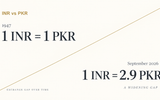
Check the rate today and the dollar is buying more than 95 rupees. It climbed through the spring as oil prices spiked, peaked near 96.5 in May, eased back, and has pushed above 95 again over the past few weeks. If you're planning a trip abroad, a semester overseas, or a payment to a supplier this year, this number affects you directly.
Why the Rupee Fell This Hard
The trigger was oil. In early March, the Strait of Hormuz, the narrow waterway that carries roughly a fifth of the world's oil, was shut amid strikes on Iran, and Brent crude spiked from the low $70s to past $120 a barrel. India imports close to 85% of its crude and pays for it in dollars, so when oil jumps like that, India needs far more dollars to buy the same barrels, and that extra demand pushes the rupee down.
Oil has since cooled back toward $75 a barrel as the crisis eased, but the rupee has been slower to recover, the way currencies usually lag the shock that moved them. A second force kept the pressure on: foreign investors heading for the exits. More than $29 billion has left Indian equities this year, and the share of Indian stocks held by foreign portfolio investors has slid toward a 20-year low. Every exit works the same way, sell rupees, buy dollars, leave. Add a Federal Reserve that has held interest rates high, and you get a dollar that's strong against almost everything, not just the rupee.
None of this means the Indian economy is in trouble. Growth stayed strong through the first quarter and inflation held close to the RBI's 4% target for most of the year. This is a story about global oil and global capital, not about India's finances falling apart. What moves this number day to day is a separate question, and we've answered it here.
What the RBI Has Actually Done
The RBI isn't trying to peg the rupee at a fixed number. It's trying to slow the fall so it doesn't turn into a panic. It has tightened how much open foreign-currency exposure banks can carry overnight, which curbs speculative bets against the rupee, restricted how much banks can play in offshore forward markets, and sold dollars from its reserves, still in a healthy $640 to $700 billion range, to smooth the sharpest swings.
One newer move actually worked: India recently removed taxes on foreign investment in government bonds, and foreign buying of Indian bonds hit a record in June, real money coming back in. It just hasn't been enough yet to undo months of oil-driven selling and equity outflows. It's also worth understanding what RBI authorisation actually means for the dealer you buy from.
What This Means If You're Buying Dollars
This is the part that actually touches your wallet.
Say you're loading $2,500 onto a forex card for a trip. At ₹83 to the dollar, a rate that wasn't unusual a couple of years ago, that would have cost ₹2,07,500. At ₹95, the same $2,500 costs ₹2,37,500, about ₹30,000 more before you've even landed anywhere.
Scale that up to tuition. A US master's programme at $35,000 a year cost about ₹29.05 lakh at ₹83. At ₹95 that same fee is ₹33.25 lakh, roughly ₹4.2 lakh more every single year, for a degree that hasn't changed at all. For a parent budgeting for a child's education abroad, that isn't a rounding error, it's the difference between a plan that works on paper and one that doesn't.
Anyone investing abroad through the Liberalised Remittance Scheme is doing the same math without noticing: every dollar converted into a US stock or an overseas fund costs more rupees than it did last year.
What This Means If You're Receiving Dollars
Flip the direction and the story flips too.
If you have family working abroad who send money home, a weak rupee works in your favour. An NRI sending $1,000 home that used to convert to ₹83,000 now lands as ₹95,000, about ₹12,000 more for doing nothing differently at all.
Exporters and IT-services firms that earn in dollars and spend in rupees are in the same happy spot: every dollar of revenue converts into more rupees than before. Gold benefits twice over, global prices up on safe-haven demand, and the weak rupee adding another layer of gains for Indian buyers on top.
The TCS Twist Nobody Talks About
Tax Collected at Source on foreign exchange kicks in once your LRS remittances or forex purchases cross ₹10 lakh in a financial year, and the 2026 budget changed it differently depending on why you're sending money. Education and medical remittances dropped from 5% to 2% above the threshold, and overseas tour packages were cut to 2% as well. But plain travel forex you arrange yourself, loading a forex card, buying cash, or a wire that isn't a packaged tour, stays at 20% above ₹10 lakh, alongside investment and gift remittances. So the rate now depends on the purpose, and self-arranged leisure forex is still the expensive one.
A weaker rupee quietly shrinks that ₹10 lakh runway. At ₹83, ten lakh rupees bought about $12,048 before TCS applied; at ₹95, the same ten lakh buys only about $10,526, roughly $1,500 less headroom before the 20% kicks in. It catches long trips and study-abroad plans off guard more often than you'd expect. If your dates allow, splitting a large load across two financial years is a simple way to stay under it.
Where the Rupee Goes from Here
Nobody knows the exact number six months out, and anyone who tells you they do is guessing. But a Reuters poll of currency strategists in late June put the median at 94.5 in three months and 95 by year-end. That's not a currency about to snap back to 83, and not one about to hit 100 either. A run to 100 is described as a longer-term scenario, 2028 or later, one that would need oil well above $130 a barrel and a lot more trade tension than exists right now.
The honest way to think about this is that ₹95 is closer to the new normal than a temporary spike. Waiting around for a return to 83 isn't a strategy, it's a bet, and not one most analysts are making either. For a sense of how far the rupee has already travelled, we've traced its journey since 1947.

What to Actually Do About It
If you know you'll need dollars for a trip, a tuition payment or a supplier invoice in the coming months, locking in a rate now removes the guesswork. A forward contract fixes today's rate for a transfer up to a year out, which matters a lot when the rupee is swinging between 94 and 96 in any given week.
Compare rates before you buy. Airport counters and walk-in bank branches routinely charge 2 to 4% more than the interbank rate, a gap that a genuinely zero-markup rate closes entirely, and on a large load that gap is real money, often more than what the rupee's weakness itself is costing you. If you send money home regularly, check whether the rate you're getting is close to the live mid-market rate, or whether your provider is quietly padding a margin into the number they show you.
And if you're budgeting for something big this year, a semester abroad or a family visit, build ₹95 into your math now. Don't wait around hoping the number gets better before you need it.
Frequently Asked Questions
Why did the rupee cross ₹95?
Three things hit at once: an oil-price spike after the Strait of Hormuz was shut in early March 2026, heavy foreign-investor selling in Indian equities, and a strong US dollar backed by high Federal Reserve rates. India's own economy stayed healthy through it, so this was largely an external shock, not a domestic one.
Will the rupee go back to ₹83?
Not any time soon, based on where analysts are putting their forecasts. The median estimate from a recent Reuters poll has the rupee still around 95 at the end of this year. Plan around ₹95, not around a correction that isn't showing up in anyone's forecast.
Is the rupee going to hit ₹100?
Most analysts don't see that in 2026. It is treated as a longer-term scenario for 2028 to 2030, one that would need oil well above $130 a barrel along with serious new trade tension. Those conditions don't exist right now.
Does a weak rupee affect money my family receives from abroad?
Yes, and it works in your family's favour. Every dollar remitted from abroad converts into more rupees than it did a year ago. If you have relatives sending money home regularly, this is the one part of the story that is good news.
Should I buy dollars now or wait for a better rate?
Nobody can time this with certainty, and treating a currency purchase like a stock trade usually backfires. If you have a known need coming up, such as tuition, travel or a payment, a forward booking locks in today's rate and removes the guesswork.
Does the weak rupee change how much TCS I pay?
Not the rate, but it changes how fast you reach the threshold. The ₹10 lakh limit is fixed in rupees, so a weaker rupee now covers less actual foreign currency than it used to. Frequent travellers loading large amounts should watch this more closely than two years ago.
Is a weak rupee bad for India overall?
It is mixed, not universally bad. Imports, travel and education abroad get more expensive, while exporters, IT-services companies and families receiving remittances come out ahead. The RBI's own full-year forecast expects growth near 6.9% and inflation near 4.6%, numbers that assume the economy can absorb this rather than being knocked off course.
What is the TCS rate on a forex card or cash withdrawal for travel?
For self-arranged leisure travel, forex cards and cash withdrawals, TCS is 20% on what you spend above ₹10 lakh in a financial year, and the 2026 budget did not change it. The lower 2% rate applies to education and medical remittances and to overseas tour packages, not to travel forex you arrange yourself.
How can I reduce or recover the TCS I pay on forex?
TCS is not money you lose. It is adjustable against your income-tax bill and refundable when you file your ITR if you do not owe that much. To manage the upfront cash flow, splitting a large purchase across two financial years, or checking whether your remittance qualifies for the lower 2% education or medical rate, are the two legitimate options. Our guide to claiming a TCS refund walks through the paperwork.
What is the LRS limit for sending money abroad from India?
Under the Liberalised Remittance Scheme, resident Indians can send up to USD 250,000 abroad per financial year for approved purposes such as education, medical treatment, investment or family support. We have broken down what counts against that limit and how it interacts with TCS separately.
A weak rupee is not a headline to panic over, it's a number to plan around. Know which side of it you're on, budget at ₹95 rather than a hoped-for 83, and remember that the biggest saving on any dollar you buy is the rate you buy it at. Matrix Forex is an RBI-authorised AD Category-II dealer with 15 years in foreign exchange, selling dollars and forex cards at the live interbank rate with no markup, and offering forward contracts to lock a rate for a payment up to a year away. Sort your forex at matrixforex.in.
Same-day delivery · RBI-authorised · No hidden charges
Get Free Callback →