


Switzerland Travel Guide
A practical guide to Switzerland covering Swiss francs, cards, the Swiss Travel Pass, costs, and what travellers should know.
Switzerland money at a glance
Currency
Swiss Franc (CHF). Switzerland is not part of the Eurozone. Euros are sometimes accepted, but they are usually exchanged at unfavourable rates.
Cards & ATMs
UBS, Raiffeisen, PostFinance ATMs are reliable. Visa/Mastercard work at every counter. Refuse DCC.
Visa
Schengen visa via Switzerland VFS. Allow 4–6 weeks. EU Entry/Exit System registration at the border since 10 April 2026.
Swiss Travel Pass
Worth it for 4+ days of travel. Covers SBB trains, boats, most cable cars. Buy online before arrival.
Etiquette
Punctuality is taken seriously. Tipping is usually done by rounding up the bill, with 5–10% given for exceptional service. Sundays are generally quiet, and most shops remain closed.
Common mistakes
Switzerland is expensive. Budget at least CHF 200 per day for a moderate trip. Be cautious of “free” mountain photo offers in Zurich, as they may come with hidden charges.
Switzerland is overwhelmingly cashless. Even alpine huts accept cards.
Best places to visit in Switzerland
Most Switzerland trips are built from two or three of these. Each now has its own guide with costs in Swiss francs and Indian rupees, what to see, and how to pay.
Zurich
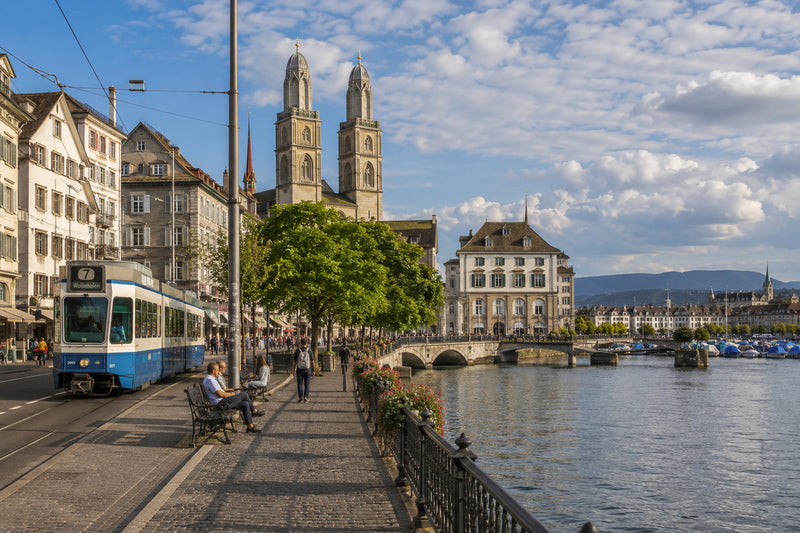
The financial capital, and the priciest night
Read the Zurich guide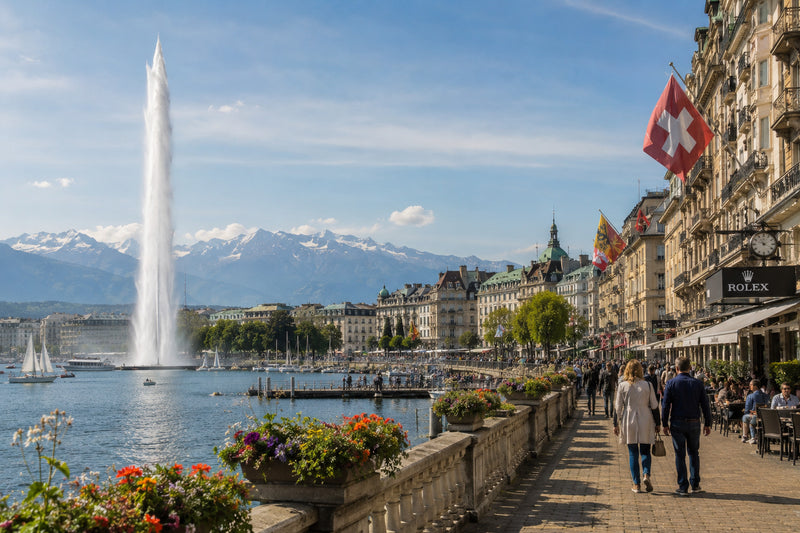
Geneva
The lake, the fountain and the UN quarter
Read the Geneva guide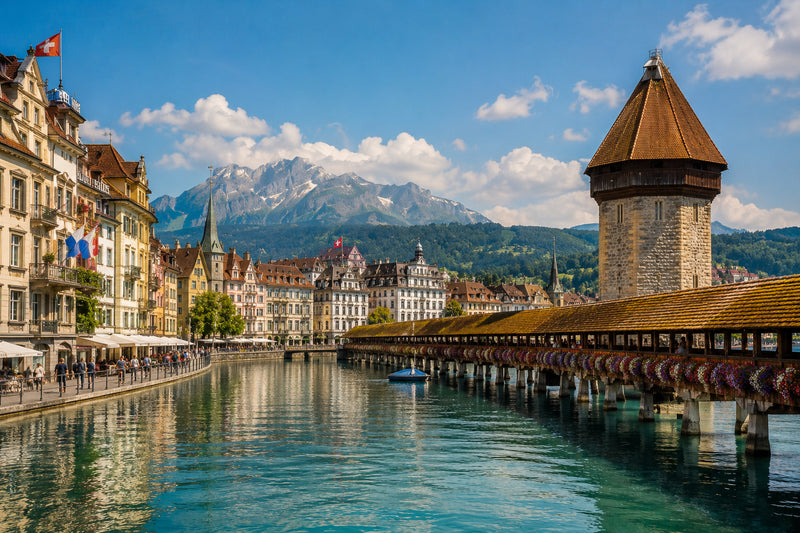
Lucerne
The covered bridge and the easiest mountain access
Read the Lucerne guide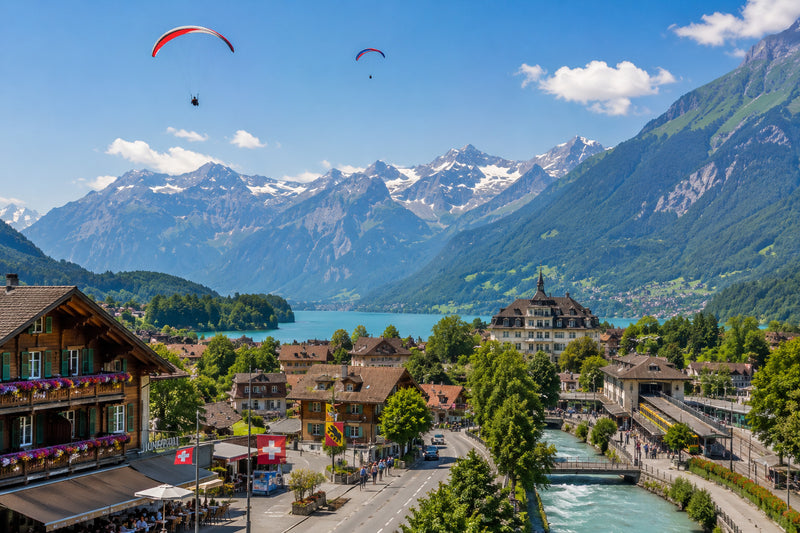
Interlaken
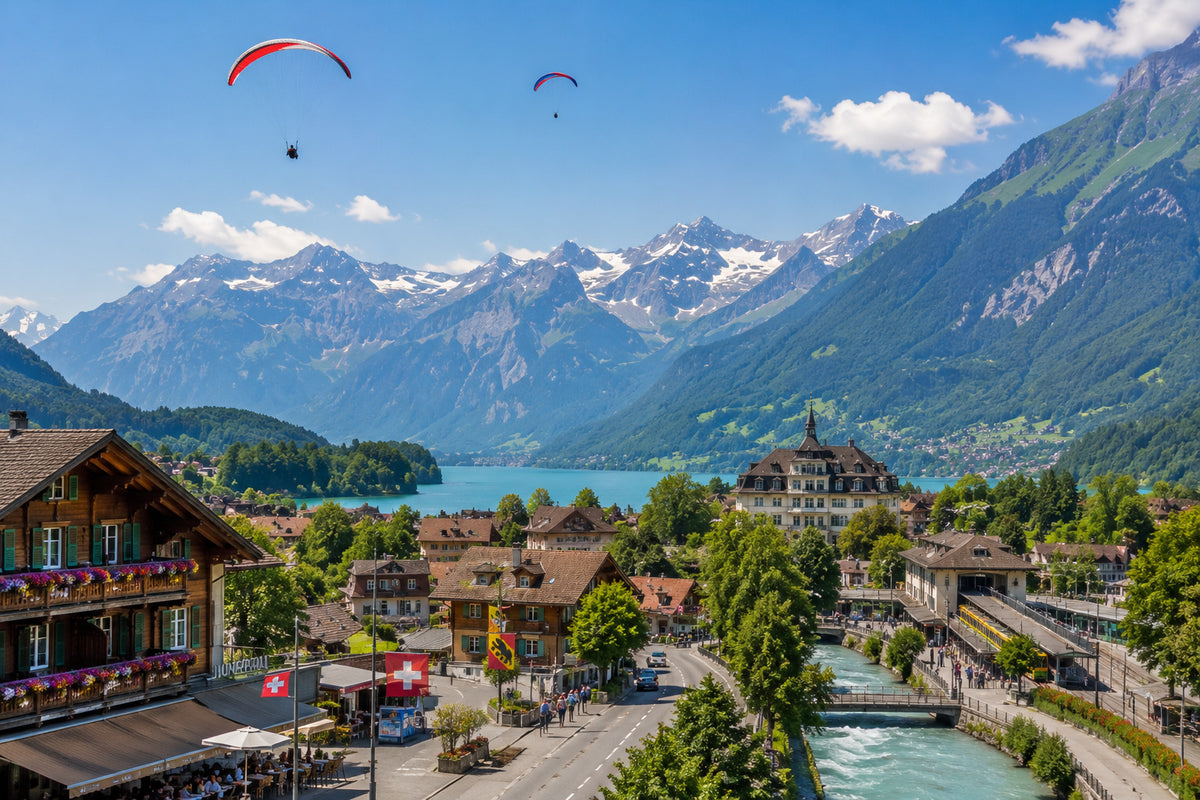
The base for Jungfraujoch and the Bernese Oberland
Read the Interlaken guide| City | In short |
|---|---|
| Zurich | The financial capital, and the priciest night |
| Geneva | The lake, the fountain and the UN quarter |
| Lucerne | The covered bridge and the easiest mountain access |
| Interlaken | The base for Jungfraujoch and the Bernese Oberland |
What things cost in Switzerland
| Coffee | CHF 5 |
|---|---|
| Day train pass | CHF 75 |
| Hotel (3-star) | CHF 220 |
| Pizza meal | CHF 25 |
Budget roughly ₹14,000 to ₹28,500 per person per day on the ground, two sharing a room and excluding flights.
Money in Switzerland, in detail
Switzerland is consistently among the most expensive countries travellers visit. Daily costs in Zurich and Geneva can be 3–4× equivalent days in Spain or Czech Republic.
The Swiss Travel Pass is the single biggest money saver. Bought online before arrival, it covers trains, boats and most mountain cable cars across the country. For a 5–7 day Switzerland leg of a Europe trip, the pass usually pays for itself in 2 days.
The Swiss Franc and the Rupee
The Swiss franc is one of the strongest currencies in the world. It trades comfortably above both the Euro and the rupee, and it has been broadly stable to slightly stronger against the rupee through 2025 and into 2026. Mental maths is cleaner than it sounds: multiply CHF by roughly 115 to get a rough INR equivalent, and the running maths takes care of itself.
Switzerland is expensive in a way that surprises first-time visitors. A coffee in Zurich runs more than a sit-down meal in many parts of India. A simple lunch lands well above what a similar meal would cost in Paris or Rome. The exchange rate is not the part that hurts. The base prices are. Plan accordingly.
Rates move every day. The number on Google is the live rate, what authorised dealers use to trade with each other. It is not the rate most banks and forex providers actually sell at. They build a markup into their selling price, usually 2 to 4 percent, and it never appears as a separate line item on the bill. On a forex order of a few lakh rupees, that markup quietly adds up to thousands.
How Much Swiss Franc to Carry
Switzerland is among the most card-friendly countries in Europe. Cards work at almost every retail outlet, restaurant, hotel, train ticket machine, and tourist site. Contactless payments are universal at modern terminals. Cash matters at small mountain restaurants and refuges, public toilets in train stations (which usually take coins), some farmers' markets, and remote rural areas where the village shop has not modernised.
A modest stock of CHF in cash handles every situation that still needs it. Most travellers withdraw or carry a small amount and barely use it through the trip.
One small note for travellers: Euros are accepted at many Swiss tourist-area shops and hotels but at distinctly poor rates. The change comes back in CHF at a rate the merchant chooses. Always pay in CHF if you can, it is the cleaner outcome.
A Sensible Cash Plan
Carry a small amount of CHF in cash from India for arrival incidentals, train ticket from the airport, a coffee, a public toilet at a station. Withdraw additional cash on the ground only if needed. For most travellers, a forex card loaded with CHF handles 95 percent of spending.
Indian residents can carry up to USD 3,000 equivalent in foreign currency notes per trip to Switzerland. Anything beyond that goes on a forex card or as a wire transfer. A typical Switzerland trip may approach the ₹10 lakh per person per financial year TCS threshold once flights, hotels, and on-ground spending are added together, if your total LRS spending in the financial year crosses that threshold, the 20 percent TCS applies on the amount above ₹10 lakh, and it is recoverable against your final income tax liability when you file your return.
Where to Buy Swiss Francs Before You Fly
The cheapest Swiss francs you will buy are the francs you buy in India before flying. Indian airport counters and tourist-area money changers run a noticeable markup over the mid-market rate. Hotel front desks run worse. Ordering online before you fly lets you see the rate and the applicable charges before you confirm, which the counters do not.
Inside Switzerland, the rates at airport exchange counters and tourist-area money changers are mediocre. Major banks like UBS, Credit Suisse's successor entities, and Raiffeisen offer better rates, but the spread is narrow and not worth a special trip if you have already loaded a forex card. Skip airport exchange counters at Zurich, Geneva, and Basel for anything beyond emergency cash.
The cleanest approach for an Indian traveller: order a moderate amount of CHF for door delivery before flying, load the bulk on a forex card, and rely on the card for almost all spending.
Cards in Switzerland
Visa and Mastercard are accepted almost universally in Switzerland, at hotels, restaurants, train ticket machines, mountain railways, supermarkets, and shops. American Express works at most international hotels and large restaurants, less reliably at small establishments. JCB has reasonable acceptance through Japanese tourism volumes. RuPay has effectively no acceptance, so do not rely on it as your main card.
Apple Pay, Google Pay, and Samsung Pay all work widely. TWINT, the Swiss QR payment system, is everywhere on signs but tied to local Swiss bank accounts and not directly usable by visitors. A standard Visa-based forex card works wherever Visa is accepted.
Two Things Indian Cardholders Should Know
Online payments in Switzerland trigger 3D Secure verification, which means an OTP to your registered Indian mobile number. Keep your Indian SIM active on roaming, or use an eSIM that keeps the number reachable. Otherwise online bookings, particularly the SBB Mobile rail app and individual mountain railway tickets, sometimes fail at the OTP step.
At hotels, large department stores, and watch shops, the card machine asks whether to charge in CHF or in your home currency. Always pick CHF. The home-currency option is dynamic currency conversion and adds a markup of several percent on top of whatever your card already takes, and on Swiss prices, that markup can be a meaningful sum.
ATMs in Switzerland
ATMs are everywhere: UBS, PostFinance and Raiffeisen all have wide networks, and foreign cards work reliably at most of them. The Swiss machines themselves are the cheap part. Major bank Bancomats generally charge foreign cards no operator fee at all, so almost the entire cost of a withdrawal is your own bank's foreign-currency markup, its flat international ATM fee and the GST on both. What that adds up to on Swiss prices, and how to cut it, is worked through in our guide to using ATMs in Switzerland with an Indian card.
The cleanest approach is to load a forex card before flying, withdraw a moderate amount on day one if cash is needed, and avoid frequent small withdrawals. Private machines in stations and tourist spots are the exception worth avoiding: they surcharge, and a bank Bancomat is almost always nearby.
The Swiss Travel Pass
Switzerland's public transport network is exceptional, trains, buses, lake boats and many mountain railways form a single integrated system. The Swiss Travel Pass is a flat-fee unlimited-use ticket across most of that system, and for the kind of itinerary most travellers from India plan, it is the single biggest money decision of the trip.
The pass also covers free admission to most museums, free travel on lake boats, and substantial discounts on the famous mountain excursions like the Jungfraujoch, Schilthorn and Mount Pilatus. The Top of Europe trip alone is expensive enough that the discount on it moves the maths on the pass.
Buy the pass online before flying or at any major Swiss train station. The 4-day, 6-day, 8-day and 15-day options cover most itineraries. Children under 16 travelling with a parent on a Swiss Travel Pass travel free on a Swiss Family Card. Run the numbers on your own route before buying, since a short trip built around one region can come out cheaper on point-to-point tickets.
What You Will Spend Each Day
On the ground, daily spending in Switzerland splits into three rough tiers.
Backpacker: hostel dorm bed, supermarket meals from Migros or Coop (genuinely good and affordable), local trains on the Swiss Travel Pass, free outdoor attractions like alpine hiking and lakeside walks. Switzerland at this tier is feasible but still significantly more expensive than most of Europe, there is no cheap Switzerland.
Mid-range, where most travellers land: a three-or-four-star hotel in Lucerne, Interlaken, or Zermatt, two restaurant meals a day with the breakfast usually included, the Swiss Travel Pass for transport, paid mountain excursions like the Jungfraujoch or Mount Titlis.
Premium: five-star resorts like the Burgenstock or the Mont Cervin Palace in Zermatt, fine-dining experiences, helicopter tours, and the high-end watch and shopping budget on Bahnhofstrasse and Rue du Rhône. Switzerland at this tier rivals any premium destination in the world.
A 7-day mid-range trip for two is one of the more expensive holidays you can plan from India, comparable to Japan in cherry blossom season but typically higher. Flights and hotels are usually paid in India before departure and sit on top.
Getting Around
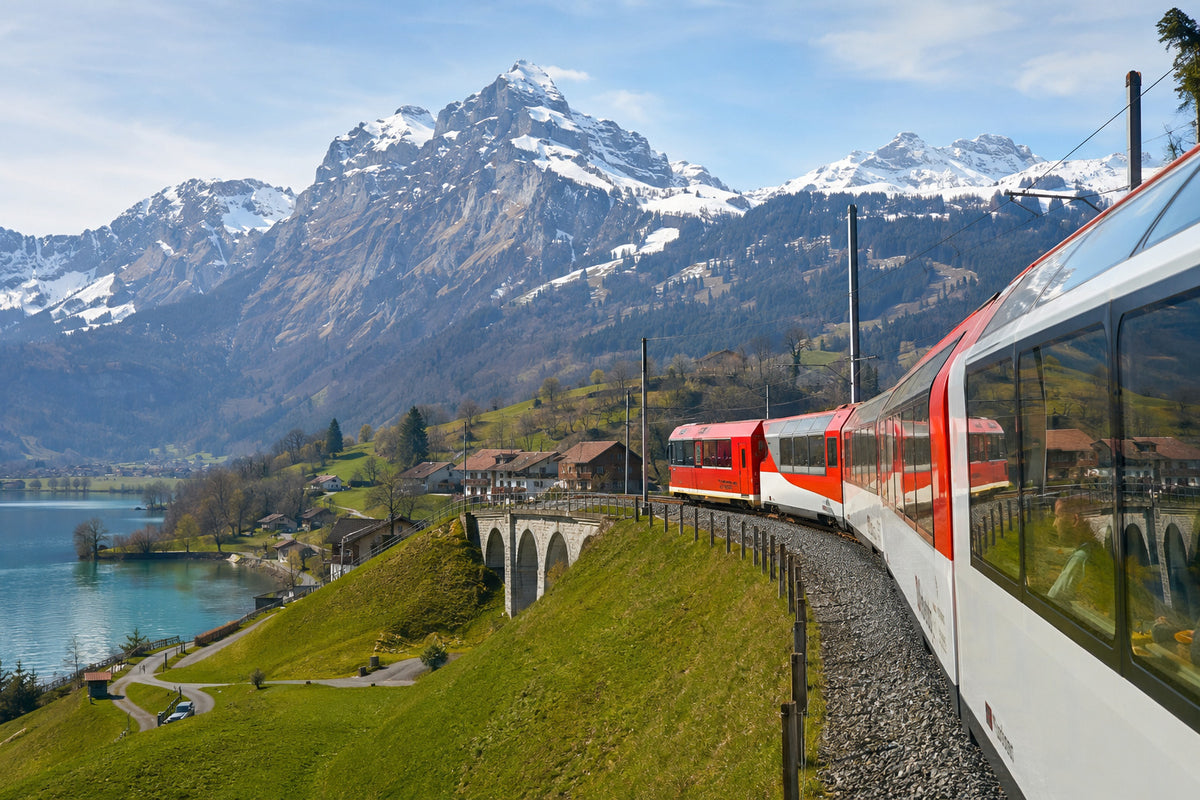
Trains run Switzerland. The SBB network is fast, on time, and integrated with buses, lake boats, and mountain railways. The Swiss Travel Pass or a point-to-point ticket combined with a Half Fare Card covers most situations. The SBB Mobile app handles bookings and shows live timetables and platforms.
Driving is feasible but not necessary. Swiss roads are excellent and the alpine driving is genuinely scenic, but parking in cities is expensive and the train network is so good that most Indian itineraries do not benefit from a car. The exception is if you are basing yourself in a single chalet town and using it as a base for the surrounding region.
From the airports, the train is almost always the right answer. Zurich Airport has its own SBB station underneath Terminal 1. Geneva Airport is similarly direct. Skip the airport taxis unless you have specific accessibility needs.
Switzerland money FAQs
Switzerland uses the Swiss franc (CHF), not the euro, despite being ringed by eurozone countries. On 29 September 2026, 1 franc was about €1.06 and about ₹115.41. Some tourist tills near the borders accept euros, but they set their own rate and give change in francs, and you lose on the conversion both ways, so pay in francs or by card.
Yes. Switzerland is in the Schengen area, so Indian passport holders need a Schengen visa. Apply at the Swiss visa application centre run by VFS Global if Switzerland is where you spend the most nights, and allow four to six weeks. Since 10 April 2026, arrivals are also registered at the border in the EU Entry/Exit System.
Overwhelmingly card. Visa and Mastercard work almost everywhere, mountain railways included, but RuPay has effectively no acceptance. Keep a few francs in coins for station toilets and small mountain stalls.
A small amount for arrival incidentals is enough for most travellers, who barely use cash. Indian residents can carry up to USD 3,000 equivalent in foreign currency notes per trip; the rest is best loaded on a forex card.
Francs. When a card machine offers rupees, that is dynamic currency conversion, and it adds several percent on top of whatever your card already charges.
Usually, for a trip that moves between cities. It covers trains, buses, lake boats and city transport, makes Rigi free, halves Pilatus and Titlis, and takes 25 percent off the Jungfraujoch beyond Grindelwald or Wengen. For a short stay in one region, point-to-point tickets with a Half Fare Card can come out cheaper.
Most first trips combine Zurich, Lucerne and Interlaken, with Geneva added for the lake or a side trip into France. Each has its own guide on this page, with costs in francs and rupees.
By direct train from the station under the terminal: about an hour to Lucerne (CHF 27 in second class) and a little over two hours to Interlaken Ost (about CHF 75). A Swiss Travel Pass covers both.
CHF 234.80 return from Interlaken Ost in summer (May to October), CHF 177.20 with a Swiss Travel Pass and half price with the Half Fare Card, plus a mandatory CHF 10 seat reservation from 1 May to 31 October.
Yes. Hiltl in Zurich, the oldest vegetarian restaurant according to Guinness World Records, has Indian dishes on its menu, and the Jungfraujoch has an Indian buffet restaurant called Bollywood. Migros and Coop supermarkets are the everyday budget option.
Interlaken has had a bronze statue of Yash Chopra in the Kursaal garden since 2016, and the Titlis summit station above Engelberg has a cut-out of Shah Rukh Khan and Kajol from Dilwale Dulhania Le Jayenge.
Service is included in Swiss prices, so tipping is optional. Rounding up the bill is normal, and 5 to 10 percent is for exceptional service.
Sort your Swiss Franc before you fly
Lock the rate, carry the right mix of cash and card, and know today’s CHF rate before you book.
Buy swiss franc before you fly
See your Matrix rate and the applicable charges before you confirm. Order online for doorstep delivery or collect from your nearest branch.
RBI Authorised Dealer Category-II, Licence No. NDL-ADII-0023-2023 · Same-day delivery · Serving 3 lakh+ customers