


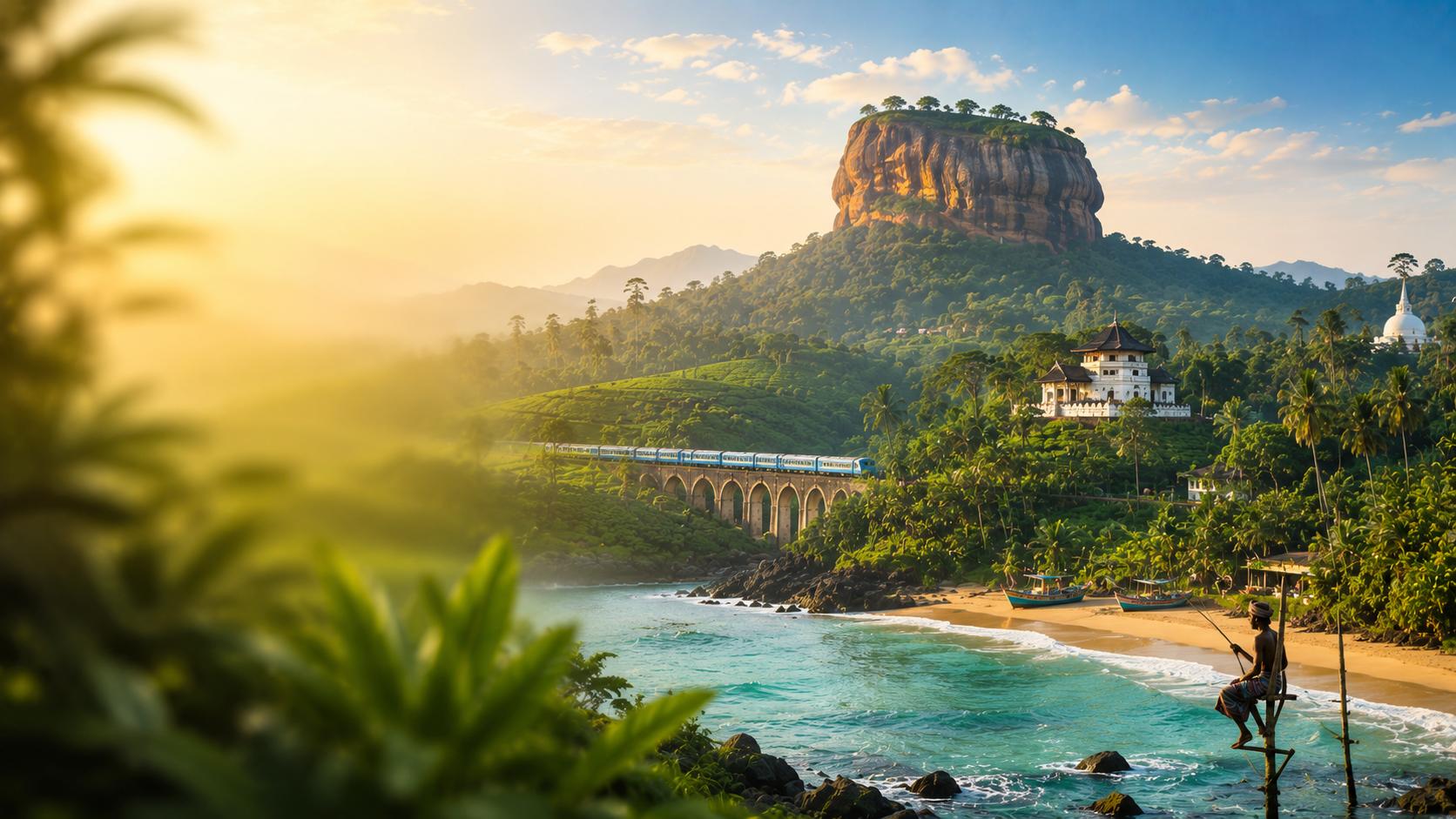
Sri Lanka Travel Guide
A practical guide to a Sri Lanka covering LKR, USD, cards, transport, daily costs, and the things travellers often get wrong.
Sri Lanka money at a glance
Currency
Sri Lankan Rupee (LKR), distinct from INR. Carry a moderate LKR cash float plus a small USD buffer for dive shops and beach stays.
Cards & ATMs
Commercial Bank, Sampath Bank, HNB ATMs accept Indian cards reliably. Cards work at hotels and supermarkets (Cargills, Keells) but not in tuk-tuks or small restaurants.
Visa
ETA online before travel for ~USD 50 (waived in some 2024–25 promotional periods, check current rules). Apply 3–5 days before flying.
Transport
PickMe app for tuk-tuks (like Uber). Trains for scenic routes (Kandy–Ella). Buses are cheap but crowded.
Etiquette
Cover shoulders and knees at temples. Remove shoes before temple entry. Photographing Buddha statues with your back to them is disrespectful.
Common mistakes
Don't exchange currency at the airport, Colombo Fort branches give better rates. Confirm tuk-tuk fares before starting. Watch for the "shop tour" scam offering free rides.
Sri Lanka runs largely on cash for everyday spending. Cards work at hotels, branded restaurants and large supermarkets in Colombo and tourist towns, but cash matters for transport, small restaurants, markets and most local experiences.
Best places to visit in Sri Lanka
Most Sri Lanka trips are built from two or three of these. Each now has its own guide with costs in Sri Lankan rupees and Indian rupees, what to see, and how to pay.
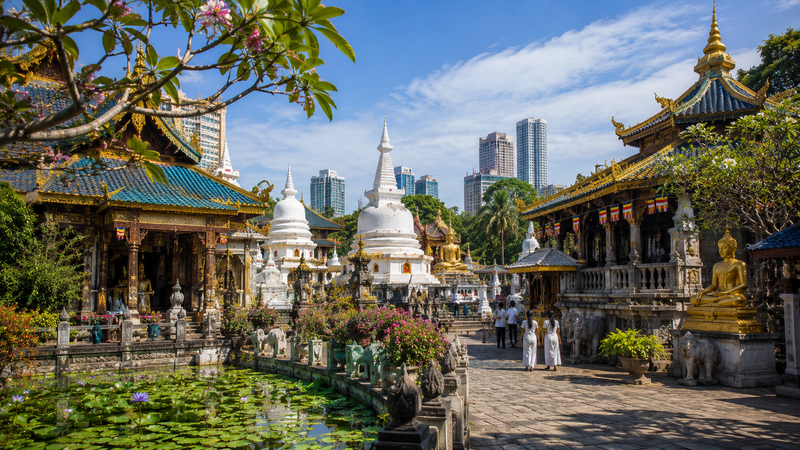
Colombo
The arrival city, and the best exchange rates
Read the Colombo guide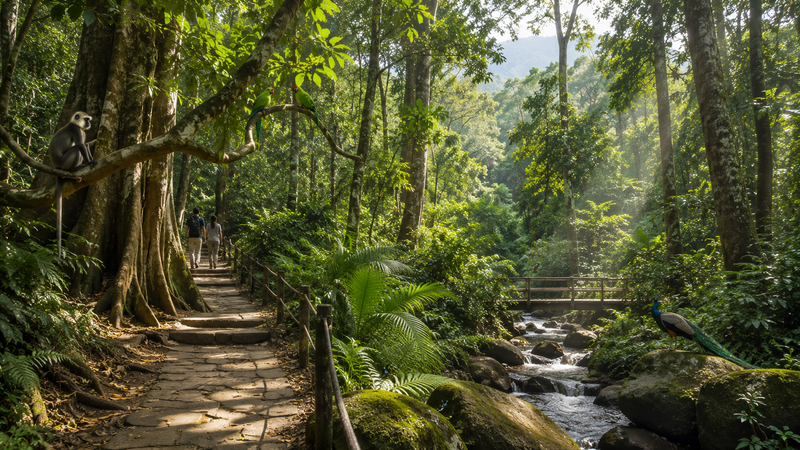
Kandy
The Temple of the Tooth and the hill country gateway
Read the Kandy guide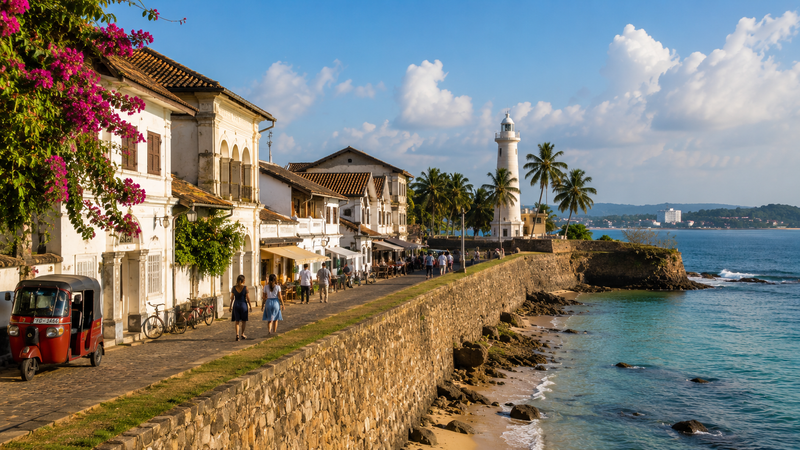
Galle
The Dutch fort and the southern beaches
Read the Galle guide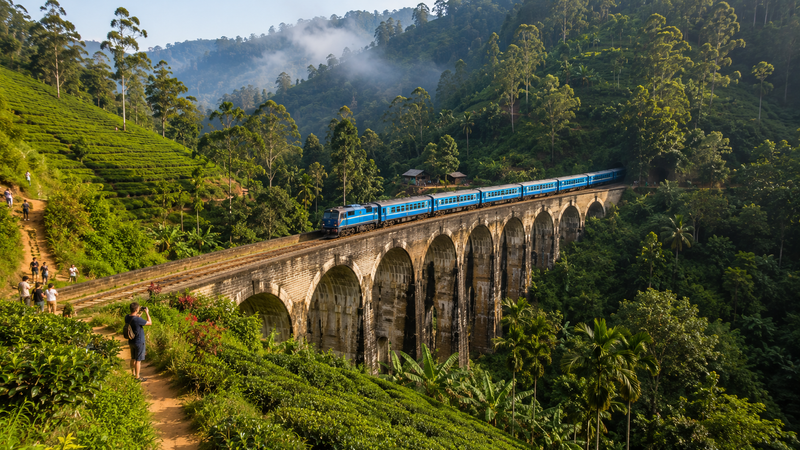
Ella
Tea country, and the famous train ride
Read the Ella guide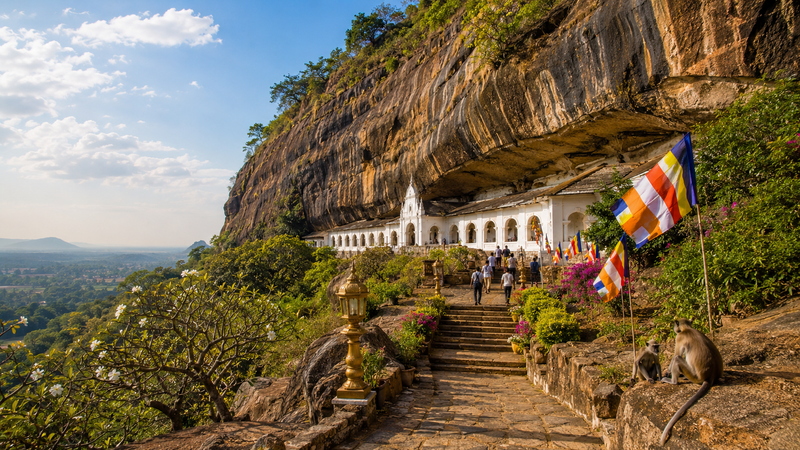
Sigiriya
The rock fortress, SAARC discount applies
Read the Sigiriya guide| City | In short |
|---|---|
| Colombo | The arrival city, and the best exchange rates |
| Kandy | The Temple of the Tooth and the hill country gateway |
| Galle | The Dutch fort and the southern beaches |
| Ella | Tea country, and the famous train ride |
| Sigiriya | The rock fortress, SAARC discount applies |
What things cost in Sri Lanka
| Coffee / tea | LKR 400 |
|---|---|
| Tuk-tuk ride | LKR 500 |
| Hotel (3-star) | LKR 18,000 |
| Rice & curry meal | LKR 800 |
Budget roughly ₹3,200 to ₹7,450 per person per day on the ground, two sharing a room and excluding flights.
Money in Sri Lanka, in detail
Sri Lanka is one of the closest and most accessible international destinations from India. Cultural overlap is high, English is widely spoken in tourist circles, and the flight is short. The money side is straightforward, with one caveat, Sri Lanka has been through a serious currency crisis in recent years, and the practical advice for forex differs from older guides.
The LKR went through a sharp devaluation during the 2022 economic crisis and has stabilised since 2023. For travellers this means Sri Lanka is now noticeably better value than it was before the crisis, and the country is open and welcoming again.
The Sri Lankan Rupee and the Indian Rupee
Both countries call their currency the rupee, which causes occasional confusion. The Sri Lankan rupee (LKR) is a distinct currency and the exchange rate to the Indian rupee is about 3.4 LKR per INR, and it has held between 3.4 and 3.5 right through 2026, so the LKR is the weaker of the two. Mental maths is easy: divide LKR amounts by about 3.4 to get a rough INR equivalent.
The LKR went through a sharp devaluation during Sri Lanka's 2022 economic crisis and has stabilised since 2023. For travellers this stabilisation has been good, Sri Lanka is now noticeably better value than it was before the crisis, and the country is open and welcoming again.
Rates move every day. The number on Google is the live rate, what authorised dealers use to trade with each other. It is not the rate most banks and forex providers actually sell at. They build a markup into their selling price, usually 2 to 4 percent, and it never appears as a separate line item on the bill. On a forex order of a couple of lakh rupees, that markup quietly adds up to thousands.
How Much Cash to Carry
Sri Lanka is mainly a cash economy outside the four-star and five-star tourist circles. Tuk-tuks, small restaurants, markets, train tickets, beach shacks, and most local experiences run on cash. Cards work at international hotels in Colombo, Galle, and Kandy, branded restaurants, large supermarkets like Cargills Food City and Keells, big shopping malls, and most upmarket tour operators.
USD is widely accepted in Sri Lanka, particularly at hotels, dive shops, and tour operators in tourist towns. Many businesses prefer USD for larger payments. Both rupees and dollars work, the practical advice is to carry both.
A Sensible Cash Plan
Carry US dollars from India in clean, undamaged notes, torn, marked, or pre-2009 series notes are sometimes refused at Sri Lankan exchange counters. Convert in batches on arrival rather than all at once. Keep a forex card loaded with USD as backup. Some travellers also choose to carry Indian rupees for emergency cash exchange at the border or in tourist areas, where INR is sometimes accepted at small premiums.
Indian residents can carry up to USD 3,000 equivalent in foreign currency notes per trip to Sri Lanka. Anything beyond that goes on a forex card or as a wire transfer. Most leisure trips will not approach the ₹10 lakh per person per financial year TCS threshold, so no tax collection at source applies.
Where to Exchange Money
The cheapest forex you will buy is the USD you buy in India before flying. Indian airport counters and tourist-area money changers run a noticeable markup over the mid-market rate. Hotel front desks run worse. Ordering online before you fly lets you see the rate and the applicable charges before you confirm, which the counters do not.
Inside Sri Lanka, the licensed money changers in Colombo's Pettah district and around the major hotels in Galle Face offer the best rates. Major banks like Commercial Bank, Sampath Bank, and HNB are reliable and only slightly worse. Avoid the airport exchange counters at Bandaranaike International for anything beyond the immediate cash you need on arrival.
The cleanest approach for an traveller: order USD for door delivery before flying, carry the bulk in cash, load a moderate amount on a forex card as backup, and exchange in batches at licensed money changers or banks once on the ground.
Cards in Sri Lanka
Visa and Mastercard are accepted at international hotels, branded restaurants, large supermarkets, big shopping malls, and most established tour operators in Colombo, Galle, Kandy, and the major beach towns. Acceptance drops sharply outside those circles. American Express works at international hotel chains but not much else. JCB has limited acceptance. RuPay has effectively no acceptance, so do not rely on it as your main card.
Apple Pay and Google Pay work at most card terminals that accept contactless, though contactless penetration is lower in Sri Lanka than in India. A standard Visa-based forex card works wherever Visa is accepted.
Two Things Indian Cardholders Should Know
Online payments in Sri Lanka often trigger 3D Secure verification, which means an OTP to your registered Indian mobile number. Keep your Indian SIM active on roaming, or use an eSIM that keeps the number reachable. Otherwise online bookings, particularly for trains and domestic flights, fail at the OTP step.
At hotels and large restaurants, the card machine sometimes asks whether to charge in LKR or in rupees. Pick LKR. Choosing rupees hands the exchange rate to the machine's operator, and we explain what that costs in our Sri Lanka ATM and card guide.
ATMs in Sri Lanka
ATMs are common in Colombo and the tourist towns, and foreign cards work reliably at most of them. Commercial Bank, Sampath Bank, HNB and BOC have the widest networks.
Fees, per-withdrawal limits, which machines to avoid and the charge-in-LKR question are covered in full in our guide to using ATMs in Sri Lanka with an Indian card.
What You Will Spend Each Day
On the ground, daily spending splits into three rough tiers.
Backpacker: a guesthouse room, three rice-and-curry meals at small restaurants, train and bus, free beaches and temples. Sri Lanka at this tier is one of the cheapest serious-travel destinations in South Asia.
Mid-range, where most travellers land: a three-or-four-star hotel or a heritage boutique property, two restaurant meals a day, a private driver for day trips between Colombo, Kandy, and the Hill Country, paid attractions like Sigiriya, Polonnaruwa, and the Temple of the Tooth, occasional spa visits and Ayurveda treatments.
Premium: five-star resorts in Galle, Yala, or the Hill Country, fine-dining restaurants, private guides, helicopter tours, and the high-end safari and wellness budget. Sri Lanka at this tier offers strong value for the money compared to comparable resort destinations.
A 7-day mid-range trip for two in Sri Lanka, including a private driver, lands well below what the same trip in Singapore or Japan would cost. Flights and hotels are usually paid in India before departure and sit on top.
Getting Around
A private driver-cum-guide is the default for travellers doing the classic Sri Lanka loop, Colombo, Sigiriya, Kandy, Nuwara Eliya, Ella, Galle, Yala. Rates are reasonable and most hotels can arrange one. The driver doubles as a guide for shorter day trips.
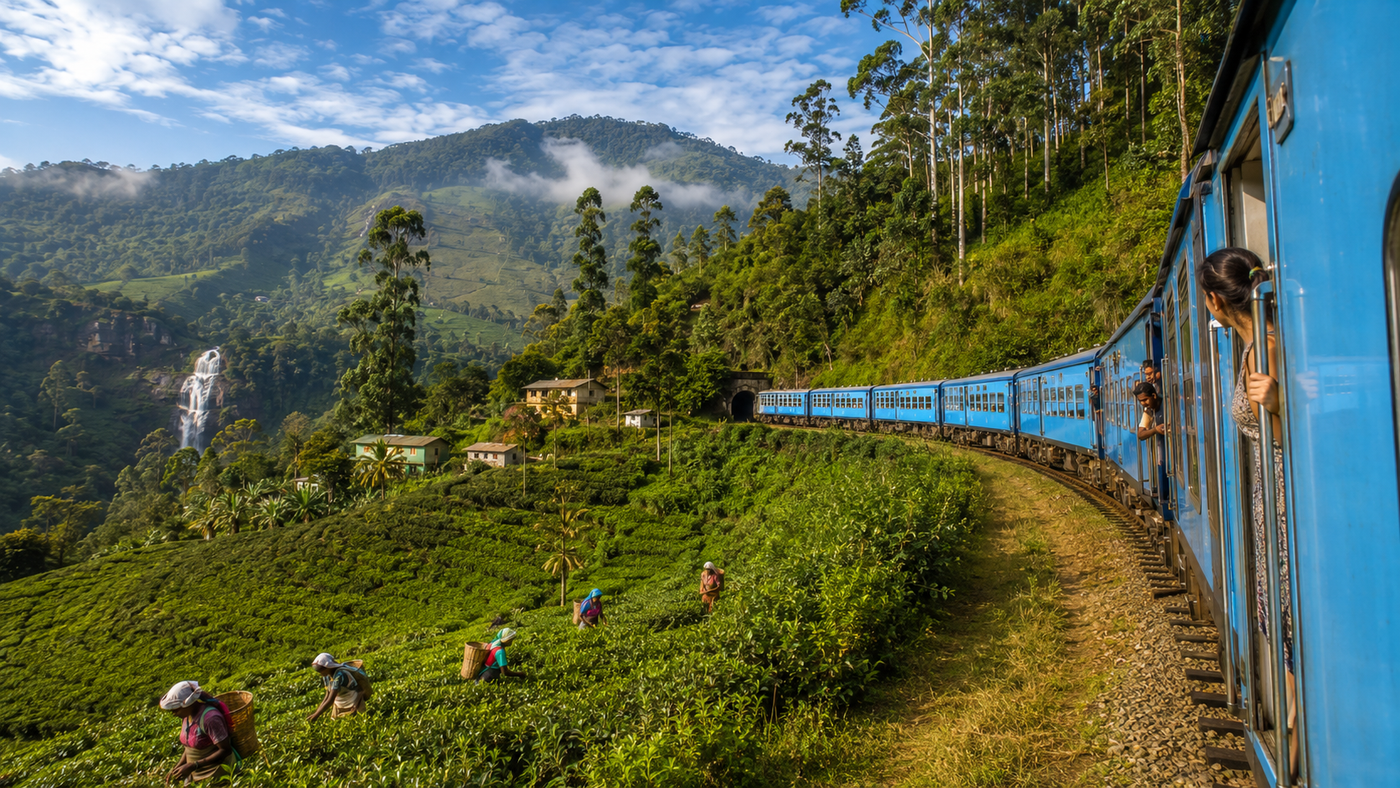
The train from Kandy to Ella is one of the most photographed train rides in Asia for a reason. Book second-class reserved or observation-car tickets a few weeks in advance through the official Sri Lanka Railways site or a trusted booking agent. Tickets sell out for the famous segments.
Inside the cities, tuk-tuks are the default. Apps like PickMe and Uber operate in Colombo and Kandy and avoid the bargaining headache of street tuk-tuks. Outside the apps, agree the fare before getting in. A meter is rare; an honest quote is normal.
Sri Lanka money FAQs
On 23 September 2026 one Sri Lankan rupee was about ₹0.29, so LKR 100 is roughly ₹29 and LKR 10,000 is about ₹2,908. Put another way, ₹1 buys about 3.4 Sri Lankan rupees. Rates move daily, so check the live rate on the day you order.
Indian passport holders need an ETA, the Electronic Travel Authorisation, which is applied for online before travel and is normally issued quickly. Apply through the official Sri Lankan government portal rather than a third-party site, which will charge more for the same document.
Yes, at the major heritage sites. India is a SAARC member and Sri Lanka charges SAARC nationals a reduced rate: roughly USD 20 at Sigiriya against USD 30 to 35 for other foreign visitors, and LKR 2,500 at the Temple of the Tooth against LKR 3,000. Carry your passport and ask at the counter, because the posted price is usually the non-SAARC one.
For a week, roughly LKR 40,000 to 70,000 per person, about ₹11,600 to ₹20,400, covers tuk-tuks, local restaurants, entrance fees and markets. Sri Lanka is markedly more cash-dependent than Thailand or Malaysia once you leave Colombo.
Mixed, and it shifts as you travel. Colombo's hotels, malls and branded restaurants take cards reliably. Kandy is patchier, and Ella and Sigiriya are close to cash-only outside the larger hotels. Tuk-tuks are cash almost everywhere.
In limited places. NPCI has extended UPI acceptance to Sri Lanka through partner networks, but coverage is thin outside larger merchants in Colombo and no tuk-tuk or village restaurant will take it. Treat it as an occasional convenience and carry a forex card and rupees.
Yes, at the major bank ATMs including Commercial Bank, Sampath and HNB. Expect the Sri Lankan bank's own withdrawal fee on top of your Indian bank's international charge and a conversion markup, so fewer larger withdrawals beat several small ones. Our guide to ATMs in Sri Lanka breaks the charges down.
Carry most of it from India. Colombo airport counters and hotel desks run the widest spreads, while licensed money changers in Colombo Fort and Pettah are competitive if you need more on the ground.
On the ground, roughly ₹580 to ₹2,180 per person per day across most of the island, so a week works out at about ₹4,000 to ₹15,000 per person excluding flights and accommodation. Sigiriya is the exception, where a single entrance ticket can cost more than a whole day elsewhere.
Colombo as the arrival bookend, Kandy for the Temple of the Tooth, Ella for the hill country and the train, Galle for the colonial fort and the south coast beaches, and Sigiriya for the rock fortress. Most first trips fit three or four of the five.
On daily spending, yes, and by a wide margin outside Sigiriya. Most stops run ₹580 to ₹2,180 per person per day against Thailand's ₹3,450 to ₹18,700 and Malaysia's ₹2,800 to ₹6,600. The exception is heritage entrance fees, which are priced in dollars and are high by regional standards.
The island has two monsoons, so there is almost always somewhere in season. December to March suits the west and south coasts and the Cultural Triangle, which covers Colombo, Galle and Sigiriya. May to September suits the east coast. The hill country around Kandy and Ella is workable year-round but wetter from October to December.
Sort your Sri Lankan Rupee before you fly
Lock the rate, carry the right mix of cash and card, and know today’s LKR rate before you book.
Buy sri lankan rupee before you fly
See your Matrix rate and the applicable charges before you confirm. Order online for doorstep delivery or collect from your nearest branch.
RBI Authorised Dealer Category-II, Licence No. NDL-ADII-0023-2023 · Same-day delivery · Serving 3 lakh+ customers