


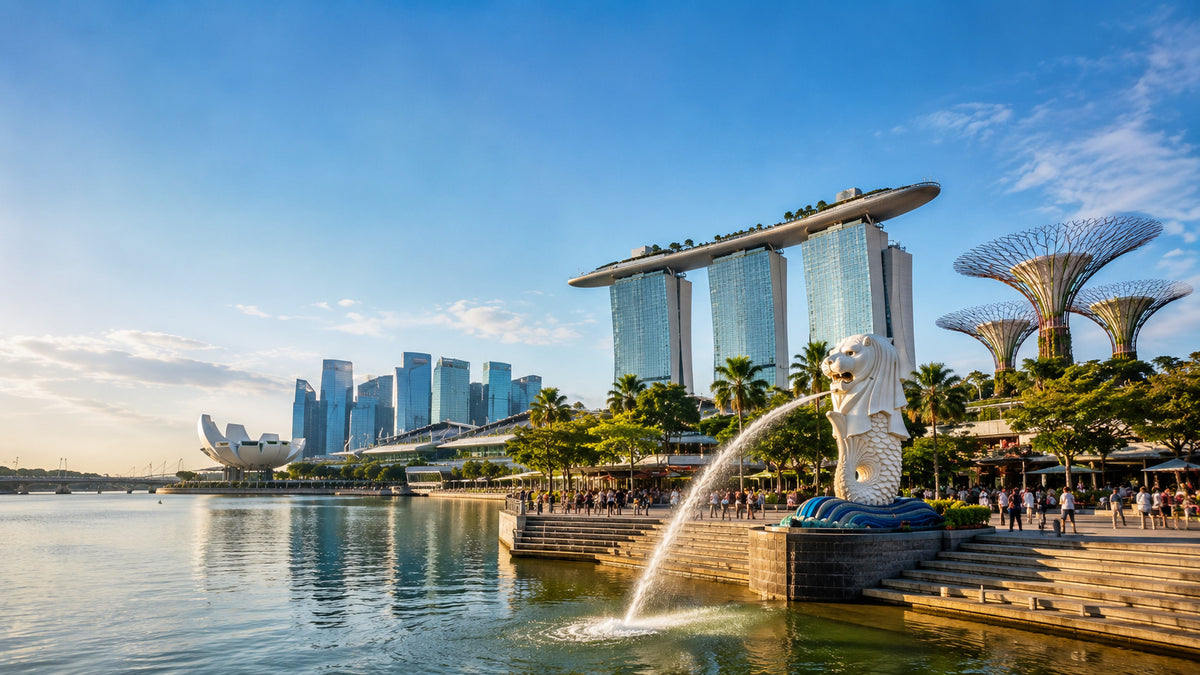
Singapore Travel Guide
A practical guide to planning a trip to Singapore, covering SGD, cards, EZ-Link, transport, costs, and everything travelers should know.
Singapore money at a glance
Currency
Singapore Dollar (SGD). A small cash float covers hawker centres and street food; cards do the rest.
Cards & ATMs
Contactless cards work universally across MRT, taxis, hawker centres, and malls. ATMs are widely available, and DBS/POSB and OCBC are among the most reliable banking options.
Visa
Indian passport holders need a Singapore tourist visa via SAVE / SG Arrival. e-Visa typically issued in 2–5 working days.
Transport
EZ-Link or SimplyGo card for MRT and buses. Grab works city-wide. The MRT is the fastest way around.
Etiquette
No chewing gum is allowed. Littering is prohibited, and fines apply. Queue politely and reserve hawker tables by placing a tissue packet.
Common mistakes
Refuse DCC at checkout. Avoid exchanging currency at Changi Airport, as rates are often weak. Avoid taxi flag-downs during Marina Bay rush hours.
Singapore is one of the most cashless destinations in Asia. Cards and PayWave work nearly everywhere.
Best places to visit in Singapore
Most Singapore trips are built from two or three of these. Individual guides are being written.
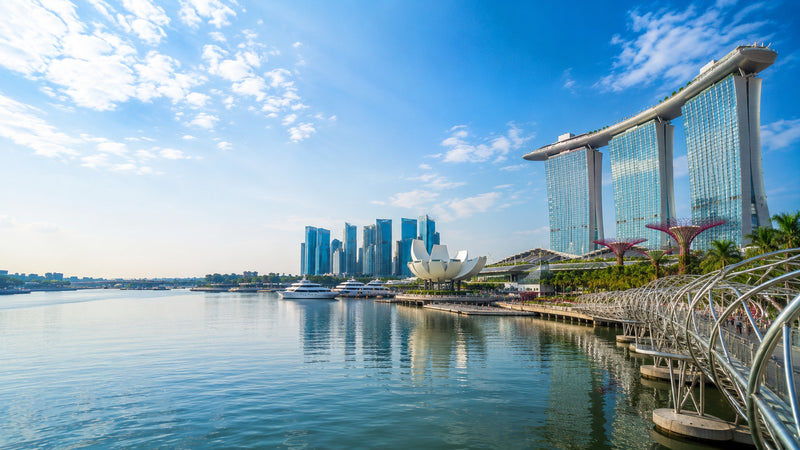
Marina Bay
The skyline, the gardens and the light show
Read the Marina Bay guide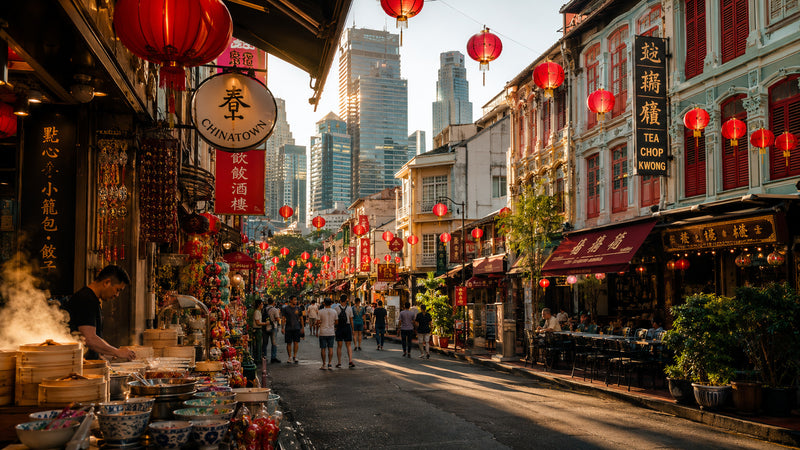
Chinatown
Hawker centres and the best cheap eating
Read the Chinatown guide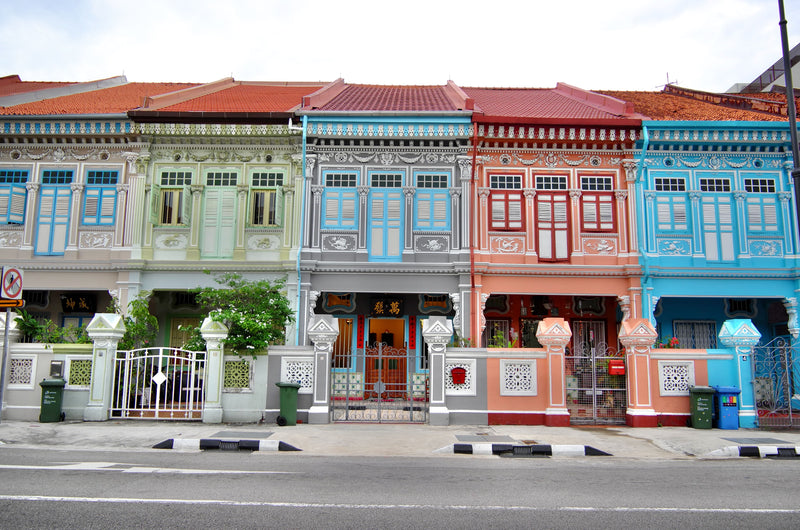
Little India
The most familiar corner for travellers
Read the Little India guide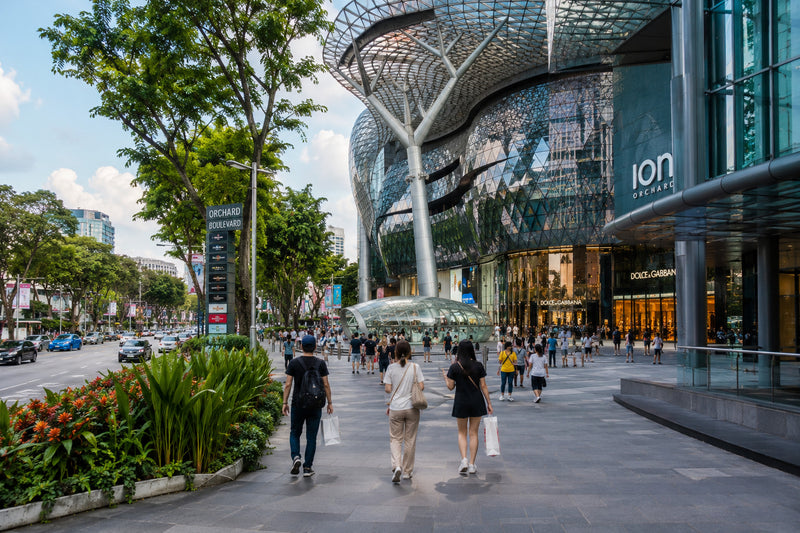
Orchard Road
The shopping spine
Read the Orchard Road guide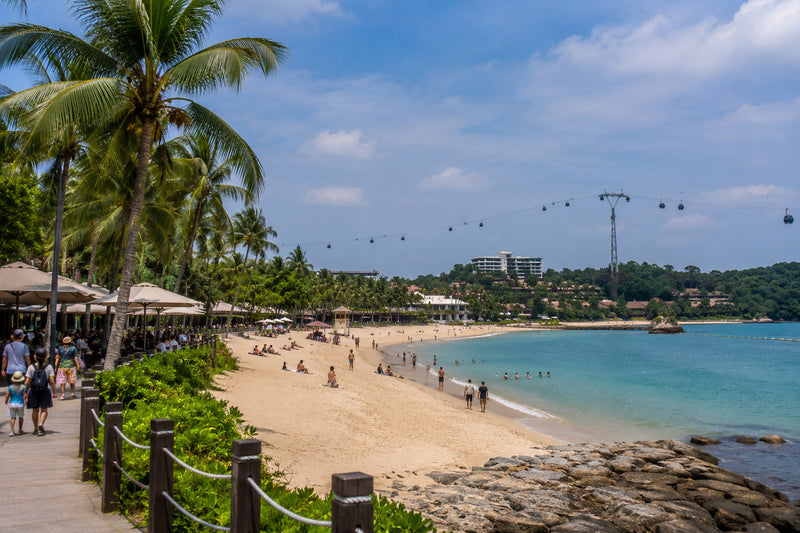
Sentosa
Beaches, Universal Studios and cable cars
Read the Sentosa guide| City | In short |
|---|---|
| Marina Bay | The skyline, the gardens and the light show |
| Chinatown | Hawker centres and the best cheap eating |
| Little India | The most familiar corner for travellers |
| Orchard Road | The shopping spine |
| Sentosa | Beaches, Universal Studios and cable cars |
What things cost in Singapore
| Coffee | S$5 |
|---|---|
| MRT day pass | S$10 |
| Hotel (3-star) | S$200 |
| Hawker meal | S$8 |
Budget roughly ₹7,300 to ₹17,700 per person per day on the ground, two sharing a room and excluding flights.
Money in Singapore, in detail
Singapore is small, organised and almost cashless. For an traveller it is one of the easiest international trips to plan, the language is familiar, the food is familiar, the systems work.
Where most travellers leak money is the airport currency counter and the dynamic-currency-conversion offers at hotels and restaurants. Both are quietly more expensive than the live interbank rate.
The Singapore Dollar and the Rupee
The Singapore dollar trades comfortably above the Indian rupee, and the rate is mentally easy, multiply SGD by roughly 75 to get a rough INR equivalent, and the running mental maths takes care of itself within a day. The currency has been broadly stable to slightly stronger against the rupee through 2025 and into 2026, which is normal for SGD given the Monetary Authority of Singapore's exchange-rate-targeting framework.
Rates move every day. The number on Google is the live rate, what authorised dealers use to trade with each other. It is not the rate most banks and forex providers actually sell at. They build a markup into their selling price, usually 2 to 4 percent, and it never appears as a separate line item on the bill. On a forex order of a couple of lakh rupees, that markup quietly adds up to thousands.
Singapore is expensive. Hotels, dining, and alcohol are markedly higher than Bangkok or Saigon. The exchange rate is not the part that hurts. The base prices are.
How Much SGD to Carry
Singapore is among the most cashless economies in the world. Cards work at almost every retail outlet, restaurant, taxi, and tourist site. Contactless tap-to-pay is universal. PayNow and other QR systems are everywhere on signs but tied to local bank accounts and not directly usable by travellers.
Cash matters mainly at hawker centres, where Visa or Mastercard contactless is increasingly accepted but not universal yet, plus the older wet markets, some traditional shops in Chinatown and Little India, and small mom-and-pop establishments.
A Sensible Cash Plan
Carry a small amount of SGD in cash from India for arrival incidentals, a hawker centre meal on day one, a top-up on the EZ-Link card, a taxi from Changi if you skip the MRT. Withdraw additional cash only if needed. For most travellers, a forex card loaded with SGD handles 95 percent of spending.
Indian residents can carry up to USD 3,000 equivalent in foreign currency notes per trip to Singapore. Anything beyond that goes on a forex card or as a wire transfer. Most leisure trips will not approach the ₹10 lakh per person per financial year TCS threshold, so no tax collection at source applies.
Where to Buy SGD Before You Fly
The cheapest SGD you will buy is the SGD you buy in India before flying. Indian airport counters and tourist-area money changers run a noticeable markup over the interbank rate. Hotel front desks run worse. Online forex providers are typically a few percent better than both, and show you the rate and the applicable charges before you confirm the order.
Inside Singapore, licensed money changers in The Arcade at Raffles Place, People's Park Complex in Chinatown, and Mustafa Centre in Little India offer rates close to the interbank rate, often better than banks and far better than airport counters. They are one of the small genuinely cheaper-than-home things in Singapore. If you find yourself short on cash mid-trip, those are the places to top up.
Skip the airport exchange counters at Changi for anything beyond emergency cash. The fees are reasonable but the rates are middling.
Cards in Singapore
Visa and Mastercard are accepted almost universally in Singapore. American Express works at most international hotels, restaurants, and large stores. JCB has decent acceptance through Japanese tourism volumes. RuPay has effectively no acceptance, so do not rely on it as your main card.
Apple Pay, Google Pay, and Samsung Pay all work widely. NETS and PayNow are the local alternatives but they are tied to Singapore bank accounts and not directly usable by visitors. A standard Visa-based forex card works wherever Visa is accepted.
Two Things Indian Cardholders Should Know
Online payments in Singapore trigger 3D Secure verification, which means an OTP to your registered Indian mobile number. Keep your Indian SIM active on roaming, or use an eSIM that keeps the number reachable. Otherwise online bookings, particularly attractions like Universal Studios Singapore and the Night Safari, sometimes fail at the OTP step.
At hotels, large department stores like Takashimaya and ION, and duty-free counters at Changi, the card machine asks whether to charge in SGD or in Indian rupees. Always pick SGD. The rupee option is dynamic currency conversion and adds a markup of several percent on top of whatever your card already takes.
ATMs in Singapore
ATMs are everywhere, DBS, OCBC, UOB, Citibank, HSBC, and Standard Chartered all have wide networks. Foreign cards work reliably at almost all of them. Withdrawal fees are moderate. The main consideration is your home bank's foreign-ATM fee, which adds to the cost of every withdrawal.
The cleanest approach is to load a forex card before flying, withdraw a moderate amount in cash on day one, and avoid frequent small withdrawals.
What a withdrawal actually costs once your Indian bank has taken its share, and the screen to decline are covered in full in our guide to ATMs in Singapore.
EZ-Link or SimplyGo: The Transit Card
The EZ-Link card is Singapore's stored-value transit card. Tap on, tap off, fare deducts automatically. It works on the MRT, all public buses, and increasingly at retail outlets and parking. Buy it at any MRT station with a small refundable deposit and a few dollars of stored value.
There is also a SimplyGo option that uses your contactless Visa or Mastercard directly, tap your card or phone at the gate and the fare is charged in SGD. Most Indian forex cards work with SimplyGo, which means many travellers can skip buying a separate transit card altogether. Test it on day one before committing.
If you visit Singapore often, an EZ-Link or NETS FlashPay card is worth keeping for return trips. The balance does not expire.
What You Will Spend Each Day
On the ground, daily spending splits into three rough tiers.
Backpacker: hostel dorm bed, hawker centre meals (still some of the best food value in the world for the money), MRT and buses, free attractions like Gardens by the Bay's outdoor sections and most museums on free days. Singapore at this tier is more expensive than Bangkok or Saigon but still doable.
Mid-range, where most travellers land: a three-or-four-star hotel in Bugis, Clarke Quay, or near Orchard Road, a mix of hawker meals and mid-range restaurants, paid attractions like Universal Studios, the SEA Aquarium, and the Night Safari, occasional taxis, a few experiences like a Singapore Sling at Raffles or a chilli crab dinner.
Premium: five-star hotels like Marina Bay Sands, the Fullerton, or the Capella, fine-dining restaurants, private guides, paid Sentosa attractions, and the high-end shopping budget on Orchard Road. Singapore at this tier is genuinely expensive, comparable to London or Tokyo.
A 7-day mid-range trip for two in Singapore costs noticeably more than the same trip to Vietnam or Sri Lanka, and roughly comparable to a Japan trip outside the cherry blossom premium. Flights and hotels are usually paid in India before departure and sit on top.
Getting Around
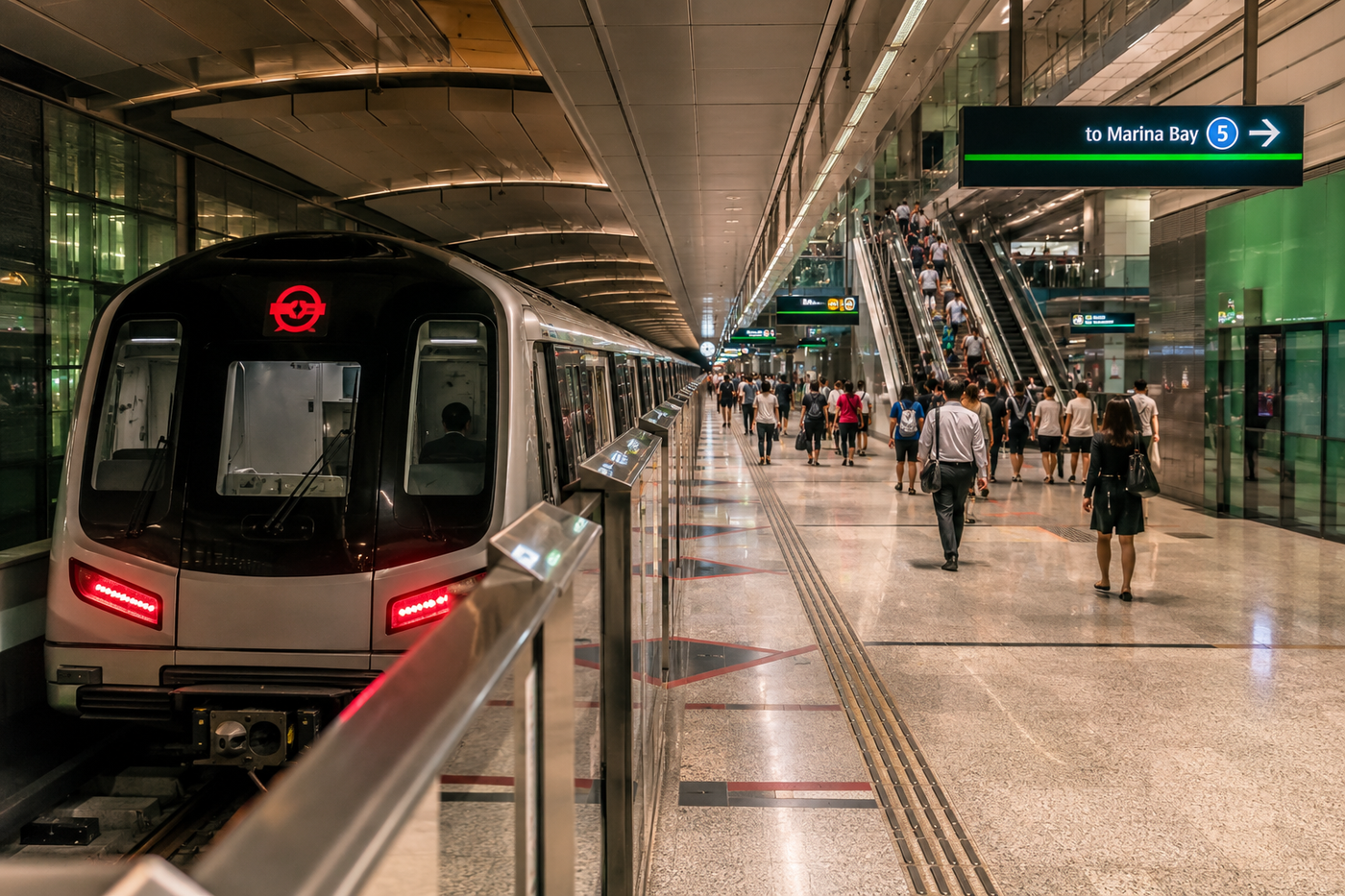
The MRT is fast, clean, and covers almost everywhere a tourist needs to go. EZ-Link or SimplyGo handles the fare. Buses fill in the rest of the network. Singapore is small, most journeys take under 30 minutes.
Taxis are easy to hail and use meters honestly, but they are expensive compared to the MRT. The Grab app is the default for ride-hailing and works with foreign cards. Standard taxis from companies like ComfortDelGro can also be booked through the Grab app.
Walking between the major neighbourhoods is feasible but Singapore's heat and humidity make long walks unpleasant. Plan around indoor connections, much of central Singapore is connected by air-conditioned underground walkways and shopping centres.
Singapore money FAQs
Singapore uses the Singapore dollar (SGD). In mid-September 2026, 1 SGD was about ₹75.63 at the mid-market rate, so S$100 is roughly ₹7,563. Singapore is close to cashless, with cards and QR working nearly everywhere including hawker centres, so most Indian travellers load a forex card and carry only a small amount of cash.
Indian residents can carry up to USD 3,000 equivalent in foreign currency notes per trip. Anything above that goes on a forex card or as a wire transfer. Singapore has a separate rule on its own side: cash or bearer instruments of S$20,000 or more must be declared on arrival.
Only if you are carrying S$20,000 or more, in any currency combination, including bearer instruments. The declaration is form NP727, submitted online within 72 hours before arrival through the e-727 service, the MyICA app, or alongside your Singapore Arrival Card. Below that threshold nothing is required.
SGD is the ISO currency code for the Singapore dollar, written as S$ locally to distinguish it from other dollars. One Singapore dollar divides into 100 cents. Brunei dollars circulate at par in Singapore under a long-standing currency interchangeability agreement, though most shops will still prefer SGD.
No. Indian rupees are not accepted by shops, restaurants, taxis or the MRT in Singapore, and INR is not freely exchangeable there. Buy Singapore dollars in India before you fly, or load a forex card. Carrying rupees to change on arrival is the most expensive way to do it.
Only above the threshold. Tax collected at source applies at 20 percent on LRS spending beyond ₹10 lakh per person per financial year. Most Singapore leisure trips stay well under that, so no TCS applies. If you do cross it, the TCS is recoverable against your income tax when you file your return.
The Singapore side is the cheap part. DBS, OCBC, UOB and the other major bank ATMs accept foreign cards reliably, and the bulk of what a withdrawal costs is your Indian bank's foreign currency markup, its flat international ATM fee, and the GST on both. Our guide to ATMs in Singapore works through the full cost of one withdrawal.
Always choose Singapore dollars. When a terminal offers to bill you in rupees, that is dynamic currency conversion, and the machine operator sets the rate rather than your card network. It typically adds several percent on top of whatever your card already charges. This comes up most at hotels, department stores and Changi duty free.
Visa and Mastercard work almost everywhere, including taxis, the MRT and most hawker stalls. American Express is accepted at larger hotels and restaurants. RuPay has effectively no acceptance in Singapore, so it should not be your main card. Apple Pay, Google Pay and Samsung Pay all work widely.
No. Most restaurants and hotels add a 10 percent service charge plus 9 percent GST, shown as ++ on menus, which lifts a S$50 meal to about S$59.95. Additional tipping is not expected. Hawker centres and food courts add neither, and no tip is expected there either.
A forex card for almost everything, with a small cash float. Singapore is among the most cashless economies in the world, and cards cover retail, restaurants, taxis and transit. Cash still helps at older hawker stalls, wet markets and small shops in Chinatown and Little India.
You need it to. Online payments in Singapore trigger 3D Secure verification, which sends a one-time password to your registered Indian mobile number. Keep the number reachable on roaming or use an eSIM that keeps it active, or bookings for attractions like Universal Studios and the Night Safari can fail at the OTP step.
Sort your Singapore Dollar before you fly
Lock the rate, carry the right mix of cash and card, and know today’s SGD rate before you book.
Buy singapore dollar before you fly
See your Matrix rate and the applicable charges before you confirm. Order online for doorstep delivery or collect from your nearest branch.
RBI Authorised Dealer Category-II, Licence No. NDL-ADII-0023-2023 · Same-day delivery · Serving 3 lakh+ customers