


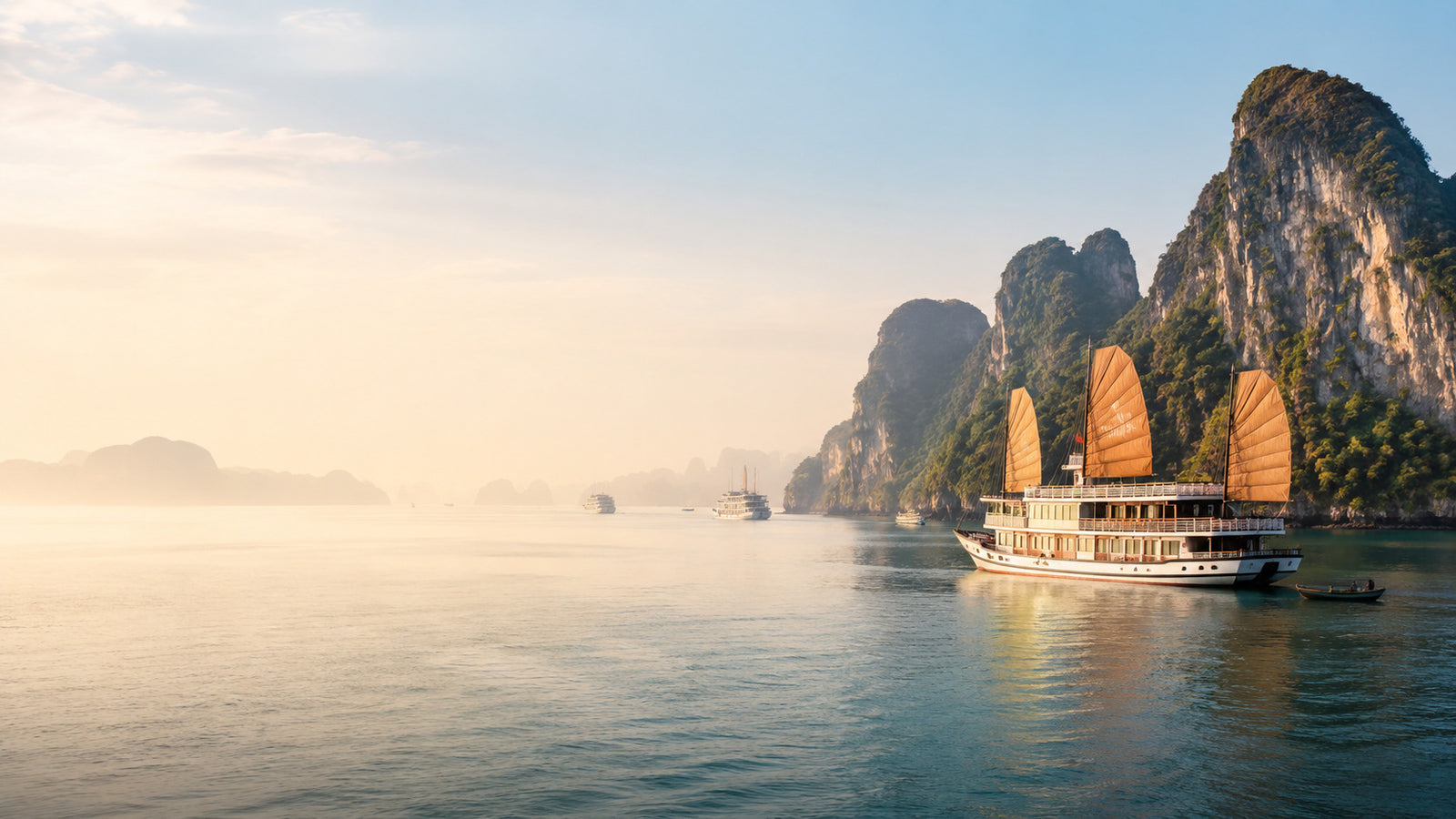
Vietnam Travel Guide
A practical guide to Vietnam covering Vietnamese dong, USD, cards, cash, transport, scams, and what travellers should know before visiting.
Vietnam money at a glance
Currency
Vietnamese Dong (VND): Numbers are large. For example, VND 100,000 is roughly ₹350. Carry USD as a backup.
Cards & ATMs
Vietcombank, BIDV, Sacombank ATMs are reliable. Skip standalone airport / hotel ATMs. Cards in nicer restaurants only.
Visa
eVisa: Indian passport holders can apply online. It costs USD 25 for a 30-day, single-entry visa and is available up to 7 days before travel.
Transport
Grab everywhere. Sleeper trains Hanoi–Da Nang–Ho Chi Minh are scenic. Domestic flights cheap and frequent.
Etiquette
Bow slightly when greeting elders. Remove your shoes before entering temples and homes. Bargain politely at markets, starting at 30–50% below the asking price.
Common mistakes
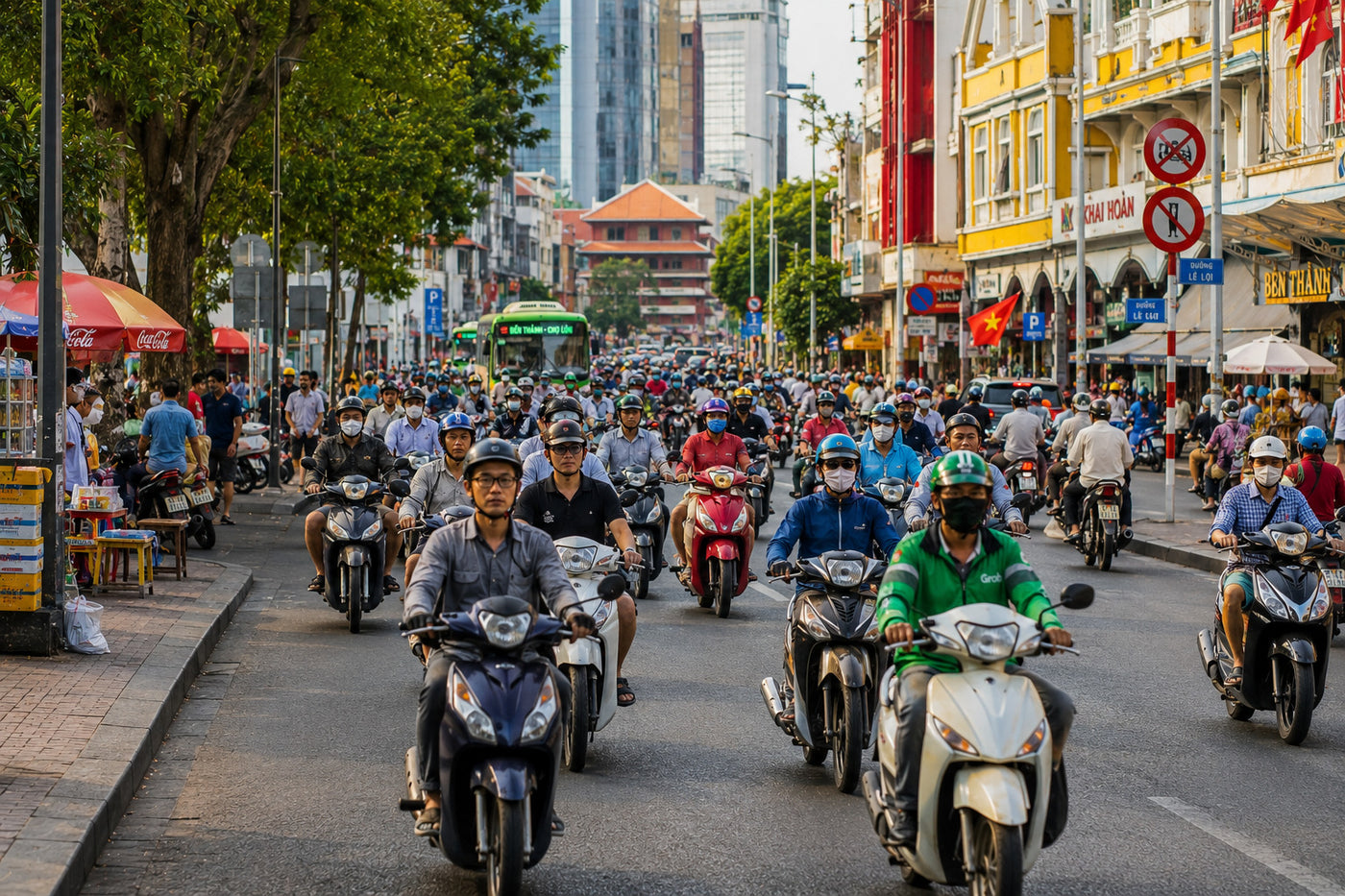
Watch for the "wrong change" scam and count your VND carefully. Cross roads slowly and predictably so scooters can move around you.
Vietnam is cash-heavy. USD widely accepted in tourist areas; VND for everything local.
Best places to visit in Vietnam
Most Vietnam trips are built from two or three of these. Individual guides are being written.
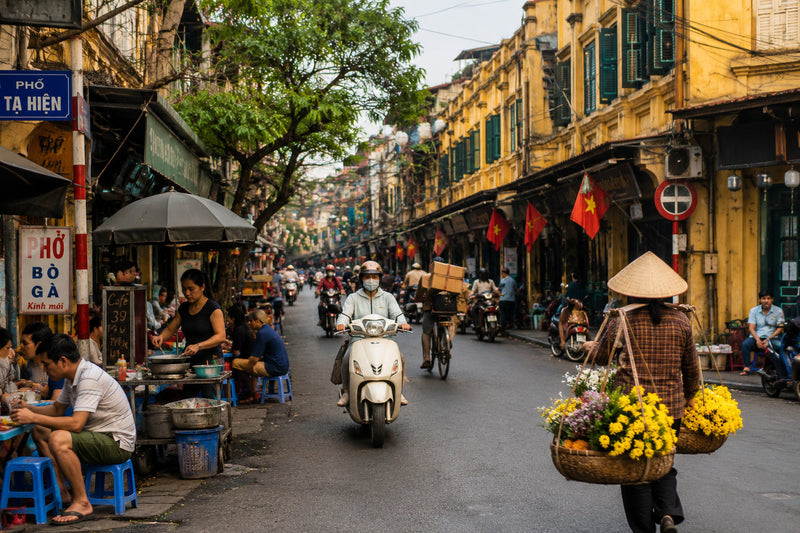
Hanoi
The Old Quarter, and the best street food
Read the Hanoi guide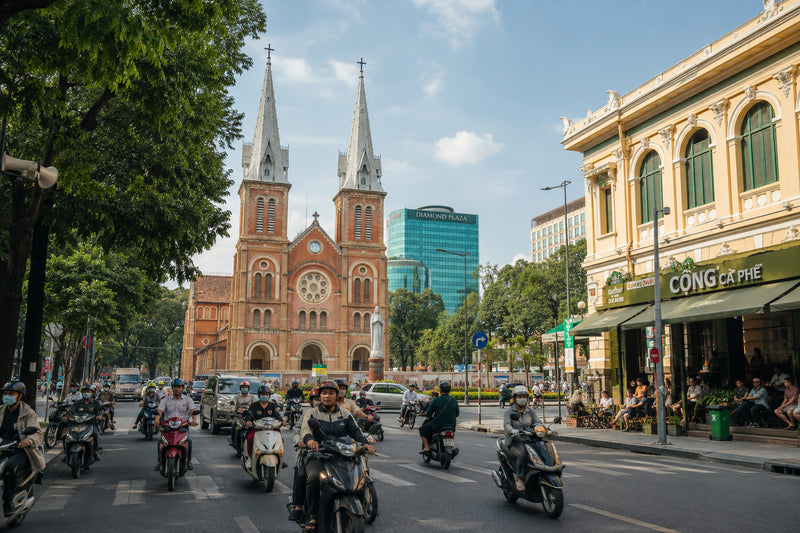
Ho Chi Minh City
The commercial capital, and the most card-friendly
Read the Ho Chi Minh City guide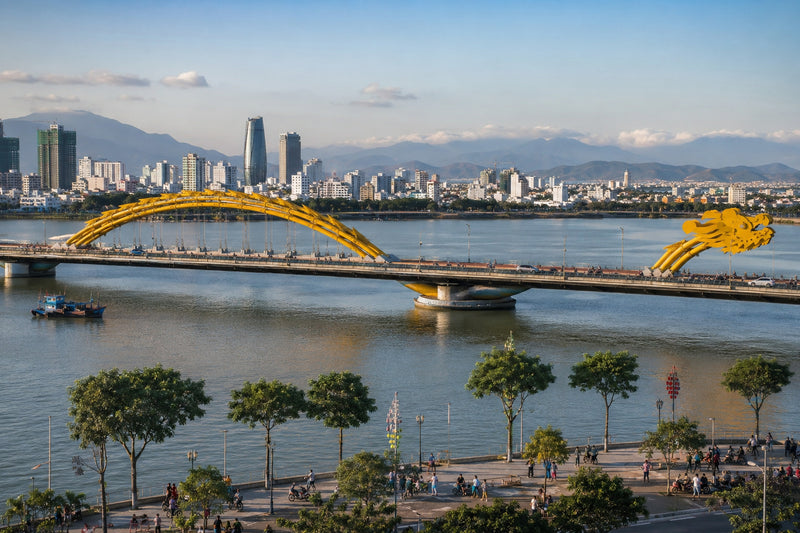
Da Nang
Beaches and the Marble Mountains
Read the Da Nang guide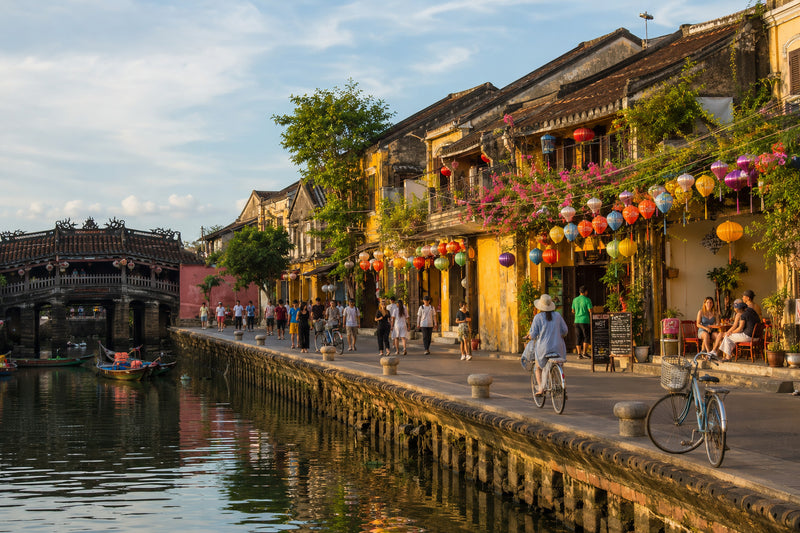
Hoi An
Lantern-lit old town and tailors
Read the Hoi An guide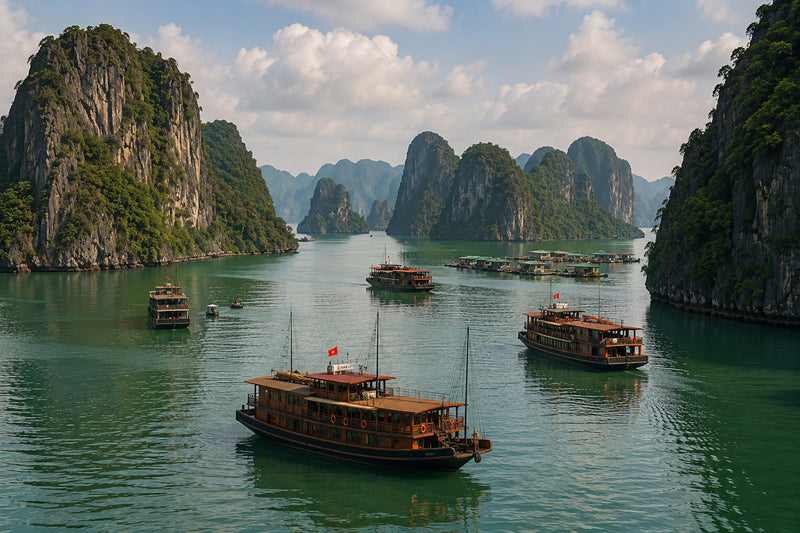
Ha Long
The limestone bay, usually an overnight cruise
Read the Ha Long guide| City | In short |
|---|---|
| Hanoi | The Old Quarter, and the best street food |
| Ho Chi Minh City | The commercial capital, and the most card-friendly |
| Da Nang | Beaches and the Marble Mountains |
| Hoi An | Lantern-lit old town and tailors |
| Ha Long | The limestone bay, usually an overnight cruise |
What things cost in Vietnam
| Coffee | VND 30,000 |
|---|---|
| Grab ride | VND 80,000 |
| Hotel (3-star) | VND 1,200,000 |
| Pho bowl | VND 50,000 |
Budget roughly ₹2,600 to ₹7,400 per person per day on the ground, two sharing a room and excluding flights.
Money in Vietnam, in detail
Vietnam is one of the most rewarding short-trip destinations from India in 2026. The eVisa is straightforward, the food is exceptional, and a week-long trip from Hanoi to Ho Chi Minh City costs a fraction of equivalent European destinations.
The dong has many zeros. VND 100,000 sounds like a lot but is around ₹350. The simplest mental model: drop three zeros and divide by three to get the rough rupee equivalent.
The Dong, the Dollar, and the Rupee
The Vietnamese dong runs in big numbers. A bowl of pho costs around 50,000 dong. A mid-range hotel night runs into the millions. The trick most travellers miss on day one is dropping the last three zeros in your head, divide by a thousand and the number becomes manageable.
Vietnam has a soft dual-currency culture. Hotels, tour operators, dive shops, and high-end restaurants will quote in US dollars. Street food, taxis, markets, and most shops quote in dong. You will spend in both. USD is widely accepted in Hanoi, Ho Chi Minh City, Da Nang, and the major resort towns, though paying in dong almost always gets a better effective rate.
Rates move every day. The number on Google is the live rate, what authorised dealers use to trade with each other. It is not the rate most banks and forex providers actually sell at. They build a markup into their selling price, usually 2 to 4 percent, and it never appears as a separate line item on the bill. On a forex order of a couple of lakh rupees, that markup quietly adds up to thousands.
How Much Cash to Carry
Vietnam is a cash economy for everyday spending. Street food, taxis, markets, family-run guest houses, intercity buses, and most domestic experiences run on cash. Cards work at four-star and five-star hotels, large restaurants in Hanoi and Saigon, supermarket chains, and big tourist sites. Outside that, plan to pay cash.
There is one important constraint travellers should know. Vietnamese law restricts the export of large amounts of dong out of the country. The practical rule for a tourist is to convert the bulk of your forex on arrival in Vietnam, spend it, and avoid leaving with a wallet full of dong. Carry small leftover amounts back if you must, but do not stockpile dong in India before flying. The cleanest approach is to carry US dollars from India and convert on the ground, or load a forex card with USD.
A Sensible Cash Plan
Carry US dollars from India in clean, undamaged notes, torn, marked, or pre-2009 series notes are routinely refused at Vietnamese exchange counters. Convert in batches on arrival rather than all at once. Keep a forex card loaded with USD as backup, both for ATM withdrawals in Vietnam and for hotel and restaurant payments where cards are accepted.
Indian residents can carry up to USD 3,000 equivalent in foreign currency notes per trip to Vietnam. Anything beyond that goes on a forex card or as a wire transfer. Most leisure trips will not approach the ₹10 lakh per person per financial year TCS threshold, so no tax collection at source applies.
Where to Exchange Money
The cheapest forex you will buy is the USD you buy in India before flying. Indian airport counters and tourist-area money changers run a noticeable markup over the interbank rate. Hotel front desks run worse. Online forex providers are typically a few percent better than both, and show you the rate and the applicable charges before you confirm the order.
Inside Vietnam, gold shops in Hanoi's Old Quarter and the Ben Thanh Market area in Saigon historically offer the best USD-to-dong rates, often better than banks. Major banks like Vietcombank, BIDV, and Sacombank are reliable and only slightly worse. Avoid airport exchange counters and hotel front desks, they run several percentage points off the mid-market rate.
The cleanest approach for an traveller: order USD for door delivery before flying, carry the bulk in cash, load some on a forex card as backup, and exchange in batches at gold shops or banks once on the ground.
Cards in Vietnam
Visa and Mastercard are accepted at four-star and five-star hotels, large restaurants, supermarket chains, big-name shops, and most established tour operators in Hanoi, Saigon, Da Nang, and Hoi An. Acceptance drops sharply outside those circles. American Express works at international hotel chains but not much else. JCB has decent acceptance through Japanese investment in the country. RuPay has effectively no acceptance.
Apple Pay and Google Pay work at most card terminals that accept contactless. Local QR wallets like MoMo, ZaloPay, and VNPay are everywhere on signs but do not accept foreign-issued cards for top-up. Travellers cannot use them.
Two Things Indian Cardholders Should Know
Online payments in Vietnam often trigger 3D Secure verification, which means an OTP to your registered Indian mobile number. Keep your Indian SIM active on roaming, or use an eSIM that keeps the number reachable. Otherwise online bookings, particularly for trains and domestic flights, fail at the OTP step.
At hotels and large restaurants, the card machine sometimes asks whether to charge in dong or in your home currency. Always pick dong. The home-currency option is dynamic currency conversion and adds a markup of several percent on top of whatever your card already takes.
ATMs in Vietnam
ATMs are everywhere in Hanoi, Saigon, Da Nang, and most tourist towns. The trick is choosing the right one. Foreign-card-friendly ATMs from HSBC, ANZ, Citibank, and Vietcombank tend to charge moderate fees and dispense reliably. Local-only ATMs sometimes refuse foreign cards or charge punitive fees.
Withdrawal limits per transaction tend to be lower than what travellers are used to, often capped at 2 to 5 million dong (a relatively small amount in real terms) per withdrawal. Plan multiple withdrawals if you need cash for a multi-day trip outside the cities.
Skip the airport ATMs in Hanoi and Saigon for anything beyond emergency cash. The fees are high and the rates are poor. Walk into the city, find a Vietcombank or HSBC branch, withdraw there.
The fees, the banks worth using and the conversion screen to decline are covered in full in our guide to ATMs in Vietnam.
What You Will Spend Each Day
On the ground, daily spending splits into three rough tiers.
Backpacker: dorm bed in a hostel, two pho or banh mi meals, one cheap restaurant dinner, local buses or grab bikes. Vietnam is one of the cheapest serious-travel destinations in Asia at this tier.
Mid-range, where most travellers land: a three-star hotel in the city centre, two restaurant meals a day, a private car for day trips, paid attractions and museums, a mid-range cooking class or boat tour every couple of days.
Premium: four-or-five-star hotel, fine-dining restaurants, private guides, helicopter or seaplane transfers, the high-end resort wings of Phu Quoc and Da Nang. Comfortable rather than extravagant by Indian premium standards.
A 7-day mid-range trip for two is one of the better-value Southeast Asian holidays you can plan. Flights and hotels are usually paid in India before departure and sit on top.
Getting Around
Domestic flights, sleeper trains, and tourist buses cover the long distances. The country is over 1,600 kilometres top to bottom, and trying to do it all by road is exhausting. Most itineraries fly between Hanoi, Da Nang, and Saigon, and use ground transport for shorter hops.
Inside the cities, Grab is the default for taxis and bike-taxis. Download it before flying. Pay through the app or in cash. Avoid hailing taxis off the street unless they are from established companies like Mai Linh or Vinasun, meter scams are common with independents.
Renting a motorbike is tempting and it is the genuine Vietnam experience for some travellers. It is also where most foreign tourist injuries happen. Indian licences are not technically valid for motorbikes in Vietnam, and rental scams over scratches and damage are common. Skip it unless you are an experienced rider and have read the trip reports.
Vietnam money FAQs
At the verified mid-market rate on 17 September 2026, 100,000 Vietnamese dong is about ₹370, and 20,000 INR converts to roughly 5.4 million dong. The dong has a lot of zeros, which is the single most common cause of tourist mistakes, because a 500,000 note and a 50,000 note look alike in low light. A rough mental shortcut is to drop three zeros and multiply by about 3.7 to get rupees.
Carry US dollars or load a forex card and withdraw dong locally. INR to VND is not a widely quoted pair, so converting rupees directly in Vietnam usually means paying two spreads instead of one. Buying USD in India before you fly, or loading a forex card, both beat converting rupees on the ground.
Indian residents can carry up to USD 3,000 equivalent in foreign currency notes per trip, with anything above that going on a forex card or as a wire transfer. Vietnam sets its own thresholds: a customs declaration is required for more than USD 5,000 equivalent in foreign currency, or more than 15 million dong. The same two thresholds apply on the way out. Most leisure travellers are well under both.
Up to 15 million dong without declaring it, and more only if you declare at customs. Vietnam applies the same thresholds leaving as arriving. The practical rule is to convert what you need after arrival, spend it down, and change anything left before you reach the airport, where the rates are worst.
Cash for most of the day. Street food, taxis, markets, family-run guest houses and intercity buses are cash-only. Visa and Mastercard work at four and five-star hotels, large restaurants in Hanoi and Saigon, supermarket chains and established tour operators, and little else.
No. MoMo, ZaloPay and VNPay are on signs everywhere but are tied to Vietnamese bank accounts and do not accept foreign cards. UPI is not a payment method in Vietnam either. Plan on dong in cash, with a Visa or Mastercard for hotels and larger restaurants.
HSBC, Citibank and Vietcombank machines take foreign cards reliably and charge moderate fees. Local-only ATMs sometimes refuse foreign cards or charge punitively. Withdrawal limits are lower than Indian travellers expect, often 2 to 5 million dong per transaction, so a multi-day cash budget means several withdrawals. Our guide to ATMs in Vietnam works through what one costs.
Always choose dong. When a terminal offers to bill you in rupees, that is dynamic currency conversion, and the machine operator sets the rate rather than your card network. It typically adds several percent on top of whatever your card already charges. This comes up most at hotels and larger restaurants.
Visa and Mastercard work at larger hotels, big restaurants, supermarket chains and established tour operators in Hanoi, Saigon, Da Nang and Hoi An. American Express is limited to international hotel chains. RuPay has effectively no acceptance, so it should not be your main card.
Only above the threshold. Tax collected at source applies at 20 percent on LRS spending beyond ₹10 lakh per person per financial year. Most Vietnam leisure trips stay well under that, so no TCS applies. Above it, the TCS is recoverable against your income tax when you file.
Among the cheapest serious destinations in Asia. A mid-range day on the ground runs roughly ₫600,000 to ₫1,400,000 depending on the city, about ₹2,200 to ₹5,200 per person, before flights and accommodation. Street food and local transport are where the value is.
Decades of inflation left the currency with a very high nominal value, so ordinary prices run into the hundreds of thousands. The practical risk is note confusion: the 500,000 and 50,000 notes look similar in low light. Check the number of zeros before handing a note over, particularly with taxi drivers at night.
Sort your Vietnamese Dong before you fly
Lock the rate, carry the right mix of cash and card, and know today’s VND rate before you book.
Buy vietnamese dong before you fly
See your Matrix rate and the applicable charges before you confirm. Order online for doorstep delivery or collect from your nearest branch.
RBI Authorised Dealer Category-II, Licence No. NDL-ADII-0023-2023 · Same-day delivery · Serving 3 lakh+ customers