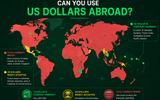
US Dollar
 Euro
Euro British Pound
 UAE Dirham
 Australian Dollar
 Singapore Dollar
LRS Limit 2026: USD 250,000 Rules & What Counts

Introduction
Let us say you want to send some money abroad from India, maybe for your child's fees, maybe to help out a relative, maybe to invest. The first thing to understand is that you cannot simply send any amount you wish. There is a ceiling on it, and that ceiling is called the LRS limit. LRS stands for the Liberalised Remittance Scheme, which you will also see written as the Liberalised Remittance Scheme, and it is set by the Reserve Bank of India. As things stand, the limit is USD 250,000 per person, in one financial year.
Now for most of us, whether we are travelling for a holiday or paying for a course abroad, that is a very large amount and more than we will ever need. But for parents paying hefty college fees, families buying a flat overseas, or people putting money into foreign investments, the limit can start to feel tight, and that is when planning matters. So in this guide, let us go through it slowly: what counts towards the limit, what does not, and what you can do if your genuine need happens to be larger.
What is the LRS, in simple words?
Think of the LRS as a standing permission from the RBI. It lets every Indian resident send up to USD 250,000 abroad in a year, and the year here means the financial year, from 1 April to 31 March. The nice part is that you do not have to go and ask the RBI separately each time. As long as you go through an RBI-approved bank or forex dealer, the permission is already there for you to use.
And it covers a lot of ground. You can use it for travel, for gifts to family, for college fees, for medical treatment, even for buying shares or property abroad. The one thing to hold on to is that the USD 250,000 is a single combined limit across all these uses put together. It is not a fresh USD 250,000 for each purpose.
Why does India have an LRS limit at all?
It helps to understand the thinking behind it. India keeps a watch on how much money flows out of the country, because that is part of how the RBI looks after the value of the rupee and our foreign exchange reserves. The LRS is really a balance between two things. On one side, it gives every resident a generous amount they can send out freely, no questions asked. On the other, the ceiling makes sure the total outflow stays within sensible limits.
Before this scheme came in back in 2004, sending money abroad meant filling forms and waiting for case-by-case approval from the RBI. The LRS swept all that away and replaced it with one simple standing allowance. The USD 250,000 ceiling is just what keeps the whole arrangement in balance.
The current limit and how it gets counted
The headline figure is easy enough, but a few details around it are worth knowing. First, the limit is per person, not per family. So each member of your family has their own USD 250,000. This means a family of four can together send up to a million dollars in a single year. And yes, children count as well, they simply use their allowance through a parent or guardian.
Second, the limit is added up across every dealer you use. Let us say you buy USD 50,000 worth of forex from one provider today, and another USD 50,000 from your bank tomorrow. You have now used USD 100,000 of your yearly limit. Every dealer can see your running total against your PAN, so there is no question of resetting it by simply moving to a different provider.
Third, the limit resets every 1 April, and whatever you do not use does not carry forward. So if you use only USD 100,000 this year, you do not get USD 400,000 next year. You simply start fresh at USD 250,000. And finally, everything is counted in US dollars. So even if you send euros or dirhams, the amount is converted into its dollar value on that day, and it is that dollar figure which goes against your limit.

If you are looking for the full mechanics of how a transfer actually moves through the system once you know your limit, our outward remittance guide walks through the process end to end, from choosing a provider to the money landing in the beneficiary's account.
What you are allowed to use the LRS for
The RBI permits a fairly long list of purposes, so let us cover the ones that come up most often. You can use it for holidays and personal travel, for gifts to relatives or friends living abroad, and for supporting close relatives who are settled outside India. You can use it for education costs, which includes fees, hostel, and living expenses, and for medical treatment in another country. Beyond that, you can invest in foreign shares, mutual funds, and bonds, buy property abroad, and even set up a small overseas venture, though that last one comes with extra rules. The one exception worth remembering is Nepal and Bhutan, where the LRS does not apply.
What the LRS does not cover
Just as important is knowing what falls outside it. You cannot use the LRS for margin trading or for buying lottery tickets abroad, nor can you send money to countries that sit on the FATF non-cooperative list. Trade payments made by businesses go through a completely different RBI route, because the LRS is meant only for individuals. And if your employer buys forex for your official travel, that sits on the company's books, not on your personal allowance.
How the LRS, TCS, and the A2 form work together
Whenever you send money abroad, three rules tend to come into play at the same time, so it helps to see how they fit. The LRS sets the yearly ceiling of USD 250,000. The A2 form is the short declaration you fill for each individual transaction, where you state the purpose of the money and confirm that you are still within your limit, and since an RBI circular dated July 3, 2024, this form is required for every remittance regardless of the amount, so there is no small-transfer shortcut. Our A2 form guide walks through every field if you want the detail.
And TCS is the advance tax that gets collected once you cross a threshold inside that ceiling, currently ₹10 lakh in a financial year. Here is how the rate itself depends on what the money is for:
|
Purpose |
TCS rate |
Threshold |
|
Education, funded by a recognised loan under Section 80E |
Nil, at any amount |
No threshold applies |
|
Education, self-funded |
2% on the amount above ₹10 lakh |
₹10 lakh per financial year |
|
Medical treatment, self-funded |
2% on the amount above ₹10 lakh |
₹10 lakh per financial year |
|
Overseas tour packages |
2% from the first rupee |
No threshold |
|
All other purposes (travel, family maintenance, gifts, investment) |
20% on the amount above ₹10 lakh |
₹10 lakh per financial year |
Source: TCS rates and thresholds under Section 394, Income-tax Act, 2025 (effective April 1, 2026; the corresponding provision was Section 206C(1G) of the Income Tax Act, 1961 before that date). Always confirm the current rate with your dealer or CA before a large remittance, since these figures have changed more than once in recent years.
One thing worth flagging clearly, since a lot of older material online has not caught up with it: from April 1, 2026, the Income-tax Act, 2025 replaced the 1961 Act entirely, and the TCS provision for foreign remittances moved from Section 206C(1G) to Section 394 of the new Act. The rule itself has not changed, only the section a CA or compliance document will now cite, so if you see Section 206C(1G) mentioned anywhere, that is simply the pre-April-2026 name for the same rule.
All three, the LRS ceiling, the A2 declaration, and TCS, apply together, and none of them can be skipped. The reassuring part is that any RBI-approved dealer handles all of this machinery for you. You give your PAN, you fill the A2 form, and you pay the TCS upfront, which comes back to you later as a refund when you file your return, our TCS refund guide covers that claim process step by step. Our purpose code guide also shows how the code you pick on your A2 form decides which row of this table applies to you, and if you want the fuller story of how these TCS rates came down from where they used to be, our Budget 2026 TCS guide has that history.

What if you genuinely need to send more than the limit?
Plenty of real situations run past USD 250,000, an MBA in the United States, a family flat in Dubai, a new business abroad. The good news is that there are perfectly legal ways to manage it. The most common one is to pool the family's limits. Since each member has their own allowance, a couple along with two adult children can together cover up to a million dollars, as long as each person is sending their own money for a genuine need. This is exactly how families commonly fund an overseas property purchase, where the combined limit needs each contributing family member to also be a co-owner.
Another option is to split the payment across two financial years. So you use this year's allowance before 31 March, and next year's from 1 April. A lot of parents do exactly this with college fees, paying one semester in March and the next in May. And for very large medical or education needs, you can actually apply to the RBI for special permission to go beyond the limit. It is not a quick process, but it does exist, and it is meant for genuine cases like these.
Common mistakes people make with the LRS
A few errors tend to repeat themselves, so they are worth flagging. People often forget that loading a forex card counts towards the limit just like a wire transfer does. Many assume that small gifts to family abroad are free, when in fact they count too. Some end up routing business payments through their personal LRS, which is a FEMA breach, since business forex has to go through the company's own route. Others invest abroad under the LRS and then forget to declare those holdings in Schedule FA of their return each year. And then there is the riskiest one of all, trying to get around the ceiling by sending money to a friend who then forwards it onward. That is a serious FEMA violation and can lead to heavy penalties, so it is simply not worth it.
How a Big Transfer Works
Let us put this together with an example. Suppose the Sharma family wants to buy a flat in London worth USD 600,000. Both parents have a USD 250,000 limit, so between them that covers USD 500,000, which leaves them USD 100,000 short. So here is what they do. They split the purchase across two years. The first USD 500,000 goes out in March, using both parents' limits for the current financial year. The remaining USD 100,000 goes out in April, using the father's fresh limit for the new year. The whole purchase stays neatly within the RBI rules. They use one dealer for the transfers, fill an A2 form for each one, and pay TCS at 20 per cent on the part above 10 lakh, which they later claim back when they file their returns.

Putting It All Together
When you step back and look at it, the LRS limit is actually one of the most generous personal forex allowances anywhere in the world. USD 250,000 per person every year, no separate RBI permission to chase, and easy access through any approved dealer. Pooled across a family, it quietly becomes a million dollars or more. So plan your year a little, use education loans where you can to bring down your TCS, split large payments across financial years, and keep your A2 forms and your returns in order. Handled sensibly, the limit will rarely get in the way of anything you genuinely need to do.
Matrix Forex is an RBI-authorised Authorised Dealer Category-II (License No. NDL-ADII-0023-2023), and our team keeps your A2 paperwork, purpose codes, and TCS calculation correct as a routine part of handling your remittance.
Frequently asked questions
Can NRIs use the LRS limit?
No. The LRS is meant only for resident Indians. NRIs use their NRE, NRO, and FCNR accounts instead, and those come with their own RBI rules, quite separate from the LRS.
Does buying foreign stocks on Indian apps count towards the limit?
Yes, it does. Whether you invest through an Indian platform or directly with a foreign broker, the amount counts towards your LRS limit either way.
What if I cross the limit by mistake?
That is treated as a FEMA breach. The right thing to do is contact the RBI as soon as you can and pay the compounding fee. Disclosing it yourself usually leads to a far smaller penalty than being caught later.
Are there countries where I cannot use the LRS?
Yes. You cannot send money to countries on the FATF non-cooperative list, which the RBI updates from time to time. Your dealer will let you know if a particular destination is restricted.
How much foreign cash can I bring back to India?
This one is separate from the LRS, but people ask it often, so it is worth answering. After your trip, you are allowed to retain up to USD 2,000 in foreign currency notes or traveller's cheques. Anything beyond that should be sold back to an authorised dealer within the time allowed.
Has the limit ever been changed?
Yes, several times since the scheme began in 2004. The current figure of USD 250,000 has been in place since 2015, and the RBI does review it from time to time.
Can I gift my full limit to my child abroad?
Yes, you can. Gifting USD 250,000 to a non-resident relative is allowed under the LRS. Do bear in mind that the person receiving it may face separate tax rules in their own country, so it is good for them to check locally.
Which section of the law now covers TCS on my LRS remittance?
Section 394 of the Income-tax Act, 2025, effective April 1, 2026. Before that date, the same rule sat under Section 206C(1G) of the Income Tax Act, 1961. The rates and thresholds are unchanged; only the section number and the underlying Act have changed.
Same-day delivery · RBI-authorised · No hidden charges
Get Free Callback →More from the Blog