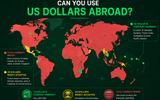
US Dollar
 Euro
Euro British Pound
 UAE Dirham
 Australian Dollar
 Singapore Dollar
Forex for Frequent Business Travellers: Smart Strategies to Save Lakhs

Introduction
A leisure traveller takes one to three international trips a year, and the cost of doing forex badly is annoying but bearable.
A frequent business traveller operates on completely different economics. Sales head visiting clients in Singapore monthly. Founder pitching investors in London quarterly. Project manager rotating through Dubai, Riyadh, and Doha every few weeks.
Across fifteen to twenty-five trips a year, suboptimal forex choices compound into a meaningful annual leakage, almost all of which is recoverable with a structural setup that takes a few hours to put in place.
This guide is for the business traveller who has stopped finding international travel exotic. The trip is part of the job. The forex setup needs to match.
Why the default corporate credit card setup leaks money
Most Indian companies issue corporate credit cards for international travel.
The default assumption is that this is the best option. The company pays the bill. The expense gets reimbursed. The traveller does not have to think about it. For an occasional traveller, this works fine.
For someone making fifteen-plus trips a year, three problems emerge.
The first is the foreign currency markup on the corporate card itself. Most Indian corporate credit cards charge a percentage markup on every foreign currency transaction abroad. Across a year of international card spend by a sales team, this markup quietly becomes a serious operating cost, paid by the company but rarely visible on individual expense reports because it is baked into the card statement.
The second is reimbursement-cycle exposure. When the traveller pays personally on an Indian credit card and gets reimbursed in rupees weeks later, the rupee has moved. If the rupee depreciated in that window, the traveller is out of pocket on the conversion. Across many trips this adds up to real personal loss per traveller.
The third is the airport-and-DCC tax. Frequent travellers are precisely the people who get caught by airport money changers, because they need cash immediately for the next leg, and by dynamic currency conversion, where the terminal asks INR or local currency and a tired traveller accepts INR. Both options carry significantly worse rates than the alternatives. Across many trips this is silent leakage.
The four-element forex setup for a frequent business traveller
A short structural setup recovers most of this leakage.
Element one: a multi-currency forex card kept perpetually loaded
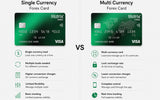
A multi-currency forex card holding several currencies on the same card means one card serves a Singapore-London-Dubai trip without re-issuing or re-loading at each leg.
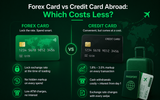
Loaded from an RBI-authorised dealer at the live interbank rate with a narrow markup, the card replaces the corporate credit card for every meal, taxi, hotel incidental, conference fee, and client coffee. The foreign currency markup that flows through the corporate card on these spends disappears.
For frequent travellers, the key is keeping the card loaded between trips rather than topping up trip by trip. A baseline balance covers most quarterly trips. Arrange a top-up from India through the branch whenever the balance drops below a threshold you set yourself. This eliminates the land-in-Heathrow-with-an-empty-card and rush-to-airport-WiFi-for-an-emergency-reload pattern.
Element two: an RBI-authorised dealer relationship, not a generic provider
The difference between a transactional forex provider (book online, get card, never speak to anyone again) and a relationship-based RBI Category-II authorised dealer matters more for frequent travellers than for one-off users.
A relationship means same-day card replacement when one gets blocked at midnight in Frankfurt. Weekend top-ups when a Sunday departure surprises you. Multiple currencies loaded in one transaction without per-currency fees. A single point of contact who knows your travel pattern.
Established Category-II authorised dealers like Matrix Forex run physical branches across major Indian cities precisely so corporate accounts and frequent travellers have a relationship to call when something goes wrong on a Tuesday night in Frankfurt.
For fifteen-plus trips a year, this relationship is worth measurable money, both in time saved and in problems avoided. Every business traveller has the story of the trip ruined by a card blocked at the wrong moment. The fix is a dealer relationship where the recovery path is one phone call rather than a customer service queue.
Element three: an expense categorisation system that separates billable from personal
Frequent travellers blur the line between billable trip expenses and personal items bought during travel.
The clearer this line, the cleaner the reimbursement, and the lower the personal forex leakage.
A simple structure. Corporate card or company-loaded forex card for billable items only, flights, hotels, client meals, ground transport, conference fees. Personal forex card for personal spend, souvenirs, personal meals on personal evenings, gifts. The line keeps reimbursement clean and minimises the personal rupee-conversion exposure described above.
Element four: a written corporate forex policy
For companies with multiple frequent travellers, an unwritten policy means each traveller does whatever they figure out individually.
Some buy at the airport, which is the most expensive option. Some use only credit cards, with the markup. Some use forex cards, which is best. Across the team, this inconsistency is an annual loss.
A written policy that mandates forex cards from a designated RBI-authorised dealer, no airport currency conversion, declining DCC at all terminals, and expense reporting in foreign currency with INR conversion at a company-defined rate, captures the savings systematically rather than relying on individual diligence.
Frequent-traveller-specific tactics that quietly save money
A handful of small habits make a noticeable difference over a year.
Time-zone-aware top-ups. Top-ups during Indian business hours are usually quick. With Matrix Forex, a family member can arrange a reload through the branch that reflects within about an hour. For a traveller landing in New York late on a Sunday with a low card balance, the fix is simple: arrange the top-up before departure rather than in transit. The fix is simple, top up before departure, not in transit. Build a habit of checking the card balance the day before any departure.
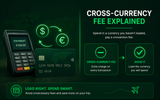
Currency choice for cross-border meeting trips. A trip that hits Singapore, Hong Kong, and Tokyo in five days is three currencies. A multi-currency card holds them all separately and swipes in the local currency at each location. Avoid the load-USD-and-let-it-auto-convert approach, because the cross-currency conversion charge on each transaction quietly defeats the purpose of using a forex card at all.
Hotel pre-authorisation handling. Hotels abroad routinely place a pre-authorisation hold of around 120 to 150 per cent of the expected bill on a card. On a forex card this temporarily blocks the corresponding amount, which can leave the card showing low available balance for several days post-checkout. For frequent travellers, this means keeping a comfortable buffer on the card balance against the actual spending plan. Otherwise mid-trip transactions decline because of a held balance from the previous hotel.
Flight delay and unexpected layover budget. A frequent traveller will, statistically, hit a long layover in Doha or Frankfurt every couple of years. The unexpected hotel and food spend in a connecting city is exactly when forex matters most, there is no time to find a good rate, no time to pre-load, just the need to spend immediately. A perpetually-loaded forex card with a connecting-city currency available solves this. An empty card and a rush to airport WiFi does not.
When the corporate credit card still wins
Forex cards do not replace corporate credit cards entirely.
Three categories where the corporate card is the right call.
Online flight bookings made from India in foreign currency, like booking a Delhi-London flight on a foreign airline's website that prices in GBP. The corporate credit card handles the foreign currency conversion through the bank, which is fine here because the alternative would be to load the forex card just for this single transaction.
Hotel chains with long-standing INR billing. Many international chains bill the Indian corporate office in rupees even for stays abroad. No foreign currency transaction occurs from the traveller's perspective, so the forex card has no role.
Reward points accumulation. Some corporate card programmes have travel-reward points that compound to meaningful value, lounge access, free hotel nights, fare upgrades. A foreign currency markup on a small share of annual spend specifically routed through the card for reward accumulation is a reasonable trade-off if the points are demonstrably used. Keep this volume small and intentional rather than letting it become the default route.
GST and TCS for business travel forex
Two tax dimensions worth being clear about.
Forex services in India attract GST on the service fee component, with GST at 18 per cent on that fee. For business travellers, this GST is creditable to the company under input tax credit rules, provided the invoice is in the company name and the GST registration is in place. A forex provider that issues B2B invoices with GST clearly identified is preferable to one that issues a generic retail invoice.
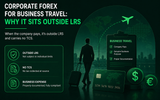
TCS implications. Business travel forex routed through company purchase rather than personal reimbursement is generally not subject to LRS-route TCS, since TCS on LRS applies to individual remitters. However, individual self-funded travel above 10 lakh in a financial year, including business trips reimbursed personally and converted at the time of travel, can attract TCS at the rate applicable to the purpose. The structural fix is to route business travel forex through company purchase rather than personal reimbursement, which avoids the TCS interaction with the traveller's personal LRS use.
TCS rates and thresholds change. Confirm current rates with the company CA before designing the corporate forex policy.
Putting It All Together
A frequent business traveller making fifteen-plus international trips a year is leaking real money annually on the default corporate-credit-card setup.
The recovery is structural. A multi-currency forex card kept perpetually loaded. An RBI-authorised dealer relationship for fast support and replacement. An expense policy that mandates declining airport conversion and dynamic currency conversion. Clear separation of billable from personal spend. The setup takes a few hours to put in place, and the recovery starts on the very next trip.
For a company with several frequent travellers, the policy-level recovery is large enough to make the forex card programme one of the higher-ROI corporate finance changes available, with no impact on traveller experience and a small uplift in convenience.
Frequently asked questions about forex for business travellers
What is the best forex strategy for frequent business travellers from India?
A multi-currency forex card kept perpetually loaded for daily spending (meals, taxis, incidentals) replaces the corporate credit card markup with a much narrower spread at the live interbank rate. Combine with a corporate credit card retained for large bookings and reward accumulation, an RBI-authorised dealer relationship for fast top-ups and replacement, and a written expense policy that mandates declining airport conversion and dynamic currency conversion.
How much can a business traveller save by switching from credit card to forex card?
For a frequent business traveller spending heavily abroad on card-eligible items like hotels, meals, ground transport, and conference fees, switching from a corporate credit card to a forex card removes the markup that the credit card was adding on every transaction. The exact saving depends on the corporate card's markup and the volume of annual spend, but for high-frequency travellers it is large enough to materially affect the corporate travel budget.
Should a company issue forex cards to all frequent travellers?
Yes, for any team where individuals make five-plus international trips per year. The cost of the forex card itself is minimal, and the per-traveller savings on the markup more than justify the administrative overhead of the policy. Most RBI-authorised dealers offer corporate forex programmes with consolidated billing, audit trails, and a single point of contact for the company finance team.
Is GST applicable on forex services for business travel?
Yes. GST applies on the service fee charged by the forex provider, the markup or commission, not on the foreign currency value itself. Standard rate is 18 per cent on the service fee. For B2B forex transactions, this GST is creditable as input tax credit if the company is GST-registered and the invoice is correctly issued in the company name.
Do business travellers face TCS on forex purchases?
Business travel forex routed through company purchase, with the company-paid business invoice, is generally not subject to TCS. However, business trips paid personally and reimbursed later may flow through the traveller's personal LRS, where TCS applies on cumulative LRS remittances above 10 lakh per financial year. Frequent business travellers reimbursing personally should be aware of this threshold and consider routing forex through company purchase to avoid the TCS interaction.
How fast can a forex card be replaced if blocked or lost during a trip?
Through an RBI-authorised dealer with active customer service, a blocked or lost forex card can be replaced and the balance moved to a new card within a day or two in major cities globally, sometimes faster. Some providers offer a linked emergency card that activates instantly when the primary card is blocked. For frequent travellers, asking specifically about replacement times in their key cities is one of the most important due-diligence questions when choosing a provider.
What is the difference between a corporate forex card and an individual forex card for business use?
A corporate forex card is issued in the company name with the traveller's name on the embossing, billed to the company, and tracked under the company's GST number for input credit. An individual forex card is held by the traveller personally and reimbursed via expense report. Corporate cards offer cleaner GST accounting and centralised admin. Individual cards offer flexibility for travellers who blur business and personal trips. Most companies end up using both, corporate cards for billable spend, individual cards as backup or for personal travel.
Can I keep multiple currencies loaded on the same forex card for multi-country business trips?
Yes. Multi-currency forex cards typically support several currencies on a single card. For a Singapore-Hong Kong-Tokyo trip, load SGD, HKD, and JPY separately on the same card. Transactions in each country debit from the corresponding currency wallet at the live rate without any cross-currency conversion charge. Single-currency cards force conversion at every leg, defeating the point of the forex card for multi-country trips.
Same-day delivery · RBI-authorised · No hidden charges
Get Free Callback →More from the Blog