


Vienna Travel Guide
Buy EurosVienna at a glance
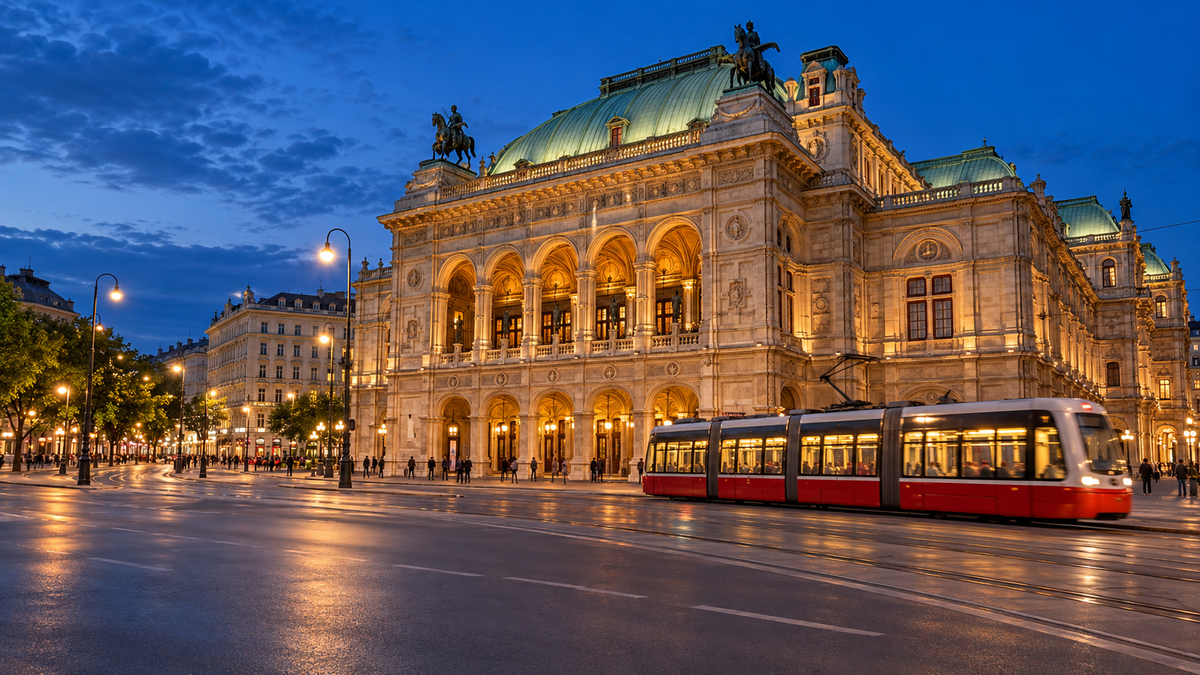
Vienna, Austria's capital, is a city of imperial palaces, coffee houses and music: the Hofburg and St Stephen's Cathedral in the old centre, Schönbrunn on the edge of town, and an opera house that sells standing places for a few euros on the day. Three to four days covers the main sights, and trains reach Salzburg in about two and a half hours.
Schönbrunn's park is free; inside the palace, the State Apartments tour costs €30 and the longer Palace Ticket €42, both with a timed slot and an audio guide (prices to 2 November 2026). Klimt's The Kiss hangs in the Upper Belvedere (€23), and the Kunsthistorisches Museum, now open daily with compulsory time slots, costs €22 online or €24 at the door. St Stephen's Cathedral is free to enter; the two towers, the catacombs and the audio-guided cathedral visit cost €8 each, or €29 for all of them with the cathedral museum.
Standing places at the Vienna State Opera cost €7 to €23 and are sold only on the day, online from 10 am and at the standing-room box office 80 minutes before curtain; seats run from about €16 to €265. A melange in a classic coffee house costs about €6 to €7.50, and a slice of Sachertorte at Café Sacher €11.50. Café Central, the best known of them, is closed for renovation until a planned reopening in winter 2026, with a pop-up round the corner at Freyung 3.
Air India's Delhi-Vienna flight, usually four times a week, is the only nonstop route between India and Austria. Indian passport holders need a Schengen visa, and hotels add Vienna's accommodation tax of 5% of the room price, rising to 8% on 1 July 2027.
What to see and do
The Innere Stadt is walkable end to end; Schönbrunn and the Belvedere are a short U-Bahn or tram ride out.
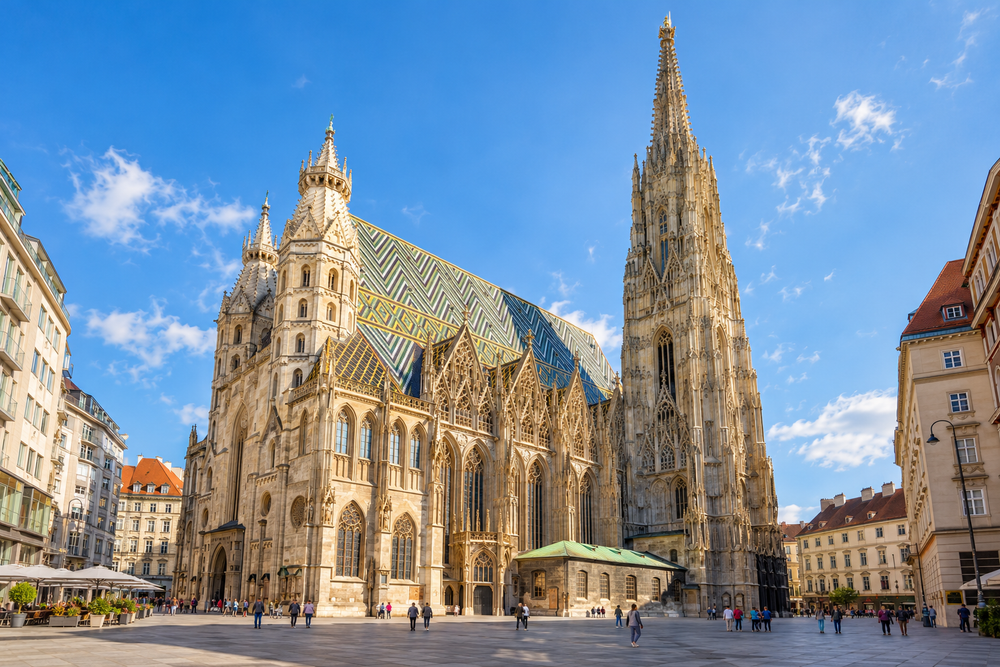
The Innere Stadt
The old centre inside the Ringstrasse: St Stephen's Cathedral, the Hofburg palace, the Spanish Riding School and the State Opera, all within 15 minutes of each other on foot. The cathedral is free to enter; its towers and catacombs cost €8 each.
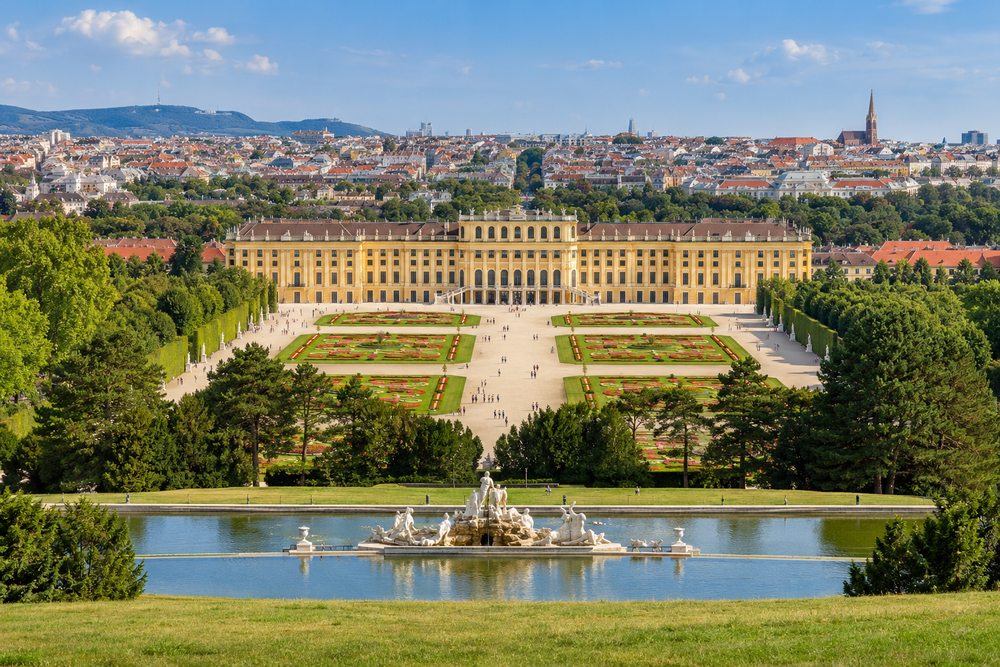
Schönbrunn Palace
The Habsburgs' summer palace, a short ride out on the U4. The park and the climb up to the Gloriette hill are free; the State Apartments tour costs €30 and the Palace Ticket €42, with timed entry.
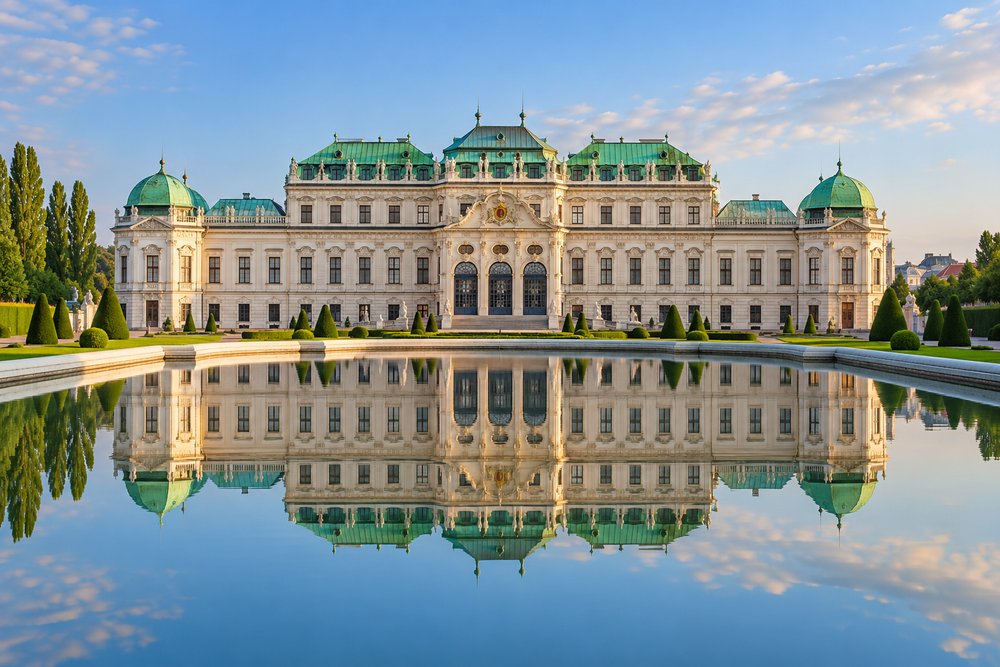
The Belvedere
Two baroque palaces facing each other across a formal garden, south of the centre. The Upper Belvedere (€23, time slot required) holds Klimt's The Kiss; Upper and Lower together cost €32.

The Naschmarkt
Vienna's best-known market, a long strip of food stalls, delis and cafés along the Wienzeile, with a flea market on Saturdays from 6:30 am to 3 pm. The stalls close on Sundays and public holidays.
Paying in Vienna
For the euro itself, the visa, the VAT refund and how much cash to carry, see the Austria travel guide, and before you fly, our forex guide for Schengen trips from India.
Vienna takes cards at hotels, restaurants, museums and most shops, and contactless is the norm, but Austrians still pay cash more than you might expect: in the central bank's 2025 survey, 55% of in-store payments were made in cash. Carry €50 to €100 in small notes for coffee-house tips, sausage stands, market stalls, small Heuriger wine taverns and the Prater, where many ride booths take cash only. Schönbrunn's garden ticket booths are the exception the other way: cards only.
Tip about 5 to 10% by telling the waiter the total you want to pay, rather than leaving coins on the table. Use bank ATMs such as Erste, Bank Austria, BAWAG or Raiffeisen rather than the independent machines in tourist areas, and when any ATM or terminal offers to charge you in rupees, choose euros. Shops, supermarkets included, close on Sundays, except at the main railway stations and the airport.
What Vienna actually costs
Set the length and style of your trip to see what to budget, in euros and Indian rupees.
Indicative, excluding international flights and accommodation, per person per day. Converted at the verified mid-market rate on 7 October 2026, €1 ≈ ₹108.24, not a Matrix board rate.
Budget roughly ₹4,870 to ₹19,480 per person per day on the ground, excluding flights and accommodation.
| Item | Cost |
|---|---|
| Melange in a classic coffee house | €6-7.50 |
| Schnitzel at Figlmüller (pork) | €21.90 |
| Single ride / 24-hour ticket | €3.20 / €10.20 |
| Schönbrunn State Apartments (to 2 November) | €30 |
| Upper Belvedere | €23 |
| State Opera standing place, on the day | €7-23 |
| Riesenrad, the Prater Ferris wheel | €14.50 |
Getting around
Wiener Linien runs five U-Bahn lines, trams and buses on one ticket: a single ride costs €3.20, a 24-hour ticket €10.20 (€9.70 in the WienMobil app) and a 7-day ticket €28.90. The 48- and 72-hour tickets ended in January 2026; the digital Vienna City Card now covers those lengths (€31 for 48 hours, €37 for 72), with discounts at sights. There are no gates, so carry a valid ticket at all times; inspectors check at random.
From the airport, a Railjet or REX7 train to Wien Hauptbahnhof takes 15 to 20 minutes and costs €5.50. Until the end of October 2027, while the S-Bahn line through the centre is closed for works, the City Airport Train runs as a bus to Wien Mitte (€14.90), and the S7 stops at St. Marx, where trams continue into town. A pre-booked taxi costs about €42 for up to four people; Uber and Bolt serve the airport too, and the airport warns against touts in the arrivals hall.
Railjet Xpress trains to Salzburg normally take 2 hours 25 minutes and run hourly from the Hauptbahnhof; until 12 December 2026, line works in Germany cut them to every two hours and add about 15 minutes. Bratislava is about an hour away by direct train, and Melk Abbey in the Wachau valley about an hour from Westbahnhof.
Common mistakes in Vienna
Trying to buy opera standing places in advance
They are sold only on the day: online from 10 am, and at the standing-room box office 80 minutes before the performance.
Riding without a valid ticket
There are no gates, but inspectors check at random. Buy a ticket in the WienMobil app or at a machine before you board.
Planning a Sunday of shopping
Shops and supermarkets close on Sundays, except at the main stations and the airport, and the Naschmarkt stalls are shut too.
Paying in rupees at the card machine
When a terminal or ATM offers to charge you in rupees, choose euros. The rupee option lets the operator set its own rate.
Vienna FAQs
The euro (EUR), as in the rest of Austria. On 7 October 2026 one euro was ₹108.24 at the mid-market rate, so a €3.20 tram ride is about ₹350 and a €7 melange about ₹760. Cards work almost everywhere, but carry some cash for coffee-house tips, market stalls and the Prater.
Three days covers the Innere Stadt, Schönbrunn, the Belvedere and an evening at the opera. Add a fourth for the museums, or a day trip to Bratislava or the Wachau valley.
Yes. Indian passport holders need a Schengen visa, applied for through VFS Global for the Austrian embassy in New Delhi, with centres in most large Indian cities. The fee is €90 for adults, decisions normally take 15 days, and you can apply from six months to 15 days before travel; the embassy warns of delays, so book early. ETIAS, the EU's planned travel authorisation, is only for visa-exempt travellers and does not replace the visa.
The cheapest quick option is a Railjet or REX7 train to Wien Hauptbahnhof, 15 to 20 minutes for €5.50. Until the end of October 2027 the City Airport Train runs as a bus to Wien Mitte (€14.90), and the S7 stops at St. Marx, where trams continue into town. A pre-booked taxi costs about €42 for up to four people.
A single ride costs €3.20, a 24-hour ticket €10.20 (€9.70 in the WienMobil app) and a 7-day ticket €28.90, valid on the U-Bahn, trams and buses. The 48- and 72-hour tickets ended in January 2026; the Vienna City Card covers those lengths.
They cost €7 to €23 and are sold only on the day of the performance: online from 10 am, and at the standing-room box office, which opens 80 minutes before curtain.
The park is free. Inside, the State Apartments tour costs €30 and the Palace Ticket, which covers more rooms, €42, both with an audio guide and a timed slot (prices valid to 2 November 2026; winter prices are published later). The Gloriette terrace and the private gardens share a €16 ticket, sold until 2 November.
Yes. Hotels add 5% of the room price before VAT and breakfast, rising to 8% from 1 July 2027.
More guides in Austria
Buy euro before you fly
See your Matrix rate and the applicable charges before you confirm. Order online for doorstep delivery or collect from your nearest branch.
RBI Authorised Dealer Category-II, Licence No. NDL-ADII-0023-2023 · Same-day delivery · Serving 3 lakh+ customers