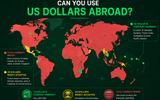
US Dollar
 Euro
Euro British Pound
 UAE Dirham
 Australian Dollar
 Singapore Dollar
What to Do With Leftover Foreign Currency After Your Trip

Coming home with unspent foreign currency leaves you two honest options. RBI rules let you keep up to USD 2,000 in foreign notes, around ₹1.9 lakh, with no time limit, and anything beyond that should be sold back to an authorised dealer or bank within 180 days of your return. Selling takes about ten minutes and a photo ID, and the only thing worth comparing between dealers is the buy-back rate they quote you. Everything below covers the limits and paperwork, and how to tell a fair buy-back rate from a weak one.
Most leftover currency gets neither treatment. It ends up in a drawer. Come back from Europe with 240 euros, roughly ₹26,500, and the drawer is where it usually goes, earning nothing and slowly turning into a problem.
How much foreign currency can you legally keep
The rules here come from FEMA, the law that governs all foreign exchange held by Indian residents. You may retain up to USD 2,000 or its equivalent in any currency, in notes or traveller's cheques, with no time limit at all. The limit applies to everything you hold combined, not per currency, so 1,000 dollars plus 800 euros plus a stack of pounds is measured as one total.
Foreign coins sit outside the limit entirely. You can keep those in any quantity, indefinitely.
There is one more route for people who deal in forex often. Amounts can be credited to a Resident Foreign Currency (Domestic) account with a bank, which has no ceiling. Most travellers will never need it.
How long do you have to sell it
Anything above the retention limit should be surrendered to an authorised dealer or bank within 180 days of your return to India. The window applies to currency notes, traveller's cheques and unspent balances on forex cards alike.
Holding beyond the window is a contravention under FEMA. In practice, the fix for a missed deadline is simple and undramatic: sell without further delay. But the cleaner habit is to deal with leftover currency in the first week or two after landing, while the trip paperwork is still in one place and the task is still small.
Where to sell leftover foreign currency in India
Three kinds of providers can buy your currency back: authorised dealer banks, RBI-authorised full-fledged money changers, and AD Category-II dealers. All of them operate under the same RBI framework, and all of them will issue you proper documentation for the sale.
The one place worth avoiding is the airport counter on the way home. Airport buy-back rates are typically the weakest you will be quoted anywhere, because the convenience is doing the selling. A traveller clearing immigration with 300 dollars in hand is not going to comparison-shop, and the counters price accordingly.
The better routine is unhurried. Get a buy-back quote from a dealer near you, by phone if you like, and compare it against the live interbank rate for that currency before you hand anything over.
How selling back works, step by step
The process is shorter than most people expect, and knowing it in advance removes the hesitation that keeps currency in the drawer.
Start by counting what you have, currency by currency, because quotes are given per currency and a mixed pile of euros, dirhams and baht is three separate conversations. Then call a dealer or two for their buy-back rate on each. Any provider comfortable with its pricing will quote on the phone without ceremony.
Check the quote against the live interbank rate, which any currency converter shows you in seconds. The gap between the two is the dealer's margin on the deal, and it is the only number that separates one provider from another.
Then visit with your notes and a photo ID. The dealer counts and inspects the notes, confirms the final amount, and pays you in rupees. Smaller amounts are commonly settled in cash and larger ones to your bank account, depending on the dealer's process. You receive an encashment certificate recording the sale, and the whole visit rarely takes longer than a coffee.
What documents you need
For most leftover travel money, a photo ID is all a dealer needs. Up to USD 500 equivalent, any standard identity document works, a driving licence included. Above that, carry your passport or another photo identity document, since dealers must keep a record for larger encashments.
You do not need the receipt from when you originally bought the currency. If you brought a large amount into India and declared it on a Currency Declaration Form at the airport, carry that form when you sell, but this applies to very few travellers.
The dealer issues you an encashment certificate recording the sale. Keep it with your travel papers. It is your proof that the conversion went through an authorised channel.
What rate you get when you sell back
Dealers quote two rates for every currency: the rate at which they sell to you and the rate at which they buy from you. The gap between the two is where a dealer earns, and it varies widely between providers. On ₹26,500 worth of euros, a weak buy-back rate can quietly cost ₹800 to ₹1,300 against a fair one.
The gap also varies by currency. Heavily traded currencies like the US dollar, euro and pound carry the tightest spreads, because dealers can move them on quickly. Less common currencies cost more to handle, and the buy-back rate reflects it.
So treat the sale the way you treated the purchase. Ask for the rate first, in writing or on the phone, before you commit. A dealer confident in its rate will quote it without ceremony.
Which currencies are easy to sell back
Major currencies sell back anywhere. US dollars, euros, pounds, dirhams, Singapore dollars, Australian and Canadian dollars, Swiss francs, yen and Thai baht are bought back by practically every authorised dealer in the country.
The picture changes with less common currencies. Vietnamese dong, Indonesian rupiah and several other regional currencies are bought back by far fewer dealers in India, and the rates on offer tend to be poor where they exist at all. Currencies under capital controls can be harder still.
The practical rule: if you are travelling somewhere with a currency that is not on the majors list, convert your leftover cash before you fly home, at a bank or established money changer in that country. A dong note that is easy to exchange in Hanoi can be close to unsellable in Kanpur.
Damaged, marked or withdrawn notes
Dealers buy notes they can sell on, which means the condition of your notes matters. Torn, taped, heavily soiled or ink-marked notes are commonly discounted or declined outright. Keep foreign notes flat, clean and out of back pockets if you expect to sell them later.
Withdrawn series are the bigger trap. Central banks retire note designs, and once a series stops being legal tender abroad, its resale value in India falls off quickly. The United Kingdom pulled its paper £20 and £50 notes from legal tender in September 2022, and travellers holding old paper notes in India found them far harder to sell afterwards. A note design you are holding today is not guaranteed to be sellable in three years, which is one more argument against the drawer.
Found an old stash of foreign currency at home
A common version of this problem arrives years late. A drawer cleanout turns up dollars from a trip in 2019, or a parent hands over euros left from a family holiday nobody quite remembers. The question is always the same: is this still money.
If the notes are a current series and in decent condition, yes. Any authorised dealer will buy them with the same photo ID process, and nobody asks when the trip happened. If the series has since been withdrawn, your options narrow to the few dealers who will still take them at a discount, or in some cases the issuing country's central bank. The longer a stash sits, the more likely it drifts into the second category, which is the strongest argument for selling currency while it is still ordinary.
What about money left on a forex card
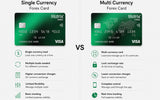
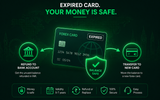
The 180-day surrender rule covers unspent forex on cards as well as cash. Unused card balance is encashed through the card issuer, which converts the balance back to rupees at the rate prevailing on the day and credits it to your bank account. There are no notes to carry and no counter visit, which makes card balances the easiest leftover of all to settle.
If you have another trip coming, speak to your issuer before encashing, since holding a loaded card for planned travel is common practice and the sensible option when the next trip is near. Matrix Forex Card holders can settle either way with a call to their branch.
Leftover currency from a business trip
Forex purchased by a company for an employee's business travel works differently. It is the company's foreign exchange, not the traveller's, and it sits outside the personal LRS framework. Unspent amounts go back to the employer, which surrenders them through its own authorised dealer.
The personal retention allowance does not stretch to cover corporate forex, so the simple rule for business travellers is to hand back what the trip did not use along with the expense report.
Why keeping it for next time usually costs you
Past the USD 2,000 allowance it breaks the rules, and even within the allowance the habit has quiet costs. The ₹26,500 in the drawer earns nothing while it waits. The exchange rate can move against your currency as easily as for it, and as the previous section covers, the notes themselves can age out of the market.
If the next trip is real and booked, keep what the rules allow. If it is a vague someday, sell while the money is still money.
Frequently asked questions
How much foreign currency can I keep after returning to India
You can retain up to USD 2,000 or its equivalent, around ₹1.9 lakh, in foreign currency notes or traveller's cheques, with no time limit. The limit covers all your foreign currency combined. Foreign coins can be kept in any quantity.
How long do I have to sell leftover foreign currency
Anything above the USD 2,000 retention limit should be surrendered to an authorised dealer or bank within 180 days of your return to India. The window applies to notes, traveller's cheques and forex card balances.
Can I sell foreign currency at the airport in India
Yes, counters at international airports buy currency back, and their rates are usually the weakest you will find. Unless you have a pressing reason, sell in the city after comparing a quote or two.
Can I deposit leftover foreign currency into my bank account
A regular rupee savings account cannot accept foreign cash. Either sell the currency to an authorised dealer or bank and deposit the rupees, or open a Resident Foreign Currency (Domestic) account, which can hold foreign currency without limit.
Can I sell foreign coins back in India
Dealers generally do not buy coins back, only notes. Since coins can be retained without limit, the practical advice is to spend them before your flight home.
Do I need the original purchase receipt to sell currency
No. A photo ID is enough for most amounts, and a passport or similar photo identity document for larger ones. The dealer issues you an encashment certificate for the sale.
Is there any tax when I sell foreign currency back
GST applies on the conversion under the standard slabs, the same as when you bought the currency. On a ₹50,000 sale it comes to ₹90. There is no other tax on simply converting your leftover travel money back to rupees.
Leftover currency is the easiest forex decision you will make all year. If you have foreign currency sitting at home, Matrix Forex will buy it back at any of its 9 branches across India, with the rate quoted upfront before you hand over a single note. Visit matrixforex.in to get a buy-back quote and turn the notes in your drawer back into rupees this week.
Same-day delivery · RBI-authorised · No hidden charges
Get Free Callback →More from the Blog