


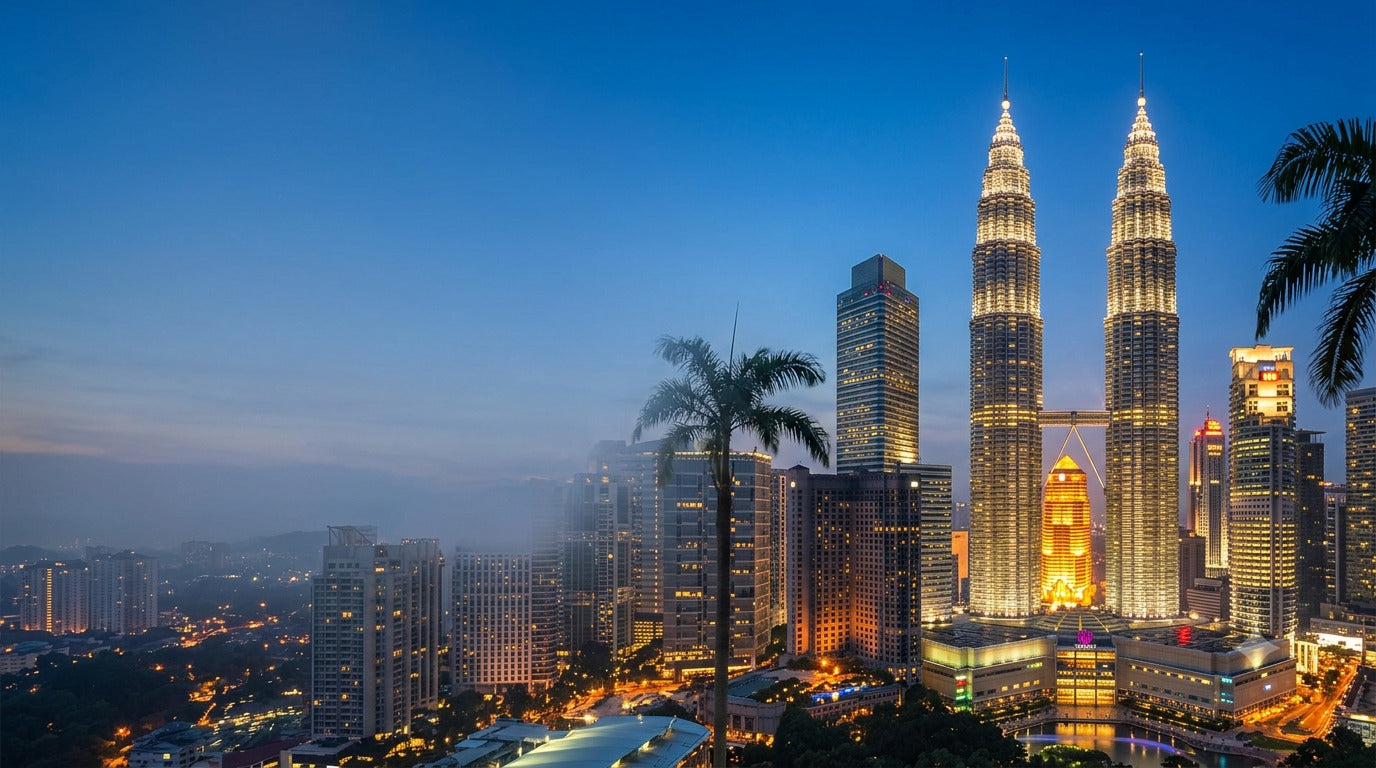
Malaysia Travel Guide
A practical guide to travelling to Malaysia, including currency, payment options, transportation, travel costs, and common travel mistakes to avoid.
Malaysia money at a glance
Currency
Malaysian Ringgit (MYR). Carry a moderate cash float for hawker stalls and pasar malam (night markets).
Cards & ATMs
Maybank, CIMB, Public Bank ATMs are reliable. Touch 'n Go eWallet is the local payment standard, set up via boarding-pass scan.
Visa
Visa-free entry for Indian passport holders for stays up to 30 days. MDAC online declaration required before arrival.
Transport
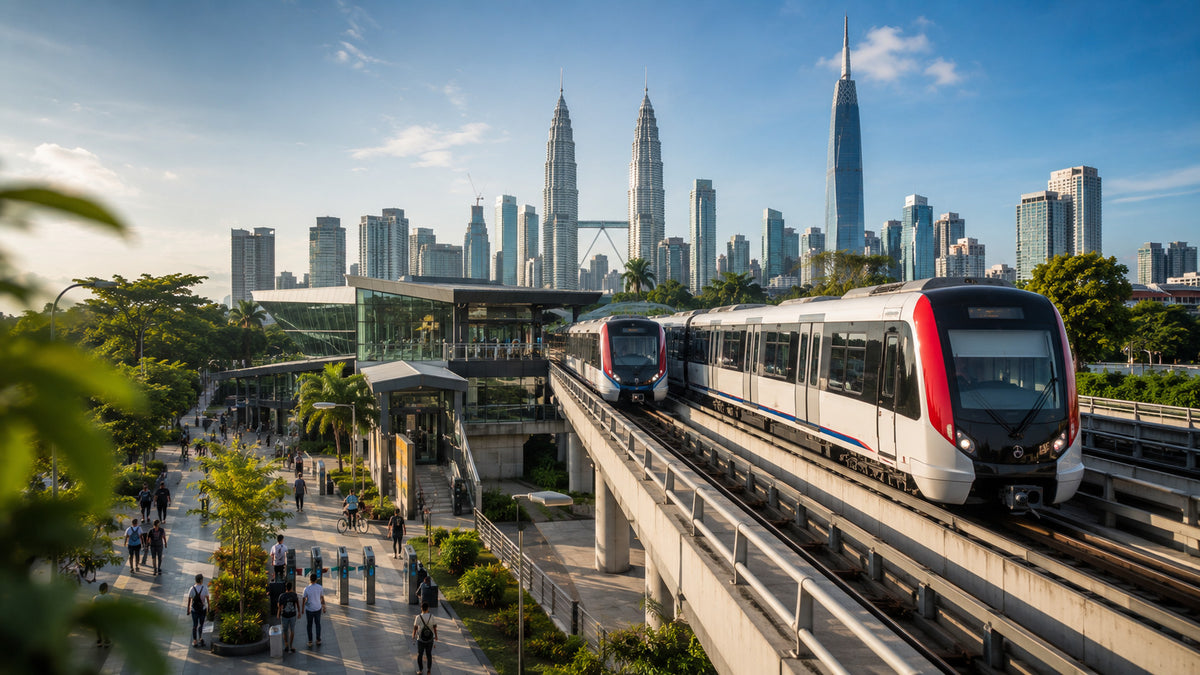
Grab works countrywide. KL has metro (LRT) + monorail + commuter trains. KLIA Express to/from airport in 28 minutes.
Etiquette
Modest dress at mosques. Right hand only when eating with hands. Halal-vegetarian options widely available.
Common mistakes
Skip the airport money-changers. Don't tip at hawkers. Refuse DCC at hotels. Carry a copy of MDAC at immigration.
Malaysia is mostly cashless in cities; cash matters in night markets and rural areas.
Best places to visit in Malaysia
Most Malaysia trips are built from two or three of these. Each has its own guide with costs in ringgit and rupees, what to see, and how to pay.
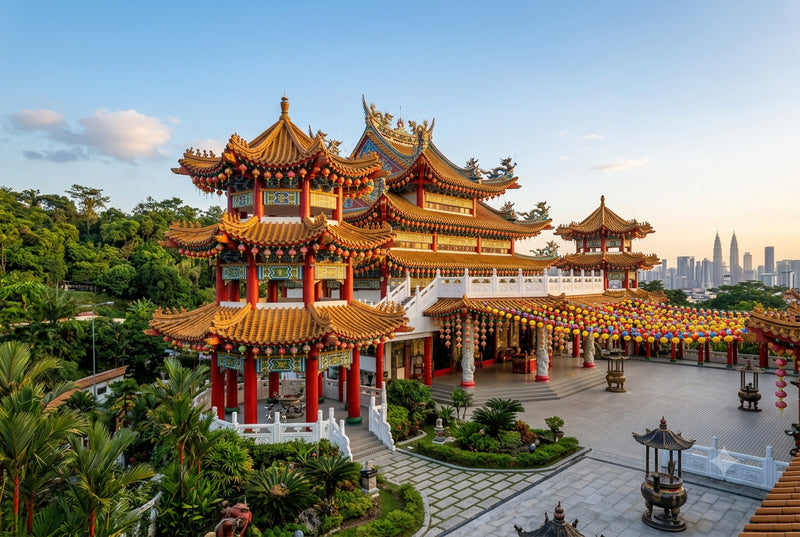
Kuala Lumpur
The Petronas Towers and the best transport links
Read the Kuala Lumpur guide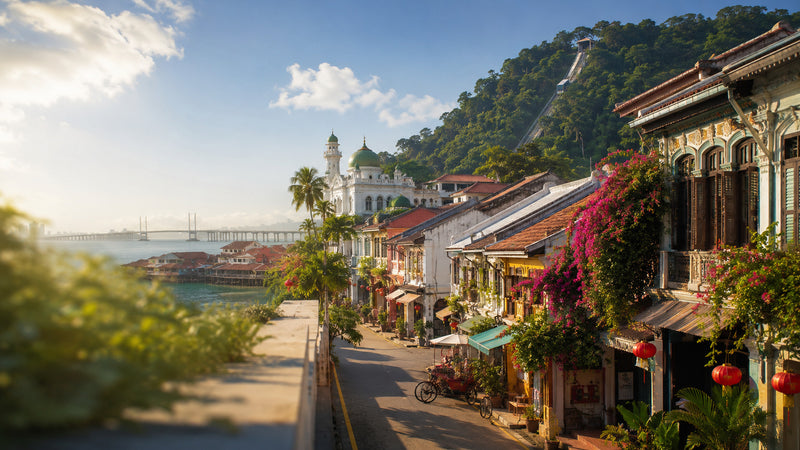
Penang
George Town street art and hawker food
Read the Penang guide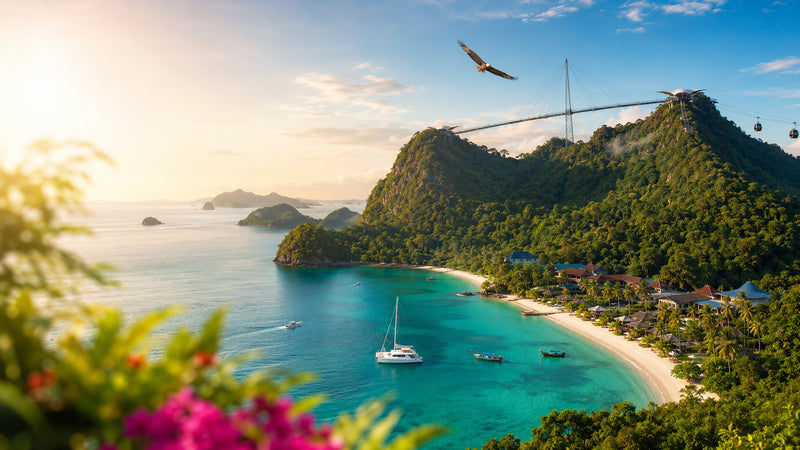
Langkawi
Duty-free islands and beaches
Read the Langkawi guide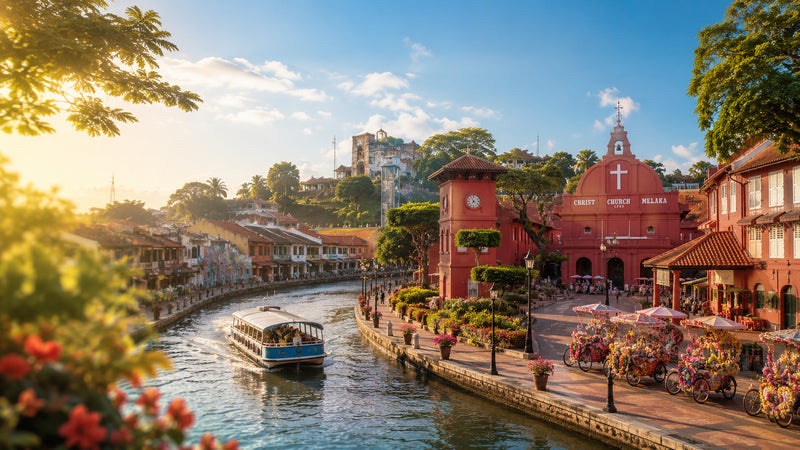
Malacca
Portuguese and Dutch trading history
Read the Malacca guide| City | In short |
|---|---|
| Kuala Lumpur | The Petronas Towers and the best transport links |
| Penang | George Town street art and hawker food |
| Langkawi | Duty-free islands and beaches |
| Malacca | Portuguese and Dutch trading history |
What things cost in Malaysia
| Coffee | RM 10 |
|---|---|
| Grab city ride | RM 15 |
| Hotel (3-star) | RM 280 |
| Hawker meal | RM 12 |
Budget roughly ₹2,850 to ₹6,700 per person per day on the ground, two sharing a room and excluding flights.
Money in Malaysia, in detail
Malaysia is one of the most under-rated short-trip destinations from India. Visa-free entry, English widely spoken, fantastic food, and a ringgit that buys roughly the same as a similar amount of Indian rupees.
The MDAC (Malaysia Digital Arrival Card) is a fresh requirement, fill it out three days before arrival. Without it, expect a long queue at immigration.
The Ringgit and the Rupee
The Malaysian ringgit (MYR) trades comfortably above the Indian rupee, and the mid-market rate sat at about ₹23.50 per ringgit on 18 September 2026. Mental maths is easy: multiply a ringgit figure by roughly 23 and a half for a rough rupee equivalent, so RM100 is about ₹2,350 and a ₹10,000 budget is about RM425. The ringgit has strengthened against the rupee over the past year, so older guides quoting 19 to 21 will understate what a trip costs today.
Rates move every day. The number on Google is the live rate, what authorised dealers use to trade with each other. It is not the rate most banks and forex providers actually sell at. They build a markup into their selling price, usually 2 to 4 percent, and it never appears as a separate line item on the bill. On a forex order of a couple of lakh rupees, that markup quietly adds up to thousands.
Malaysia is genuinely affordable. Hotels, dining, and most experiences are noticeably cheaper than Singapore or Bangkok. Petaling Street, Bukit Bintang, and the hawker corners of Penang offer some of the best food value in Southeast Asia for the spend.
How Much Ringgit to Carry
Malaysia sits in the middle of the cash-versus-card spectrum. Cards work at most hotels, branded restaurants, supermarket chains like Cold Storage and Jaya Grocer, big shopping malls in KL and Penang, and most established tour operators. Cash matters at hawker stalls, smaller family-run restaurants, traditional markets, intercity buses, and most local experiences in smaller towns and the East Malaysian states.
Malaysia has its own QR payment systems, DuitNow QR is the dominant one, which appear on signs everywhere. These are tied to local Malaysian bank accounts and are not directly usable by travellers.
A Sensible Cash Plan
Carry a moderate amount of MYR in cash from India for arrival incidentals, a hawker meal on day one, a taxi or train from KLIA, a bottle of water. Withdraw additional cash on the ground if needed. For most travellers, a forex card loaded with MYR plus a moderate cash cushion handles 90 percent of spending comfortably.
Indian residents can carry up to USD 3,000 equivalent in foreign currency notes per trip to Malaysia. Anything beyond that goes on a forex card or as a wire transfer. Most leisure trips will not approach the ₹10 lakh per person per financial year TCS threshold, so no tax collection at source applies.
Where to Buy Ringgit Before You Fly
The cheapest ringgit you will buy is the ringgit you buy in India before flying. Indian airport counters and tourist-area money changers run a noticeable markup over the mid-market rate. Hotel front desks run worse. Ordering online before you fly lets you see the rate and the applicable charges before you confirm, which the counters do not.
Inside Malaysia, the licensed money changers at Mid Valley, KLCC, and Pavilion in KL, and at the Komtar mall and Gurney Plaza in Penang, offer rates close to the mid-market rate, often better than banks. Major banks like Maybank, CIMB, and Public Bank are reliable and only slightly worse. Avoid airport exchange counters at KLIA and Penang International for anything beyond the immediate cash you need on arrival.
The cleanest approach: order a moderate amount of MYR for door delivery before flying, load the bulk on a forex card, and exchange in batches at licensed money changers if you need more cash on the ground.
Cards in Malaysia
Visa and Mastercard are accepted at most hotels, branded restaurants, supermarket chains, big shopping malls, and most established tour operators in KL, Penang, Langkawi, Kota Kinabalu, and Kuching. Acceptance drops at smaller restaurants, hawker stalls, and rural areas. American Express works at most international hotels and large stores, less reliably at small shops. JCB has decent acceptance through Japanese tourism volumes. RuPay has effectively no acceptance, so do not rely on it as your main card.
Apple Pay and Google Pay work at most card terminals that accept contactless. Samsung Pay also works. DuitNow QR is everywhere on signs but tied to local bank accounts. A standard Visa-based forex card works wherever Visa is accepted.
Two Things Indian Cardholders Should Know
Online payments in Malaysia trigger 3D Secure verification, which means an OTP to your registered Indian mobile number. Keep your Indian SIM active on roaming, or use an eSIM that keeps the number reachable. Otherwise online bookings, particularly for AirAsia and Firefly domestic flights, sometimes fail at the OTP step.
At hotels and large department stores, the card machine asks whether to charge in MYR or in your home currency. Always pick MYR. The home-currency option is dynamic currency conversion and adds a markup of several percent on top of whatever your card already takes.
ATMs in Malaysia
ATMs are everywhere in KL, Penang, Langkawi, and the major cities, Maybank, CIMB, Public Bank, RHB, and Hong Leong all have wide networks. Foreign cards work reliably at most of them. Withdrawal fees are moderate. Withdrawal limits per transaction are reasonable, often higher than in Sri Lanka or Vietnam.
Skip the airport ATMs at KLIA for anything beyond emergency cash. The fees are slightly higher than in-city ATMs. The licensed money changers at the airport offer better rates if you need a meaningful amount.
Which banks charge what, and how the fees stack up on a single withdrawal are covered in full in our guide to ATMs in Malaysia.
What You Will Spend Each Day
On the ground, daily spending splits into three rough tiers.
Backpacker: hostel dorm bed, hawker meals at places like Jalan Alor or Penang's Chulia Street, public transport, free attractions like the Batu Caves and Petronas Towers' outdoor area. Malaysia at this tier is one of the better value-for-money serious-travel destinations in Asia.
Mid-range, where most travellers land: a three-or-four-star hotel in Bukit Bintang or KLCC, two restaurant meals a day, a private car for day trips, paid attractions like the Petronas Towers observation deck, the KL Tower, and the Aquaria, and short island hops to Langkawi or Penang. East Malaysian additions like Mount Kinabalu treks or orangutan sanctuaries sit on top.
Premium: five-star hotels like the Mandarin Oriental KL, the St Regis Langkawi, or the Datai, fine-dining restaurants, private guides, and the high-end shopping budget at Pavilion or Suria KLCC. Malaysia at this tier is comparable to Bangkok and noticeably cheaper than Singapore.
A 7-day mid-range trip for two split between KL and Langkawi or Penang is one of the better-value beach-plus-city holidays you can plan from India. Flights and hotels are usually paid in India before departure and sit on top.
Getting Around
KL has a clean and growing rail network, the LRT, MRT, Monorail, and KLIA Express together cover most of what a tourist needs. The Touch 'n Go card handles fares across most of the system. Buy one at any major station and top up with cash or card.
Grab is the default for taxis and bike-taxis in KL, Penang, and the major cities. Pay through the app or in cash. Avoid hailing taxis off the street unless they are airport coupon taxis or branded, overcharging is common with independent street taxis, particularly outside hotels and shopping malls.
For inter-city journeys, AirAsia and Firefly link KL to Penang, Langkawi, Kota Kinabalu, and Kuching for routinely cheap fares booked in advance. The KTM intercity train is scenic but slow. Express buses are cheap and reliable for shorter routes like KL to Melaka or KL to Cameron Highlands.
Malaysia money FAQs
Malaysia uses the ringgit (MYR). On 18 September 2026 one ringgit was about ₹23.50, so RM100 is roughly ₹2,350 and a ₹10,000 budget is about RM425. Rates move daily, so check the live rate on the day you order rather than working from a figure in an older guide.
At the mid-market rate of about ₹23.50 per ringgit on 18 September 2026, RM50 is roughly ₹1,175. That is about three hawker meals in Penang, or one sit-down dinner with a drink on Jalan Alor in Kuala Lumpur.
For a week-long trip, RM1,000 to RM1,500 in cash per person, roughly ₹23,500 to ₹35,000, covers hawker stalls, markets, local transport and tips comfortably, with a card for hotels, malls and larger restaurants. Malaysia is card-friendly in the cities but cash-first at exactly the food stalls worth visiting.
Two separate limits apply. Under India's rules a resident can carry up to USD 3,000 equivalent in foreign currency notes per trip, with the balance on a forex card or as a wire transfer. On arrival, Malaysian customs require a declaration for cash or bearer negotiable instruments above USD 10,000 equivalent, and carrying more than USD 10,000 equivalent in ringgit itself needs permission from Bank Negara Malaysia.
Not at present. India sits on Malaysia's visa-required list, but the Immigration Department has confirmed a visa exemption for Indian citizens until 31 December 2026, allowing stays of up to 30 days. The Malaysia Digital Arrival Card (MDAC) must still be completed online before you arrive, and it is free.
Both, in roughly a 70:30 split. Put the bulk on a forex card for hotels, malls, larger restaurants and attraction tickets, and carry ringgit cash for hawker centres, night markets, small shops and local transport. Malaysia's own DuitNow QR standard is tied to local bank accounts, so it is not a practical third option for most visitors. If you want one, buy a physical Touch 'n Go card at any convenience store and top it up with cash: it covers Kuala Lumpur's trains, buses and toll roads without needing a Malaysian account.
Effectively no. Unlike Singapore's PayNow or Thailand's PromptPay, Malaysia's payment network has no UPI interoperability as of 2026, so a UPI app will not pay a Malaysian merchant. Plan on a forex card for anything ticketed and ringgit cash for hawker stalls and markets.
Yes. Maybank, CIMB and Public Bank ATMs accept Visa and Mastercard debit cards reliably, and RuPay is not widely accepted. Expect the Malaysian bank's own withdrawal fee plus your Indian bank's international ATM charge and a currency conversion markup on top, which is why a forex card usually works out cheaper for planned spending. Our guide to ATMs in Malaysia breaks the charges down.
Buy most of it in India before you fly. Indian and Malaysian airport counters both run the widest spreads, and hotel front desks are worse than either. If you need more ringgit on the ground, the licensed money changers at Mid Valley, KLCC and Pavilion in Kuala Lumpur, or Komtar and Gurney Plaza in Penang, are better than the banks and far better than the airport.
On the ground, a mid-range trip runs roughly ₹2,800 to ₹6,600 per person per day depending on the city, so a week works out at about ₹20,000 to ₹46,000 per person excluding flights. Malacca is the cheapest of the four cities in this guide and Kuala Lumpur the most expensive.
No, it is one of the better-value destinations in Southeast Asia. Hotels, dining and most experiences cost noticeably less than Singapore and broadly track Bangkok. The one place costs jump is ticketed attractions, where foreign visitors pay a separate published rate: the Petronas Towers are RM127 for a non-Malaysian adult on a weekday against RM42 for a Malaysian, and Penang Hill's funicular is RM40 against RM16.
Kuala Lumpur for the Petronas Towers, Batu Caves and the best transport links; Penang for George Town's heritage streets and the country's best hawker food; Langkawi for beaches and duty-free shopping; and Malacca as a day trip or overnight stop from Kuala Lumpur for its Portuguese, Dutch and Peranakan history. Most first trips pair two of the four.
Sort your Malaysian Ringgit before you fly
Lock the rate, carry the right mix of cash and card, and know today’s MYR rate before you book.
Buy malaysian ringgit before you fly
See your Matrix rate and the applicable charges before you confirm. Order online for doorstep delivery or collect from your nearest branch.
RBI Authorised Dealer Category-II, Licence No. NDL-ADII-0023-2023 · Same-day delivery · Serving 3 lakh+ customers