US Dollar
 Euro
Euro British Pound
 UAE Dirham
 Australian Dollar
 Singapore Dollar
Forex for Students Going to USA: A Complete Cost Breakdown

Introduction
A student going from India to a USA university is not a single forex transaction.
It is six or seven of them, each with its own rules, its own paperwork, and its own price. The SEVIS fee is paid online in dollars before the visa interview. The visa application fee is paid in rupees through a designated bank. The tuition wire is a SWIFT transfer to the university. The housing deposit might be a separate wire to the residence office. A forex card needs to be loaded for living expenses on landing. And then there is the proof-of-funds documentation the consulate wants to see at the visa interview.
Most families do all of this through whichever bank holds the parents' salary account.
That bank is competent, but it charges a markup on every dollar purchase, a SWIFT fee on every wire, and a conversion fee on the forex card. Stack these across a multi-year degree and the cumulative cost runs to a real share of one term's tuition. This guide breaks down each cost component, the right channel for each, and the documentation a US consulate actually wants to see.
The seven forex steps for a USA-bound student
Read these in order. They roughly follow the timeline from admission to landing.
Step 1: the SEVIS I-901 fee
The SEVIS I-901 fee is currently USD 350 for an F-1 visa, paid online at fmjfee.com using an international debit or credit card before the visa interview.
The amount is small enough that the markup difference between a bank card and a forex card is negligible. Pay with whichever lets you complete the form. Keep the receipt. You will carry it to the consulate.
Step 2: the US visa application fee
The DS-160 visa application fee is currently USD 185 for an F-1 visa.
This is paid in rupees through the consulate's designated bank channel, currently NEFT to a specified account or cash at NEFT-enabled branches. There is no forex transaction here. The embassy quotes a daily rupee amount based on its own conversion rate. Do not try to optimise this one. It must go through the official channel exactly as the embassy specifies.
Step 3: the tuition wire to the university
This is the largest single transaction.
Most US universities expect tuition by SWIFT wire to their treasury account. The wire instructions appear in the student's portal, including bank name, SWIFT or BIC code, ABA routing, account number, beneficiary name (the university), and a unique reference, usually the student ID.
If the family is using an education loan, the lender disburses the wire directly. If it is self-funded, the parent or student initiates the wire from India.
On a wire of this size, the rate difference between a retail bank quote and an authorised dealer quote translates into a meaningful number in the family's favour, large enough to notice across the course of a degree.
Step 4: the housing deposit and other university charges
Some universities lump housing into the tuition invoice. Others expect a separate deposit to the residence office, sometimes via a different payment portal.
Check carefully. Students sometimes wire only the tuition portion and arrive to find the housing slot has been released.
For small amounts, paying through the university's online portal with an Indian credit card can actually be cleaner than a SWIFT wire, even though the per-dollar markup is higher. For larger amounts, wire it through an authorised dealer.
Step 5: the forex card for living expenses
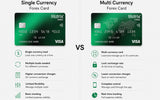
A USD-loaded multi-currency forex card is the standard for groceries, transport, eating out, and ad-hoc spending in the first 30 to 60 days, until the student opens a US bank account.
Load enough for one to two months of living costs, with the amount depending on the city. Manhattan and the Bay Area are at the top end. College towns in the Midwest are at the bottom.
Once the student has a US bank account and a US debit card, the forex card becomes a backup, not a daily-driver.
Step 6: cash on arrival
A small amount of US dollars in cash for the airport day.
Coffee, taxi, the occasional uncooperative card terminal. RBI permits up to USD 2,000 equivalent in cash per trip. You do not need anywhere near that. A few hundred dollars is plenty.
Step 7: proof of funds for the visa interview
Separately from any actual forex transaction, the F-1 visa interview officer wants to see that the family has access to enough money to cover the first year.
This is a documentation requirement, not a remittance. Bank statements, fixed deposit certificates, education loan sanction letters, and CA-certified income statements are typical.
The student does not need to have already wired the tuition to prove this. They just need to demonstrate the funds exist.
The TCS rule that saves loan-funded families real money
This is the single most expensive thing families miss.
Tax Collected at Source on outward remittances under LRS is structured deliberately to ease the burden on education borrowers. For education remittances funded by an education loan from a recognised Section 80E lender, the TCS is zero per cent, with no upper threshold. The lender disburses the wire and TCS does not apply.
For self-funded education remittances, the structure is different.
Zero TCS up to 10 lakh rupees in a financial year, then 2 per cent on the part above 10 lakh. A self-funded family wiring a year of US tuition typically crosses 10 lakh easily, which means some TCS applies on the part above the threshold.
TCS is not money you lose.
It is advance tax collected against the remitter's PAN, fully credited against income tax when the annual return is filed, and refundable if there is no tax payable. But the cash flow difference matters. For loan-funded families, that 2 per cent never gets locked up in the first place.
TCS rates have changed more than once in recent years. Always confirm the current rate with the lender or a chartered accountant before signing the A2 form.
How the four-year journey actually adds up
A representative public-university Master's programme in the US has a total cost of attendance running to tens of thousands of dollars per year, with the full programme cost building to a substantial cumulative figure in rupees.
Through a retail bank doing all wires at the wider markup, plus a forex card from the same bank with the typical conversion charges, the cumulative cost above mid-market across the journey runs into a meaningful number that the family never sees as a line item.
Through an authorised dealer at the narrower spread, with a separate forex card, the cumulative cost runs to a fraction of that. The savings are not theoretical. They are simply the markup the bank charges that the authorised dealer does not.
Documents the consulate wants and the order they want them in
A clean documentation set makes the visa interview a five-minute formality.
The student should carry, in this order: the I-20 form from the university, the SEVIS I-901 fee receipt, the DS-160 confirmation, the appointment confirmation, the visa application fee receipt, the passport, the academic transcripts and standardised test scores, the financial documentation (bank statements, FD certificates, education loan sanction letter if loan-funded, CA-certified income statements), and any TCS certificates from the authorised dealer for wires already initiated.
A messy documentation set turns the interview into a fifteen-minute interrogation. A clean one keeps things moving.
Mistakes that delay students and waste money
Wiring tuition through the parent's bank without comparing rates is the default behaviour and an expensive outcome. The bank's quoted dollar rate already includes a markup the family never sees. Compare the quote to the live rate on Google Finance and the gap is the cost.
Loading the forex card with too much currency too early is another common slip. Reload, do not over-load. Once the student has a US bank account, residual balance on the card incurs reload-out charges if it has to be converted back. Load a 30-to-60 day buffer and reload as needed.
Sending the wire without the unique reference or student ID is the most painful mistake. A SWIFT wire to a university without the student ID in the reference field can sit in an unallocated suspense account for weeks before the bursar matches it manually. Always include the unique reference exactly as the university specifies.
Mixing personal and education funds in the same A2 form creates avoidable documentation issues. The A2 form requires a stated purpose. Education and travel are different LRS purposes with different TCS treatments. Keep them separate.
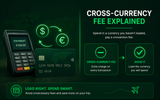
And finally, forgetting that dollars spent on the card outside the US incur cross-currency markup catches more students than it should. A student who flies via Frankfurt and uses the USD-loaded card to pay for a snack in Euros pays a cross-currency conversion charge. Either load EUR for the layover, pay in cash, or skip the purchase.
Choosing a forex channel for the USA student journey
A multi-year student journey deserves a forex channel built for repeat use, not for a one-off transaction.
Established RBI Category-II authorised dealers like Matrix Forex handle the four forex pieces of the USA student journey as a connected sequence: SWIFT wires for tuition and housing at live interbank rates with a small spread, multi-currency forex cards loaded with dollars for living expenses, and currency cash for the airport. Branch managers in major cities handle the A2 form, the TCS calculation, and the education loan coordination if the family is using one.
The structural advantage is not just the rate on any one wire. It is having one team that has done this exact journey for thousands of students before.
Putting It All Together
A student going to the USA does not need to be a forex expert.
The family just needs to break the journey into its actual pieces, SEVIS, visa fee, tuition wire, housing, forex card, cash, documentation, and route each one through the cheapest correct channel.
Education-loan TCS is zero. Self-funded TCS is 2 per cent above 10 lakh.
Bank wires are easy and expensive. Authorised-dealer wires are nearly as easy and meaningfully cheaper. The cumulative saving over a multi-year degree adds up to a number the family can feel.
Frequently asked questions about forex for students going to USA
How much money can I send to USA for education in a year?
Under LRS, an Indian resident individual can send up to USD 250,000 per financial year for education and other permitted purposes combined. For most US programmes, the full annual cost of attendance fits comfortably under this limit. If the cost exceeds USD 250,000, additional remittance requires specific RBI approval, but this is rare for student remittances to USA.
Is TCS on education remittance to USA refundable?
Yes. TCS deducted on education remittance is not an additional tax. It is advance tax credited to the remitter's PAN, adjustable against income tax liability or refundable when the income tax return is filed. For families using an education loan, TCS is zero per cent upfront, so there is nothing to claim back.
Should I use a forex card or a US debit card for living expenses in USA?
Use a USD-loaded forex card for the first 30 to 60 days while you set up your US bank account and SSN. Once you have a US debit card, switch to that for daily spending and treat the forex card as a backup. The US debit card is free for domestic US transactions. The forex card has reload and reissue charges.
Can I pay USA tuition fees with my Indian credit card?
Technically yes for amounts the credit card limit allows, but it is rarely a good idea for tuition. Indian credit cards charge a foreign currency markup on every transaction, and the university may charge a separate card-handling fee. A SWIFT wire through an authorised dealer is significantly cheaper for amounts above a few thousand dollars.
When should I pay the SEVIS I-901 fee?
After receiving the I-20 from your university and at least three working days before the visa interview. The fee receipt is a required document at the interview. Paying earlier is fine. Paying too close to the interview risks a system delay in the receipt being verified.
Do US universities accept SWIFT wires from India?
Yes, all US universities accept international SWIFT wires for tuition payment. The wire instructions appear in the student's admission portal or financial services section. Some universities partner with payment platforms that route through SWIFT but provide a tracking-friendly student-facing portal. Both work.
What is the difference between an education loan TCS rate and self-funded TCS rate?
An education remittance funded by a recognised Section 80E education loan attracts zero TCS, with no upper limit. A self-funded education remittance attracts zero TCS up to 10 lakh rupees in a financial year and 2 per cent on the amount above. The structure deliberately favours loan-funded education to ease cash flow.
Can I open a US bank account before I land in USA?
Most major US banks require physical presence and a US address to open an account, so the standard route is to open it within the first two weeks of arrival on campus. A handful of fintech-backed accounts allow online opening from India for incoming students using the I-20 and passport. These can be useful as a starter, but most students still open a traditional US bank account once on campus for cheque deposits and broader compatibility.
Same-day delivery · RBI-authorised · No hidden charges
Get Free Callback →More from the Blog