US Dollar
 Euro
Euro British Pound
 UAE Dirham
 Australian Dollar
 Singapore Dollar
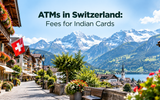
Swiss ATMs Charge You Nothing, So Why Does Cash Cost So Much

Switzerland is the one country on this list where the cash machine is not the problem.
UBS and PostFinance Bancomats charge foreign cards no operator fee at all. Raiffeisen and the cantonal banks rarely surcharge either, and between them they cover almost every town and alpine village in the country. The local half of the bill is, for practical purposes, zero.
Which means every rupee you lose is your own bank's, and on Swiss prices that is a bigger number than you are used to. A single CHF 500 withdrawal carries about ₹2,000 of foreign currency markup before anything else happens. This guide covers what a Swiss withdrawal actually costs, why Switzerland is the one destination where loading a card before you fly clearly beats withdrawing on arrival, and the two screens that can turn a clean withdrawal into an expensive one.

Swiss bank ATMs do not charge foreign cards
The Swiss term for a cash machine is a Bancomat, and the major bank networks are the ones you want.
| Network | Fee on a foreign card | Where you will find them |
|---|---|---|
| UBS | None reported | Cities and larger towns. Former Credit Suisse machines are being converted to UBS |
| PostFinance | None reported | The yellow Bancomats, in virtually every town and village |
| Raiffeisen | Rarely surcharges | Strong in smaller towns and alpine valleys |
| Cantonal banks | Rarely surcharges | Often the only bank machine in a small resort |
| Euronet and other private operators | Charges a few francs, plus conversion | Stations, airports, tourist streets |
PostFinance is the one to remember. Its yellow machines are the most evenly spread network in the country, which matters when you are in Wengen or Zermatt rather than Zurich.
The exception is the same one as everywhere else in Europe: independent machines in stations, airports and tourist streets, which charge their own fee and push conversion hard. In Switzerland they are the only machines that will cost you on the local side, and there is almost always a bank Bancomat nearby.
So where does the money actually go
If the Swiss side is free, the entire cost is what your Indian bank takes. Most large Indian banks apply a foreign currency markup of around 3.5% plus a flat international ATM fee of ₹100 to ₹125, with 18% GST on both. Check your own schedule, because these vary by bank and card variant.
Switzerland is where that 3.5% stops being an abstraction. The franc is worth roughly ₹117, so ordinary Swiss amounts convert into large rupee numbers, and a percentage of a large number is a large number.
| You withdraw | Worth at mid-market | Your bank's 3.5% markup alone |
|---|---|---|
| CHF 200 | ₹23,320 | ₹816 |
| CHF 500 | ₹58,300 | ₹2,041 |
| CHF 1,000 | ₹116,600 | ₹4,081 |
That is the markup by itself, before the flat fee and the GST. In a cheaper country you would barely notice it. In Switzerland it is the whole story.
What CHF 500 actually costs you
The franc sits around ₹116.6 to the Indian rupee at the mid-market rate in early September 2026. That is the benchmark below, not a rate any retailer sells at, and it moves daily.
CHF 500 is a realistic single withdrawal for a week of incidentals in a country where a mountain railway ticket can run into three figures.
| Line | Calculation | Amount |
|---|---|---|
| The francs themselves, at mid-market | CHF 500 × ₹116.6 | ₹58,300 |
| Bank foreign currency markup | 3.5% of ₹58,300 | ₹2,041 |
| International ATM fee | flat, per withdrawal | ₹125 |
| GST | 18% of (₹2,041 + ₹125) | ₹390 |
| Swiss ATM fee at a bank Bancomat | none reported | ₹0 |
| Total debited | ₹60,856 | |
| Cost above the mid-market rate | ₹2,556, or 4.38% |
The mid-market rate is indicative and moves daily. The fee figures are assumptions drawn from published Indian bank schedules, and the zero local fee assumes a bank Bancomat rather than a private machine.
Notice what is missing. There is no local fee line to argue about and no operator markup to dodge. Switzerland is the cleanest version of this arithmetic anywhere in the series, which is exactly why the conclusion is different here.
Why Switzerland is the card-before-you-fly country
In most destinations the honest answer to "cash or card" is that it depends. In Switzerland it does not, and the reason is structural.
Your bank's 3.5% markup applies to every withdrawal, every time. Load a forex card with francs before you fly and you fix the rate once, at load, and spend from a franc balance with no conversion on each transaction. In a country where cards work almost everywhere and the amounts are large, that difference compounds across a trip in a way it does not in Bali or Bangkok.
Switzerland is also unusually card-friendly. Cards work at nearly every shop, restaurant, hotel, station ticket machine and mountain railway. Contactless is universal. The places that still want cash are narrow and predictable: small mountain restaurants and refuges, station toilets, some farmers' markets, and the occasional village shop.
So the shape that works is a card for almost everything, plus a modest cash float for the mountain and the coin-operated. Our Switzerland travel guide covers how much to plan for, and forex card vs international debit card is the direct comparison if you are deciding what to carry.
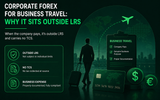
One planning note that catches Switzerland trips specifically. Because the country is expensive, a family trip can push your total remittances past the ₹10 lakh LRS threshold in a financial year once flights, hotels and on-ground spending are added up, and the TCS treatment then depends on what the spending is classified as. Our TCS under LRS guide sets out which rate applies to which purpose, and it is worth reading before a big trip rather than after.

The two screens that cost you
At the machine. Many Swiss Bancomats, and all the private ones, will offer to charge you in Indian rupees instead of francs. Decline it. This is dynamic currency conversion, and it hands the exchange rate to the machine's operator rather than your card network. Visa's own guidance is explicit that a DCC transaction carries the operator's rate plus whatever fees it applies, and that you are entitled to see both before you decide. Choose CHF.
At the till. The same question appears at hotels, department stores and watch shops, and on Swiss ticket sizes it is worth more. A conversion markup on a CHF 1,200 watch is not a rounding error. Choose CHF there too.
There is a third, quieter version. Euros are accepted at many Swiss tourist-area shops and hotels, but at a rate the merchant picks, and your change comes back in francs at a rate they also pick. Switzerland is in the Schengen area but not in the European Union and not in the eurozone. The currency is the Swiss franc. Paying in euros to save a conversion is how you pay two.
Common mistakes at ATMs in Switzerland
Using the machine at the station because it is there. Station and airport machines are the ones most likely to be privately operated. Walk to a bank Bancomat.
Assuming Switzerland uses the euro. It does not. Arriving with only euros means converting them in Switzerland at whatever rate you are offered.
Paying in euros in tourist shops. Accepted is not the same as sensible.
Withdrawing several small amounts. Your bank's flat international fee applies to every withdrawal regardless of size, and the 3.5% applies to all of it either way.
Taking a large cash float out of habit. Switzerland is close to fully card-enabled. Unspent francs come home with you, and francs are an expensive currency to sell back.
Accepting the rupee amount at the screen. It reads more clearly and it costs more. That is the trade being offered.
Forgetting your Indian SIM. Swiss online bookings, particularly the SBB rail app and individual mountain railway tickets, trigger 3D Secure and send an OTP to your registered Indian number. Keep it reachable on roaming or an eSIM.

Frequently asked questions
Do Swiss ATMs charge foreign cards a fee?
Major bank machines generally do not. UBS and PostFinance are reported to charge no operator fee on foreign cards, and Raiffeisen and the cantonal banks rarely surcharge. The exceptions are privately operated machines in stations, airports and tourist streets, which charge their own fee and push currency conversion. Because the Swiss side is usually free, almost all of what you pay is your own Indian bank's charges.
Which ATMs should I use in Switzerland?
Use a bank Bancomat. UBS in cities and larger towns, PostFinance almost everywhere including small villages, and Raiffeisen or the local cantonal bank in alpine towns where they are often the only branch. PostFinance's yellow machines are the most evenly spread network in the country. Avoid standalone private machines in stations and tourist areas.
How much does it cost to withdraw money in Switzerland with an Indian card?
In the worked example on this page, CHF 500 at a mid-market rate of ₹116.6 is worth ₹58,300, and the total debit comes to about ₹60,856, roughly 4.4% above mid-market. Nearly all of that is your Indian bank: a foreign currency markup of around 3.5%, a flat international ATM fee of ₹100 to ₹125, and 18% GST on both. The Swiss machine itself typically adds nothing.
Does Switzerland use the euro?
No. Switzerland is in the Schengen area but not in the European Union and not in the eurozone, and the currency is the Swiss franc, written CHF. Some tourist-area shops and hotels accept euros, but at a rate they choose themselves, and your change comes back in francs at a rate they also choose. Pay in francs wherever you can.
Is a forex card better than an ATM in Switzerland?
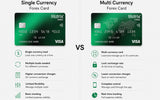
For most trips, yes, and more clearly than in other destinations. Your bank's foreign currency markup of around 3.5% applies to every ATM withdrawal, whereas a forex card loaded with francs fixes the rate once at load and then spends from a franc balance with no per-transaction conversion. Switzerland is unusually card-friendly and unusually expensive, so that difference compounds across a trip.
How much cash should I carry in Switzerland?
Not much. Cards work at nearly every shop, restaurant, hotel, station ticket machine and mountain railway, and contactless is universal. Keep a modest float of francs for small mountain restaurants and refuges, station toilets that take coins, some farmers' markets and the occasional village shop. Indian residents can carry foreign currency notes up to the equivalent of USD 3,000 per trip under RBI rules.
Sorting your Switzerland money before you fly
Switzerland inverts the usual advice. In most places the question is which machine to use. Here the machines are fine, and the question is whether to use one at all.
Matrix Forex is an RBI Authorised Dealer Category-II, licence NDL-ADII-0023-2023, with branches in eight cities and doorstep delivery in sixteen. You can buy Swiss francs as cash or load them onto a multi-currency forex card before you fly, and you see the rate and the applicable charges before you confirm the order. For a country this card-friendly and this expensive, fixing the rate once before departure is the version of this that costs least.
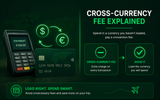
Worth reading alongside this: the CHF to INR page for the current rate, RBI rules on carrying foreign currency abroad for the Indian departure limits, and what is a cross-currency fee if Switzerland is one stop on a wider European trip. Our Schengen forex guide covers the multi-country version.
If you are visiting other destinations in the same year, our Dubai and Sri Lanka ATM guides run the same arithmetic for those countries, and the answers are different in each.
Same-day delivery · RBI-authorised · No hidden charges
Get Free Callback →More from the Blog