US Dollar
 Euro
Euro British Pound
 UAE Dirham
 Australian Dollar
 Singapore Dollar
UK Student Visa Maintenance Funds: The 28-Day Rule Indian Students Keep Getting Wrong

Say your bank balance is exactly right. You have done the maths, moved the money, and you are booking your visa appointment feeling good about it. Then the refusal comes back with one line: funds not held for the required period.
Nobody warned you that having the right amount and proving you have had it for long enough are two different things. That gap, a specific 28-day window buried inside the UK student visa rules, catches more Indian applicants than almost any other part of the financial requirement.
If you are one of the thousands of Indian students who plan to apply for a UK study visa this year, or a parent trying to get this right for your child, this is the part worth slowing down for. The amount matters. The timing matters more.

Indian student reviewing UK student visa financial documents before applying
UK student visa requirements: what the UK actually asks for
Every UK student visa application comes down to two kinds of money on paper: your course fees, and your living costs.
Tuition is the simpler half. You either pay it in full before applying, or you show the outstanding balance sitting in your account alongside your living costs. Your CAS, the Confirmation of Acceptance for Studies your university issues once you accept an offer, states exactly how much you have already paid and how much is left.
Living costs, officially called the maintenance requirement, run on a fixed monthly rate that depends on where you will be studying.
|
Where you study |
Monthly figure |
9-month total |
|
London |
£1,529 |
£13,761 |
|
Outside London |
£1,171 |
£10,539 |
"London" here means one of the 32 London boroughs or the City of London specifically, not the wider commuter belt. If your university has more than one campus, go by whatever your CAS says rather than guessing.
Add your outstanding tuition to whichever maintenance figure applies, and that combined number is what needs to be sitting in an account. Not earned. Not incoming. Sitting there, already.
The 28-day rule, in plain terms
This is where most of the confusion happens, and where most refusals happen too.
The rule itself: the full amount has to sit in the account continuously for 28 days in a row. Not 28 days total, and not 28 days with a dip somewhere in the middle. Twenty-eight consecutive days where the balance never drops below what you need.
There is a second half to this rule that trips people up just as often. Your bank statement or letter has to be dated within 31 days of the date you submit your visa application. You cannot show a clean 28-day stretch from three months ago and expect it to count. Both ends of the window matter, and they are only 31 days apart.
Picture it on a calendar. Say your course starts in September and you are aiming to apply in early June. You would want the full amount parked in the account by roughly the first week of May. Leave it untouched for 28 days. Once that stretch closes, request your statement, and you now have about a month to actually submit your application before that statement is considered too old.
Miss either end and the whole 28 days has to start over. That costs time, and if the pound moves against you while you wait, it can cost money too.
What actually counts as acceptable proof
Not every bank statement for a visa application will satisfy a UK Visas and Immigration caseworker. The list of what counts is fairly specific.
Your own bank statement or bank letter. This is the cleanest route. It needs your name, your account number, the transaction dates, and a balance that never falls below the required amount across the full 28 days. A downloaded PDF carrying the bank's letterhead works well. A screenshot usually does not. If you want to see what a compliant one looks like before you request yours, most university international offices publish a sample bank statement for UK visa applications on their admissions pages.
A parent's account. Very common among Indian applicants, and fully allowed, though it adds paperwork. You will need your birth certificate, or an equivalent document proving the relationship, along with a signed letter from your parent confirming they consent to the funds being used for your studies.
A recognised student loan. If a government-backed or regulated lender is financing your course, the loan letter counts, provided it is dated within six months of your application and confirms the money will be available before you travel.
A recognised financial sponsor. This covers the UK government, the Government of India, the British Council, certain international organisations, and your university itself, in cases where any of these are covering your costs directly.
What does not work as cleanly: a loan taken out in your parent's name instead of yours, a partner's funds unless they are applying for their own visa at the same time as you, or assets like property and shares that are not sitting in a bank account as accessible, liquid funds.
A worked example
Say you have an offer from a university in Manchester. Tuition for the first year is £18,000, and you have already paid a £3,000 deposit.
Outstanding tuition: £15,000.
Maintenance funds, outside London: £10,539.
Total you need to show: £25,539.
At a rough rate of ₹124 to the pound, that is a little over ₹31.6 lakh, and it needs to sit untouched for 28 straight days before you apply. Rates move daily, so treat that as a planning figure and check the live number before you actually convert anything.
Now take the exact same tuition and deposit, but for a university in London instead.
Outstanding tuition: £15,000.
Maintenance funds, London: £13,761.
Total you need to show: £28,761.
At the same rough rate, that comes to close to ₹35.7 lakh, sitting untouched for the same 28 days.
That gap, roughly £3,222 or close to ₹4 lakh, between London and everywhere else surprises a lot of families who assumed the number would land somewhere similar regardless of city.
Where this sits alongside your other visa costs
Maintenance funds are not the only cost UKVI expects. There is also the visa application fee, and the Immigration Health Surcharge, which currently runs £776 for each year your visa covers, paid upfront as part of the application. Neither of these counts toward your maintenance figure. Both are separate, and both are due before a decision is even made.
Add all four together before you fix a submission date: tuition balance, maintenance funds, the application fee, and the IHS. Families who plan for the full picture rarely get caught out by a last-minute shortfall.
Why the timing matters for how you convert your money
This is the part that connects straight back to how you should plan your forex, not just your paperwork.

28-day rule timeline for UK student visa maintenance funds
If you are converting rupees to pounds to fund that 28-day window, the money should already be converted and sitting in the account before the clock starts, not trickling in across several transactions. A single, well-timed transfer is far easier to explain than five smaller deposits landing on different dates, since UKVI can and does query unexplained activity during the 28-day period.
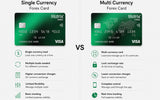
That means locking in your GBP rate and completing your transfer with enough runway before the 28 days need to begin, not after. If you are also loading a forex card for arrival expenses, or sending the tuition wire transfer separately from the maintenance funds, plan both against the same calendar so nothing lands mid-window and muddies your bank statement.
Check today's live GBP to INR rate before you decide when to convert. Our full British Pound guide covers denominations, everyday spending, and what to expect once you land, on top of the compliance basics covered here.
If you are the parent handling the transfer rather than the applicant, our guide on sending money to a child studying abroad walks through that side in more detail, and our piece on claiming back TCS on education remittances is worth bookmarking for when you file your return the following year.
Weighing more than one country? We have covered the equivalents elsewhere too: Canada's GIC requirement and Germany's blocked account, and Australia's Evidence Level 3 financial proof rules, both worth reading side by side with this one.
For the complete official rulebook, UKVI's own financial evidence guidance for Student and Child Student applicants is worth reading in full, particularly the sections on parental consent letters and sponsor documentation. The documents you must provide page on gov.uk lists the exact paperwork checklist for each scenario, and the general student visa overview is the right starting point if you have not applied yet.
Once your numbers are set, the practical next step is straightforward: lock in your GBP rate and time the transfer so it lands before your 28-day window needs to start. Get in touch whenever you are ready to move on it.
Frequently asked questions
How much bank balance do I need for a UK student visa?
It depends on where you are studying and how much tuition is still outstanding. Living costs alone come to £13,761 for London or £10,539 outside London, on top of any unpaid tuition shown on your CAS.
What counts as an acceptable bank statement for a UK visa?
A statement or letter on the bank's letterhead showing your name, account number, transaction history, and a balance that stays above the required amount for 28 consecutive days. It has to be dated within 31 days of your application.
Can I use my parents' bank statement for my UK student visa?
Yes. You will need to add your birth certificate, or an equivalent document proving the relationship, along with a signed consent letter from the account holder confirming the funds are for your studies.
What is the 28-day rule for a UK student visa?
The required funds must sit in the account without dropping below the minimum for 28 consecutive days. The closing statement then has to be dated within 31 days of when you submit your application.
Can I show a fixed deposit instead of a regular savings account?
Yes. A certificate of deposit is accepted as long as it shows the deposit date, confirms the funds have been held for the full 28 days, and states that the money is accessible.
Does the required amount change if I study outside London?
Yes, and by a meaningful margin. Outside London the monthly figure is £1,171 against £1,529 in London, a difference of about £3,222 over the full nine months.
What happens if my balance dips below the requirement during the 28 days?
The count effectively resets. You would need a fresh, unbroken 28-day period where the balance never falls below the threshold before you can apply.
Is a student loan accepted as proof of funds?
Yes, provided it comes from a government, government-sponsored, or regulated lender, is issued in your own name, and the loan letter is dated within six months of your application.
Same-day delivery · RBI-authorised · No hidden charges
Get Free Callback →More from the Blog