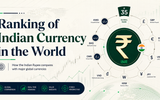
US Dollar
 Euro
Euro British Pound
 UAE Dirham
 Australian Dollar
 Singapore Dollar
Forex Guide for Travelling to Schengen Europe from India

Introduction
A Schengen Europe trip has a forex peculiarity most travellers miss.
Most Schengen countries are part of the Eurozone, but several are not. Switzerland uses the Swiss Franc. The Czech Republic uses the Koruna. Hungary uses the Forint. Sweden uses the Krona. Plan a EUR-loaded forex card for the Eurozone, with a separate currency wallet or card for the non-Euro Schengen countries on the same trip.
Card acceptance is high across Europe but cash culture varies more than you might think.
This guide walks through the Euro versus non-Euro country breakdown, the cash versus card culture variation across Europe, the dynamic currency conversion trap at European terminals (which is particularly aggressive), and the VAT refund opportunity that meaningfully subsidises trip shopping.
Schengen Zone versus Eurozone: not the same thing
The Schengen Zone (the free-movement area) and the Eurozone (the Euro currency area) overlap heavily but are not identical.
Most Schengen countries use the Euro. Germany, France, Italy, Spain, Portugal, Netherlands, Belgium, Austria, Greece, Ireland, Finland, and others all sit in both.
But several Schengen countries do not use the Euro.
Switzerland uses the Swiss Franc (CHF). The Czech Republic uses the Koruna (CZK). Hungary uses the Forint (HUF). Sweden uses the Krona (SEK). Norway uses the Norwegian Krone (NOK). Denmark uses the Danish Krone (DKK). Poland uses the Zloty (PLN).
For multi-country itineraries, this means the forex setup needs adjustment.
A classic France-Switzerland-Italy trip needs EUR for France and Italy, plus CHF for Switzerland. A Prague-Vienna-Budapest trip needs CZK, EUR, and HUF respectively. Loading multiple currencies on a multi-currency forex card or carrying a separate currency card handles this cleanly. Avoid the temptation to use Euros everywhere in Europe. Non-Euro countries technically accept Euro cash at some tourist establishments, but always at a meaningfully worse rate than the official exchange rate.
Cash and card culture varies meaningfully across Europe
European countries differ significantly in cash and card culture, contrary to the stereotype that Europe is uniformly card-friendly.
Netherlands, France, Sweden, and Norway are card-dominant. Amsterdam and Paris are nearly cashless for tourists. Restaurants, shops, attractions, public transport, and even small bakeries take card or contactless tap. Sweden has actively moved towards a cashless economy. Card spending dominates the vast majority of typical travel spending in these countries.
Germany, Austria, and Eastern Europe are surprisingly cash-friendly.
Germany has a strong cash culture by European standards. Many small restaurants in Munich, Berlin, and smaller German cities are card-reluctant or cash-only. Austria is similar. Eastern European countries are cash-heavy at small establishments and public transport ticket machines, though tourist-area card acceptance has improved.
The right split varies by country.
For a France-only trip, lean heavily card. For a Germany-only trip, plan for noticeably more cash. For a Czech Republic-Hungary trip, a meaningful share of spending needs to be in cash, and a portion of that cash needs to be in CZK and HUF rather than Euros. For multi-country itineraries, plan the cash portion country by country rather than as a single pool.
The dynamic currency conversion problem at European terminals
European point-of-sale terminals are aggressive about dynamic currency conversion.
When you pay at a French restaurant, German hotel, or Italian shop, the terminal frequently asks: pay in EUR or pay in INR? Always choose EUR. Always.
The INR option is dynamic currency conversion, with a markup applied by the terminal's payment processor. The EUR option charges your forex card at the locked load rate. European DCC is more pervasive than in the UK or US. Many terminals default to offering INR conversion as the convenient option, and staff often press the INR button without asking.
Tell the cashier explicitly: EUR please, or charge in Euros. The same applies at ATMs. Decline any convert to INR prompt.
VAT refund: the Europe trip subsidy
European countries charge VAT (value added tax) at country-specific rates.
Tourists from outside the EU can claim a refund on goods purchased and exported, typically a meaningful percentage of the goods price after admin fees.
How it works is well-established.
At participating retailers, including the Global Blue and Planet Tax Free networks that operate at most major shopping destinations, present your passport at checkout and get a tax refund form linked to your purchase. At the airport before departing the EU, get the form stamped at customs. Sometimes this is a quick self-service kiosk, sometimes a staffed counter, and for high-value purchases customs may inspect the goods. Then either receive the refund in cash at the airport refund counter or have it credited to your forex card within one to three weeks.
For travellers planning luxury purchases, electronics, or designer items, the refund materially changes the trip economics.
Minimum purchase thresholds vary by country, typically a per-store-per-day minimum, and the goods must be unused at customs inspection. Worth claiming on the bigger receipts.
Loading the right amount for a Europe trip
A typical Europe trip covers multiple cities or countries over 10 to 14 days, with hotels and flights pre-paid in rupees.
Load most of the on-ground spending budget on the forex card, with separate currency wallets if the trip includes non-Euro Schengen countries. Withdraw a working amount as cash, sized to country-by-country cash culture. The cash mix should reflect the local currency, not a one-size-fits-all Euro reserve.
Established RBI Category-II authorised dealers like Matrix Forex offer multi-currency forex cards covering EUR and CHF (the most common combination for Switzerland-inclusive itineraries), plus same-day delivery in major Indian cities.
Putting It All Together
A Europe trip rewards forex preparation more than most other destinations.
The Euro versus non-Euro country mix needs planning. The dynamic currency conversion at terminals is aggressive. And the VAT refund opportunity meaningfully subsidises shopping.
Get a EUR-loaded forex card from an RBI-authorised dealer, add CHF or CZK or HUF if your itinerary needs them, claim the VAT refund at the airport on any meaningful shopping, and decline DCC at every terminal. That combination keeps the forex side of a Europe trip clean and turns the VAT refund into a small bonus that funds the souvenirs.
Frequently asked questions about forex for travelling to Schengen Europe
Should I load EUR or multiple currencies for a Europe trip?
It depends on the itinerary. For Eurozone-only trips like France, Italy, Spain, Germany, and Netherlands, EUR alone is sufficient. For multi-country trips that include non-Euro Schengen countries (Switzerland, Czech Republic, Hungary, Sweden, Norway, Denmark, Poland), load the relevant additional currency on the same multi-currency card or carry a separate card. Avoid spending Euro cash in non-Euro countries since tourist establishments accept it but at a much wider markup than the official rate.
How much EUR cash should I carry for a 12-day Europe trip?
Cash needs vary by country. France and Netherlands are nearly cashless, so a modest amount covers small establishments and tipping. Germany, Austria, and Eastern Europe are more cash-friendly, so plan more cash for those countries. For multi-country trips, withdraw country-specific currency on arrival rather than carrying Euros everywhere.
Should I always pay in EUR or in INR when European terminals ask?
Always pay in EUR (or the local currency for non-Euro Schengen countries). When a European terminal offers EUR or INR, the INR option is dynamic currency conversion with a markup applied by the merchant's payment processor. The EUR option charges your forex card at the locked load rate. European DCC is particularly aggressive, so tell the cashier explicitly to charge in EUR.
Can I claim VAT refund on shopping done in Europe?
Yes. EU countries charge VAT at country-specific rates and offer a refund scheme to non-EU tourists for goods exported within 90 days. At participating retailers, request a tax refund form linked to your passport at checkout. Before departing the EU at the airport, get the form stamped at customs, then receive the refund in cash at the airport or credited to your forex card within one to three weeks. Worth claiming on the bigger receipts.
What is the difference between Schengen Zone and Eurozone for a traveller?
The Schengen Zone is the free-movement area where a single visa allows travel across many European countries without internal border checks. The Eurozone is the currency union of EU countries that adopted the Euro. They overlap heavily but are not identical. Most Schengen countries use the Euro, but Switzerland, Czech Republic, Hungary, Sweden, Norway, Denmark, and Poland are Schengen but not Eurozone. Plan forex accordingly for multi-country itineraries.
Will my Indian forex card work everywhere in Europe?
A Visa or Mastercard contactless forex card works at the vast majority of European businesses, including major hotels, branded restaurants, malls, attractions, museums, and public transport. Acceptance varies by country: Netherlands, France, and Sweden are nearly cashless, while Germany, Austria, and Eastern Europe have more cash-only small establishments. ATMs accept forex cards across Europe. At point of sale and ATMs, decline any convert to INR prompt and pay in the local currency.
How does tipping work across European countries?
Tipping in Europe is moderate and varies by country. France: rounding up the bill or 5 to 10 per cent at sit-down restaurants. Italy: 10 per cent at restaurants if a cover charge is not already added. Germany: 5 to 10 per cent, often by saying the rounded total to the waiter. Spain: 5 to 10 per cent. Switzerland: 5 to 10 per cent, often service is included. Hotel housekeeping: a small Euro tip per night. Tour guides: a modest cash tip for half-day tours. Tipping is much less aggressive than in the US.
Should I load CHF separately for Switzerland on a multi-country Europe trip?
Yes. Switzerland uses the Swiss Franc, not the Euro, and Swiss merchants generally do not accept Euro at favourable rates. For a multi-country itinerary that includes Switzerland, load CHF on a multi-currency forex card alongside EUR, or carry a separate CHF card. The same principle applies for Czech Republic (CZK), Hungary (HUF), Sweden (SEK), Norway (NOK), Denmark (DKK), and Poland (PLN).
Same-day delivery · RBI-authorised · No hidden charges
Get Free Callback →More from the Blog