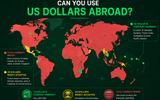
US Dollar
 Euro
Euro British Pound
 UAE Dirham
 Australian Dollar
 Singapore Dollar
Documents Needed for Forex Purchase in India: A Complete 2026 Checklist

Introduction
Let us say you are getting ready to buy some foreign currency, maybe for a holiday, maybe for your child's studies abroad. Before you walk into a branch or open the app, it helps to know exactly which documents you will be asked for, because forex in India is regulated by the RBI under FEMA, and the seller has to check who is buying, why, and whether you are within your yearly limit.
The difference a clean set of documents makes is bigger than people expect. When everything is in order, your order goes through in minutes. When one paper is missing or does not match, it can hold things up for hours or stop the order altogether. So in this guide, let us go through the full checklist, the extra papers needed for different kinds of trips, and the small things that cause orders to get rejected.
The basic checklist for any kind of trip
No matter why you are buying forex, a few documents are always needed, so let us start with those. You will need your PAN card, either the original or a clear scan, with the name matching your passport. You will need a valid passport with at least six months left before it expires. You will need proof of travel, which can be a confirmed air ticket, a valid visa, or an e-visa. You will need a filled A2 form, either in your own hand or e-signed through Aadhaar. You will need a bank account in your own name to pay the rupee amount, since third-party payments are not allowed. And if this is your first forex card, you may also be asked for a recent passport-size photo.
Extra documents, depending on your trip
On top of the basics, different kinds of travel need a few extra papers, so let us go through the common ones.
If you are travelling for tourism or a holiday, the basic checklist is usually enough on its own. Some dealers may also ask to see your hotel booking or tour itinerary as supporting proof, but that is about it.
If you are going abroad to study, you will need your university admission letter, ideally showing the fee due, along with the course fee schedule from the university. If you are paying through an education loan, keep the loan letter ready, because loan-funded education attracts no TCS at all, which is a real saving. Depending on the country, you may also need your I-20 for the United States or your CAS letter for the United Kingdom, and your student visa or an offer letter for visa stamping.
If the trip is for medical treatment abroad, you will need the hospital invoice or treatment estimate on the hospital's letterhead, a letter from your doctor in India explaining the need to travel, and a medical visa or a confirmed appointment letter from the foreign hospital. If a family member is travelling along as an attendant, a short declaration to that effect helps too.
If you are travelling for business, keep a company letter on the letterhead explaining the purpose of the trip and the amount, a copy of the company's GST registration, and a board resolution or authorisation letter naming you as the traveller. If you are attending a meeting, an invitation letter from the customer or vendor is useful as well.
And if you are heading abroad for a job or to settle, you will need your offer letter from the foreign employer, a copy of your work visa or resident permit, your last three months of salary slips or your Form 16 as proof of your source of funds, and your bank statement for the last six months.
Why each document is asked for
It can feel like a lot of paperwork, so it helps to understand the reason behind each one. Your PAN is what tracks your yearly LRS spend and links any TCS to your tax record. Your passport proves your identity and confirms that the traveller name matches. Your travel ticket or visa confirms that you are within the RBI's 60-day window before departure. The A2 form is your declaration of the purpose and your confirmation that you are inside the USD 250,000 yearly limit. And your bank account proof is there to stop third-party payments, which the RBI does not allow. Once you see why each paper is needed, the checklist stops feeling like a hurdle and starts making sense.
A quick word on self-attestation
When you submit photocopies of your PAN and passport, they usually need to be self-attested. All that means is you write the words self-attested below the copy and sign it, using the same signature you use on your A2 form. If you are uploading documents digitally through an app, the Aadhaar OTP signature is treated as self-attestation under the RBI's digital KYC rules, so you do not need to print and sign anything separately.
Digital or paper: how documents are submitted today
Most providers now accept fully digital documents, which makes the whole thing far quicker. You upload your PAN, passport, visa, and ticket as a PDF or photo, sign the A2 form with an Aadhaar OTP from your registered mobile, and pay by net banking, NEFT, RTGS, IMPS, or UPI from your own bank account. The forex card then reaches you by courier, or you can pick it up from a branch. If you do prefer to visit a branch in person, just carry the originals along with two sets of self-attested copies, and you are set.
A few special situations
Some cases come up often enough to be worth covering on their own. If you are buying forex for a family member, say your spouse, child, or parent, you can pay for it, but their PAN, passport, ticket, and A2 form are needed, the relationship has to be declared, and the spend counts under their LRS limit, not yours. If you are buying forex for a child below 18, a parent or guardian fills the A2 form on the child's behalf, the child's passport and ticket are needed, and the spend counts under the child's own limit, because yes, even minors get their own USD 250,000 a year. And if you are an NRI visiting India, you do not buy forex under the LRS at all, you operate through your NRE or NRO accounts, and the rules and forms there are different, so it is best handled through a dealer's dedicated NRI desk.
Common reasons an order gets rejected
Most rejections come down to small mismatches rather than anything serious, so let us flag the usual culprits. The name spelling on your PAN not matching your passport is a frequent one, which you fix by correcting the older document or carrying an affidavit. A passport that expires within six months will usually need renewing first. An unconfirmed or waitlisted ticket is often not accepted. A visa for a country different from your ticket destination needs explaining or correcting. A PAN photo that is too old or unclear may need a fresh copy from NSDL or UTI. And a bank account held jointly with a non-relative will not work, so pay from a single-name account instead.
How long does the KYC check actually take?
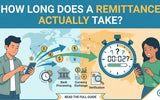
People often worry this will drag on, but it is usually quick. If you go online with all your documents ready, the check typically takes between five and fifteen minutes. If one document is missing and has to be re-uploaded, it might take one to four hours after you send it across. A branch walk-in with originals is usually done in twenty to forty minutes. And a first-time card issuance that needs biometric verification can take up to one working day. So in most cases, you are looking at minutes rather than days.
A real situation: last-minute student forex
Let us make this concrete. Suppose Aman has a flight to Toronto in four days for his master's programme, and he still needs his forex sorted. He walks in with his university admission letter, fee schedule, education loan letter, passport, PAN, ticket, and student visa. He fills the A2 form, signs it with an Aadhaar OTP, and pays the rupee amount by net banking. Because his trip is funded through an education loan, he pays no TCS at all, which saves him a meaningful amount compared with the 2 per cent that would apply on self-funded education above 10 lakh. His forex card is loaded with the currency he needs well within those four days, and he flies out without a worry.
Tips to make your forex purchase smooth
A little preparation goes a long way here. Scan all your documents in advance and keep them in one folder on your phone, so you are not hunting for them at the counter. Make sure the names on your PAN, passport, and visa match exactly. Use the same bank account for all your forex deals to keep things consistent. Save your A2 form details, since only the amount and date usually change next time. If you are using a loan for education, get the loan letter on the bank's letterhead with the sanction details on it. And keep digital copies of all your paid invoices and TCS certificates, the Form 27D, for when you file your taxes.
Putting It All Together
When you boil it down, buying forex in India really comes back to four things: your PAN, your passport, your ticket or visa, and a filled A2 form. Add one purpose-specific document for study, medical, or business trips, keep digital copies handy, and your order will sail through the KYC check in minutes. It looks like a lot the first time, but once you have done it once, it becomes second nature.
Frequently asked questions
Is PAN a must for buying forex in India?
PAN is mandatory for any forex purchase above 50,000 in a financial year, and for smaller amounts it is still strongly recommended.
Can I buy forex without a confirmed travel ticket?
Most providers ask for either a confirmed ticket or a valid visa, and some accept a tour package booking. Waitlisted or tentative tickets are generally not accepted.
Do I need to give the same documents for every purchase?
With the same provider, your KYC stays saved. You only need to upload the trip-specific documents, like a new ticket and a fresh A2 form, each time.
What exactly is an A2 form?
It is a declaration you make to the RBI through your bank or dealer, stating the purpose of the forex and confirming that you are within your USD 250,000 yearly LRS limit.
Can my parents pay for my study-abroad forex from their account?
Yes. In that case they become the LRS remitter, the spend counts under their yearly limit, and your education documents along with their A2 form are needed.
Are digital signatures accepted?
Yes. Aadhaar OTP-based e-signing is fully accepted under the RBI's digital KYC rules.
What if my passport expires in five months?
Most providers will not sell you forex on a passport with less than six months left, so it is best to renew it first. Tatkaal renewal is usually done in one to three working days.
Do I need to carry these documents while travelling abroad?
No. The KYC is completed at the time of purchase. While abroad, you only need your passport, visa, forex card, and a copy of your travel insurance.
Same-day delivery · RBI-authorised · No hidden charges
Get Free Callback →More from the Blog