US Dollar
 Euro
Euro British Pound
 UAE Dirham
 Australian Dollar
 Singapore Dollar
INR to JPY: How to Send Money to Japan at the Live Cross-Rate

Introduction
A first-time visitor to Japan opens a menu in Tokyo and sees prices that look astronomical.
A coffee at 500 yen. A bullet-train ticket at 14,000 yen. A hotel night at 18,000 yen.
Then they convert and realise these are not big numbers in rupees.
Each yen converts to a small fraction of a rupee, so 500 yen, 14,000 yen, and 18,000 yen all translate into manageable rupee amounts. The Yen is denominated in small units, the way the Indonesian Rupiah or the Korean Won is. Each unit is small. The total for the trip is not.
For an Indian wiring or carrying JPY, this denomination quirk changes how the rate looks. The conventional quote is something like one Yen equals a fraction of a rupee, in small fractions, not big numbers. The same markup that reads as a clear gap on a USD wire reads as a tiny fraction on JPY.
The percentage is identical. The mental math is harder. And most retail remitters do not catch the markup at all, because the per-Yen number is so small.
How the INR to JPY cross-rate is built
The Japanese Yen has driver dynamics that overlap only partially with other major currencies.
The Bank of Japan ran negative interest rates for years and has only recently begun normalising. The Yen is a safe-haven currency, strengthening during global crises. Carry-trade flows, where investors borrow in Yen at low interest and invest in higher-yielding currencies, drive much of its movement.
INR-JPY is built as a cross.
USD-JPY combined with USD-INR. The yen's price in dollars is set by the Tokyo and global markets, with the Bank of Japan as a major influence. The dollar's price in rupees is set by the interbank market in India. Multiply the two and you get the live INR per yen figure that Google publishes.
The carry-trade unwinds of mid-2024 saw USD-JPY drop sharply over a few weeks. For Indian remitters, this meant Japanese tuition wires got noticeably more expensive in rupees over a short window.
JPY can move fast.
Why the markup hides differently on JPY wires
On a JPY wire, the bank quotes the rate as rupees per yen, in small fractions.
The retail bank markup applied to that per-yen rate looks like a fractional addition that the eye reads as basically the same number.
The percentage is identical to a USD or GBP markup. The visual signal is much weaker.
On a tuition wire of three million yen, which is a substantial rupee sum, the markup at retail bank rates adds up to a sum the family genuinely notices. But the family sees the wire confirmation and reads the per-yen rate as a small fraction, close enough to the rate, without computing what that means at scale.
The way to test the quote: search 1 JPY to INR on Google for the live mid-market, multiply by your yen amount, compare to the wire confirmation in rupees.
The difference is the cost.
The four ways an Indian sends JPY to Japan
Tuition wire to a Japanese university
Japanese universities like the University of Tokyo, Kyoto University, Waseda, Keio, Tohoku, and the broader system accept tuition by SWIFT wire to the university's treasury account.
International student programmes, often taught in English under the Global Programme initiatives, charge tuition in a range that converts to several lakhs of rupees per year. Adding living expenses, the annual cost is meaningful.
The wire instructions appear in the student's admission portal. Beneficiary, SWIFT or BIC code, account number, and reference (typically the student ID).
Wire goes via SWIFT and reaches the Japanese university in one to three working days.
MEXT scholarship and partial-funding remittances
A meaningful share of Indian students in Japan are on MEXT (Ministry of Education) scholarships, which cover tuition and a monthly stipend.
These students still wire smaller amounts from India for incidental expenses, books, and travel within Japan.
The wire mechanics are unchanged. The size is smaller.
Family maintenance to relatives in Japan
Indians working in Japan are concentrated in IT, engineering, and increasingly in design and manufacturing.
Family-maintenance remittances to relatives in Tokyo, Osaka, and Yokohama are LRS-permitted. Wire to the recipient's Japanese bank account using SWIFT routing.
Travel forex: JPY cash and forex card for Japan trips
Japan is unusual among developed economies in being more cash-friendly than card-friendly.
Many small restaurants, ryokan (traditional inns), older shops, and rural areas accept cash only. Convenience-store ATMs at 7-Eleven, Lawson, and FamilyMart accept international cards, but small establishments may not.
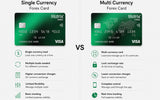
For a Japan trip, the recommendation is a JPY-loaded forex card for hotels, large restaurants, department stores, and chain shops, plus a meaningful cash carry for small payments.
This is genuinely different advice from what you would get for the UK, Singapore, or the UAE.
Carry more cash than you would for those destinations. Several tens of thousands of yen on hand is normal for a Japan trip.
JPY-specific things worth knowing
Japanese banking and the postal bank. Japan Post Bank (Yucho Ginko) is one of the largest financial institutions in the world by deposits and is broadly accessible. International students often open accounts at Japan Post Bank or Mizuho. SWIFT wires reach these banks. The recipient sees the JPY in their account.
Japan is more cash-based than other developed economies. Despite Japan's reputation for technology, cash usage remains high. Small restaurants, traditional shops, taxis in some cities, and most rural establishments prefer or require cash. Carry meaningfully more JPY cash than you would for a European or US trip.
TCS on JPY remittance. The rules apply uniformly across LRS purposes regardless of currency. Education through a recognised loan is zero. Self-funded education above 10 lakh attracts 2 per cent on the part above. Other LRS purposes above 10 lakh attract 20 per cent on the part above. Confirm the prevailing rate at the time of remittance.
JPY cash carry. RBI permits up to USD 2,000 equivalent in cash per trip, which is around three lakh yen. A traveller who plans to use cash heavily in Japan can comfortably carry tens of thousands of yen within this limit.
Reload during a Japan stay. A multi-currency forex card with a JPY wallet can be topped up from India during the trip, arranged through the branch by a family member if you are away. Useful for unplanned spending or extended stays. The reload rate at the time of top-up applies. The existing card balance retains its earlier rate.
Established RBI Category-II authorised dealers like Matrix Forex handle JPY wires for tuition, family maintenance, and travel-card loads. The fact that the markup on JPY is visually invisible (buried in fractions of a paisa per yen) is exactly why working with a dealer who quotes the live cross matters most on JPY wires.
Putting It All Together
JPY is the major currency where the markup is hardest to see.
Per-yen rates are denominated in fractions of a rupee, so the retail bank markup looks like half a paisa per yen. Most families never compute what that means at scale.
Test every JPY quote against Google's live cross-rate. Use an authorised dealer for the small spread. And carry more cash than you would for Singapore or the UK, because Japan still pays a lot of its bills with paper.
Get those three things right and your Japan tuition, your family wires, or your two-week trip across Kyoto, Tokyo, and Osaka costs measurably less than it would have through the default route.
Frequently asked questions about INR to JPY
What is the live INR to JPY exchange rate today?
The rate moves continuously and is influenced by Bank of Japan policy, US Treasury yields, and global risk sentiment. Search 1 JPY to INR on Google Finance for the live mid-market rate. The rate is typically quoted as fractions, around half a rupee per yen. Any retail quote adds a markup. An authorised dealer typically quotes much closer to the live rate than a retail bank.
How do I send Japanese Yen to a Japanese university for tuition?
Get the wire instructions from the student's admission portal. Beneficiary name, SWIFT or BIC code, account number, and student-ID reference. Take these to an authorised dealer with the A2 form, admission letter, and PAN. The wire goes via SWIFT and reaches the Japanese university in one to three working days.
Why is the Yen so weak against the Rupee compared to USD or GBP?
The Yen is denominated in smaller units. One yen converts to only a small fraction of a rupee. This is a quirk of how the Yen is denominated, not a measure of Japan's economic strength. A thousand yen is comparable in purchasing power to several US dollars in Japan. The Yen looks weak because each unit is small. The total cost of a Japan trip in rupee terms is comparable to other developed-country trips.
How much JPY cash should I carry to Japan?
Japan is unusually cash-based for a developed economy. Many small restaurants, shops, and rural areas accept cash only. Carry tens of thousands of yen in cash, plus a JPY-loaded forex card for everything else. RBI cash limit is USD 2,000 equivalent per trip, around three lakh yen, so well above what most travellers need.
Is TCS applicable on JPY remittance for Japanese tuition?
Yes, TCS applies to all LRS remittances regardless of currency. Education through a recognised education loan is zero. Self-funded education is zero up to 10 lakh in a financial year and 2 per cent on the amount above. Confirm the prevailing rate before the wire.
Can I open a Japanese bank account from India?
Most Japanese banks require physical presence in Japan to open an account, typically with a residence card and proof of address. International students usually open at Japan Post Bank or Mizuho within the first month of arrival. A handful of banks have remote-opening processes for incoming students with confirmed admission, but it is the exception.
How long does an INR to JPY wire take?
A correctly documented SWIFT wire from an Indian authorised dealer typically reaches a Japanese beneficiary in one to three working days. The Japan-India time difference does not significantly affect settlement. The constraint is correspondent-banking cutoffs in Tokyo.
Why does the Yen rate move so much around Bank of Japan meetings?
JPY is unusually sensitive to BoJ policy because of its decades-long ultra-low or negative interest rate stance. The 2024 and 2025 normalisation has brought rates back into positive territory, but every meeting still moves JPY meaningfully because the yield differential between Japan and the US drives global carry trades. A surprise BoJ move can shift USD-JPY in hours.
Same-day delivery · RBI-authorised · No hidden charges
Get Free Callback →More from the Blog