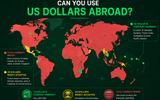
US Dollar
 Euro
Euro British Pound
 UAE Dirham
 Australian Dollar
 Singapore Dollar
Form 15CA and 15CB Explained: When You Need Them and When You Do Not

Introduction
Let us say you are sending money abroad and, somewhere in the checklist, you spot the words Form 15CA and maybe Form 15CB. For a first-timer, this is usually the moment the whole thing starts to feel complicated. And to be fair, the form does look intimidating. It has four parts, a few thresholds, an exempt list, and a separate CA certificate that some of those parts need. It is genuinely one of the more confusing-looking pieces of forex paperwork.
One more thing worth knowing before we go further, since it is new and most material online has not caught up with it yet: from 1 April 2026, under the Income-tax Act, 2025, Form 15CA was renamed Form 145 and Form 15CB was renamed Form 146. Nothing about what the forms do, who needs them, or the thresholds involved has changed. Only the number on the form changed. Since almost everyone, including most banks and dealers, still refers to them by their old names out of habit, this guide uses 15CA and 15CB throughout, exactly as your dealer or CA is likely to say it to you, with the new names noted alongside on first mention so you recognise either one.
So let us cut through it together. The good news, which is worth saying right at the start, is that most ordinary people sending money abroad for personal reasons never need either form. And in the small number of cases where you do, the logic is far simpler than the form's layout makes it seem. In this guide we will go through what 15CA is for, when you actually need it, when you do not, and what 15CB adds on top.
What Form 15CA actually does
In simple terms, Form 15CA, now Form 145, is how the Income Tax Department keeps an eye on money leaving India for tax purposes. It is a self-declaration you file online on the income tax portal, and all it really says is: I am sending this amount abroad, this is what the payment is for, and here is whether it is taxable in India.
The form exists because some payments going abroad are taxable in India, things like fees to a foreign contractor, royalties, or technical charges, and the department wants to see the tax position before the bank releases the money. For an ordinary person sending tuition to a foreign university, there is no Indian tax on the payment, so 15CA either does not apply at all or is filed in its simplest form. And note that the form does not collect any tax itself. It simply signals to the bank or dealer that the tax position has been declared, and it generates an acknowledgement number that gets attached to the transfer.
And what Form 15CB adds
Form 15CB, now Form 146, is a separate certificate, and this one is issued by a chartered accountant rather than by you. It comes into the picture when a remittance is taxable and crosses a certain size. The CA looks at the nature of the payment, works out whether any tax should be withheld, applies any tax-treaty benefit that fits, and certifies the whole tax position.
To put it plainly: an ordinary person sending tuition or family support does not need a CA for this. A business paying a foreign software vendor for a licence, or a company paying for imports above the threshold, does. So 15CB is largely a business document, while 15CA is the one individuals occasionally touch.
The four parts of Form 15CA, made simple

The form looks daunting because it is built to cover everything from a small personal transfer to a multi-crore taxable payment. But here is the reassuring bit: most people only ever deal with one of its four parts. Let us go through them.
Part A is for a taxable remittance up to 5 lakh in the financial year. It is a simple self-declaration, no CA certificate needed. You fill in the payment details and the tax position online and submit.
Part B is for a taxable remittance above 5 lakh where you have already obtained a certificate from the Assessing Officer, usually a lower or nil deduction certificate. You attach that certificate, and no 15CB is needed because the tax officer has already taken a view.
Part C is the one businesses use most. It is for a taxable remittance above 5 lakh where there is no Assessing Officer certificate. Here the CA issues Form 15CB certifying the tax, and you then file 15CA Part C online with the 15CB acknowledgement number included. Most cross-border business payments, like software licences, consulting, and royalties, sit here.
Part D is for a remittance that is not taxable at all, such as gifts, education, medical treatment, or family maintenance. It is a self-declaration with no CA certificate. This is the part almost every ordinary person ends up filing, in the rare case they need to file 15CA at all.
When 15CA is not needed at all

Here is the part that saves most people the worry. There is a specific list of remittance purposes that are exempt from filing 15CA entirely, and it lives in Rule 37BB of the Income Tax Rules. The everyday purposes that matter to ordinary people, travel for education, medical treatment, family maintenance, gifts, and most personal LRS transfers, sit on this exempt list.
So if you are loading a forex card for a holiday, sending tuition to a foreign university, or supporting a child studying abroad, you very likely do not need to file Form 15CA at all. The authorised dealer simply handles the transfer against your A2 form and PAN. One honest caution, though: the exempt list and the thresholds in Rule 37BB have been changed more than once over the years, so for any amount approaching 5 lakh in a year, it is worth confirming the current position with your dealer or CA at the time of the transfer.
So when does an ordinary person actually need 15CA?
In real life, an individual sending money for personal reasons needs 15CA only in a small set of situations, usually where the payment is taxable in India in some way, or where it falls just outside the exempt categories. For the everyday cases, a tuition wire, a forex card load for travel, family support, or a medical transfer, none of these need it. And the simplest test of all is this: the bank or authorised dealer will tell you if it is needed. They handle these remittances all day long, and they are not going to ask you for a form you do not need.
How to file Part D online, if you do need it
If you do need to file, and it is a non-taxable personal transfer, you will be filing Part D, so here is the gist of it. You log in to the income tax e-filing portal, choose Form 15CA, and select Part D. You fill in your details, the beneficiary's details, the amount in both rupees and the foreign currency with the rate, and the purpose. You submit it, and the portal generates an acknowledgement number, which the dealer then attaches to your transfer. With your details in hand, the whole thing takes around fifteen minutes. It is genuinely friendlier than its reputation suggests.
How businesses file Part C with 15CB
For a business making a taxable payment abroad, the order is slightly different. First, the CA reviews the payment and issues Form 15CB, uploading it and sharing the acknowledgement number. Then the business files 15CA Part C online, embedding that 15CB acknowledgement number. For companies that make foreign payments often, this becomes routine, and most keep a CA on hand who can turn around a 15CB in a day or two.
Small mistakes that hold up a transfer
Most of the delays here come from small errors, so let us flag the usual ones. Filing the wrong part is the big one, for instance filing Part D for a payment that is actually taxable, which gets the form rejected and means refiling, possibly with a 15CB this time. Getting the beneficiary's tax details wrong is another, so if the receiver has no Indian PAN, use their home-country tax ID. Mismatched amounts are a common trip-up too, where the rate used in the form does not match the rate the transfer actually goes out at, so always use the dealer's quoted rate for the real transfer. And for Part C, leaving out the 15CB acknowledgement number, or mistyping it, will bounce the form, so copy it straight from the CA's confirmation rather than typing it by hand.
How the A2 form and 15CA fit together

It helps to be clear that these are two separate pieces of paperwork doing two separate jobs. The A2 form is your declaration to the RBI, under the LRS, that a remittance is for a permitted purpose and within your yearly limit, and it is required for every outward remittance regardless of amount. Form 15CA, where it applies at all, is a separate declaration to the Income Tax Department about the tax position of that same payment. For the great majority of personal transfers, education, medical, family support, travel, only the A2 form is needed, since these purposes sit on the Rule 37BB exempt list for 15CA. The two forms overlap in what they ask about the remittance, but they answer to two different regulators, RBI on one side and the Income Tax Department on the other, and your purpose code on the A2 form is often the same detail that determines whether 15CA even comes into the picture. If your remittance also happens to cross into TCS territory, our guide to TCS under the LRS covers that separately, since TCS and 15CA are two more independent requirements that can both apply, or neither, depending on your situation.
How an authorised dealer makes this easier
Here is the practical reality: most personal forex transfers do not need 15CA at all. An RBI Category-II authorised dealer processes wires for tuition, medical, travel, and family support against the standard A2 form and the LRS declaration, with no 15CA or 15CB involved. For the small set of cases where 15CA is genuinely required, a good dealer will tell you which part to file and what the bank's compliance team will want to see, and where a 15CB is needed, they can point you to a CA who has issued plenty of them. The aim is simple: make sure you do not file what you do not need, and that you do file what you do.
Putting It All Together
Form 15CA is not the monster the checklist makes it look. For the great majority of personal forex transfers, tuition, medical, travel, family support, it simply does not apply. For the few cases where it does, the form has four parts, and only one of them, Part C, needs a CA's certificate. Whether your dealer calls it Form 15CA or its new name, Form 145, the substance is identical. The smartest move is to confirm with your authorised dealer before you file anything. If they say it is not needed, it is not needed. If they say it is, file the right part, and for Part C, get the CA involved early so your transfer does not sit waiting.
Matrix Forex is an RBI-authorised Authorised Dealer Category-II (License No. NDL-ADII-0023-2023), and our team can tell you upfront whether your remittance needs Form 15CA at all, so you are never filling out paperwork you do not need.
Frequently asked questions
Is Form 15CA mandatory for every foreign remittance from India?
No. It is needed only for taxable remittances and a few specific categories. The purposes listed in Rule 37BB, including education, medical treatment, family maintenance, gifts, and most LRS purposes, are exempt. Most individuals never file it.
When does Form 15CB become necessary?
When the remittance is taxable in India, the taxable amount crosses 5 lakh in the year, and you do not have a lower-deduction certificate from the Assessing Officer. In that case a CA issues 15CB and you file 15CA Part C.
Can I file 15CA online without a CA?
Yes, for Part A and Part D, which are self-declarations filed directly on the income tax portal. Part C needs a CA's 15CB first, after which you file Part C with the 15CB acknowledgement number.
Do I need 15CA for a forex card load?
No. A forex card load for travel is on the exempt list under Rule 37BB. The dealer issues the card against your A2 form and KYC, with no 15CA required.
Do I need 15CA for sending tuition fees abroad?
No. Education remittance under the LRS is on the exempt list. The dealer sends the tuition against your A2 form, the admission letter, and your PAN.
What is the difference between 15CA and 15CB?
15CA is your own self-declaration, filed online. 15CB is a chartered accountant's certificate on the tax position of a taxable remittance, and it accompanies 15CA Part C when a taxable remittance crosses 5 lakh without an Assessing Officer certificate.
Can 15CA be revised after filing?
Yes. It can be withdrawn or revised within seven days of filing, provided the dealer has not yet processed the transfer. After processing, a correction needs a fresh form for the corrected transfer.
Why are people now calling these Form 145 and Form 146?
Because from 1 April 2026, the Income-tax Act, 2025 renamed Form 15CA to Form 145 and Form 15CB to Form 146. Nothing about the rules, thresholds, or process changed, only the form numbers. Most banks and dealers still use the old names out of habit, so you are likely to hear both for some time.
Same-day delivery · RBI-authorised · No hidden charges
Get Free Callback →More from the Blog