US Dollar
 Euro
Euro British Pound
 UAE Dirham
 Australian Dollar
 Singapore Dollar
Forex Guide for Travelling to the USA from India (2026)

TL;DR
A US trip from India is the highest-stakes forex decision most travellers make — the dollar is the world's reserve currency, but bank markup on USD is also where Indian banks make the most money per traveller. Plan the forex split (card-heavy with small cash buffer), understand that almost everything in the US is card-acceptable except tipping and small-town gas, and know that the US uses no chip-and-pin (just chip-and-signature or contactless), so an Indian forex card with proper setup works seamlessly. Insurance is non-negotiable — a single emergency room visit can cost USD 10,000+. Plan the trip's forex like you plan the itinerary.
A two-week trip to the US for an Indian family of four typically involves USD 6,000-USD 12,000 in spending — flights paid in INR, but everything on the ground is dollars. Hotel, food, internal flights, attractions, shopping, ride-share, tips, and the inevitable medical-cost-protection. Where you source those dollars determines whether you keep ₹15,000-₹40,000 in your pocket or hand it to your bank as invisible markup.
This guide is the practical forex playbook for an Indian traveller heading to the USA. Cash versus card split, what works and what does not, the tipping reality, the medical insurance non-negotiable, and the small operational details (chip-and-signature, the gas station pre-auth quirk) that catch first-time visitors off-guard.
The cash-vs-card split for a US trip
The USA is one of the most card-friendly countries in the world. Almost every restaurant, store, hotel, taxi, ride-share, attraction, and even most food trucks accept cards — Visa and Mastercard, including forex cards. The right split for a typical Indian traveller is roughly 90% card, 10% cash.
The 10% cash buffer is for: tipping (often expected in cash for housekeeping, valets, tour guides), tips at small establishments, small-town gas stations that occasionally have card issues with foreign cards, parking meters in older areas, and the rare cash-only restaurant or food vendor. For a 14-day trip with USD 8,000 budget, USD 600-USD 800 in cash is more than enough.
Why a forex card beats a credit card in the USA
Indian credit cards used abroad come with a 3-3.5% foreign transaction fee, plus the bank's own forex markup baked into the rate. On USD 8,000 of spending, that is roughly ₹20,000-₹25,000 in fees. A USD-loaded forex card from an authorised dealer carries no foreign transaction fee at all — you spend at the rate you loaded.
The other advantage is rate-locking. When you load a forex card in India, you lock in the dollar rate for the duration of the trip. If the rupee weakens 2-3% during your two weeks abroad (which happens regularly), your forex card spending stays unaffected, while every credit card swipe gets converted at the day's rate including markup.
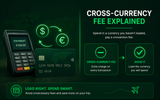
Caveat: load the forex card with USD specifically, not in another currency. If you load EUR and spend in the US, every transaction triggers a cross-currency markup of 3-5%. The USA is single-currency for a reason — keep the card single-currency too.
The tipping reality (and why you need cash for it)
Tipping in the US is not optional and not a small amount. Service workers depend on tips for the bulk of their income, because base wages are intentionally low — the system runs on the assumption tips will be paid.
Standard tipping rates: 18-22% at sit-down restaurants, 15-20% for ride-share and taxi, USD 1-USD 2 per drink at bars, USD 2-USD 5 per night for hotel housekeeping (left in cash on the pillow with a note), USD 1-USD 2 per bag for porters, 15-20% for hairdressers, spas, and similar services. Tour guides typically get USD 10-USD 20 per person for a half-day tour.
Most card-payment terminals at restaurants prompt for a tip during the transaction, so card-tipping is normal. But housekeeping, valets, doormen, porters, and small services are cash-tip situations. Plan your USD cash withdrawal accordingly — small bills (USD 1, USD 5, USD 10) are far more useful than large ones.
Travel insurance: the non-negotiable item
A single emergency room visit in the USA can cost USD 5,000-USD 15,000 even for something minor. A broken bone treated in a hospital can hit USD 30,000-USD 50,000. The US healthcare system charges international tourists at full rates with no government safety net.
A travel insurance policy for a 14-day US trip typically costs ₹2,500-₹5,000 per person and covers up to USD 250,000-USD 500,000 in medical emergencies, plus trip cancellation, baggage loss, flight delays, and emergency evacuation. The insurance cost is roughly 1% of your trip budget. Skipping it to save that 1% is the most expensive risk in international travel — every Indian traveller knows someone who learned this the hard way.
Buy the policy before departure (most are valid only if purchased before leaving India), keep the policy document and emergency helpline numbers easily accessible, and confirm pre-existing conditions are disclosed honestly during purchase or coverage can be denied at the time of claim.
eSIM and connectivity in the USA
A US eSIM purchased before departure costs roughly ₹800-₹2,500 for 7-30 days of data, depending on the plan and provider. Activate it before boarding the flight to the US — the moment you land, you have working data without scrambling for a SIM kiosk at the airport.
Indian roaming on US networks costs ₹500-₹1,500 per day with most operators, and the data is often capped after a small fair-use limit. For a 14-day trip, an eSIM saves ₹5,000-₹15,000 compared to international roaming — and the connectivity is more reliable.
Operational details that catch first-time visitors
Chip-and-signature, not chip-and-PIN
Most US card transactions are chip-and-signature, not chip-and-PIN like India and Europe. Your card may be inserted into the terminal and then you sign on a touchpad or a paper receipt. Some terminals also prompt for a PIN — if asked, enter your forex card PIN as set during issuance. A small number of transactions are contactless (tap), which is increasingly common at chains and transport.
The gas station pre-authorisation hold
When you swipe at a US gas pump, the system places a pre-authorisation hold of USD 75-USD 150 on the card before fueling, then settles the actual amount within 1-3 days. This means you can see USD 100 "missing" from your forex card balance even after a USD 30 fuel purchase. The unused portion releases automatically. The same happens at hotel check-in (USD 100-USD 250 hold) and car rental (USD 200-USD 500 hold). Plan card balance accordingly.
ZIP code prompts at gas stations and self-checkout kiosks
Some unattended terminals (gas pumps, self-checkout, parking meters) prompt for a ZIP code as a verification step. Foreign cards do not have a US ZIP code, and the prompt fails. The workaround is to use an attended counter, where a human can process the transaction without the ZIP check. This is a quirk of older payment systems — newer terminals handle foreign cards correctly.
How much USD to load on the forex card
Estimate trip spending realistically: hotel (already pre-paid in INR if booked online, otherwise USD 100-USD 300 per night), food (USD 40-USD 100 per person per day), internal flights and trains (varies), attractions and tours (USD 30-USD 100 per person per attraction), shopping budget (varies), transport (USD 30-USD 80 per day for ride-share), and a contingency buffer of 15-20%.
Load roughly 90% of the estimate on the forex card, withdraw the cash portion separately for tipping and small-town situations. If you finish the trip with leftover balance on the card, you can either keep it for the next trip (cards typically valid 5 years) or convert it back to INR at a small reload fee from your authorised dealer.
The numbers on a USD 8,000 trip
A worked example: family of three, 14-day East Coast trip, USD 8,000 spending budget (excluding flights and pre-paid hotels).
Done badly via Indian credit cards plus airport currency exchange: 3.5% credit card foreign markup on USD 7,000 of card spending = USD 245 (₹20,500). 4-5% markup on USD 1,000 cash from airport = USD 45 (₹3,800). Plus poor exchange rate baseline. Total leaked: roughly ₹28,000-₹35,000.
Done well via authorised dealer forex card plus pre-trip cash: USD 7,200 on forex card at near mid-market rate, USD 800 cash at near mid-market rate. Total leaked: roughly ₹3,000-₹5,000. The same trip, ₹25,000+ saved, no compromise on convenience.
Where Matrix Forex fits in for a US trip
Matrix is an RBI Category-II Authorised Dealer with branches in nine Indian cities and same-day delivery for forex cards and cash. For a US trip, that means a USD-loaded card delivered to your door (or branch pickup) in time for your departure, live mid-market rates without the bank markup, and no foreign transaction fee on US spending. Plus travel insurance and US eSIMs available in the same booking. The aim is the trip you planned, not the bank surprise on your credit card statement after.
Frequently asked questions about forex for travelling to the USA
Is a forex card or cash better for a USA trip from India
A forex card is significantly better for the USA. The USA is one of the most card-accepting countries in the world — restaurants, hotels, ride-share, attractions, and most shops all accept Visa and Mastercard forex cards without issue. Cash is needed only for tipping, small establishments, and the rare cash-only vendor. A 90% card and 10% cash split works for most travellers. A USD-loaded forex card from an authorised dealer also avoids the 3-3.5% foreign transaction fee that Indian credit cards charge.
How much US dollars should I carry in cash for a 10-day USA trip
For a typical 10-day USA trip, USD 400-USD 700 in cash is sufficient for an average traveller. This covers tipping (housekeeping, valets, porters, tour guides), small establishments, parking meters, and the occasional cash-only vendor. Carry the cash in small denominations (USD 1, USD 5, USD 10, USD 20) — large bills are harder to break and less useful for tipping. Keep most of the cash in the hotel safe and carry only what you need for the day.
Do I need to declare US dollar cash when entering the USA
You do not need to declare amounts under USD 10,000 (or equivalent) when entering the USA. Above USD 10,000 in cash or monetary instruments per person, you must file a FinCEN Form 105 with US Customs on arrival. Failure to declare is a serious offence. From the Indian side, RBI rules limit cash carry to USD 2,000 equivalent per trip for most purposes — the rest of your forex must be on a card or traveller's cheques.
What is the foreign transaction fee on Indian credit cards in the USA
Most Indian credit cards charge a foreign transaction fee of 3-3.5% on every USD transaction in the USA, plus the card network's own forex markup which is typically baked into the exchange rate quoted on your statement. The combined cost can easily reach 4-5% per transaction. A forex card loaded with USD avoids this entirely — you spend at the rate you loaded the card, with zero foreign transaction fee at point of sale.
Is travel insurance mandatory for travel to the USA
Travel insurance is not legally mandatory for entering the USA on a tourist visa, but it is functionally non-negotiable. The US healthcare system is the most expensive in the world for international travellers — a single emergency room visit can cost USD 5,000-USD 15,000, and a hospitalisation can run into tens of thousands of dollars. A travel insurance policy for the USA costs roughly ₹2,500-₹5,000 per person for a two-week trip and covers medical emergencies up to USD 250,000-USD 500,000. Buy it before you leave India.
Will my Indian forex card work at every US ATM and store
A Visa or Mastercard forex card from a reputable authorised dealer works at virtually all major US ATMs (Chase, Bank of America, Wells Fargo, Citibank, and most regional bank ATMs) and at any merchant that accepts Visa or Mastercard, which is nearly all of them. ATM withdrawals carry a small fee (typically USD 2-USD 5 per withdrawal from your forex card, plus any ATM-owner fee — withdraw larger amounts less frequently). At unattended self-service kiosks (gas pumps, parking meters), some older terminals require a US ZIP code that foreign cards do not have — use an attended counter instead.
Should I get a US eSIM or use international roaming for a USA trip
A US eSIM is significantly cheaper than international roaming for a USA trip. An eSIM with 7-30 days of data costs ₹800-₹2,500 from most providers, while Indian operator international roaming on US networks runs ₹500-₹1,500 per day with limited fair-use data. For a two-week trip, eSIM saves ₹5,000-₹15,000 and the data is usually faster and more reliable. Activate the eSIM before boarding so you have connectivity the moment you land.
How does the USA tipping system work for Indian travellers
Tipping in the USA is expected, not optional, and forms a significant part of service workers' income. Standard rates are 18-22% at sit-down restaurants (often calculated on pre-tax bill), 15-20% for ride-share and taxi, USD 1-USD 2 per drink at bars, USD 2-USD 5 per night for hotel housekeeping in cash, USD 1-USD 2 per bag for porters, and 15-20% for spa services and hairdressers. Many restaurant card terminals prompt for a tip percentage during payment, but cash is needed for housekeeping, porters, valets, and small services. Plan USD cash in small bills accordingly.
Can I get tax refunds (like VAT) on shopping done in the USA
The USA does not have a national VAT system, and most states do not offer tax refunds for international tourists on the way out. A few exceptions: Texas, Louisiana, and Washington state have limited tax-free shopping schemes for tourists with proper documentation (passport, departure proof, original receipts) at participating stores. Most states do not offer this. Treat US sales tax (typically 5-10% depending on state) as a final cost, not as something refundable like in Europe.
The simple takeaway
A US trip is high-spend, high-card-usage, and high-margin for whoever supplies your forex. Get a USD-loaded forex card from an authorised dealer, pull a small cash buffer for tipping, buy travel insurance the same day you book the flight, and grab a US eSIM before departure. That combination saves ₹15,000-₹35,000 on a typical family trip and removes every common payment friction Indian travellers hit in the USA. The trip is expensive enough already — the forex side should not be where you lose more.
Same-day delivery · RBI-authorised · No hidden charges
Get Free Callback →More from the Blog