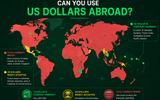
US Dollar
 Euro
Euro British Pound
 UAE Dirham
 Australian Dollar
 Singapore Dollar
Forex Guide for Travelling to Singapore from India

Introduction
Singapore is the most efficient destination in Asia for forex purposes.
Almost everything is card-acceptable. Contactless tap is standard at most outlets. Public transport runs on either an EZ-Link card or a contactless Visa or Mastercard tap. Even hawker centres, traditionally the holdout of cash-only culture, now widely accept PayNow QR and cards. The Singapore Dollar is managed against a basket of currencies by the Monetary Authority of Singapore, which makes the rate stable.
Plan for most of the spending on a card and a small cash buffer for the rest.
This guide walks through the MAS managed-band rate explained in plain language, the SGD card and cash split, the EZ-Link versus contactless transit choice, the hawker centre payment evolution, the GST refund process, and the small operational details that make Singapore one of the easiest international destinations to handle from the forex side.
Why the Singapore Dollar is stable: the MAS managed band
Most central banks set monetary policy through interest rates.
Singapore is different. The Monetary Authority of Singapore manages the Singapore Dollar against a trade-weighted basket of currencies, allowing it to fluctuate within a managed band. This is the country's primary monetary policy tool, used because Singapore's economy is so trade-dependent that exchange rate stability matters more than interest rate flexibility.
Practical implication for an Indian traveller, SGD movements against the rupee are smoother than freely floating currencies, mostly tracking USD movements with minor variations. This makes the timing of when to load your forex card less critical, since the rate you lock today is unlikely to look dramatically different in two weeks.
Singapore is a card-first economy
Singapore was an early adopter of contactless payment, and the rollout has been comprehensive.
Major hotels including Marina Bay Sands, Raffles, and Shangri-La, branded restaurants, all malls including Orchard Road's ION, Paragon, Wisma, plus VivoCity, Marina Bay Sands, and Bugis Junction, supermarkets, attractions like Universal Studios, Sentosa, Singapore Zoo, and Gardens by the Bay, Grab, and most taxis accept Visa and Mastercard, including forex cards.
In recent years, even hawker centres have rolled out card and PayNow QR acceptance.
Maxwell Food Centre, Lau Pa Sat, Newton, and Tiong Bahru now widely accept cards, though some individual stalls remain cash-only. Plan most of the spending on a card with a smaller cash buffer for the hawker holdouts and tipping.
The SGD forex card setup
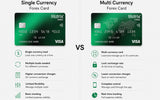
Load a forex card with SGD specifically, not USD, not multi-currency where SGD is one of several.
SGD-loaded means zero cross-currency markup on Singapore spending. Loading USD and spending in Singapore triggers a cross-currency conversion fee on every transaction, defeating the purpose of using a forex card.
Authorised dealers in India offer SGD at near-mid-market rates with same-day delivery in major cities.
Compare the effective rate (rupees per SGD) against the live mid-market rate from Google before booking. The gap should be narrow for a fair deal. Bank rates often run noticeably wider.
EZ-Link card versus contactless tap for Singapore transport
Singapore's public transport (MRT trains, buses) accepts two payment methods.
An EZ-Link card, the local stored-value transit card sold at every MRT station with a starting balance loaded on it. Or a contactless Visa or Mastercard tap directly via the SimplyGo system.
For short trips, contactless tap with your forex card is simpler.
No card to buy, no leftover credit at the end. The forex card taps in and out at MRT gates exactly like a contactless debit card, with the same fares as EZ-Link. Each traveller needs their own card. A family of four cannot tap one card four times at the same gate; only the first tap registers.
For longer stays, EZ-Link cards may offer marginal advantages on certain bus routes. For most Indian travellers on a four-to-seven-day trip, the forex card is the simpler choice.
Where to exchange SGD if you need cash on arrival
If you arrive in Singapore needing additional SGD cash beyond your card load, the airport currency exchange counters at Changi offer reasonable but not great rates.
Better options exist within the city. The Arcade at Raffles Place has multiple money changers offering rates close to mid-market. Mustafa Centre in Little India operates 24x7 with similar rates. The People's Park Complex in Chinatown has competitive rates too.
The practical strategy is straightforward.
Load most of your SGD on a forex card from India, withdraw a small amount of SGD cash on arrival from Changi ATMs or buy a modest amount at airport exchange for immediate needs, and if more cash is required mid-trip, exchange at The Arcade or Mustafa rather than tourist-area money changers.
GST refund for tourists at Changi Airport
Singapore charges 9 per cent GST.
Tourists can claim a refund on goods purchased above SGD 100 from participating retailers and exported within 60 days. The Tourist Refund Scheme is administered through eTRS. At participating stores, the cashier issues an eTRS ticket linked to your passport.
Before departure at Changi Airport, scan the ticket at the eTRS self-help kiosk, complete customs inspection if randomly selected, and receive the refund credited to your forex card or paid in cash, minus a small admin fee. For travellers planning meaningful electronics or luxury purchases, the refund is worth claiming.
Loading the right SGD amount for a Singapore trip
A typical Singapore trip for a couple covers four to five days of dining, attractions, and shopping, with hotels and flights pre-paid in rupees.
Load most of the spending budget on the SGD forex card, withdraw a modest amount of cash for hawker stalls (where cards are still not universal), small purchases, and tipping. Established RBI Category-II authorised dealers like Matrix Forex offer same-day SGD forex card and cash delivery in major Indian cities.
Putting It All Together
Singapore is the most predictable, efficient, and card-friendly major Asian destination from India.
The MAS managed exchange rate makes SGD prices stable. Contactless dominates payment. The hawker centre cash culture is increasingly transitioning to digital. The GST refund at Changi rewards anyone making meaningful purchases.
Get an SGD-loaded forex card from an RBI-authorised dealer, withdraw a modest cash buffer for hawker stalls and taxis, and use contactless tap for the MRT. That setup removes every friction point Indian travellers might hit at Singapore terminals, exactly the way a clean trip should feel.
Frequently asked questions about forex for travelling to Singapore
Is a forex card or cash better for a Singapore trip from India?
A forex card is significantly better. Singapore is one of the most card-friendly destinations in Asia. Major hotels, restaurants, malls, attractions, supermarkets, and transport all accept Visa and Mastercard contactless. Even hawker centres now widely accept cards and PayNow. An SGD-loaded forex card from an authorised dealer avoids the foreign transaction fee that Indian credit cards charge.
How much SGD cash should I carry for a 5-day Singapore trip?
A modest amount in cash is sufficient. Cash is needed for some hawker stalls (though many now accept PayNow QR), small kopitiams, taxi top-ups if you are not using Grab, tipping, and the rare cash-only vendor. Carry small denominations and keep most of the cash in your hotel safe. The rest of the trip runs smoothly on a forex card.
Where should I exchange currency for Singapore, India or Singapore?
For SGD specifically, Indian authorised dealers offer near-mid-market rates that compete well with Singapore's in-country exchange chains. Two good options are to load SGD on a forex card from an Indian authorised dealer before flying, or to carry a small amount of SGD cash from India for immediate needs and exchange additional cash at The Arcade at Raffles Place or Mustafa Centre in Little India if needed mid-trip. Avoid Singapore Changi airport exchange counters and Indian airport exchange counters for large amounts.
Do I need an EZ-Link card or can I just tap my forex card on Singapore MRT?
You can tap your contactless forex card directly on Singapore MRT and bus readers via SimplyGo. Fares are identical to EZ-Link cards. For a short trip, this is simpler than buying an EZ-Link card and dealing with leftover credit. Each traveller needs their own card. EZ-Link cards may be marginally better for frequent travellers or families using buses heavily, but for most Indian tourists on a typical trip, contactless via the forex card is the easier choice.
Can I claim a GST refund on shopping in Singapore as an Indian tourist?
Yes. Singapore charges 9 per cent GST and offers a Tourist Refund Scheme on purchases above SGD 100 from participating retailers. At checkout, request an eTRS ticket linked to your passport. Before departure at Changi Airport, scan the ticket at the eTRS self-help kiosk, complete any customs inspection, and receive the refund credited to your forex card or paid in cash, minus a small admin fee.
Will my Indian forex card work at Singapore hawker centres?
Increasingly yes, though not universally. Singapore has been actively rolling out card and PayNow QR acceptance at major hawker centres including Maxwell, Lau Pa Sat, Newton, Chinatown Complex, and Tiong Bahru. Many individual stalls now accept Visa and Mastercard contactless tap. However, some smaller traditional stalls remain cash-only. Carry a small amount of cash in small notes for hawker meals where cards are not accepted.
How does tipping work in Singapore for Indian travellers?
Tipping in Singapore is not customary or expected. Most restaurants and hotels add a 10 per cent service charge plus GST to the bill. No additional tip is required when this is included. For taxis and Grab, rounding up the fare is appreciated but not necessary. Hotel housekeeping and porters appreciate a small SGD tip if you wish, but Singapore's service economy does not depend on tips.
Why is the SGD rate so stable compared to other currencies?
The Singapore Dollar is managed by MAS inside an undisclosed band against a trade-weighted basket of trading-partner currencies. MAS adjusts the band's slope and width periodically. This makes SGD generally more stable than freely-floating currencies, so SGD-INR has lower week-to-week volatility than GBP-INR or EUR-INR. It does not make the rate fixed. It just dampens the volatility.
Same-day delivery · RBI-authorised · No hidden charges
Get Free Callback →More from the Blog