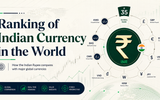
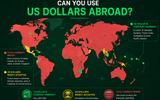
US Dollar
 Euro
Euro British Pound
 UAE Dirham
 Australian Dollar
 Singapore Dollar
Forex for First-Time International Travellers, Complete 2026 Guide

TL;DR
A first international trip is the most expensive one to get wrong on money. The default Indian setup that works almost everywhere: a forex card loaded in the destination currency at the live interbank rate, USD 200-300 equivalent in cash for arrival and small spends, and an Indian credit card kept locked away as backup. Skip airport money changers, never let a payment terminal abroad convert to INR, and load currency through an RBI-authorised dealer rather than buying it at the airport on the day of travel.
The first international trip is the one nobody warns you about properly. The flight is booked, the hotel is sorted, the visa is in your passport. Then someone says "what about money" and a small panic begins. Cash or card. Forex card or credit card. How much. Where to buy. What rate. The worst part: nobody at the bank counter explains it because the bank counter benefits from you not knowing.
This guide is the complete money setup for an Indian going abroad for the first time. No prior forex knowledge assumed. Read it once, set things up the way it suggests, and the next ten trips become routine.
The 90-second mental model
Three things move money for an international trip: a forex card (a prepaid card loaded with foreign currency, swiped abroad like a debit card), cash (small amounts of foreign currency notes, for places that do not accept cards), and an Indian credit/debit card (rarely used abroad because of cross-border fees, kept as emergency backup).
For 95% of first-trip spending, the forex card does the work. Cash covers cabs, tips, street food, and the rare card-doesn't-work moment. The Indian card is for emergencies — a hotel demanding INR pre-authorisation, a missed flight rebooking, a stuck-in-Dubai-overnight situation.
Why a forex card beats every other option for a first trip
Two reasons: rate and protection. A forex card loads at the live interbank exchange rate when bought from an RBI-authorised dealer with zero markup. The same money on an Indian credit card abroad gets hit with a 3-3.5% foreign currency markup plus the bank's exchange rate spread — typically 5-7% worse than a forex card on the same purchase.
On a 7-day trip with USD 1,500 in card spend, the difference is roughly ₹6,000-₹9,000 — money that buys you two more dinners in Paris, a day trip in Bangkok, or a nicer hotel room in London. Free money, just by using the right card.
The protection angle: forex cards are PIN-locked, separately insured, and not connected to your main bank account. If you lose it, you call the issuer, block it, and the linked replacement card arrives at your hotel within 1-2 working days in major cities. Lose your Indian debit card abroad and the situation is messier — your home bank account is now potentially exposed.
How much money to plan for — destination by tier
A working framework rather than a single number, because trip cost varies wildly by destination.
Tier 1 (Southeast Asia, Sri Lanka, Nepal): USD 60-100 per person per day for a comfortable mid-range trip. A 7-day Thailand trip on this budget runs USD 420-700 (₹35,000-₹58,000) for spending after pre-paid hotels and flights.
Tier 2 (UAE, Singapore, Malaysia, Vietnam, Eastern Europe): USD 100-180 per day. A 5-day Dubai trip lands around USD 500-900 (₹42,000-₹75,000).
Tier 3 (Western Europe, UK, Australia, Japan): USD 180-300 per day. A 10-day Schengen trip at this level runs USD 1,800-3,000 (₹1,50,000-₹2,50,000).
Tier 4 (USA, Switzerland, Scandinavia, premium-tier Japan): USD 250-400+ per day. A 12-day USA trip easily reaches USD 3,000-4,500.
These are spending budgets — money that flows through your forex card and cash. Pre-paid hotels, flights, and tours sit outside this number and get paid in INR before you leave.
The first-trip money setup, step by step
Step 1: Apply for the forex card 7-10 days before travel
A forex card requires KYC (PAN, passport, visa, ticket) and is issued by an RBI-authorised entity. The card itself takes 1-3 working days to issue depending on the city. Same-day delivery is available in major Indian cities (Mumbai, Delhi, Bangalore, Hyderabad, Chennai, Pune) through select RBI Category-II dealers, including weekends.
Apply through an RBI Category-II authorised dealer rather than a fintech overlay. The Cat-II dealer holds the licence directly, which means rate practice, KYC, and dispute resolution all flow through the licensed entity rather than through an intermediary layer.
Step 2: Load the right currencies, in the right amounts
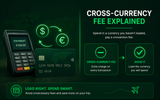
Single-country trip: load just that country's currency. UK trip → load GBP. Japan trip → load JPY. Loading USD and then spending it in JPY triggers a cross-currency conversion charge (3-4% extra) every time you swipe.
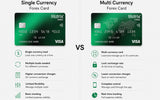
Multi-country trip: a multi-currency forex card holds up to 28 currencies on the same card. Load each country's local currency in proportion to your time there. Schengen 3-country trip (France 4 days, Italy 4 days, Germany 3 days) → load EUR for the whole trip; Schengen uses one currency.
Amount to load: 70-80% of your spending budget on the card; remainder as cash or buffer for top-up later (most cards reload online from India in real time).
Step 3: Withdraw a small amount of cash for arrival
USD 200-300 equivalent in destination currency for arrival day spends — airport SIM card, taxi from airport (in countries where ride-shares are not common), tips, the first meal, small purchases. Indian RBI rules cap personal-trip cash carry at USD 2,000 equivalent per trip, so well within limits.
Buy the cash from the same RBI-authorised dealer who issued the forex card — same KYC, same trip, single invoice. Avoid buying foreign currency at the airport on the day of travel; airport rates are typically 4-7% worse than what an authorised dealer in the city offers.
Step 4: Keep an Indian credit card for emergencies only
Lock your regular Indian credit card in the hotel safe. Use it abroad only for emergencies — re-booking a missed flight, a hotel that requires INR-card pre-authorisation, a medical situation, a hospital deposit. A 3-3.5% markup is acceptable for an emergency; it is not acceptable for daily restaurant spending.
The five mistakes first-timers make
Saying "yes" to dynamic currency conversion
At any payment terminal abroad, the screen will sometimes ask: "Pay in EUR or INR?" Always pay in the local currency (EUR in Europe, USD in America, etc.). Choosing INR triggers dynamic currency conversion — the merchant's payment processor adds 4-7% on top, captured as profit by the processor. The forex card already converts at the live interbank rate; letting the merchant terminal convert is paying twice.
Buying currency at the airport
Airport money changers operate on a 4-7% spread because they have a captive audience. A passenger boarding in 90 minutes will accept any rate to avoid travelling without cash. Buy in the city, not at the airport.
Loading the wrong currency for the destination
Loading USD for a Europe trip "because USD is the international currency" — this is the most common first-trip mistake. Every swipe in a EUR shop on a USD-loaded card triggers cross-currency conversion. Load EUR for Europe. Load GBP for the UK. Load THB for Thailand. The rule is: load what you will spend.
Not telling the home bank about the trip
Indian credit/debit cards used abroad sometimes get auto-blocked by the home bank as suspected fraud. A simple call to the bank or a notification through the bank app, marking the dates and countries of travel, prevents this. Particularly important for the Indian credit card kept as backup — a blocked emergency card is not an emergency card.
Carrying too much cash
USD 2,000 equivalent is the RBI cap, but anything more than USD 300-500 for arrival is unnecessary. Cash is bulky, cannot be replaced if lost, and earns no interest while sitting unused. The forex card is the carrier; cash is the backup. Most first-timers carry too much cash and end up converting back to INR at a loss when they return.
What changes for very long first trips (3+ weeks)
A 3-week Europe trip or a 4-week Australia trip needs a slightly different setup. Load only 60% of total budget initially; reload online from India once you arrive and have a clearer picture of actual spending. Long trips also justify carrying two forex cards (or one primary + one backup) so a lost card does not strand you for the 24-48 hours it takes to issue a replacement.
Trips over 6 months hit a different question entirely — whether the trip qualifies as a "stay abroad" under FEMA, which has its own forex rules and account requirements. Most leisure first-timers will not hit this threshold; mentioning it for completeness.
A first international trip is also the trip where most people become someone's long-term forex customer. The provider that delivers the card on time, gives the live rate, and handles the inevitable "my card isn't working" call at 11pm Bangkok time is the provider you will use for the next ten trips. Choose carefully on trip one.
Frequently asked questions about forex for first-time international travellers
How much foreign currency should I carry on my first international trip?
Plan a daily spending budget by destination tier (USD 60-100 for Southeast Asia, USD 100-180 for the Gulf and Singapore, USD 180-300 for Western Europe and UK, USD 250-400 for the USA), multiplied by trip days. Load 70-80% of that on a forex card and carry USD 200-300 equivalent in cash for arrival. The RBI cash carry limit is USD 2,000 per trip, so no first trip should be near that ceiling.
Is a forex card better than a credit card for a first international trip?
Yes, for the daily spending portion. A forex card from an RBI-authorised dealer loads at the live interbank rate with zero markup; an Indian credit card abroad attracts 3-3.5% foreign currency markup plus the issuing bank's exchange rate spread. On USD 1,500 of trip spend, that is roughly ₹6,000-₹9,000 in extra cost on the credit card route. Keep the credit card as emergency backup, not as primary spend.
Can I use my Indian debit card abroad on my first trip?
Technically yes — most Indian debit cards on Visa/Mastercard work at international ATMs. Practically, no — the foreign currency markup, the ATM withdrawal fee charged by both your bank (USD 3-7) and the foreign ATM (USD 2-5), and the exposure of your primary bank account to international fraud risk make it a poor option. A forex card replaces the debit card abroad for almost every use.
Where should I buy foreign currency for my first international trip?
From an RBI Category-II authorised dealer in your city, ideally 7-10 days before travel. The Cat-II dealer holds the licence directly (verified on rbi.org.in), offers rates close to the live interbank rate, and provides delivery to home or office. Avoid airport money changers (rates 4-7% worse), avoid roadside currency exchanges (no audit trail, possible counterfeit risk), and verify any provider on the RBI list before transacting.
What is the USD 250,000 LRS limit and does it affect a first international trip?
The Liberalised Remittance Scheme allows every Indian resident individual to send abroad up to USD 250,000 per financial year for permitted purposes including travel. A first international trip rarely uses anywhere near this — a typical trip uses USD 1,500-5,000 — so the LRS limit is almost never a constraint for travellers. It becomes relevant for education, medical treatment, or buying property abroad.
What does dynamic currency conversion mean and why should I avoid it?
Dynamic currency conversion (DCC) is when a payment terminal abroad asks you to pay in INR rather than the local currency. The merchant's payment processor then adds 4-7% on top of the conversion as their profit. Always decline — pay in the local currency (EUR, USD, GBP, THB, etc.). Your forex card or credit card converts at a much better rate than the DCC option.
How do I check if a forex card provider is RBI authorised?
Cross-check the entity name on the RBI authorised dealer list at rbi.org.in. Look for "AD Category-II" or "AD Category-I" status. The licence reference and date of authorisation should also appear on the provider's website. Any forex card provider that cannot show its RBI authorisation reference, or whose name does not appear on the official list, should be avoided regardless of how attractive its rates appear.
Should I carry an emergency forex back-up on a first trip?
For a single-country trip under 10 days, no — one well-loaded forex card plus USD 200-300 cash plus a locked-away Indian credit card is sufficient. For trips over 2 weeks or trips covering 4+ countries, a second forex card (or a different card type as backup) is reasonable insurance against a lost or blocked primary card. The cost of issuing a second card is small relative to being stranded without spend ability for 1-2 days.
The simple takeaway
A first international trip needs three things: a forex card loaded with the destination currency from an RBI-authorised dealer, USD 200-300 of cash for arrival, and an Indian credit card locked in the hotel safe for emergencies. Always pay in the local currency at terminals. Skip airport money changers. Verify the provider on the RBI list before applying. The whole setup takes 30 minutes online and one trip to the dealer or one delivery to your home.
Get this right on trip one and the next ten trips become muscle memory. The mistakes a first-timer typically makes — DCC, airport rates, wrong currency loaded, too much cash — are all preventable with the structure above.
Same-day delivery · RBI-authorised · No hidden charges
Get Free Callback →More from the Blog