 US Dollar
 Euro
Euro British Pound
 UAE Dirham
 Australian Dollar
 Singapore Dollar
Mauritius Travel Guide
A practical Mauritius travel guide for international travellers: the Mauritian Rupee, cards versus cash, passport-based entry, the mandatory travel form, the tourist fee, island transport, regional budgets and money tips.
Mauritius money at a glance
Currency
Mauritian Rupee (MUR), shown as Rs. Exchange rates float, so compare the final MUR amount after margins and fees.
Paying
Card-friendly at resorts, hotels and larger shops; cash for markets, buses, snacks and tips. Carry both.
Cash for a week
MUR 2,000 to 5,000 is practical for card-using travellers, with smaller notes for buses, tips and markets.
Entry
Depends on the passport held; visa-exempt, visa-on-arrival and pre-arranged routes exist. All travellers complete the official All-in-One Travel Form before boarding. See the entry section.
Daily budget
Roughly MUR 4,500 to 9,000 per person per day for a mid-range trip; luxury resorts and private excursions raise this sharply.
Tax and fees
VAT is 15%. A EUR 3 nightly tourist fee applies at designated accommodation for travellers aged 12 or above (see the fees panel).
Mauritius is comfortable for card-using travellers at resorts, hotels, larger restaurants and shops, but cash still matters for buses, markets, street food, small vendors and tips. The Mauritian Rupee may not be stocked by every travel-money provider at home, so compare a low-fee bank card or multi-currency travel card, keep a backup card and arrange a modest cash float for arrival. Decline any card-terminal offer to convert a payment into your home currency.
Best places to visit in Mauritius
Most first-time visitors split their stay between a beach base and the southwest or central highlands. The island is compact, so a driver or rental car makes beach-hopping and evening travel much easier than buses alone.
 North
NorthGrand Baie
Restaurants, nightlife, beaches and northern islet trips.
 Northwest
Trou aux Biches and Mont Choisy
Calmer beaches, good for couples and family stays.
 Northwest
Port Louis
Markets, museums, food and Aapravasi Ghat heritage.
 West
WestFlic en Flac and Tamarin
Sunsets, beach stays and dolphin and Black River access.
 Southwest
Le Morne and Black River
Le Morne, hiking, lagoons and luxury resorts.
 Southwest interior
Chamarel and central highlands
Waterfalls, viewpoints, forests and rum and food stops.
 East
EastBelle Mare and Trou d'Eau Douce
Long beaches, resorts and Ile aux Cerfs access.
| City | Region | Daily budget | Paying | In short |
|---|---|---|---|---|
| Grand Baie | North | MUR 5,000-9,500 | Walk, taxi, bus, car | Restaurants, nightlife, beaches and northern islet trips. |
| Trou aux Biches and Mont Choisy | Northwest | MUR 4,500-8,500 | Bus, taxi, car | Calmer beaches, good for couples and family stays. |
| Port Louis | Northwest | MUR 3,500-7,000 | Bus, taxi, walk | Markets, museums, food and Aapravasi Ghat heritage. |
| Flic en Flac and Tamarin | West | MUR 4,500-9,000 | Bus, taxi, car | Sunsets, beach stays and dolphin and Black River access. |
| Le Morne and Black River | Southwest | MUR 6,000-12,000 | Car, driver, tours | Le Morne, hiking, lagoons and luxury resorts. |
| Chamarel and central highlands | Southwest interior | MUR 4,000-8,000 | Car or driver | Waterfalls, viewpoints, forests and rum and food stops. |
| Belle Mare and Trou d'Eau Douce | East | MUR 5,000-10,000 | Taxi, car, boat | Long beaches, resorts and Ile aux Cerfs access. |
What things cost in Mauritius
| Local meal or street food | MUR 150 to 400 |
|---|---|
| Casual restaurant meal for one | MUR 400 to 900 |
| Sit-down dinner for two | MUR 1,500 to 3,500 |
| Local bus fare | MUR 20 to 50 |
| Taxi or driver, half day | MUR 1,500 to 3,500 |
| Mid-range hotel per night | MUR 3,000 to 7,000, more at beach resorts |
| Catamaran or island day trip | MUR 2,000 to 4,500 per person |
Budget roughly ₹8,300 to ₹16,650 per person per day on the ground, two sharing a room and excluding flights.
Budget ranges are editorial planning estimates based on typical mid-range travel costs reviewed in July 2026, for one person, two sharing a room, including accommodation but excluding international flights and premium private excursions. Actual prices vary by region and season.
Fees and forms that change
EUR 3 per night per tourist aged 12 or above, collected by designated tourist accommodation (hotels, guesthouses, tourist residences). Under-12s, residents and some permit holders are exempt; the property may show it separately from the room rate.
Mauritius Revenue Authority →All travellers must complete the official Mauritius All-in-One Travel Form, including a health declaration, before boarding. Submit it via the official government site and recheck the live advisory before departure.
Mauritius Government (safemauritius.govmu.org) →Money in Mauritius, in detail
Mauritius pairs lagoon beaches with mountains, Creole food and historic towns on a compact island. It is comfortable for card users at resorts and larger businesses, but cash still matters for buses, markets and tips, and the Mauritian Rupee may not be stocked by every provider at home. Entry depends on the passport held, with visa-exempt, visa-on-arrival and pre-arranged routes, and all travellers must complete the official All-in-One Travel Form before boarding. Budget around MUR 4,500 to 9,000 per person per day for a mid-range trip. Note the EUR 3 nightly tourist fee at designated accommodation, and carry a low-fee card, a backup and a modest cash float.
Understanding the rupee exchange rate
MUR exchange rates float, so compare the final customer rate after margins, card foreign-transaction fees and ATM charges rather than a headline number. The rupee may not be widely stocked abroad, so a low-fee card or multi-currency travel card is often more practical than buying cash before you fly.
How much rupee to carry
MUR 2,000 to 5,000 is a practical starting float for card-using travellers, with smaller notes for buses, snacks, tips and market purchases. Resorts, larger restaurants and shops take cards, so top up cash as needed rather than carrying large amounts.
Cards, cash and payments
Cards and contactless work well at resorts, hotels and larger businesses, but a cash-and-card mix suits the island.
- Cards for resorts and shops: enable international use and know your issuer's fees.
- Cash for daily life: buses, markets, street food, small vendors and tips usually need cash.
- DCC: when a terminal offers MUR or your home currency, choose MUR to avoid an unfavourable processor rate.
The best ATM approach in Mauritius
Use ATMs at recognised banks in towns, resorts and the airport, review any operator fee, and withdraw a sensible amount rather than many small ones. Your own issuer may also charge a withdrawal or conversion fee, and you should decline any offer to convert the withdrawal into your home currency.
Mauritius entry and the travel form
Entry requirements depend on nationality, passport type, purpose and residence; Mauritius has visa-exempt, visa-on-arrival and pre-arranged visa routes, and the official Passport and Immigration Office list for your passport takes priority. Separately, all travellers must complete the official Mauritius All-in-One Travel Form, which includes a health declaration, before boarding; submit it via the official government site and recheck the live advisory before departure (see the fees panel above).
Getting around Mauritius
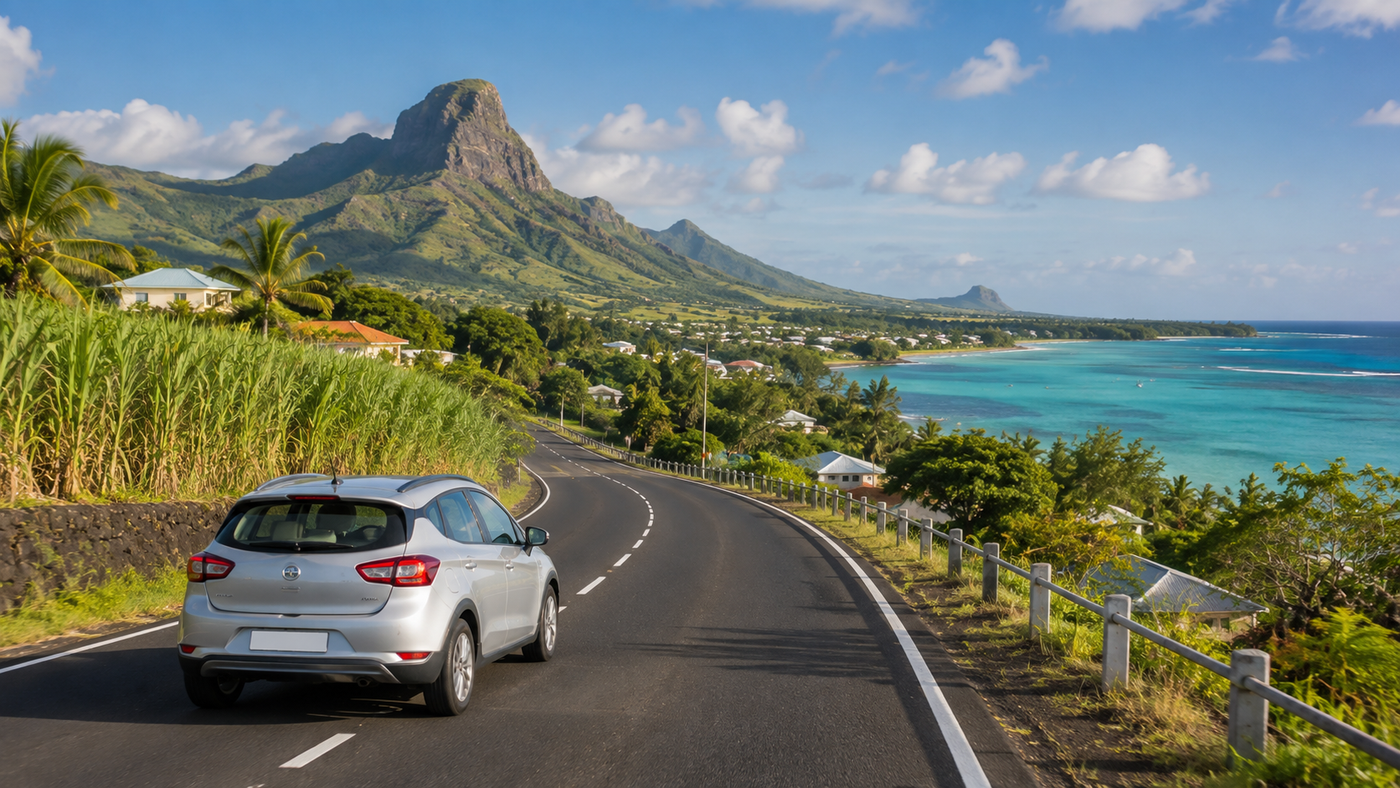
The island is compact but public buses, while affordable, are slow for beach-hopping and limited in the evening. A rental car or a hired driver makes the southwest, central highlands and scattered beaches far easier, and taxis are common for shorter trips. Agree taxi fares before setting off, as meters are not always used.
Tax, the tourist fee and shopping refunds
Mauritius applies 15% VAT to taxable goods and services, and from 1 October 2025 designated tourist accommodation collects a EUR 3 nightly fee for travellers aged 12 or above (see the fees panel). There is no blanket tourist VAT refund: refunds apply only through participating VAT-free or deferred-duty shops, with the required vouchers and goods inspection, so do not assume a general airport refund on shopping.
Cash declaration and customs
There is no general prohibition on carrying large amounts, but travellers entering, transiting or leaving with currency, negotiable instruments, precious metals, stones or other high-value goods worth more than MUR 500,000, or the equivalent, must declare them to Customs.
Weather and when to go
Mauritius has a tropical maritime climate, with a warm humid summer from November to April and a cooler, drier winter from June to September; May and October are transition months. Coastal conditions differ from the wetter, cooler central plateau, and cyclones are possible in summer, so check advisories and keep flexible plans.
Mauritius money FAQs
It depends on the passport held. Mauritius has visa-exempt, visa-on-arrival and pre-arranged visa routes; the official Passport and Immigration Office list for your passport takes priority. Separately, all travellers must complete the official All-in-One Travel Form before boarding.
All travellers must complete the official Mauritius All-in-One Travel Form, which includes a health declaration, before boarding. Submit it through the official government site, ideally around 72 hours before departure, and recheck the live advisory near your travel date.
From 1 October 2025, designated tourist accommodation collects a EUR 3 fee per tourist aged 12 or above for each night. It is collected by the property and may be shown separately from the room rate; under-12s, residents and some permit holders are exempt.
There is no blanket refund on every purchase. VAT is 15%, and refunds apply only through participating VAT-free or deferred-duty shops with the required vouchers and goods inspection, so do not assume a general airport refund.
Card-friendly at resorts, hotels and larger shops, but cash still matters for buses, markets, street food and tips. Carry a low-fee card plus a modest MUR cash float.
MUR 2,000 to 5,000 is practical for card-using travellers, with smaller notes for buses, tips and markets. Top up as needed rather than carrying large amounts.
The rupee may not be stocked by every provider at home, so a low-fee bank card or multi-currency travel card, a backup card and a modest cash float for arrival is usually best. Compare rates and fees before travel.
Currency, instruments or high-value goods worth more than MUR 500,000, or the equivalent, must be declared to Customs when entering, transiting or leaving.
Choose Mauritian Rupees (MUR). Paying in your home currency can trigger dynamic currency conversion, where the merchant or processor sets the rate and may add a margin.
Buses are affordable but slow and limited in the evening; a rental car or hired driver makes beach-hopping and the highlands much easier. Agree taxi fares before setting off, as meters are not always used.
The winter months of June to September are cooler and drier; November to April is warm and humid with a cyclone risk. May and October are pleasant transition months. The coast is warmer than the central plateau.
Tipping is modest and appreciated: small amounts for good service, drivers and guides. Some resorts add a service charge, so check the bill before adding more, and keep small notes for cash tips.
Sort your Mauritian Rupee before you fly
Lock the rate, carry the right mix of cash and card, and know today’s MUR rate before you book.
Official sources reviewed
- Mauritius Passport and Immigration Office — Visa and entry requirements
- Mauritius Government (Safe Mauritius) — Official All-in-One Travel Form
- Mauritius Revenue Authority — Tourist fee and VAT
- Mauritius Revenue Authority / Customs — Currency and goods declaration
- Mauritius Meteorological Services — Weather and cyclone guidance
- Mauritius Tourism Promotion Authority — General travel guidance
Last reviewed 31 July 2026 by Matrix Forex Editorial Team. Next review due 31 October 2026.
Plan your mauritian rupee money before you fly
Check today’s rate, load a multi-currency forex card, or speak to a Matrix Forex expert about the right travel-money mix.
RBI Authorised Dealer Category-II, Licence No. NDL-ADII-0023-2023 · Serving 3 lakh+ customers