 US Dollar
 Euro
Euro British Pound
 UAE Dirham
 Australian Dollar
 Singapore Dollar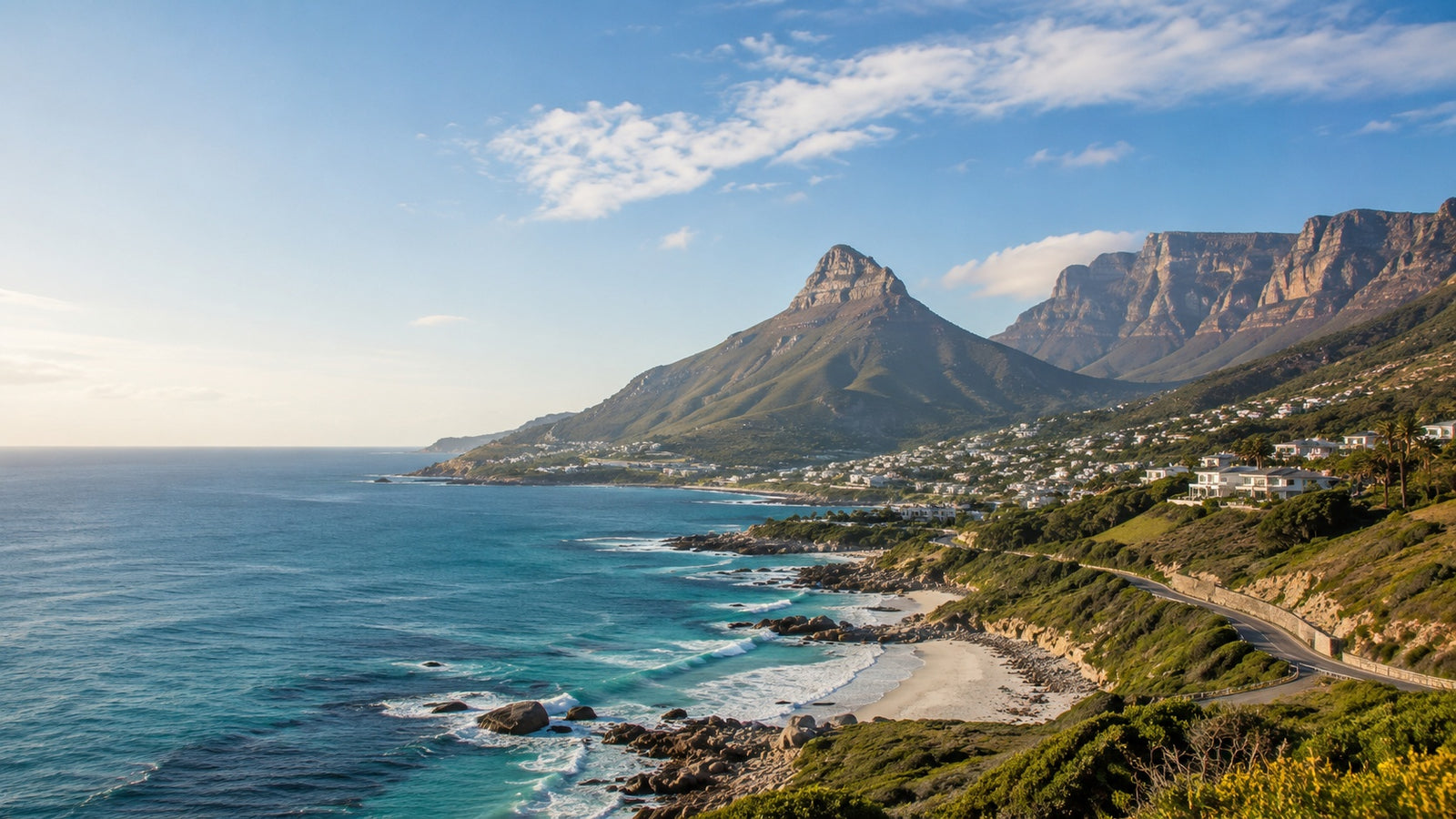
South Africa Travel Guide
A practical South Africa travel guide for international travellers: the South African Rand, cards versus cash, passport-based entry, city budgets, transport, taxes and money tips.
South Africa money at a glance
Currency
South African Rand (ZAR), shown as R. Notes are R10, 20, 50, 100 and 200.
Paying
Card-first in cities and tourist areas; cash still matters for tips, small businesses, car guards and remote routes.
Cash for a week
Keep a modest rand float for tips and small purchases; put larger costs on a card.
Entry
Depends on the passport held. From 1 July 2026 most travellers must also submit the SARS online traveller declaration (see the fees panel).
Daily budget
Roughly R2,000 to R4,500 per person per day for a mid-range city or road-trip holiday; safari lodges cost far more.
Tax
VAT is 15%; qualifying non-residents can reclaim it on eligible goods at departure.
South Africa is card-first in cities and established tourist areas, where cards and contactless work well, but cash remains useful for tips, car guards, small businesses and remote routes. Keep a modest rand float and put larger costs on a low-fee card. Choose ZAR at terminals to avoid dynamic currency conversion, use bank ATMs and stay aware of your surroundings when withdrawing. Distances are large, so the right transport plan matters, and power interruptions can occasionally affect card terminals, so a little cash is a sensible backup.
Best places to visit in South Africa
South Africa packs cities, beaches, wine regions, mountains and world-famous wildlife into one country, but distances are large. Cape Town suits first trips; Kruger and the Garden Route reward road-trip time.
 Western Cape
Cape Town
Table Mountain, beaches, food, culture and first trips.
 Gauteng
Johannesburg
Soweto, museums, business travel and safari gateways.
 Mpumalanga / Limpopo
Kruger and Lowveld
Wildlife, the Panorama Route and multi-day safari.
 Western / Eastern Cape
Garden Route
Coastal scenery, hiking, Knysna and road trips.
 KwaZulu-Natal
Durban and Umhlanga
Warm coast, Indian Ocean beaches and food culture.
 Western Cape
Cape Winelands
Stellenbosch, Franschhoek, food and scenery.
| City | Region | Daily budget | Paying | In short |
|---|---|---|---|---|
| Cape Town | Western Cape | R2,200-R4,500 | Card-first; rideshare, MyCiTi or car | Table Mountain, beaches, food, culture and first trips. |
| Johannesburg | Gauteng | R1,900-R3,800 | Gautrain, rideshare, guided | Soweto, museums, business travel and safari gateways. |
| Kruger and Lowveld | Mpumalanga / Limpopo | R3,500-R9,000+ | Rental car, lodge transfer, safari | Wildlife, the Panorama Route and multi-day safari. |
| Garden Route | Western / Eastern Cape | R2,200-R4,800 | Self-drive is easiest | Coastal scenery, hiking, Knysna and road trips. |
| Durban and Umhlanga | KwaZulu-Natal | R1,800-R3,600 | Rideshare or car | Warm coast, Indian Ocean beaches and food culture. |
| Cape Winelands | Western Cape | R2,300-R5,000 | Car with sober driver or tour | Stellenbosch, Franschhoek, food and scenery. |
What things cost in South Africa
| Coffee | R30 to R55 |
|---|---|
| Casual meal for one | R90 to R180 |
| Sit-down dinner for two | R500 to R1,100 |
| City rideshare short trip | R60 to R150 |
| Mid-range hotel per night | R1,200 to R2,800, far more at safari lodges |
| Kruger national park daily conservation fee | around R550 for international visitors |
| Wine-tasting | R80 to R250 per person |
Budget roughly ₹9,600 to ₹21,600 per person per day on the ground, two sharing a room and excluding flights.
Budget ranges are editorial planning estimates based on typical mid-range travel costs reviewed in July 2026, for one person, two sharing a room, excluding international flights. Actual prices vary by city, season and choices.
Entry, tax and safety
required from 1 July 2026 Most travellers entering or leaving South Africa (air, land, sea or rail) must submit the free SARS online traveller declaration no more than 24 hours before the journey, via the SARS site or the SATMS app. Transit-only passengers are exempt.
South African Revenue Service →15% VAT with a tourist refund on eligible goods (not services) at departure. You may carry up to R100,000 in or out without prior approval. Check current safety guidance for specific areas and be aware power interruptions can occur.
SARS; South African Reserve Bank →Money in South Africa, in detail
South Africa combines cities, beaches, wine regions and world-famous wildlife, but distances are large and the right transport plan matters. Cards work well in cities and tourist areas, while cash stays useful for tips, small businesses and remote routes. Entry depends on the passport held, and from 1 July 2026 most travellers must submit the SARS online traveller declaration no more than 24 hours before the journey. Budget around R2,000 to R4,500 per person per day for a mid-range non-safari trip; private safari lodges cost far more. VAT is 15% with a tourist refund on eligible goods. Carry most spending on a low-fee card with a backup, plus a modest rand float.
Understanding the South African Rand exchange rate
Compare the final customer rate after card foreign-transaction fees, ATM charges and any conversion offer rather than a headline number. Make sure your card and any travel-money product handle ZAR.
How much ZAR to carry
Keep a modest rand float for tips, car guards and small purchases; put larger costs on a card. Use bank ATMs to top up, keep smaller notes for taxis, markets and tips, and put larger costs on a low-fee card. Avoid changing large sums at airport counters, where rates are usually poor.
Cards, cash and paying in ZAR
Cards, contactless and mobile wallets are widely accepted, but keep some cash for smaller vendors and tipping.
- Dynamic currency conversion: when a terminal or ATM offers ZAR or your home currency, choose ZAR. Home-currency billing lets the operator set the rate and add a margin.
- Backup: carry a second card from a different provider and a small cash float.
The best ATM approach in South Africa
Use ATMs operated by recognised banks, review any operator fee, and withdraw a sensible amount rather than many small ones. Your own issuer may also charge a withdrawal or conversion fee. Decline any offer to convert the withdrawal into your home currency.
Entry and visas
Entry depends on the passport held; some travellers visit visa-free for short stays, others need a visa or e-visa. Separately, from 1 July 2026 most travellers entering or leaving must submit the free SARS online traveller declaration no more than 24 hours before the journey (see the fees panel). Check the official requirements for your passport.
Getting around South Africa
Cities use rideshare, the Gautrain in Johannesburg and MyCiTi in Cape Town; between regions a rental car or guided transport is usually best, as distances are large and self-drive suits routes like the Garden Route.
VAT and tourist refund
South Africa applies 15% VAT, and qualifying non-resident visitors can reclaim it on eligible goods (not services) at departure when the export-verification process is met. Choose ZAR at terminals, and note power interruptions can occasionally affect card terminals.
Cash declaration
You may carry up to R100,000 in local or foreign currency, in or out, without prior approval; larger amounts need clearance. Declaring is a reporting requirement, not a penalty; keep exchange records where relevant.
South Africa money FAQs
It depends on the passport held; some travellers visit visa-free for short stays, others need a visa or e-visa. Separately, from 1 July 2026 most travellers must submit the SARS online traveller declaration before entering or leaving. Check the official requirements for your passport.
From 1 July 2026, most travellers entering or leaving South Africa by air, land, sea or rail must submit a free online declaration to SARS no more than 24 hours before the journey, via the SARS site or the SATMS app. Transit-only passengers are exempt.
Card-first in cities and tourist areas, but cash still matters for tips, car guards, small businesses and remote routes. Keep a modest rand float and put larger costs on a card.
Qualifying non-resident visitors can reclaim the 15% VAT on eligible goods (not services) at departure, when the rules and export-verification process are met.
You may carry up to R100,000 in local or foreign currency, in or out, without prior approval; larger amounts need clearance. Keep exchange records where relevant.
A modest rand float for tips, car guards and small purchases; put larger costs on a low-fee card. Withdraw at bank ATMs and stay aware of your surroundings.
Choose rand (ZAR). Home-currency billing (dynamic currency conversion) usually gives a poorer rate.
Most visits are trouble-free, but crime rates vary by area. Check current safety guidance, take normal precautions, avoid displaying valuables and follow local advice, especially after dark.
Scheduled power interruptions can occur and may briefly affect card terminals, lighting and Wi-Fi; carry a little cash as backup and a power bank.
A low-foreign-transaction-fee card or multi-currency travel card, a backup card, and a modest rand float. Compare rates and fees before travel.
Cities use rideshare, the Gautrain (Johannesburg) and MyCiTi (Cape Town); between regions a rental car or guided transport is usually best, as distances are large.
It is a year-round destination: the dry winter (roughly May to September) is best for safari wildlife viewing, while spring and autumn suit Cape Town and the coast.
Sort your South African Rand before you fly
Lock the rate, carry the right mix of cash and card, and know today’s ZAR rate before you book.
Official sources reviewed
- South African Revenue Service (SARS) — Traveller declaration and VAT refund
- South African Reserve Bank — Currency allowances
- Department of Home Affairs — Visa and entry requirements
- SANParks — National park conservation fees
- Government travel advisories — Current safety guidance
- South African Tourism — General travel guidance
Last reviewed 31 July 2026 by Matrix Forex Editorial Team. Next review due 31 October 2026.
Plan your south african rand money before you fly
Check today’s rate, load a multi-currency forex card, or speak to a Matrix Forex expert about the right travel-money mix.
RBI Authorised Dealer Category-II, Licence No. NDL-ADII-0023-2023 · Serving 3 lakh+ customers