 US Dollar
 Euro
Euro British Pound
 UAE Dirham
 Australian Dollar
 Singapore Dollar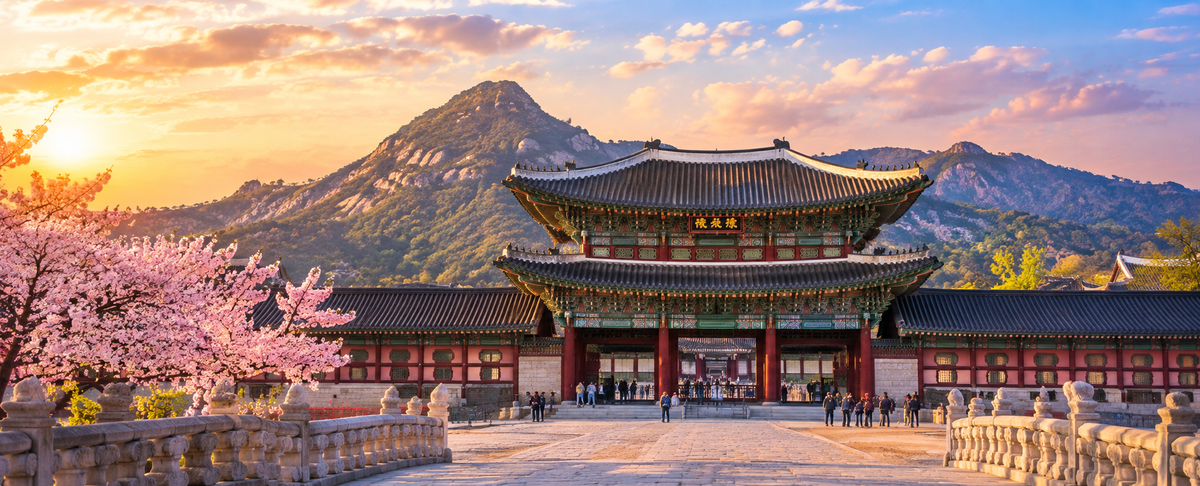
Seoul Travel Guide
Buy Korean WonSeoul at a glance
Seoul is where almost every South Korea trip starts. Four days covers the palaces, the main neighbourhoods and the food, and six or seven lets you add a day trip or an onward leg to Busan or Jeju. The city is more spread out than it looks on a map, so plan each day around one area rather than crossing town twice.
Sort the visa before anything else. India is not on South Korea's visa-waiver list, so the K-ETA that many other nationalities use does not apply to Indian passport holders. You need a tourist visa, usually the C-3-9, applied for through the Korea Visa Application Centre (KVAC) in India. Allow a couple of weeks and apply before you book anything non-refundable.
Incheon International Airport (ICN) is about an hour from the centre. The AREX Express train costs KRW 13,000 and runs non-stop to Seoul Station in 43 minutes from Terminal 1, or 51 from Terminal 2. The all-stop AREX train costs far less, takes around an hour and stops at Hongik University for Hongdae. The last trains leave before midnight, so late arrivals are looking at a taxi or a night bus.
Gyeongbokgung, the largest of the royal palaces, costs KRW 3,000, is free if you wear a hanbok and closes on Tuesdays. The other palaces and Jongmyo Shrine close on Mondays instead. Seeing more than two? The KRW 10,000 integrated ticket covers Gyeongbokgung, Changdeokgung, Changgyeonggung, Deoksugung and Jongmyo. Korea plans to raise palace admission from 1 January 2027, so treat these as 2026 prices. Bukchon Hanok Village and Insadong sit beside Gyeongbokgung, N Seoul Tower on Namsan is best at sunset, and the Starfield Library inside COEX Mall is free.
Where to stay
Most trips of a week or less pick one central base and stay put; the subway makes moving hotels rarely worth it.
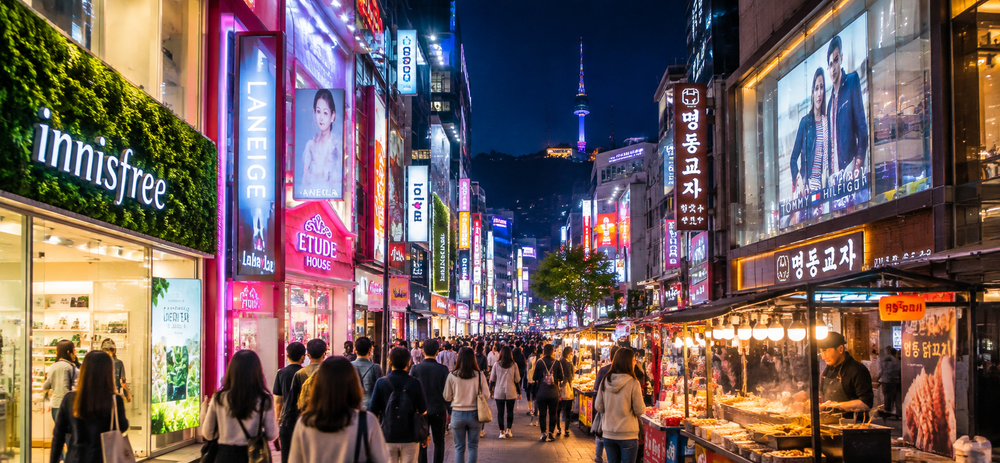
Myeongdong
Central and walkable, packed with shopping and evening street food, and a short hop from the palaces and Namsan. The easy first-trip base.
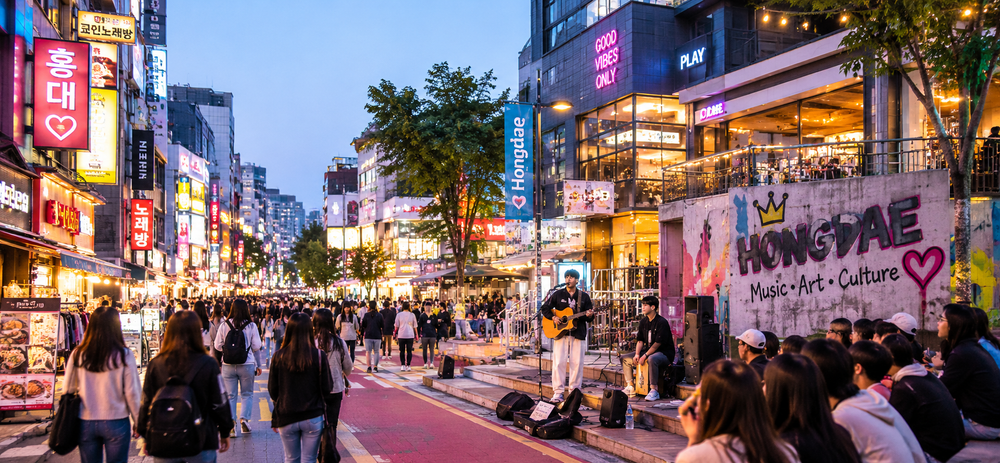
Hongdae
Younger and livelier, with indie music, street performers and nightlife. On the all-stop AREX line from the airport and usually cheaper than the centre.
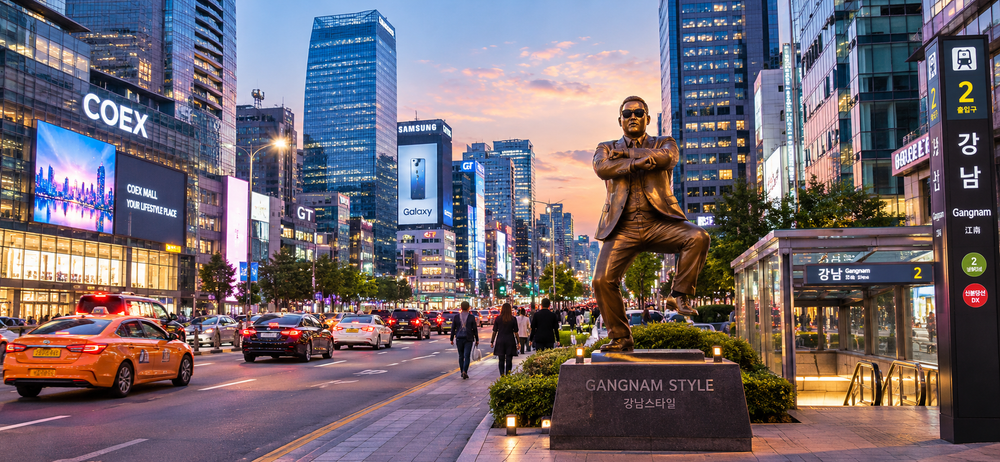
Gangnam
Polished and shopping-heavy, home to COEX and the Starfield Library. Further from the old palace district but well connected by subway.
Paying in Seoul
For the won itself, the visa Indian travellers need, how much cash to carry, the VAT refund and the cash declaration limit, see the South Korea travel guide.
Before you fly it is worth reading which ATMs in South Korea take an Indian card, since many domestic machines do not.
Seoul is one of the most card-friendly cities in Asia, and the catch is the transit card. Convenience-store T-money top-ups are cash only, and you cannot tap a foreign card at the subway gate. Since March 2026, 440 new machines at 273 stations on Lines 1 to 8 accept Visa and Mastercard, but a float of won in cash keeps you moving everywhere else. Traditional markets such as Namdaemun and Gwangjang, and many street-food stalls, still prefer cash.
What Seoul actually costs
Set the length and style of your trip to see what to budget, in Korean won and Indian rupees.
Indicative, excluding international flights and accommodation, per person per day. Converted at the verified mid-market rate on 28 September 2026, KRW 1,000 ≈ ₹70.70, not a Matrix board rate.
Budget roughly ₹3,540 to ₹20,500 per person per day on the ground, excluding flights and accommodation.
| Item | Cost |
|---|---|
| Subway ride on T-money, base fare | KRW 1,550 |
| AREX Express, Incheon to Seoul Station | KRW 13,000 |
| Street-food snack | KRW 3,000-8,000 |
| Casual restaurant or Korean BBQ, per person | KRW 15,000-40,000 |
| Gyeongbokgung Palace | KRW 3,000 |
| Integrated palace ticket | KRW 10,000 |
Getting around
The subway is the fastest way around, with English signage throughout and a base fare of KRW 1,550 on a T-money card. Buy the card at the airport or any convenience store on day one; single paper tickets cost more and slow you down. Most cross-city trips take 20 to 40 minutes door to door.
Google Maps does not give full directions in South Korea, so download Naver Map or KakaoMap before you land. Kakao T is the ride-hailing app for late nights or luggage. For Busan, Gyeongju and Jeonju, the KTX leaves from Seoul Station and Yongsan.
Common mistakes in Seoul
Assuming the K-ETA covers you
It only exists for visa-waiver nationalities, and India is not one of them. Indian passport holders need a visa, applied for through KVAC before you travel.
Planning a palace on its closing day
Gyeongbokgung shuts on Tuesdays, while Changdeokgung, Changgyeonggung, Deoksugung and Jongmyo shut on Mondays. Check before building a day around one.
Arriving with no won in cash
Convenience-store T-money top-ups are cash only and foreign cards do not work at the gates. Carry a modest float of won for transit, markets and street food.
Relying on Google Maps
It does not give full directions in Korea. Naver Map or KakaoMap, downloaded before you land, will.
Criss-crossing the city in one day
Myeongdong to Gangnam is a proper subway ride, not a walk. Group sights by area and the city feels much smaller.
Seoul FAQs
Gyeongbokgung Palace, Bukchon Hanok Village and Insadong, N Seoul Tower at sunset, the Myeongdong and Hongdae street-food scene, and the Starfield Library at COEX cover the highlights in four days.
Four covers the main palaces, neighbourhoods and food. Six or seven leaves room for a day trip or a slower pace, which most first-time visitors end up preferring.
Yes. India is not on the visa-waiver list, so the K-ETA does not apply. Apply for a tourist visa, usually the C-3-9, through the Korea Visa Application Centre in India. Jeju Island has its own separate visa waiver, covered in our Jeju guide.
The AREX Express train costs KRW 13,000 and reaches Seoul Station in 43 minutes from Terminal 1. The all-stop train is cheaper and stops at Hongdae. Late arrivals should budget for a taxi.
Mostly card. Hotels, restaurants and shops take foreign cards, but convenience-store T-money top-ups are cash only, and markets and street stalls often prefer cash.
Moderately. A mid-range day on the ground runs about KRW 120,000, roughly ₹8,480 per person, before flights and hotels. It costs more than most of Southeast Asia but is comparable to Japan.
More guides in South Korea
Buy south korean won before you fly
See your Matrix rate and the applicable charges before you confirm. Order online for doorstep delivery or collect from your nearest branch.
RBI Authorised Dealer Category-II, Licence No. NDL-ADII-0023-2023 · Same-day delivery · Serving 3 lakh+ customers