 US Dollar
 Euro
Euro British Pound
 UAE Dirham
 Australian Dollar
 Singapore Dollar
Jeonju Travel Guide
Buy Korean WonJeonju at a glance
Jeonju is Korea's food capital by reputation, a UNESCO City of Gastronomy, and home to Jeonju Hanok Village, the country's largest cluster of traditional houses. More than 700 hanok fill the Pungnam-dong quarter, most still homes, guesthouses, cafes and craft shops rather than museum pieces, and walking through the village is free. It works as a day trip from Seoul, but an overnight hanok stay is how most people remember it.
The KTX from Seoul takes under two hours to Jeonju Station, which is a 10 to 15 minute taxi from the village. There is no direct KTX from Busan; the direct express bus takes about three hours, or you change trains at Osong.
Gyeonggijeon Shrine, which holds the portrait of King Taejo, founder of the Joseon dynasty, costs KRW 3,000 and is free on the last Wednesday of each month. Omokdae gives a rooftop view over the village at sunset, Jeondong Catholic Church stands at its edge, and hanbok rental shops line the entrance for an afternoon of photos. Nambu Market has the livelier food scene, with a night market at weekends.
Jeonju bibimbap is why many people come: more side dishes than you will get elsewhere and a raw egg yolk on top. Kongnamul gukbap, a bean-sprout soup, is the local breakfast, and the Jeonju choco pie is the standard edible souvenir.
Where to stay
Hanok rooms are small and often share bathrooms; check the room style before you book.
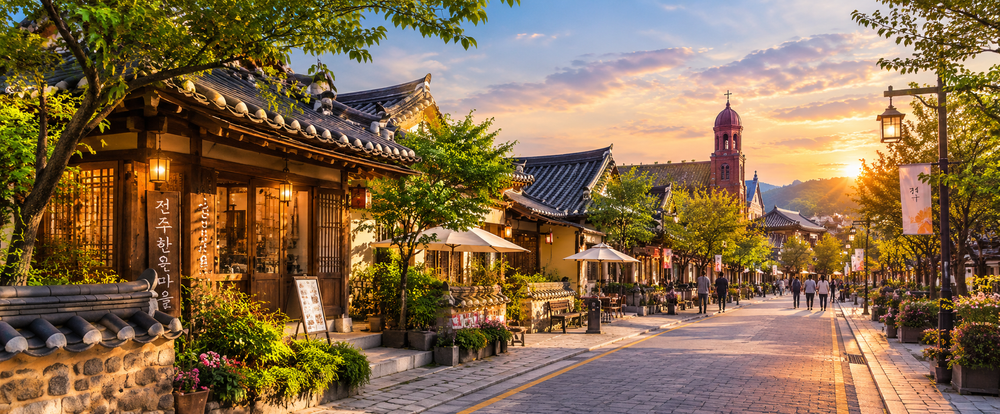
Pungnam-dong
Inside the hanok village itself, with floor-heated guesthouse rooms in working traditional houses. The distinctive Jeonju stay.
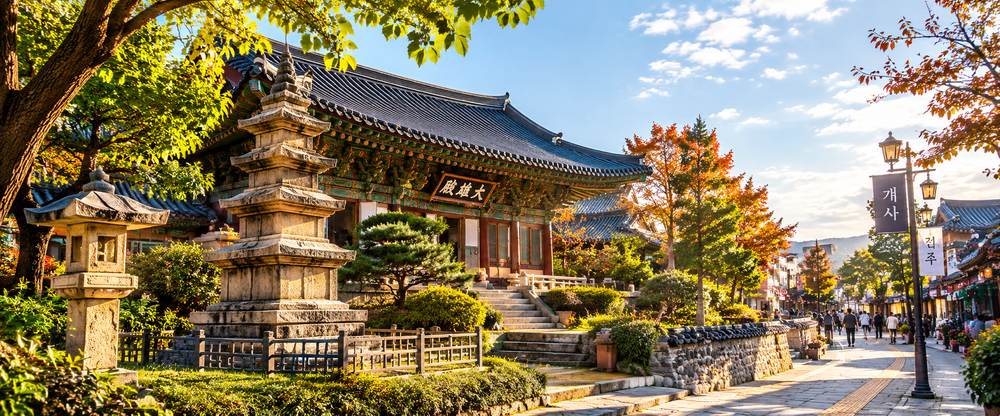
Gaeksa and downtown
Standard hotels and the Gaekridan-gil food streets a short walk from the village, for anyone who would rather skip the hanok experience.
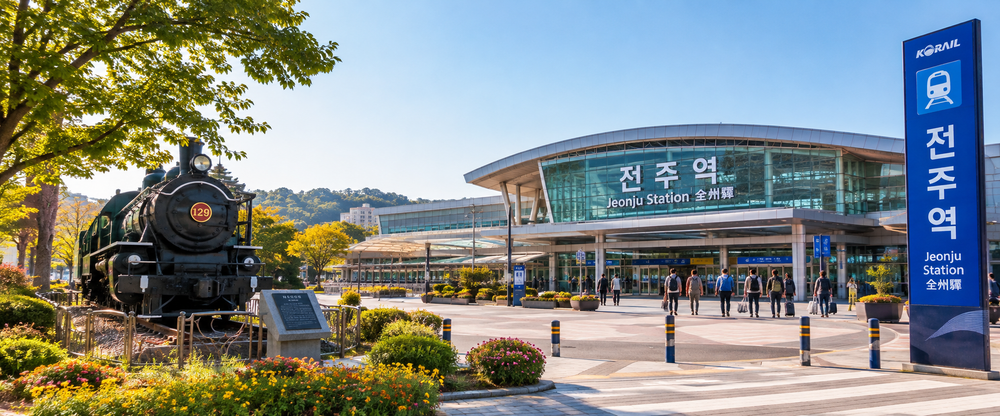
Near Jeonju Station
Business hotels by the KTX line. Only worth it for a very early train.
Paying in Jeonju
For the won itself, the visa Indian travellers need, how much cash to carry, the VAT refund and the cash declaration limit, see the South Korea travel guide.
Before you fly it is worth reading which ATMs in South Korea take an Indian card, since many domestic machines do not.
Cards work at most restaurants, cafes and guesthouses. Cash is easier at Nambu Market, the street-food stalls along the village lanes and some of the smaller craft shops.
What Jeonju actually costs
Set the length and style of your trip to see what to budget, in Korean won and Indian rupees.
Indicative, excluding international flights and accommodation, per person per day. Converted at the verified mid-market rate on 28 September 2026, KRW 1,000 ≈ ₹70.70, not a Matrix board rate.
Budget roughly ₹3,040 to ₹12,020 per person per day on the ground, excluding flights and accommodation.
| Item | Cost |
|---|---|
| Hanok Village entry | Free |
| Gyeonggijeon Shrine | KRW 3,000 |
| Hanbok rental, a few hours | KRW 10,000-25,000 |
| Jeonju bibimbap, per bowl | KRW 10,000-20,000 |
| Street-food snack | KRW 3,000-8,000 |
Getting around
The village is compact and best on foot, especially early in the morning before the hanbok shops open and the day-trip crowds arrive. Taxis and local buses cover the run to and from Jeonju Station.
From Busan, take the direct express bus of about three hours rather than the KTX, which needs a change at Osong.
Common mistakes in Jeonju
Assuming Jeonju Station is in the village
It is a 10 to 15 minute taxi away. Budget for the transfer.
Expecting a direct KTX from Busan
There is not one. The direct express bus of about three hours is simpler than changing trains at Osong.
Treating a hanok stay like a hotel
Rooms are small and floor-heated, and many share bathrooms. Confirm the room style before booking.
Arriving at midday
The lanes are quietest early in the morning and after dark. Midday is when the tour groups and rental crowds peak.
Jeonju FAQs
Korea's largest cluster of traditional houses, more than 700 hanok, and Jeonju bibimbap. The city is a UNESCO City of Gastronomy.
By KTX, under two hours to Jeonju Station, then a 10 to 15 minute taxi to the village. Express buses are cheaper but slower.
A day trip covers the main sights and a meal. An overnight hanok stay gets you the quiet evening and early morning, which is when the village is at its best.
Yes. Walking the village is free; Gyeonggijeon Shrine costs KRW 3,000, and hanbok rental and craft classes charge separately.
The direct express bus takes about three hours. There is no direct KTX; the train needs a change at Osong.
Jeonju bibimbap, kongnamul gukbap for breakfast, street food at Nambu Market, and a Jeonju choco pie to take home.
More guides in South Korea
Buy south korean won before you fly
See your Matrix rate and the applicable charges before you confirm. Order online for doorstep delivery or collect from your nearest branch.
RBI Authorised Dealer Category-II, Licence No. NDL-ADII-0023-2023 · Same-day delivery · Serving 3 lakh+ customers