 US Dollar
 Euro
Euro British Pound
 UAE Dirham
 Australian Dollar
 Singapore Dollar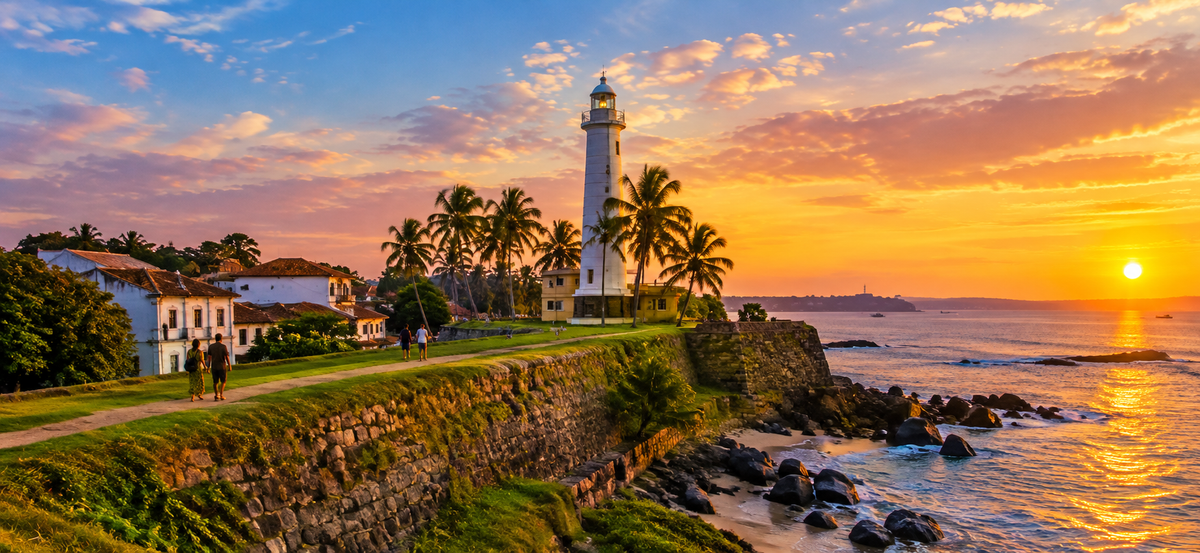
Galle Travel Guide
Buy Sri Lankan RupeesGalle at a glance
Galle is the south coast's anchor and the best-preserved colonial town in Sri Lanka, a 16th-century Dutch-built fort on a headland that is still lived in rather than preserved behind glass. It pairs naturally with the beaches a few minutes away and works as either a day trip from Colombo or an overnight stop on a south coast run.
One thing worth knowing before you book anything: India is a SAARC member, and Sri Lanka's heritage sites charge SAARC nationals a reduced rate. At Sigiriya that is roughly USD 20 against USD 30 to 35 for other foreign visitors, and at the Temple of the Tooth it is LKR 2,500 against LKR 3,000. Carry your passport and ask for the SAARC rate at the counter rather than assuming the posted foreigner price applies to you.
The fort itself is free. You walk in off the street and the ramparts are open to anyone, which makes sunset on the walls the best free thing on the south coast. Individual attractions inside charge separately: the Maritime Museum and the Historical Mansion Museum are both small, and the Dutch Reformed Church, one of the oldest Protestant churches in the country, takes a voluntary donation. The lighthouse on the southeastern point is free to walk to.
The beaches are the other half of the trip. Unawatuna is a crescent bay a short tuk-tuk ride away with calm water and a developed cafe scene, and Jungle Beach nearby is quieter, reached on foot or by boat. Whale watching runs off the south coast roughly November to April, with shared boat trips from Mirissa at around USD 50 to 80 per person including a light breakfast.
Where to stay
The choice here is atmosphere inside the walls against price outside them.
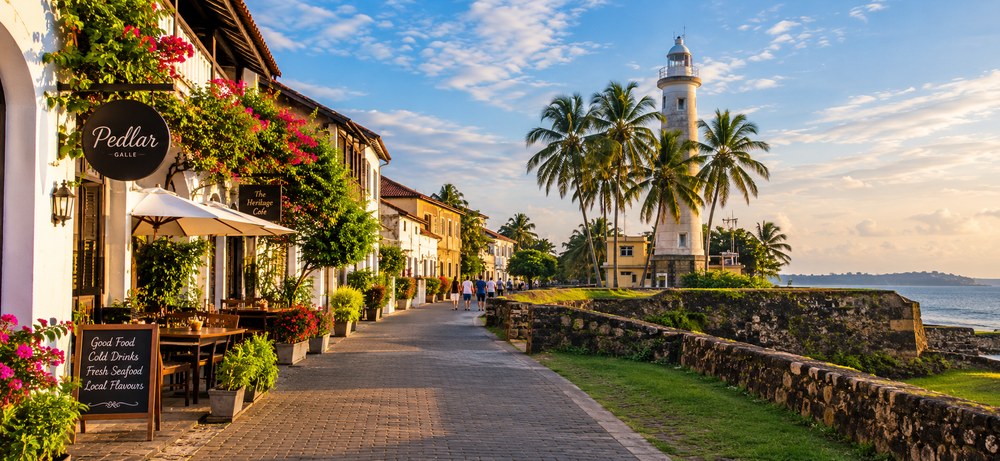
Inside Galle Fort
Boutique hotels and guesthouses in restored colonial buildings, walkable to everything within the walls. The atmospheric choice and the priciest.
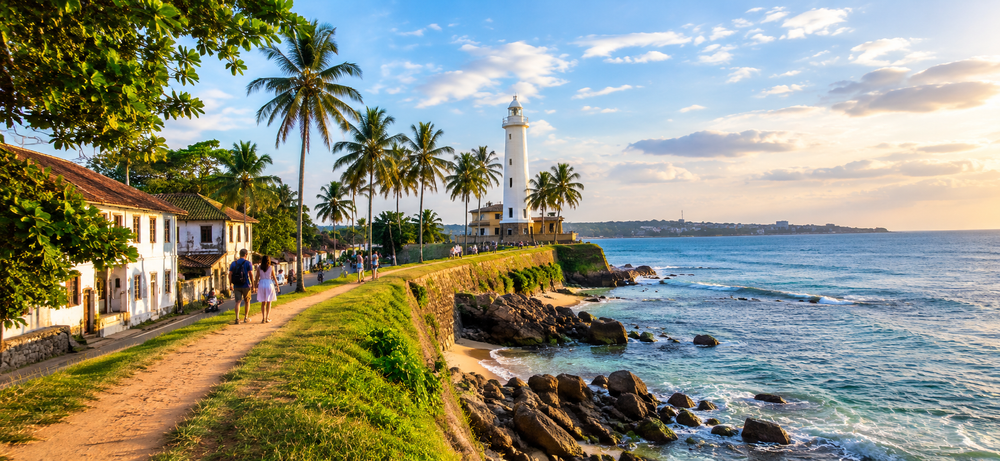
Outside the fort walls
More standard hotels at lower prices, a short tuk-tuk ride from the old town.
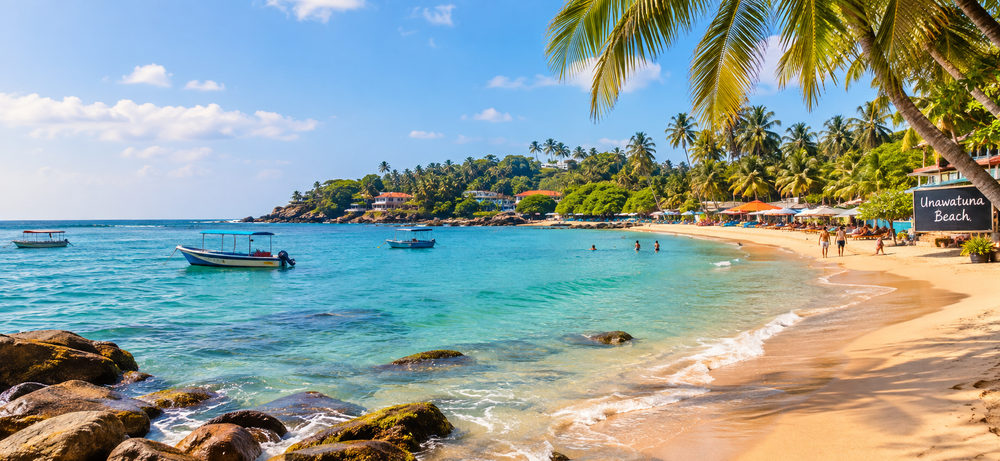
Unawatuna and the nearby beaches
A beach-first base with the fort as a day trip, which suits a longer south coast stay.
Paying in Galle
For the Sri Lankan rupee itself, visa-on-arrival, how much cash to carry and the LRS and TCS numbers, see the Sri Lanka travel guide.
Before you fly it is worth reading what an ATM withdrawal in Sri Lanka actually costs.
Galle is less card-friendly than Colombo once you step outside the boutique hotels and restaurants inside the fort. Cash matters for tuk-tuks, local restaurants and most places beyond the walls.
What Galle actually costs
Set the length and style of your trip to see what to budget, in Sri Lankan rupees and Indian rupees.
Indicative, excluding international flights and accommodation, per person per day. Converted at the verified mid-market rate on 23 September 2026, LKR 100 ≈ ₹29.08, not a Matrix board rate.
Budget roughly ₹580 to ₹1,745 per person per day on the ground, excluding flights and accommodation.
| Item | Cost |
|---|---|
| Galle Fort and the ramparts | Free |
| Rice and curry outside the walls | LKR 300-800 |
| Restaurant inside the fort | LKR 1,500-3,500 |
| Mirissa whale watching, Nov to Apr | about LKR 16,500 |
Getting around
Inside the fort everything is on foot and the walls take under an hour to circle. Tuk-tuks cover Unawatuna, Jungle Beach and the newer town outside the ramparts, and PickMe operates here though with thinner coverage than Colombo.
Galle sits on the coastal railway from Colombo, which is a cheap and genuinely scenic way in, running close to the shoreline for much of the route. The southern expressway is the faster road option at roughly two hours from Colombo.
Common mistakes in Galle
Expecting to pay to enter the fort
Galle Fort is free and always open. You walk in off the street, and only the individual museums inside charge anything.
Walking the ramparts at midday
There is almost no shade on the walls. Sunset is both cooler and the reason people photograph this place.
Booking whale watching outside the season
Trips run roughly November to April. Outside that window most operators either do not sail or cannot guarantee conditions.
Staying inside the fort on a tight budget
Boutique guesthouses within the walls carry a real premium. A room a few minutes outside costs a fraction and the fort is still walkable.
Treating Galle as a beach town
The fort is a working historic quarter, not a beach. The sand is at Unawatuna and Jungle Beach, a short tuk-tuk ride away.
Galle FAQs
No. The fort and its ramparts are free and open to walk at any time. Only the museums inside, such as the Maritime Museum, charge separately, and the Dutch Reformed Church takes a voluntary donation.
One to two days. A single day covers the fort, the lighthouse and a rampart sunset; a second adds Unawatuna or Jungle Beach.
Roughly November to April. Shared boat trips from Mirissa run around USD 50 to 80 per person, about LKR 16,500 to 26,000, usually including a light breakfast.
Yes. The southern expressway takes about two hours and the coastal train is slower but far more scenic. An overnight lets you see the ramparts at sunset, which is the best part.
Cards work at boutique hotels and restaurants inside the fort. Everywhere else, including tuk-tuks and local restaurants outside the walls, is cash.
Yes. It is the best-preserved colonial town in Sri Lanka and a UNESCO World Heritage Site, and unusually it is still a living quarter rather than a museum piece.
More guides in Sri Lanka
Buy sri lankan rupee before you fly
See your Matrix rate and the applicable charges before you confirm. Order online for doorstep delivery or collect from your nearest branch.
RBI Authorised Dealer Category-II, Licence No. NDL-ADII-0023-2023 · Same-day delivery · Serving 3 lakh+ customers