 US Dollar
 Euro
Euro British Pound
 UAE Dirham
 Australian Dollar
 Singapore Dollar
Kyoto Travel Guide
Buy Japanese YenKyoto in three days
Kyoto is where Japan slows down. It was the imperial capital for over a thousand years, and it shows: temples, shrines and machiya-lined streets sit inside a modern city rather than as separate museum pieces. Most trips pair it with Osaka on a Kansai loop, giving Kyoto 2 to 3 focused days.
Kyoto has no airport of its own. Everyone arrives via Kansai International (KIX) near Osaka, and how you cover that last stretch matters more than most guides let on.
¥3,600 one-way, discounted foreign-passport tickets available
Day 1: Fushimi Inari and Higashiyama Morning: Fushimi Inari, go early to beat both crowds and heat. Midday: bus or train to Higashiyama, lunch near Kiyomizu-dera. Afternoon: Kiyomizu-dera, then walk down through Ninenzaka and Sannenzaka into Gion. Evening: Gion for dinner, a chance sighting of a geiko heading to an appointment if you're lucky.
Day 2: Arashiyama and the northwest Morning: Arashiyama bamboo grove, as early as you can manage. Midday: Tenryu-ji garden, then the Randen tram or a bus across to Kinkaku-ji (bring cash). Afternoon: Ryoan-ji if temple fatigue hasn't set in yet. Evening: back to Kawaramachi or Kyoto Station for dinner.
Day 3: Central Kyoto and a slower pace Morning: Nishiki Market for breakfast and browsing. Midday: Nijo Castle. Afternoon: a slower neighbourhood walk, or a day trip if you booked one, Nara and Fushimi Inari (again, at leisure) both work as a half-day add-on. Evening: leave room for whichever temple from days 1-2 deserves a second look.
Where to stay
Where you base yourself in Kyoto changes the trip more than almost anything else. These are the areas that work for first-time visitors from India.
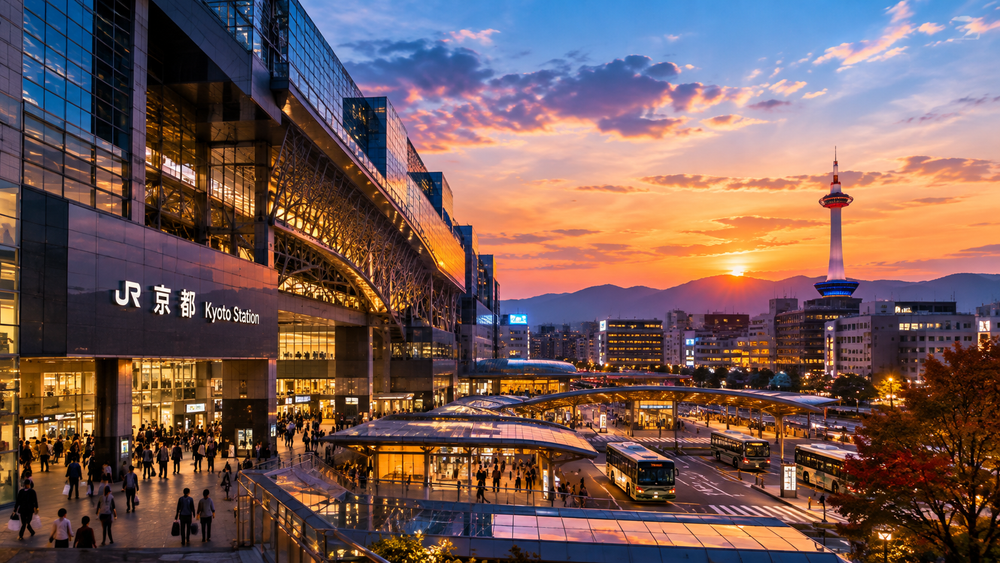
Kyoto Station area
Practical, everything connects from here. Doubles around ¥9,000-16,000 a night.
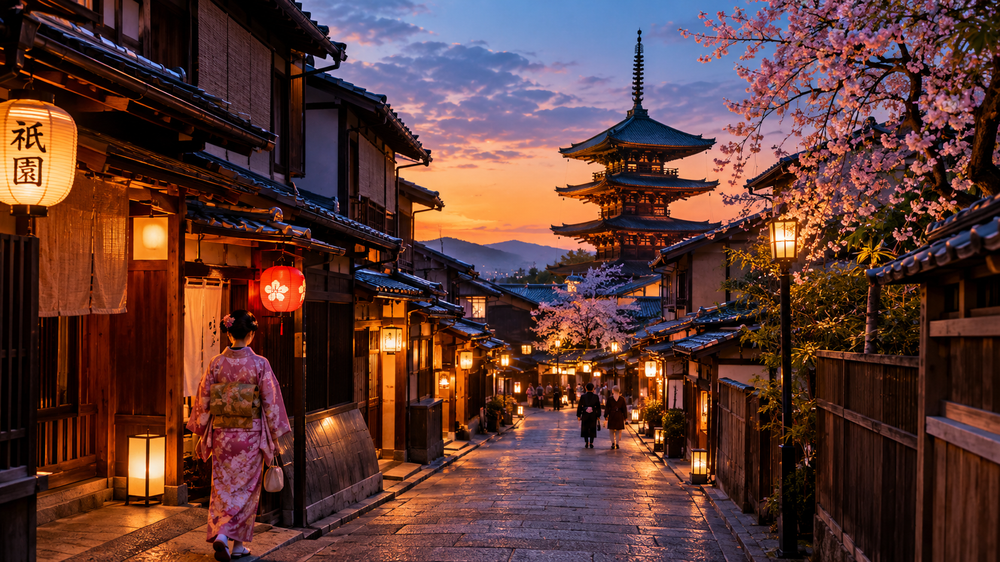
Gion
Traditional, geiko district, ryokan-heavy. Doubles around ¥15,000-30,000+ a night.
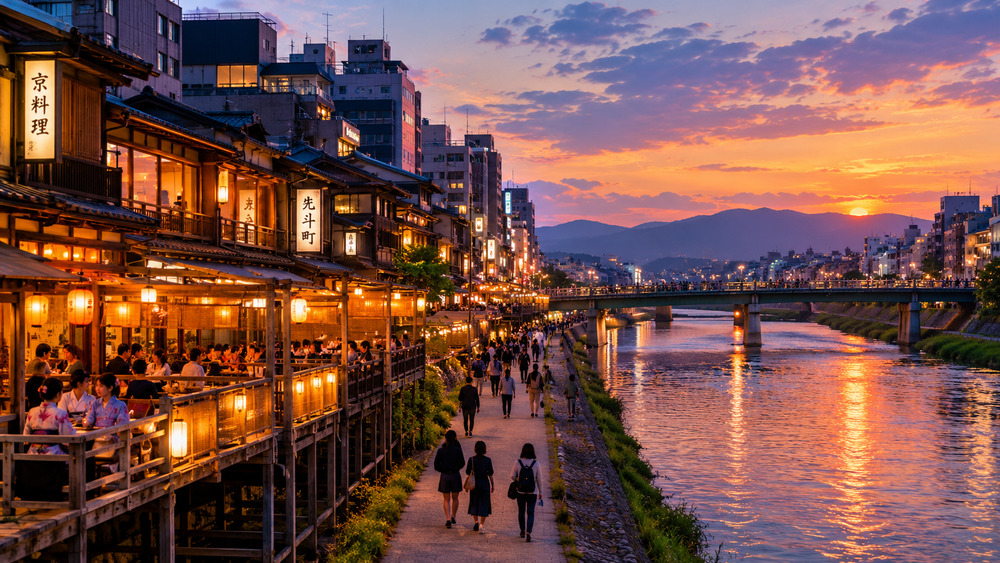
Kawaramachi/Shijo
Central, walkable, good restaurant density. Doubles around ¥10,000-18,000 a night.
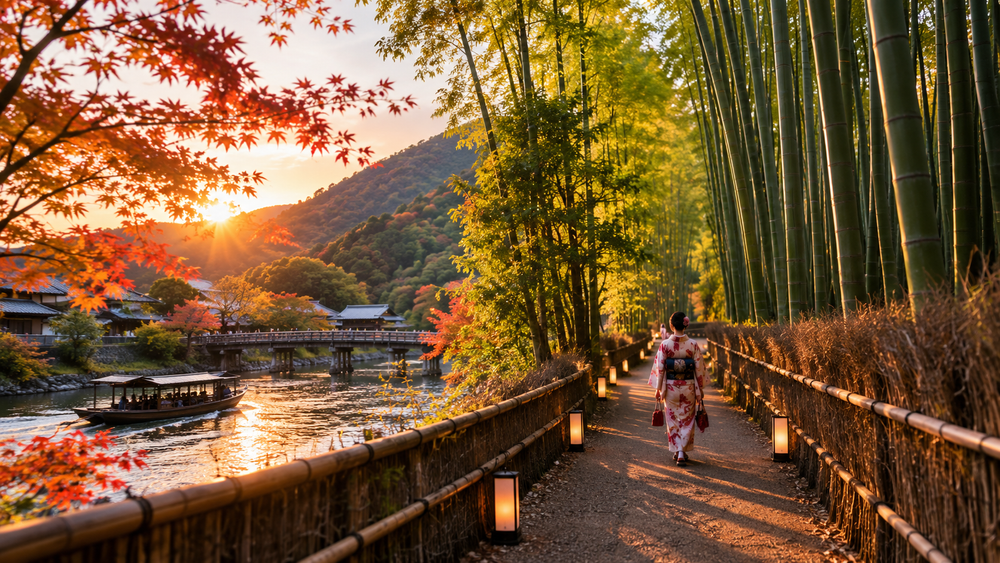
Arashiyama
Slower pace, bamboo grove on your doorstep, further from central sights. Doubles around ¥8,000-15,000 a night.
Paying in Kyoto
Kyoto is the most cash-reliant of Japan's major tourist cities. Temple and shrine entry fees, small machiya restaurants, market stalls, all lean cash more heavily than Tokyo or Osaka. Kinkaku-ji specifically takes cash only, no ATM on site, worth planning around before you set out that day.
Hotels, department stores, chain restaurants and larger shops in Kawaramachi and near Kyoto Station take cards without trouble. The gap is specifically the traditional side of the city, which is also most of what draws people here.
Carrying a noticeably larger cash float in Kyoto than you would in Tokyo is worth building into your day, along with a lodging tax that Kyoto charges on top of the room rate, higher than most other Japanese cities.
7-Eleven ATMs inside and around Kyoto Station are the most reliable option for foreign cards. Japan Post Bank ATMs are the backup, generally following business hours.
For the currency basics, the LRS and TCS numbers, and where to buy yen before flying, see the Japan travel guide.
Before you fly it is worth checking how the INR to JPY rate is set, and knowing how to spot a genuine yen note when you take change from a small vendor.
What Kyoto actually costs
Set the length and style of your trip to see what to budget, in yen and rupees.
Indicative, excluding international flights, intercity rail and paid attractions, per person per day. Converted at the verified mid-market rate on 10 September 2026, JPY 100 ≈ ₹61.90, not a Matrix board rate.
| Tier | Hotel (per night) | Food (pp/day) | Local transit (pp/day) | 3-day total, two sharing |
|---|---|---|---|---|
| Backpacker | ¥3,500-5,500 | ¥1,800 | ¥1,100 | ¥27,900-33,900 |
| Mid-range | ¥10,000-16,000 | ¥4,500 | ¥1,100 | ¥63,600-81,600 |
| Premium | ¥22,000+ | ¥9,000+ | ¥1,100 | ¥126,600+ |
Figures exclude flights, intercity rail and temple entry fees, add roughly ¥500 per temple per person on top.
Getting around
Kyoto runs mostly on buses, not trains, which surprises visitors coming from Tokyo. The subway network is limited to two lines and doesn't reach most major temples directly.
The Subway & Bus 1-Day Pass is the standard tool, ¥1,100 for adults. It covers the subway, Kyoto City Bus, and most Kyoto Bus, Keihan Bus and West Japan JR Bus routes. Pays for itself after about four rides, easy to hit on a temple-hopping day. Single bus fares run ¥230 flat within the city, so anyone planning more than four stops in a day comes out ahead on the pass.
An IC card (Suica, Pasmo or Icoca) works on Kyoto's buses and trains too, useful if you're carrying one from Tokyo already. The flat-fare day pass usually wins on a genuine sightseeing day, though. Kyoto's bus routes are what most itineraries actually run on.
The JR Pass has limited use inside Kyoto itself, JR lines barely touch the city's temple districts. Its value here is almost entirely for the Shinkansen leg in and out.
Common mistakes in Kyoto
Underestimating how bus-dependent Kyoto is and relying on subway-only
Underestimating how bus-dependent Kyoto is and relying on subway-only thinking carried over from Tokyo. Most temples need a bus, not a train.
Showing up to Kinkaku-ji without cash
Showing up to Kinkaku-ji without cash. There is no card option and no nearby ATM.
Trying to do all of Higashiyama, Arashiyama and the northwest temples
Trying to do all of Higashiyama, Arashiyama and the northwest temples in a single rushed day. Kyoto rewards a slower pace, and the walking between sights adds up more than the map suggests.
Skipping the early-morning window at Fushimi Inari and Arashiyama's ba
Skipping the early-morning window at Fushimi Inari and Arashiyama's bamboo grove. Both are dramatically different, and far less crowded, before 8am.
Not budgeting for the Kyoto lodging tax, which sits on top of quoted r
Not budgeting for the Kyoto lodging tax, which sits on top of quoted room rates and runs higher here than most other Japanese cities.
Kyoto FAQs
It covers the essentials, Fushimi Inari and one Higashiyama or northwest cluster, but 3 days lets you add Arashiyama properly and a day trip without rushing.
Only for the Shinkansen leg getting in and out. JR barely serves Kyoto's own temple districts, buses do that work.
Slightly less on the whole, roughly ¥15,000 versus ¥16,000 a day mid-range, but Kyoto's lodging tax and cash-reliance can offset some of that gap in practice.
The Subway & Bus 1-Day Pass at ¥1,100 if you're doing four or more rides. For lighter days, single bus fares at ¥230 flat work out cheaper.
Yes. Kyoto is more cash-reliant than Tokyo or Osaka, especially for temple entries and small traditional restaurants. Kinkaku-ji specifically has no card option.
Yes, easily. It's under an hour by JR each way and pairs well with a half-day Kyoto morning.
Before 8am. The gates stay open 24 hours and the early morning light through the torii is also the best photo window.
Buy japanese yen before you fly
See your Matrix rate and the applicable charges before you confirm. Order online for doorstep delivery or collect from your nearest branch.
RBI Authorised Dealer Category-II, Licence No. NDL-ADII-0023-2023 · Same-day delivery · Serving 3 lakh+ customers