 US Dollar
 Euro
Euro British Pound
 UAE Dirham
 Australian Dollar
 Singapore Dollar
Norway Travel Guide
A practical Norway travel guide for international travellers: the Norwegian krone (not the euro), cards versus cash, ETIAS and Schengen entry, city budgets, transport, VAT refunds and money tips.
Norway money at a glance
Currency
Norwegian krone (NOK), written kr. NOT the euro, and Norway is not in the EU (but is in Schengen). Notes are 50, 100, 200, 500 and 1,000 kroner.
Paying
One of the most cashless countries; cards and contactless everywhere. A small NOK reserve and a second card are sensible.
Cash for a week
A small NOK reserve is enough for most card-using visitors; top up at bank ATMs.
Entry
Depends on the passport held. Norway is in the Schengen area; ETIAS is planned but not yet in force. See the entry section.
Daily budget
Roughly NOK 1,800 to 3,200 per person per day for a mid-range trip, higher for peak-summer fjords, Lofoten, Tromso and guided excursions.
Tax
VAT is 25%, included in prices; eligible non-EU visitors can claim a refund on qualifying goods. Cash declaration threshold is NOK 25,000.
Norway is one of Europe's most cashless destinations, so most travellers can rely on cards and contactless, but a small NOK reserve and a second card are sensible for remote kiosks and offline moments. It uses the Norwegian krone, not the euro, and Norway is not in the EU (though it is in Schengen). Choose NOK at terminals to avoid dynamic currency conversion, use bank ATMs, and note that Norway is expensive, especially for fjord and winter trips.
Best places to visit in Norway
Oslo and Bergen city breaks, fjord routes, Lofoten road trips, Tromso winter trips and scenic rail journeys are the best-known trips. Distances are large, so choose fewer regions.
 Eastern Norway
Oslo
Museums, architecture, saunas, food and an easy city break.
 Western Norway
Bergen
Bryggen, coastal culture and gateway access to the fjords.
 Northern Norway
Tromso
Northern lights, winter activities and Arctic scenery.
 Central Norway
Trondheim
History, food, Nidaros Cathedral and a calmer city trip.
 Northern Norway
Lofoten
Dramatic peaks, fishing villages and road-trip scenery.
| City | Region | Daily budget | Paying | In short |
|---|---|---|---|---|
| Oslo | Eastern Norway | NOK 1,800-3,200 | Metro, tram, bus, train | Museums, architecture, saunas, food and an easy city break. |
| Bergen | Western Norway | NOK 1,700-3,100 | Walk, rail, express boats | Bryggen, coastal culture and gateway access to the fjords. |
| Tromso | Northern Norway | NOK 2,000-3,600 | Bus, tours | Northern lights, winter activities and Arctic scenery. |
| Trondheim | Central Norway | NOK 1,600-2,900 | Walk, train | History, food, Nidaros Cathedral and a calmer city trip. |
| Lofoten | Northern Norway | NOK 1,900-3,500 | Car, ferry | Dramatic peaks, fishing villages and road-trip scenery. |
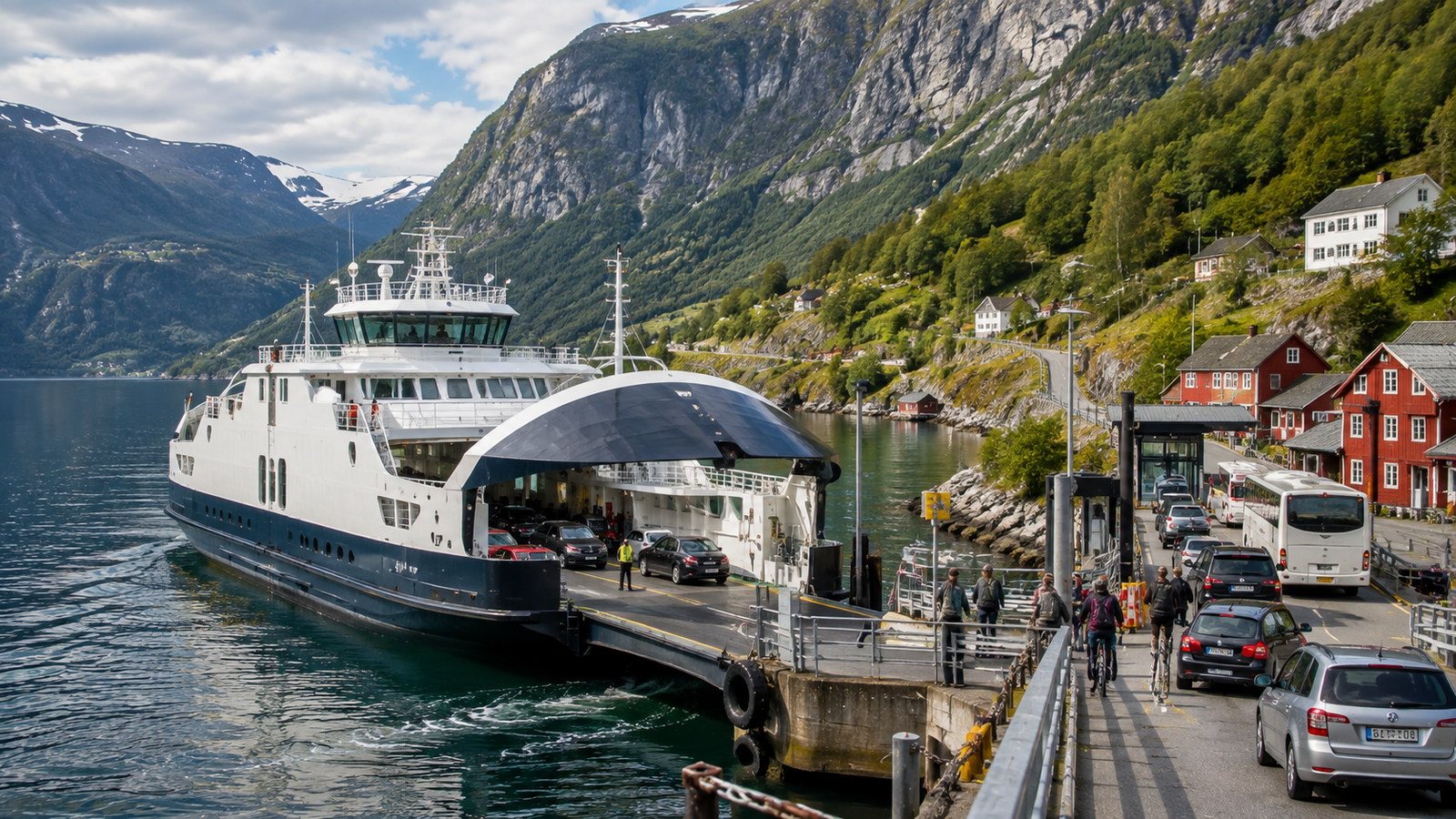
Norway’s ferries connect fjord communities through some of the country’s most scenic landscapes.
What things cost in Norway
| Coffee | NOK 45 to 65 |
|---|---|
| Casual meal for one | NOK 180 to 300 |
| Sit-down dinner for two | NOK 900 to 1,800 |
| Oslo transit day pass | around NOK 130 |
| Mid-range hotel per night | NOK 1,300 to 2,600, higher in peak summer |
| Bergen fjord tour | NOK 700 to 2,000+ depending on route |
Budget roughly ₹15,100 to ₹26,900 per person per day on the ground, two sharing a room and excluding flights.
Budget ranges are editorial planning estimates based on typical mid-range travel costs reviewed in July 2026, for one person, two sharing a room, including accommodation but excluding international flights. Actual prices vary by city, season and choices.
Entry and tax to know
The EU's ETIAS travel authorisation is planned but not yet in force; the 2026 launch was dropped and 2027 is now expected. Once live, visa-exempt travellers will need it (about EUR 20) for short stays. Travellers whose passport requires a Schengen visa should apply for one instead. Check the official EU ETIAS site.
European Union (ETIAS) →25% VAT included in displayed prices. Eligible non-EU visitors can claim a refund on qualifying purchases above the minimum spend, validated at the airport on departure.
over NOK 25,000 in currency or covered instruments, in or out, must be declared to Norwegian Customs. Note this is Norway's own threshold, higher than the EU's EUR 10,000.
Norwegian Customs →Money in Norway, in detail
Norway uses the Norwegian krone, not the euro, and is not in the EU (though it is in Schengen). It is one of the most cashless countries, so cards and contactless cover almost everything, but a small NOK reserve and a second card are sensible for remote areas. Entry depends on the passport held, and the EU's ETIAS is planned but not yet in force. Budget around NOK 1,800 to 3,200 per person per day, more for peak-summer fjords, Lofoten and Tromso winter trips. Choose NOK at terminals, use bank ATMs, and note the NOK 25,000 cash-declaration threshold.
Understanding the Norwegian krone exchange rate
NOK exchange rates float, so compare the final customer rate after card foreign-transaction fees, ATM charges and any conversion offer rather than a headline number. Norway uses the Norwegian krone, not the euro, so make sure your card and any travel-money product handle NOK.
How much Norwegian krone to carry
Norway is one of Europe's most cashless destinations. Keep a small NOK reserve for the rare cash-only moment, top up at bank ATMs, and put day-to-day spending on a low-fee card. Avoid changing large sums at airport counters, where rates are usually poor.
Cards, cash and paying in NOK
Cards and contactless are accepted almost everywhere. The key money trap is being offered a currency choice.
- Dynamic currency conversion: when a terminal or ATM offers NOK or your home currency, choose NOK. Home-currency billing lets the operator set the rate and add a margin.
- Not the euro: Norway is in Europe but uses the Norwegian krone; do not assume euro prices or euro acceptance.
- Backup: carry a second card from a different provider, as some venues are card-only.
The best ATM approach in Norway
Use ATMs operated by recognised banks rather than standalone tourist machines, which often charge high fees and push conversion. Review the operator fee, withdraw a sensible amount rather than many small ones, and decline any offer to convert the withdrawal into your home currency.
ETIAS and Schengen entry
Short-stay entry depends on nationality: some visitors travel visa-free, others need a Schengen visa. Norway is part of the Schengen area. The EU's ETIAS travel authorisation is planned but not yet in force (see the fees panel); once it launches, visa-exempt travellers will need it, while travellers whose passport requires a Schengen visa should apply for one. Check the official sources for your passport before booking.
Official EU ETIAS information →
VAT and tourist shopping refund
Prices include VAT. Eligible non-EU visitors can usually claim a VAT refund on qualifying purchases above a minimum spend, by requesting a refund form in-store and validating it at the airport on departure (see the fees panel for the rate). Allow extra time at the airport for the refund process, and keep goods and receipts available for inspection.
Cash declaration
Declare currency and covered payment instruments worth more than NOK 25,000 when entering or leaving Norway (Norway's own threshold, not the EU EUR 10,000 figure). Declaring is a reporting requirement, not a penalty; keep exchange receipts where relevant.
Norway money FAQs
No. Norway uses the Norwegian krone (NOK) and is not in the EU (though it is in Schengen). Make sure your card handles NOK and choose NOK at terminals.
It depends on the passport held. Norway is in the Schengen area; some travellers visit visa-free, others need a Schengen visa. The EU's ETIAS is planned but not yet in force. Check the official sources for your passport.
One of the most cashless countries; cards and contactless work almost everywhere. Carry a small NOK reserve and a second card for remote kiosks and offline moments.
Choose kroner (NOK). Home-currency billing (dynamic currency conversion) usually gives a poorer rate.
A small NOK reserve is enough for most card-using visitors; top up at bank ATMs rather than carrying large amounts.
Eligible non-EU visitors can claim a refund of the 25% VAT on qualifying purchases above the minimum spend, validated on departure.
Declare currency or covered instruments worth more than NOK 25,000 when entering or leaving. This is Norway's own threshold, higher than the EU's EUR 10,000.
A low-foreign-transaction-fee card or multi-currency travel card supporting NOK, a backup card, and a small NOK reserve. Compare rates and fees before travel.
High wages and taxes push up prices for meals, hotels and tours, especially for fjord and winter trips; budget accordingly and self-cater where you can.
Yes; use bank-operated ATMs, review any fee and decline home-currency conversion.
Oslo and Bergen have strong transit; between regions, scenic rail, express boats, domestic flights and rental cars matter, and distances are large.
Summer (roughly May to September) suits fjords and hiking; winter (December to March) suits northern lights and snow trips in the north. Both are peak and pricey.
Sort your Norwegian Krone before you fly
Lock the rate, carry the right mix of cash and card, and know today’s NOK rate before you book.
Official sources reviewed
- Norges Bank — Currency and exchange
- Norwegian Tax Administration (Skatteetaten) — VAT and tourist refunds
- European Union — ETIAS travel authorisation
- Norwegian Customs (Tolletaten) — Cash declaration (NOK 25,000)
- Visit Norway — General travel guidance
Last reviewed 31 July 2026 by Matrix Forex Editorial Team. Next review due 31 October 2026.
Plan your norwegian krone money before you fly
Check today’s rate, load a multi-currency forex card, or speak to a Matrix Forex expert about the right travel-money mix.
RBI Authorised Dealer Category-II, Licence No. NDL-ADII-0023-2023 · Serving 3 lakh+ customers