 US Dollar
 Euro
Euro British Pound
 UAE Dirham
 Australian Dollar
 Singapore Dollar
Chiang Mai Travel Guide
Buy Thai BahtChiang Mai at a glance
Chiang Mai is northern Thailand's cultural capital and the former seat of the Lanna kingdom, a genuinely different pace from Bangkok: a walkable Old City ringed by a moat, hundreds of temples, mountain day trips and a serious food and coffee scene. It suits travellers who want temples and nature over beaches, and pairs naturally with Bangkok on a longer Thailand trip, about an hour apart by direct flight.
Chiang Mai International Airport sits only about 4km from the Old City, one of the shortest airport-to-centre runs of any major Thailand destination, and there is no rail link. The official flat-rate airport taxi is THB 150 to most of the city and Grab runs THB 80 to 180 depending on the exact destination, both about 15 to 20 minutes. A red songthaew flagged down nearby is THB 30 to 40 per person but less predictable. Airport taxis are cash only, so keep some baht on hand before you land.
Inside the moat, Wat Chedi Luang, Wat Phra Singh and Wat Chiang Man, the city's oldest temple, sit within an easy walk of each other. Doi Suthep, the mountain temple overlooking the city, charges foreigners THB 30 to enter, with a separate THB 200 national park fee only if you continue above the temple toward Bhubing Palace. Doi Inthanon, Thailand's highest peak and the classic full-day trip, charges THB 300 for a foreign adult against THB 60 for a Thai national, plus THB 100 for the Twin Pagodas and THB 30 for a car.
Day 1: Wat Chedi Luang and Wat Phra Singh in the morning, the Old City's smaller lanes in the afternoon, the Sunday Walking Street if the timing lands or the Night Bazaar otherwise. Day 2: Doi Suthep in the morning, Nimmanhaemin's cafes and shops in the afternoon, dinner in Nimman. Day 3: an ethical elephant sanctuary or a Thai cooking class, both of which need booking ahead. A fourth day is where Doi Inthanon fits.
Where to stay
The Old City is roughly a 1.6km square, which makes almost all of it walkable end to end.
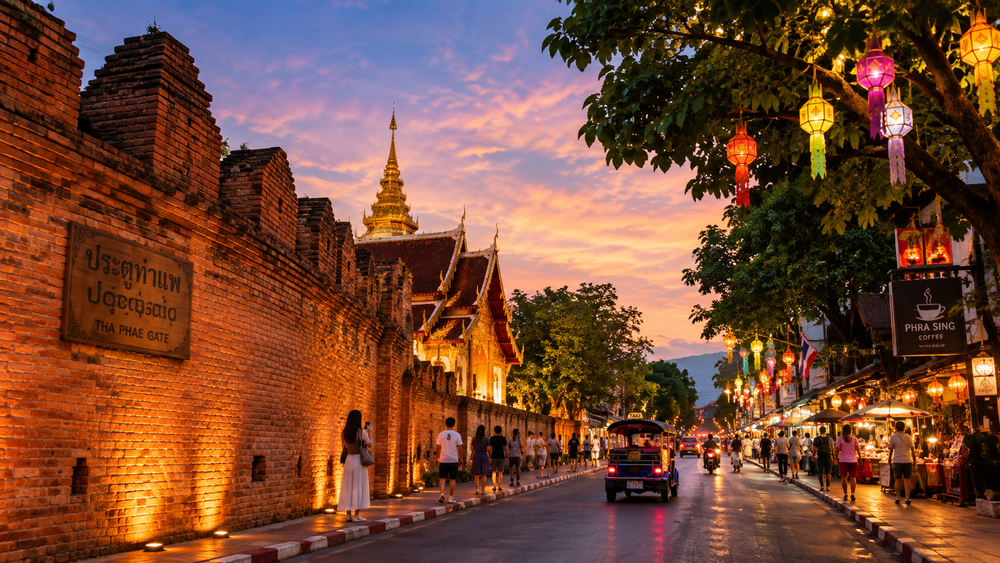
Old City
Inside the historic moat, walking distance to most major temples and the Sunday Walking Street market. The classic first-timer base and genuinely walkable.
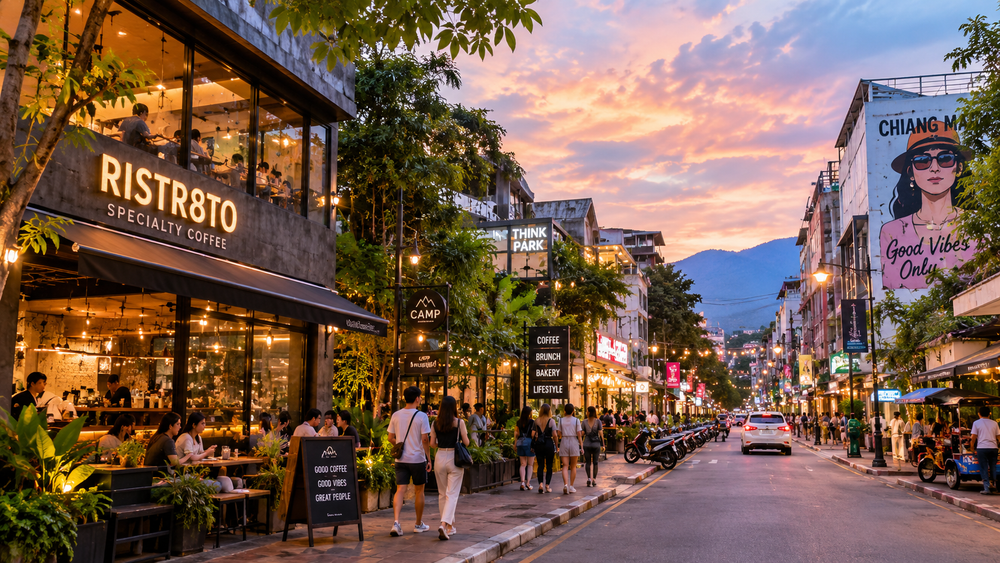
Nimmanhaemin (Nimman)
The modern cafe-and-design district just west of the Old City. A younger crowd, a strong coffee and food scene, less historic character but more contemporary energy.
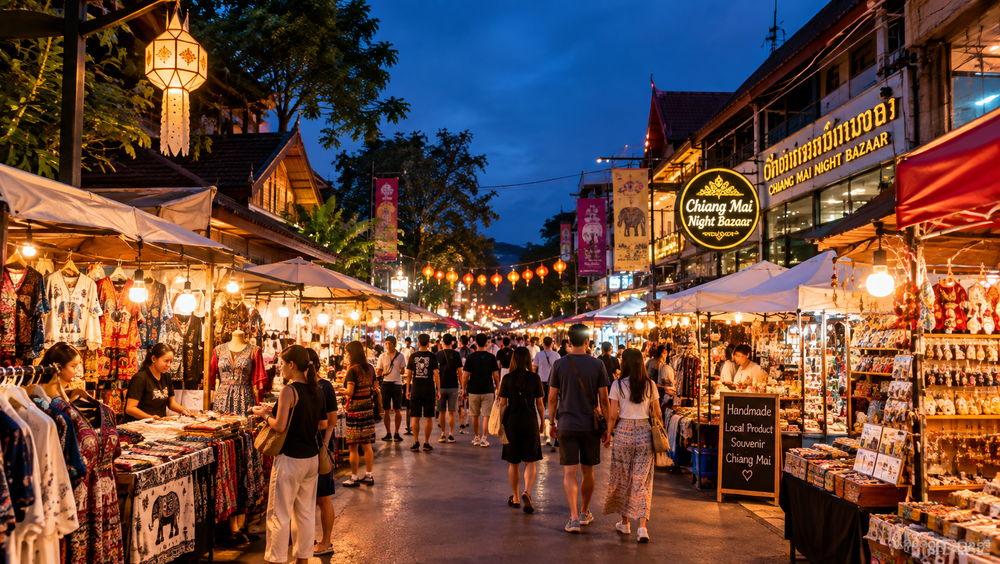
Night Bazaar area
Near the Ping River and close to the night market, a reasonable middle ground between the Old City's temples and the newer parts of town.
Paying in Chiang Mai
For the baht itself, how much cash to carry, the ATM situation and the LRS and TCS numbers, see the Thailand travel guide.
Before you fly it is worth reading what an ATM withdrawal in Thailand actually costs, since a Thai operator fee applies on top of whatever your Indian bank charges.
Chiang Mai leans on cash more than Bangkok does. Cards work at hotels, malls and established restaurants, but songthaews, street food, smaller shops and markets are cash-only or cash-preferred, so carry a larger daily float than you would in the capital, around THB 2,000 to 3,000.
What Chiang Mai actually costs
Set the length and style of your trip to see what to budget, in baht and rupees.
Indicative, excluding international flights and accommodation, per person per day. Converted at the verified mid-market rate on 21 September 2026, THB 100 ≈ ₹288, not a Matrix board rate.
Budget roughly ₹4,300 to ₹10,050 per person per day on the ground for a mid-range trip, two sharing a room, excluding flights.
| Item | Cost |
|---|---|
| Khao soi from a street stall | THB 40-80 |
| Nimman restaurant main | THB 150-300 |
| Red songthaew ride | THB 30-40 |
| Doi Suthep entry (foreign visitor) | THB 30 |
Getting around
Red songthaews, the shared pickup trucks that double as informal taxis, are Chiang Mai's most distinctive transport: flag one down, tell the driver where you are going, pay THB 30 to 40 per person in cash. They are a flag-down shared system rather than a scheduled service, so they suit short hops better than a fixed appointment. Grab and Bolt both operate reliably and are the easier choice for a direct, predictable ride.
The Old City itself is walkable, its roughly 1.6km square layout putting most temples inside the moat a short walk apart. Save the songthaews, Grab or a rented scooter for Nimman, Doi Suthep or anything further out.
Common mistakes in Chiang Mai
Visiting in March without checking air quality
Agricultural burning across the region pushes air quality down significantly through March, and it is consistently flagged as the least comfortable month to visit. If your dates are flexible, shift to the November to February window.
Assuming Bangkok's card-friendliness carries over
Chiang Mai is more cash-dependent, especially outside hotels and malls. Keep more cash on hand than you would in the capital.
Booking an elephant sanctuary at the gate
Reputable, ethical operators fill up in advance. Book ahead rather than assuming a walk-up spot will be available.
Expecting one fee to cover Doi Suthep and the summit
The temple charges foreigners THB 30, but the national park gates above it are a separate THB 200. Doi Inthanon is separate again at THB 300 for a foreign adult against THB 60 for a Thai national.
Relying on a songthaew for a fixed appointment
They are shared and flag-down rather than scheduled, which is fine for wandering but unreliable if you need to be somewhere at a set time.
Chiang Mai FAQs
Three to four days covers the Old City, Doi Suthep and one further activity such as an elephant sanctuary or a cooking class comfortably.
The official flat-rate airport taxi is THB 150 to most of the city, roughly ₹430. Grab typically runs THB 80 to 180 depending on the exact destination. The airport sits only about 4km from the Old City.
THB 30 for a foreign visitor at the temple itself, about ₹86. A separate THB 200 national park fee applies only if you continue above the temple toward Bhubing Palace and the summit.
Generally best avoided if your dates are flexible. Agricultural burning reduces air quality and visibility through March, making November to February the more comfortable window.
A shared red pickup truck that works as an informal taxi. Flag one down, state your destination and pay a small per-person cash fare, typically THB 30 to 40 within the city.
Yes, it is the most common Thailand pairing. The two are roughly an hour apart by direct flight, or an overnight train or bus if you would rather travel overland.
More guides in Thailand
Buy thai baht before you fly
See your Matrix rate and the applicable charges before you confirm. Order online for doorstep delivery or collect from your nearest branch.
RBI Authorised Dealer Category-II, Licence No. NDL-ADII-0023-2023 · Same-day delivery · Serving 3 lakh+ customers