 US Dollar
 Euro
Euro British Pound
 UAE Dirham
 Australian Dollar
 Singapore Dollar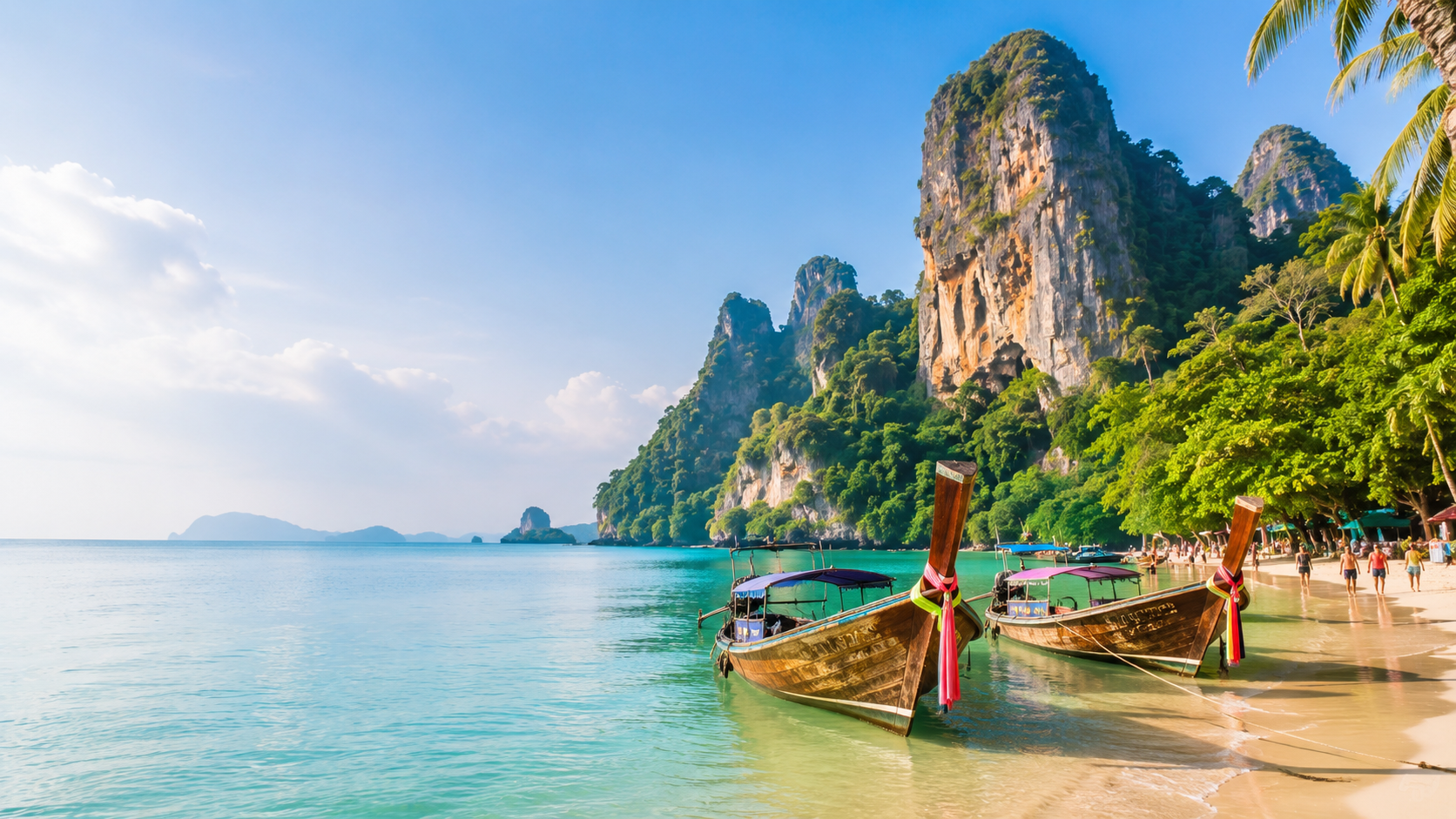
Thailand Travel Guide
A practical Thailand travel guide for international travellers: the Thai Baht, cards versus cash, passport-based entry, the Digital Arrival Card, city and island budgets, transport, VAT refunds and money tips.
Thailand money at a glance
Currency
Thai Baht (THB). Notes are ฿20, 50, 100, 500 and 1,000; coins are 1, 2, 5 and 10 baht plus satang.
Paying
Mixed. Cards work at hotels, malls and larger restaurants; street food, markets, local transport and smaller island businesses often prefer cash or Thai QR.
Cash for a week
Keep about THB 5,000 to 10,000 available if you pay big costs by card, plus a THB 3,000 to 6,000 arrival float in small notes.
Entry
Depends on the passport held and is changing in 2026. Most non-Thai visitors also submit the free Thailand Digital Arrival Card before arrival. See the entry section and the fees panel.
Daily budget
Roughly THB 2,500 to 5,500 per person per day for a mid-range trip, higher for Phuket, Koh Samui, diving and island transfers.
Tax and refunds
VAT is 7% and included in displayed prices. Eligible tourists may claim a VAT refund on qualifying goods.
Thailand combines strong digital-payment adoption with a continuing need for cash. Hotels, malls and larger restaurants generally accept cards, while street food, local markets, taxis, songthaews, ferries and smaller island businesses often prefer cash or Thai QR. Carry a practical Thai Baht reserve in smaller notes, keep at least two payment methods, and remember that a Thai ATM operator fee and your home-bank fee may both apply. Decline any offer to convert a payment or withdrawal into your home currency.
Best places to visit in Thailand
Most Thailand trips combine Bangkok with the north or the southern islands. Cards work in cities and resorts, but the islands and smaller towns lean more on cash, so plan your Thai Baht around where you are going.
 Central
Bangkok
Temples, markets, street food, nightlife and the main transport hub.
 North
NorthChiang Mai
Old-city temples, markets, mountains and a relaxed pace.
 South (Andaman)
Phuket
Beaches, island-hopping, diving and nightlife.
 South (Andaman)
Krabi and Ao Nang
Railay, limestone cliffs and Andaman island trips.
 Gulf islands
Koh Samui
Beaches, ferries, wellness and Gulf-island hopping.
 Central
Ayutthaya
Historic temple ruins and an easy Bangkok day trip.
| City | Region | Daily budget | Paying | In short |
|---|---|---|---|---|
| Bangkok | Central | THB 2,000-4,500 | Cards common; cash for street food and transport | Temples, markets, street food, nightlife and the main transport hub. |
| Chiang Mai | North | THB 1,500-3,500 | Cash-leaning; cards at hotels and malls | Old-city temples, markets, mountains and a relaxed pace. |
| Phuket | South (Andaman) | THB 3,000-6,500 | Cards at resorts; cash on beaches and boats | Beaches, island-hopping, diving and nightlife. |
| Krabi and Ao Nang | South (Andaman) | THB 2,500-5,000 | Cash important on islands and at piers | Railay, limestone cliffs and Andaman island trips. |
| Koh Samui | Gulf islands | THB 3,000-6,500 | Cards at resorts; cash elsewhere | Beaches, ferries, wellness and Gulf-island hopping. |
| Ayutthaya | Central | THB 1,200-2,800 | Cash-leaning | Historic temple ruins and an easy Bangkok day trip. |
What things cost in Thailand
| Street food dish | THB 50 to 100 |
|---|---|
| Casual restaurant meal for one | THB 150 to 350 |
| Mid-range dinner for two | THB 800 to 1,600 |
| Local SIM with data | THB 200 to 500 |
| Mid-range hotel per night | THB 1,200 to 3,000 |
| Airport to city taxi (Bangkok) | around THB 300 to 500, tolls extra |
| Domestic flight | THB 1,200 to 4,000 depending on route and date |
| Island ferry transfer | THB 300 to 1,000 depending on route |
| Full-day island or diving tour | THB 1,000 to 3,500+ depending on inclusions |
Budget roughly ₹6,300 to ₹13,800 per person per day on the ground, two sharing a room and excluding flights.
Budget ranges are editorial planning estimates based on typical mid-range travel costs reviewed in July 2026, for one person, two sharing a room, excluding international flights. Actual prices vary by season, island, booking time, traveller preferences and inclusions.
Fees and policies that change
up to 60 days for permitted short visits. Thailand has announced plans to reduce this period, so check the latest official Thai immigration guidance before departure.
Thai e-Visa and Immigration →A proposed tourist fee has been delayed and is not currently treated as an active arrival charge. Recheck before travel.
Tourism Authority of Thailand →THB 200 to 500 (typical foreign adult) Fees vary by park, age and activity; marine parks may add boat or conservation charges, and some island parks close seasonally.
Department of National Parks →Money in Thailand, in detail
Thailand uses the Thai Baht and blends strong digital payments with a real, continuing need for cash. Hotels, malls and larger restaurants take cards, but street food, markets, local transport and some islands often want cash or Thai QR. Entry rules depend on the passport held and are in transition in 2026, and most non-Thai visitors also submit the free Thailand Digital Arrival Card before arrival. For a mid-range trip, budget around THB 2,500 to 5,500 per person per day, higher for Phuket, Koh Samui, diving and island transfers. Carry a mix of a low-fee card and a Thai Baht cash reserve, and decline home-currency billing at terminals and ATMs.
Understanding the Thai Baht exchange rate
THB exchange rates move constantly and are hard to predict. Compare the final customer rate rather than a headline number, and include card foreign-transaction fees, travel-card loading fees, ATM charges, cash-exchange commission and any delivery cost. Avoid exchanging your whole budget at an airport counter unless convenience matters more than price.
How much Thai Baht to carry
A practical arrival float is about THB 3,000 to 6,000 in smaller notes. Travellers who pay hotels, larger restaurants and tours by card may keep THB 5,000 to 10,000 available across a week, topping up as needed. Carry more for markets, rural routes, islands, drivers, small guesthouses and places without reliable card terminals.
Cards, cash and Thai QR
Cards are widely accepted at hotels, malls and larger restaurants, but a cash-and-card mix works best in Thailand. Carry two independently issued cards where practical and enable international use.
- Dynamic currency conversion: when a terminal or ATM offers THB or your home currency, choose THB. Home-currency billing can carry an unfavourable processor rate.
- ATM fee stacking: a Thai ATM operator fee can be added on top of your own issuer's fee and exchange-rate markup. Review the screen before confirming and make fewer, larger withdrawals where sensible.
- Thai QR: many small vendors accept Thai QR payments, but a Thai Baht cash reserve remains the reliable fallback where cards are not accepted.
The best ATM approach in Thailand
Use ATMs operated by recognised banks, ideally in staffed branches, shopping centres or secure transport hubs. Review the operator fee, withdraw a sensible amount rather than many small ones, and decline any offer to convert the withdrawal into your home currency. Protect the keypad and keep the receipt until the transaction posts correctly.
Which banks charge what, and what a withdrawal costs once your Indian bank has taken its share are covered in full in our guide to ATMs in Thailand.
The Thailand Digital Arrival Card (TDAC)
The Thailand Digital Arrival Card (TDAC) replaced the old paper arrival card. It is required for non-Thai nationals entering by air, land or sea, subject to official exceptions, and was introduced on 1 May 2025.
- Submit it online before arrival through the official Thai Immigration Bureau system, no more than three days before you arrive.
- It is free. Avoid commercial lookalike sites that charge a fee.
- It is not a visa and does not replace one.
- Each new entry requires a fresh submission.
Thailand visa requirements by passport
Thailand entry permission depends on nationality, passport type, travel purpose, intended stay and the rules in force on the arrival date. Some passports qualify for visa exemption, some for Visa on Arrival, and others need a tourist visa or e-Visa before travel. The permitted visa-exempt stay is being revised in 2026 (see the fees panel), so check the current entitlement for your passport rather than relying on a fixed figure. The official Thai e-Visa system includes a passport-based eligibility checker.
Check Thai e-Visa eligibility →
Getting around Thailand
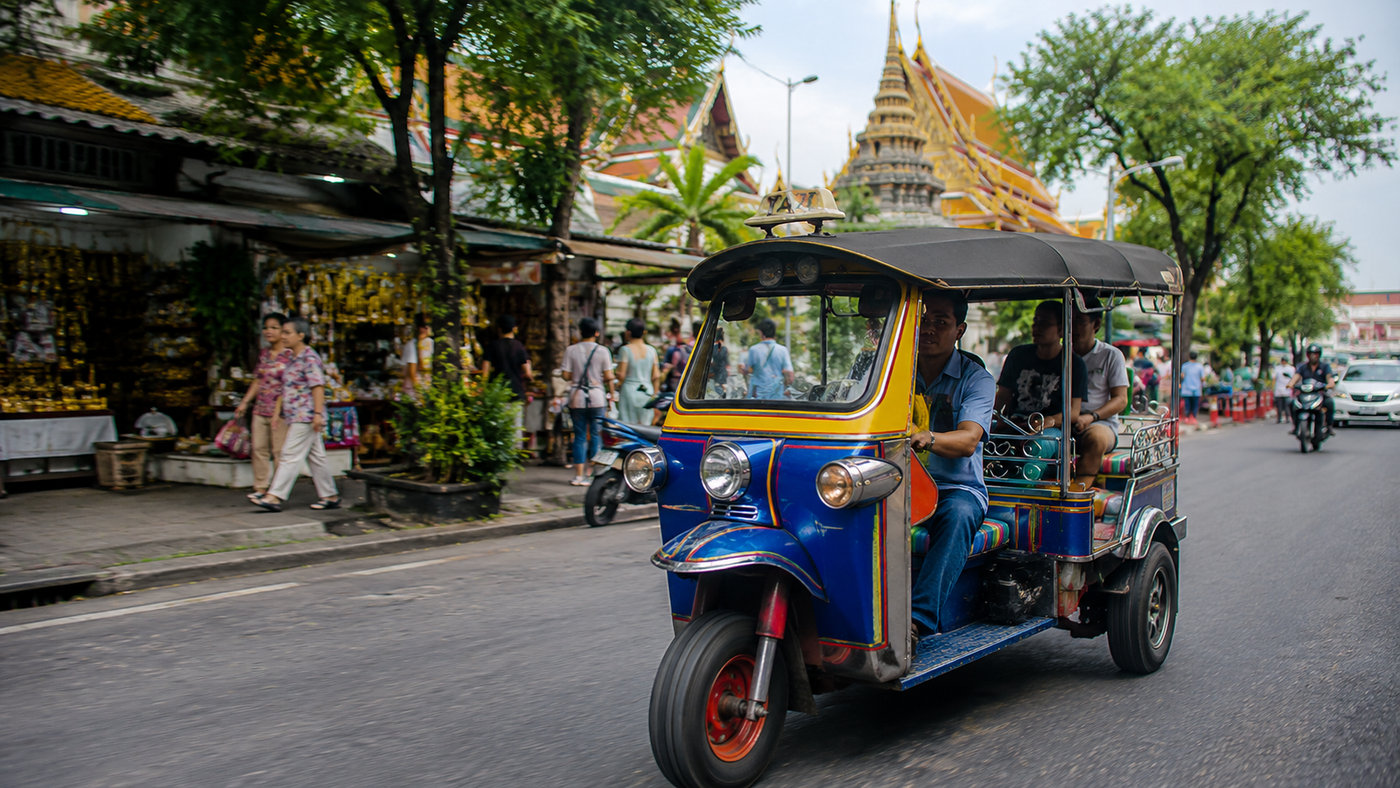
Bangkok combines the BTS Skytrain, MRT metro, buses, river boats, taxis, ride-hailing and the Airport Rail Link. Where a network supports contactless or a stored-value card, use the same method consistently and keep cash for systems that do not. Metered taxis may add expressway tolls separately, and ride-hailing apps are widely used.
Between regions, domestic flights and long-distance buses or trains connect Bangkok, Chiang Mai, Phuket, Krabi and the islands. Island travel relies on ferries and speedboats, where cash is often expected at piers. Recheck ferry schedules and seasonal island closures before booking.
VAT refund for tourists
Thailand applies a 7% VAT, normally included in displayed prices. Eligible foreign tourists can claim a VAT refund on qualifying goods bought from shops showing the VAT Refund for Tourists sign.
- Minimum purchase THB 2,000 (including VAT) per store, per day.
- Minimum total eligible purchases THB 5,000.
- Ask for a P.P.10 or e-P.P.10 form and the original tax invoice on the purchase day.
- Claim at an international airport on departure within the official timing limit, and allow time for customs inspection of higher-value goods.
Exact operational requirements can change, so review the Thai Revenue Department process before shopping.
Cash declaration in Thailand
Thailand's official sources are not fully consistent on the foreign-currency declaration threshold. The Bank of Thailand states that foreign currency exceeding the equivalent of USD 15,000 must be declared. Some other official pages cite USD 20,000, so declaring from USD 15,000 is the safer approach. Travellers carrying large amounts should confirm the current requirement with Thai Customs before departure. Thai baht has separate import and export limits.
National parks and island fees
Thailand has no single national-park price. Entry fees vary by park, nationality, age and activity, and marine parks may add boat, pier, conservation or tour charges. See the current typical foreign-adult range in the fees panel above, and check the specific park and tour operator before booking. Some islands and park zones close seasonally for weather, conservation or safety, and tour prices do not always include park admission, so carry cash unless the park confirms electronic payment.
Thailand money FAQs
It depends on the passport held, travel purpose, length of stay and the rules in force on the arrival date. Some travellers qualify for visa exemption, some for Visa on Arrival, and others must obtain a visa or e-Visa before travel. Check the official Thai e-Visa and consular guidance immediately before booking.
Visa-exemption eligibility and the permitted stay depend on your passport and are being revised in 2026. Check the current entitlement on the official Thai e-Visa or immigration site before booking, rather than relying on a fixed figure.
The Thailand Digital Arrival Card (TDAC) is a free online arrival form for non-Thai nationals entering by air, land or sea, introduced on 1 May 2025. Submit it through the official Thai Immigration Bureau system no more than three days before arrival. It is not a visa, and a new submission is needed for each entry.
Use a combination of Thai Baht cash, a low-foreign-transaction-fee bank card or THB-capable prepaid travel card, and a second backup card. Thailand is digitally advanced, but cash stays useful at markets, small restaurants, local transport and some islands.
A starting float of about THB 3,000 to 6,000 in small notes suits many travellers, while THB 5,000 to 10,000 may cover a week if most large costs are paid by card. Carry more for markets, rural areas, islands and cash-only transport.
Official sources are not fully consistent. The Bank of Thailand states that foreign currency exceeding the equivalent of USD 15,000 must be declared, while some pages cite USD 20,000, so declaring from USD 15,000 is safer. Confirm with Thai Customs before carrying a large amount. Thai baht has separate limits.
Usually yes at hotels, malls, supermarkets, larger restaurants and many attractions. Smaller businesses may prefer cash or Thai QR. Your card issuer and the ATM operator may both charge fees, so review the total cost before confirming.
Choose THB when a card terminal or ATM offers a currency choice. Paying in your home currency can trigger dynamic currency conversion, where the merchant or ATM operator sets the exchange rate and may add a substantial margin.
Eligible foreign tourists can claim the 7% VAT refund on qualifying goods of at least THB 2,000 per store per day, totalling THB 5,000 or more, from shops showing the VAT Refund for Tourists sign. Get a P.P.10 form and tax invoice and claim at an international airport on departure within the official time limit.
A Thai ATM operator fee can be added on top of your own issuer's fees and exchange-rate markup. Use bank-operated ATMs, withdraw a sensible amount rather than many small ones, and decline any offer to convert the withdrawal into your home currency.
It is mixed. Cards are widely accepted in hotels, malls and established businesses, but cash remains important for street food, markets, local transport, smaller shops and some islands. Carry both.
A proposed tourist fee has been delayed and is not currently treated as an active arrival charge. Recheck official guidance before travel.
Sort your Thai Baht before you fly
Lock the rate, carry the right mix of cash and card, and know today’s THB rate before you book.
Official sources reviewed
- Royal Thai Government / Tourism Authority of Thailand — 2026 visa-policy transition
- Thai Ministry of Foreign Affairs / e-Visa — Passport eligibility and e-Visa
- Thai Immigration Bureau — Thailand Digital Arrival Card (TDAC)
- Bank of Thailand — Foreign-currency declaration
- Thai Customs Department — Currency declaration system
- Thai Revenue Department — VAT Refund for Tourists
- Department of National Parks (DNP) — Park entrance fees
- Tourism Authority of Thailand — General travel guidance
Last reviewed 31 July 2026 by Matrix Forex Editorial Team. Next review due 31 October 2026.
Plan your thai baht money before you fly
Check today’s rate, load a multi-currency forex card, or speak to a Matrix Forex expert about the right travel-money mix.
RBI Authorised Dealer Category-II, Licence No. NDL-ADII-0023-2023 · Serving 3 lakh+ customers