 US Dollar
 Euro
Euro British Pound
 UAE Dirham
 Australian Dollar
 Singapore Dollar
USA Travel Guide
A practical USA travel guide for international travellers: the US Dollar, cards versus cash, sales tax and tipping, ESTA and visa entry, city budgets, national park fees and money tips.
USA money at a glance
Currency
US Dollar (USD). Notes are $1, 5, 10, 20, 50 and 100; coins are 1, 5, 10 and 25 cents.
Paying
Card-first. Cards and phone payments work almost everywhere; keep a small cash float for tips and minor vendors.
Sales tax
Added at the register, not shown on the price tag, and it varies by state and city. There is no general visitor refund.
Tipping
Expected. Around 15 to 20% at sit-down restaurants and USD 1 to 2 per drink or per bag.
Visa planning
Depends on the passport held. Visa Waiver travellers use an ESTA for stays up to 90 days; many others need a B-1/B-2 visa. See the entry section.
Cash for a week
A USD 150 to 250 float covers tips, small purchases and emergencies; most spending can go on a card.
Daily budget
Roughly USD 200 to 350 per person per day for a mid-range trip, more for New York, San Francisco, theme parks and road trips.
The USA is highly card-first. Restaurants, shops, transit, petrol stations and even food trucks usually take cards or phone payments. Cash still helps for tipping, small-town diners, older parking meters and as a backup if a terminal fails. Carry two payment methods plus a small USD cash float. Remember that sales tax is added at the register and tips are expected on top of the displayed price.
Best places to visit in USA
The USA is vast and first-timers underestimate distances. Some cities have transit good enough to skip a car; others, and most national-park routes, are far easier with a rental. Pick a region or two rather than trying to cross the country.
 Northeast
New York
Museums, Broadway, walkable neighbourhoods and excellent public transit.
 West Coast
Los Angeles
Beaches, Hollywood and theme parks across a sprawling, car-friendly city.
 West Coast
San Francisco
Bay views, tech culture and day trips to wine country and parks.
 Southwest
Las Vegas
Shows, dining and nightlife, and a base for Grand Canyon and Zion.
 Southeast
Orlando
The theme-park capital; budget for tickets and transfers.
 Northeast
Washington DC
Free Smithsonian museums, monuments and a walkable core with good transit.
 West
WestNational parks, Southwest
Grand Canyon, Zion and Bryce on a classic road trip; note the nonresident fees.
| City | Region | Daily budget | Paying | In short |
|---|---|---|---|---|
| New York | Northeast | USD 250-450 | Card-first; OMNY transit | Museums, Broadway, walkable neighbourhoods and excellent public transit. |
| Los Angeles | West Coast | USD 200-380 | Card-first; a car helps | Beaches, Hollywood and theme parks across a sprawling, car-friendly city. |
| San Francisco | West Coast | USD 230-430 | Card-first; transit and walking | Bay views, tech culture and day trips to wine country and parks. |
| Las Vegas | Southwest | USD 180-400 | Card-first | Shows, dining and nightlife, and a base for Grand Canyon and Zion. |
| Orlando | Southeast | USD 200-400 | Card-first; a car helps | The theme-park capital; budget for tickets and transfers. |
| Washington DC | Northeast | USD 200-350 | Card-first; Metro | Free Smithsonian museums, monuments and a walkable core with good transit. |
| National parks, Southwest | West | USD 150-300 | Card at gates; carry cash | Grand Canyon, Zion and Bryce on a classic road trip; note the nonresident fees. |
What things cost in USA
| Coffee | USD 4 to 7 |
|---|---|
| Casual meal for one | USD 15 to 30 |
| Sit-down dinner for two (before tax and tip) | USD 60 to 120 |
| City transit day pass | roughly USD 5 to 15 depending on the city |
| Mid-range hotel per night | USD 120 to 300, higher in New York and San Francisco |
| Domestic flight | USD 100 to 350 depending on route and date |
| Rental car per day | USD 40 to 90 plus insurance, fuel and tolls |
| Theme park day ticket | USD 110 to 200+ per person |
| National park entry, standard | USD 20 to 35 per vehicle (plus the nonresident fee at 11 parks, see the fees panel) |
Budget roughly ₹17,500 to ₹30,500 per person per day on the ground, two sharing a room and excluding flights.
Budget ranges are editorial planning estimates based on typical mid-range travel costs reviewed in July 2026, for one person, two sharing a room, excluding international flights, sales tax and tips. Actual prices vary by city, season, booking time and choices.
Fees and policies that change
USD 100 per person (age 16+) on top of the standard entry, at 11 popular parks including Grand Canyon, Yellowstone, Yosemite and Zion. A USD 250 Non-Resident Annual Pass covers the holder and three others; the US-resident annual pass is USD 80.
U.S. National Park Service →was enacted in July 2025 but is not yet being collected. It applies to travellers who obtain a US visa; Visa Waiver (ESTA) travellers and Canadians are exempt. Confirm the status on the official site before travel.
U.S. Department of State →about USD 40 raised from USD 21 in September 2025. This is separate from the B-1/B-2 visa fee; check the exact current amount on the official ESTA site.
U.S. CBP Official ESTA →Money in USA, in detail
The USA uses the US Dollar and is highly card-friendly, but two things push the final amount above the price on the label: sales tax, added at the register and varying by state, and tipping, expected on top at restaurants, bars and for many services. Entry depends on the passport held, with Visa Waiver travellers using an ESTA and many others needing a B-1/B-2 visa. Budget around USD 200 to 350 per person per day for a mid-range trip, more for New York, San Francisco, theme parks and road trips. Carry most spending on a low-fee card with a separate backup, plus a small USD cash float for tips.
Understanding the US Dollar exchange rate
USD exchange rates move constantly and are hard to predict. Focus on the final customer rate, card foreign-transaction fees, ATM charges and any conversion offer rather than a headline number. Compare the quoted USD rate against a reliable market reference and check all visible charges before you confirm.
How much USD to carry
For a mid-range trip, allow around USD 200 to 350 per person per day before international flights, sales tax and tips. Most travellers put planned spending on a low-foreign-transaction-fee card with a separate backup card, and carry a USD 150 to 250 cash float for tips, small purchases and emergencies. Increase the buffer for road trips and remote areas.
Cards, cash and payment traps
Card acceptance is near-universal, but a card-first trip should still include a backup. Carry two independently issued cards, enable international use, and know your issuer's foreign-transaction, ATM and replacement fees.
- Dynamic currency conversion: when a terminal or ATM offers USD or your home currency, choose USD. Home-currency billing can carry an unfavourable processor rate.
- Tip prompts: many card terminals now ask for a tip. Check the suggested percentages, which are calculated before or after tax depending on the venue.
- Sales tax at the register: the shelf price usually excludes sales tax, so the amount charged is higher than the label. Keep a small buffer.
The best ATM approach in the USA
Use ATMs operated by recognised banks rather than standalone machines in shops or bars, which often charge higher fees. Review the operator fee, withdraw a sensible amount rather than many small ones, and decline any offer to convert the withdrawal into your home currency. Your own issuer may also charge a withdrawal or conversion fee.
Sales tax and tipping in the USA
There is no national VAT. Sales tax is set by each state and often the city too, is added at the register rather than shown on the price tag, and ranges widely; some states have none. Unlike VAT-refund countries, there is no general sales-tax refund for visitors (a few state schemes are limited exceptions), so do not expect an airport refund.
Tipping is a core part of service-worker pay and is expected: roughly 15 to 20% at sit-down restaurants, about USD 1 to 2 per drink at a bar, 15 to 20% for taxis and rideshare, and USD 1 to 2 per bag for porters. Card terminals often prompt for a tip; keep small notes for cash tips.
US visa and ESTA by passport
Entry depends on the passport held, travel history, trip purpose and route. Eligible Visa Waiver Program travellers may use an approved ESTA for tourism or permitted business stays of up to 90 days; many other nationals need a B-1/B-2 visitor visa. Canadian and Bermudian citizens follow separate provisions, and study, work or long stays need the appropriate visa. An approved ESTA does not guarantee admission at the border.
The ESTA fee and the B-1/B-2 visa fee are two different charges for two different groups; see the current amounts in the fees panel and check the official sites. A USD 250 Visa Integrity Fee has been enacted but is not yet being collected, and Visa Waiver travellers and Canadians are exempt (see the fees panel).
Official ESTA site → · US visa information →
Getting around the USA
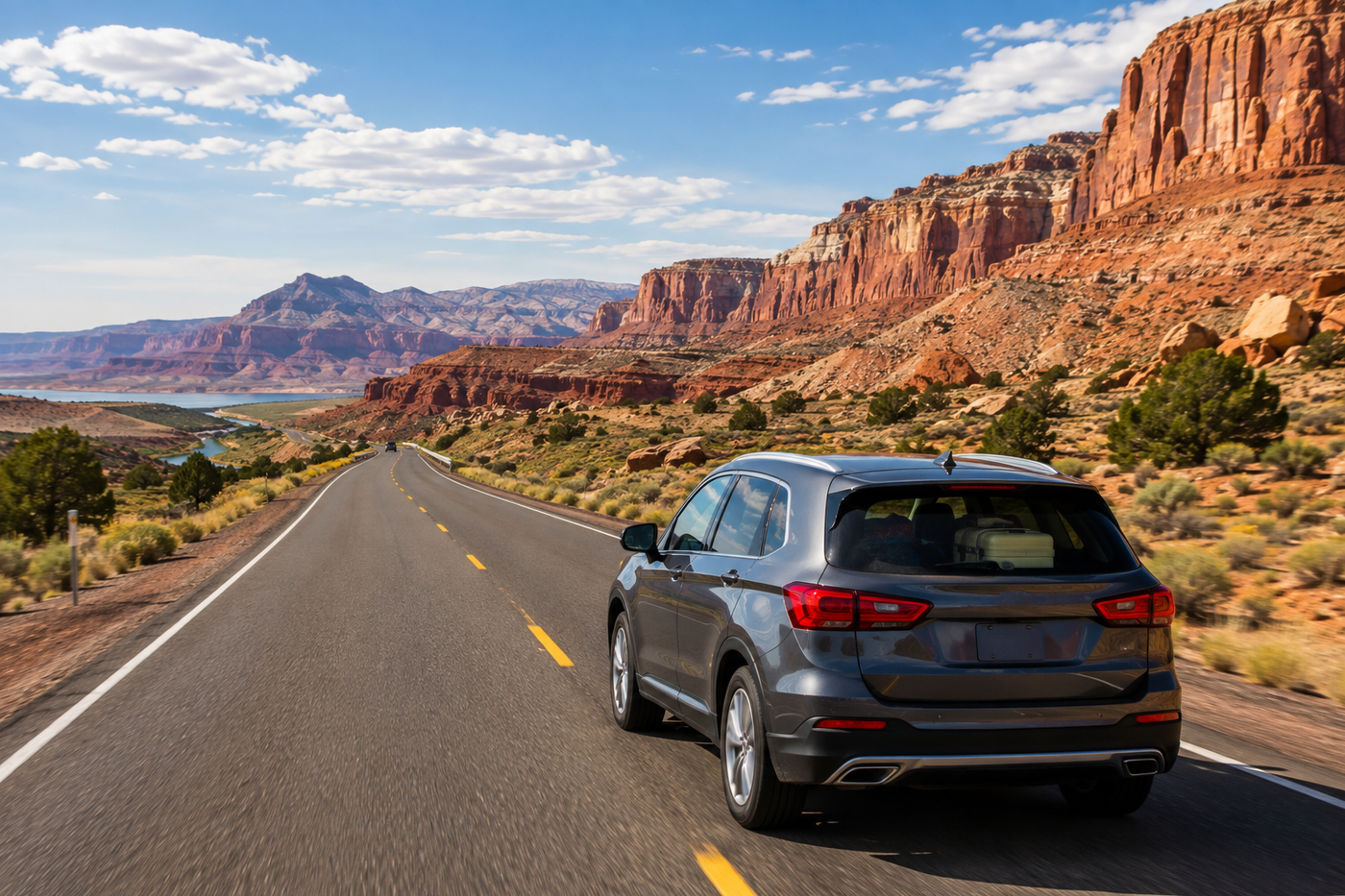
New York, Chicago, Washington DC, Boston and parts of San Francisco have transit good enough to skip a car. Los Angeles, Orlando, national parks and many suburban itineraries are far easier with a rental car. Domestic flights are the fastest way to cross the country; Amtrak is useful on the Northeast Corridor between Boston, New York, Philadelphia and Washington DC. Uber and Lyft work in most cities and are often the simplest airport-to-hotel option. Where a city uses contactless fare payment, tap the same card or device consistently.
Cash declaration entering the USA
There is no limit on how much money you may carry, but currency or reportable monetary instruments exceeding USD 10,000 must be declared to US Customs and Border Protection. The threshold can apply to the combined amount carried by a family or group travelling together. Declaring is not a penalty; failing to declare can lead to seizure and penalties.
National parks and the 2026 nonresident fee
Most national parks charge a standard entrance fee, often per vehicle. From 2026 a new nonresident fee also applies at several of the most popular parks; see the current amount and the annual-pass option in the fees panel above. Road-trip itineraries that include multiple marquee parks should compare individual nonresident fees against the nonresident annual pass, and check each park's page before you go.
USA money FAQs
It depends on the passport you hold and the purpose of your trip. Eligible Visa Waiver Program travellers can normally visit for tourism or permitted business for up to 90 days with an approved ESTA. Many other travellers need a B-1/B-2 visitor visa, and Canadian and Bermudian citizens follow separate rules. Check the official US visa guidance before booking.
Only travellers with an eligible Visa Waiver Program passport who meet all requirements can use ESTA, for tourism or business visits of 90 days or less; it does not guarantee admission at the border. The ESTA fee is about USD 40 (raised from USD 21 in September 2025) and is separate from the B-1/B-2 visa fee. Check the exact amount on the official ESTA site.
A USD 250 Visa Integrity Fee was enacted in July 2025 but is not yet being collected. It applies to travellers who obtain a US visa; Visa Waiver (ESTA) travellers and Canadians are exempt. Confirm the current status on the official US government site before travel.
Yes at some parks. From 1 January 2026, non-US residents aged 16 and older pay an extra USD 100 per person at 11 popular parks, including Grand Canyon, Yellowstone, Yosemite and Zion, on top of the standard entry. A USD 250 Non-Resident Annual Pass covers the holder and three others. Check the National Park Service site.
Usually not. Sales tax is set by each state and often the city, and is added at the register rather than shown on the price tag, so the amount you pay is higher than the label. There is no general sales-tax refund for visitors, unlike VAT-refund countries.
Tipping is expected: about 15 to 20% at sit-down restaurants, USD 1 to 2 per drink at a bar, 15 to 20% for taxis and rideshare, and USD 1 to 2 per bag for porters. Card terminals often prompt for a tip; keep small notes for cash tips.
Use a low-foreign-transaction-fee card or a USD prepaid or multi-currency travel card, a separately issued backup card, and a modest USD cash float for tips and emergencies. Compare all card, conversion and ATM charges before travel.
Cash helps, although many card terminals now include tip prompts. Carry small notes for hotel staff, drivers, small purchases and situations where card tipping is awkward.
There is no limit on how much you may carry, but currency or reportable monetary instruments exceeding USD 10,000 must be declared to US Customs and Border Protection. The threshold can apply to the combined amount carried by a family or group travelling together.
Almost always, at hotels, shops, restaurants, transit and attractions. Your issuer may charge a foreign-transaction fee, and some terminals offer dynamic currency conversion, which you should decline.
Choose USD. Paying in your home currency may trigger dynamic currency conversion, where the merchant or processor sets the exchange rate and may add a significant margin.
Standalone ATMs in shops and bars often charge high operator fees; bank-operated ATMs are usually cheaper. Your own issuer may also charge a withdrawal or conversion fee. Withdraw sensible amounts and decline any offer to convert to your home currency.
Sort your US Dollar before you fly
Lock the rate, carry the right mix of cash and card, and know today’s USD rate before you book.
Official sources reviewed
- U.S. Department of State — Visa fees, Visa Waiver Program and visa wait times
- U.S. Customs and Border Protection — Official ESTA
- U.S. Department of Homeland Security — Visa Integrity Fee
- U.S. National Park Service — Nonresident fees and pass coverage
- U.S. Customs and Border Protection — Currency reporting (over USD 10,000)
- State and local tax authorities — Sales tax (no federal VAT or general refund)
- Brand USA / Visit The USA — General travel guidance
Last reviewed 31 July 2026 by Matrix Forex Editorial Team. Next review due 31 October 2026.
Plan your us dollar money before you fly
Check today’s rate, load a multi-currency forex card, or speak to a Matrix Forex expert about the right travel-money mix.
RBI Authorised Dealer Category-II, Licence No. NDL-ADII-0023-2023 · Serving 3 lakh+ customers