 US Dollar
 Euro
Euro British Pound
 UAE Dirham
 Australian Dollar
 Singapore Dollar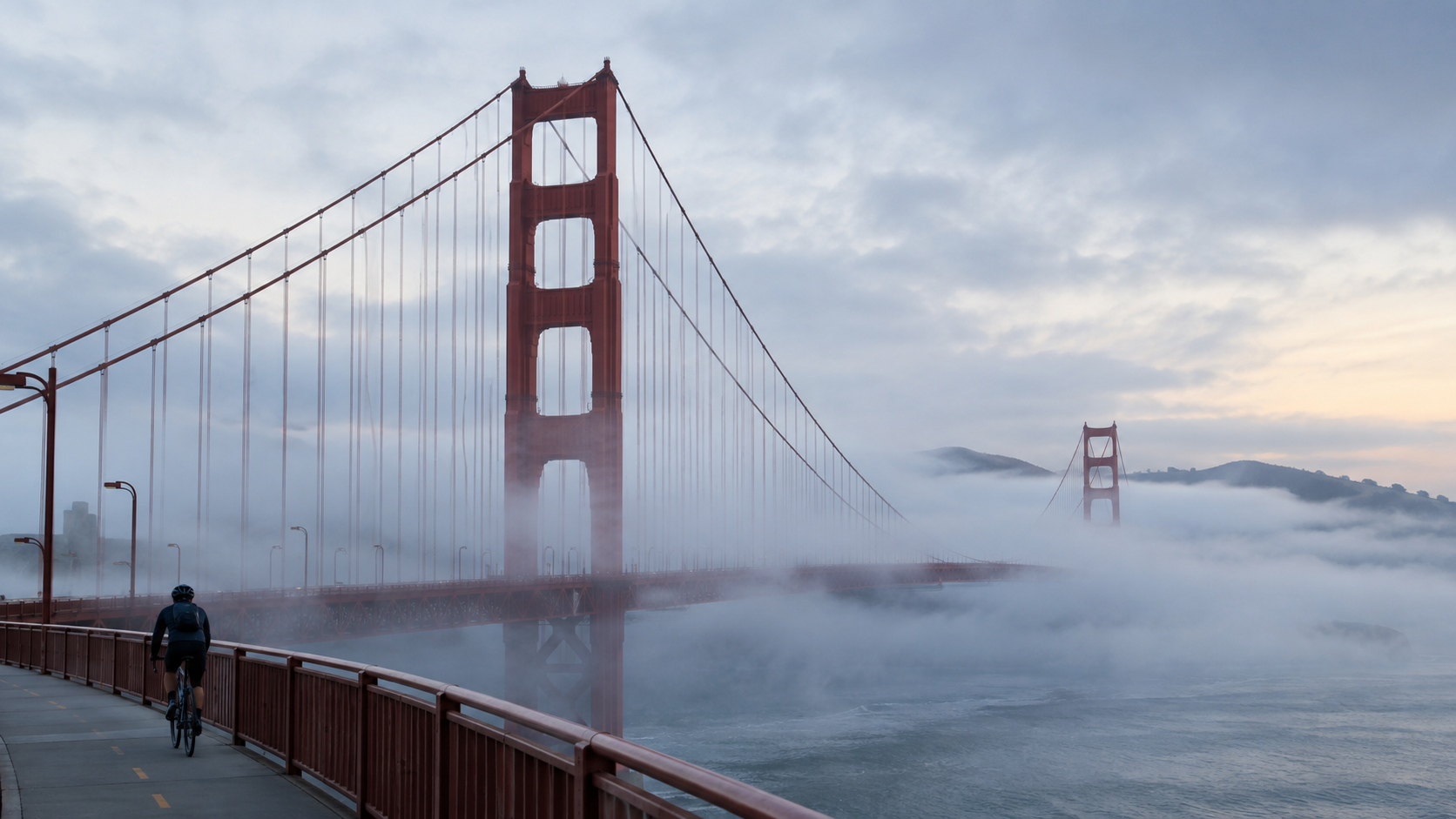
San Francisco Travel Guide
Compact, walkable, and the one California city on this list where you genuinely don't need a car.
Buy US DollarsSan Francisco in three days
San Francisco is a compact, hilly city on a peninsula, known for the Golden Gate Bridge, cable cars and a genuinely comprehensive public transit network. Unlike Los Angeles, San Francisco doesn't require a car: BART, Muni and the cable cars cover most visitor needs inside the city.
SFO sits about 21km south of downtown. BART (free AirTrain to the station, then the train) runs roughly USD 10-11 to downtown stations, about 30 minutes. BART fare gates now accept contactless bank cards and phone wallets directly through Tap and Ride, alongside the traditional Clipper Card, which is still worth having for Muni, the cable cars, or a BART-to-Muni transfer.
A realistic three days: Day 1 is the Golden Gate Bridge and the Presidio, dinner in the Marina or Cow Hollow. Day 2 is Alcatraz in the morning (ferry booked well ahead) and Fisherman's Wharf in the afternoon, with the crooked block of Lombard Street an easy add on the way. Day 3 is Chinatown in the morning and Golden Gate Park in the afternoon, home to the California Academy of Sciences (roughly USD 40-55) and the de Young Museum (around USD 15). A fourth day is best spent on Napa or Sonoma wine country (60-90 minutes by car) or Muir Woods and Sausalito (20-30 minutes north).
Where to stay and see
San Francisco is small enough that most bases put you within reach of everything on this list.
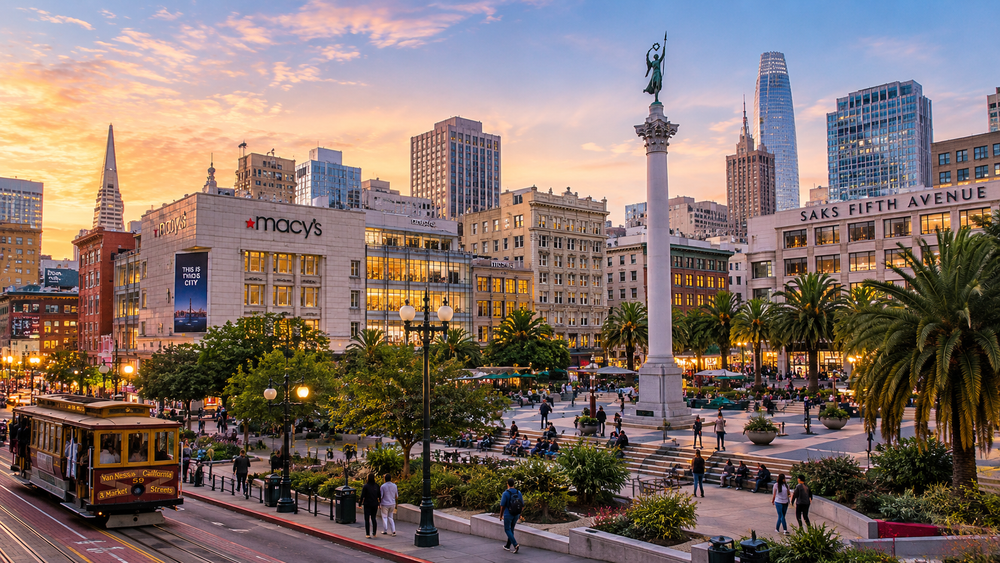
Union Square
Central, well connected, close to shopping, and a genuinely convenient first-timer base within walking distance of a cable car line. Priced at the higher end of the city's bases for exactly that convenience.
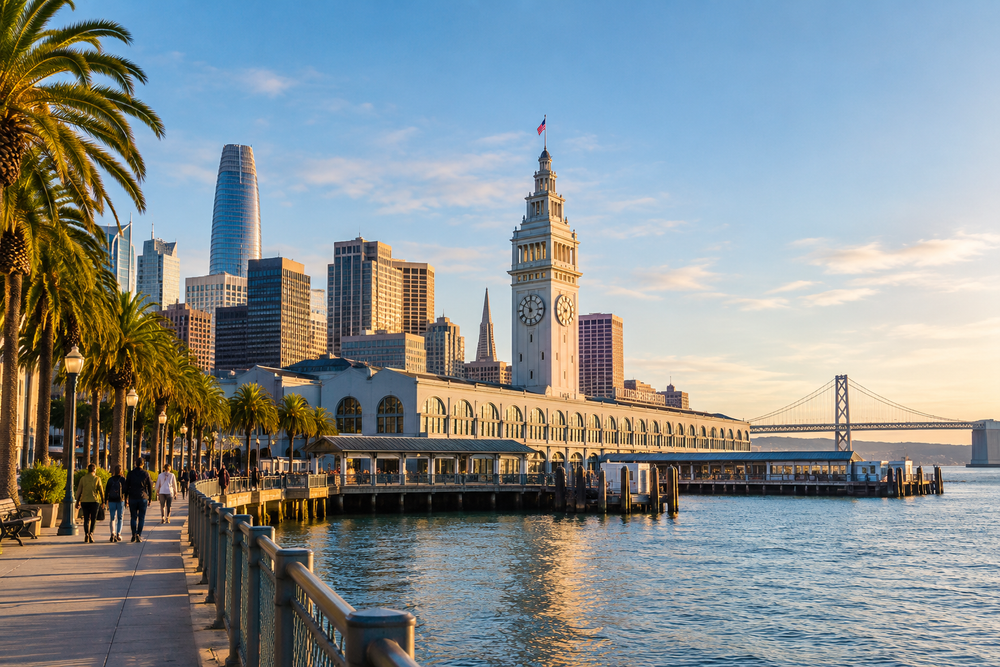
Financial District / SoMa
Well connected by BART and Muni, generally the better value of the two central bases, close to the Ferry Building and the Embarcadero. A sensible pick if shopping isn't the priority.
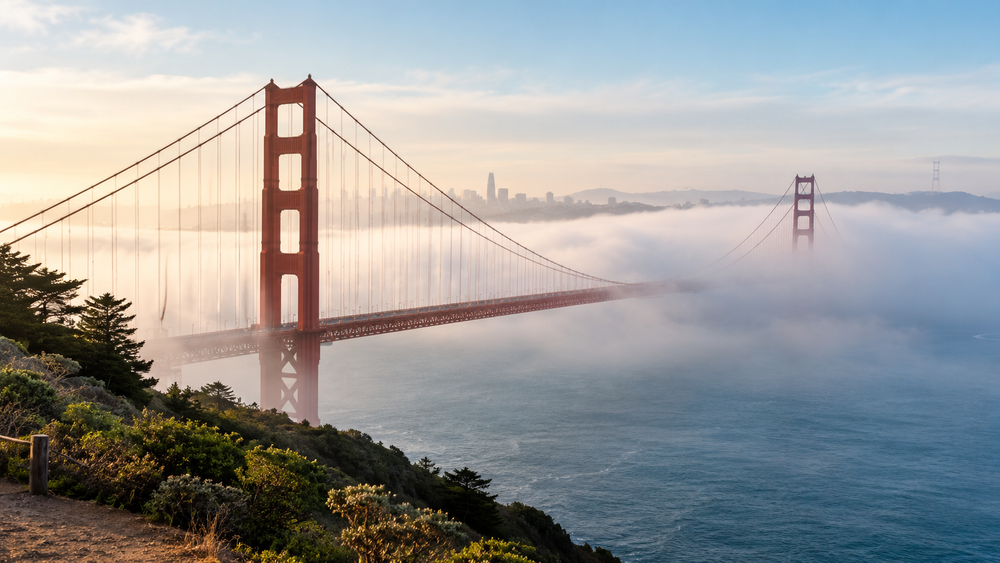
The Golden Gate Bridge and the Presidio
Walking or cycling across the bridge is a genuine highlight, both free. Bike rentals near Fisherman's Wharf run roughly USD 28-40 a day; the popular route bikes across to Sausalito and back by the free Golden Gate Ferry.
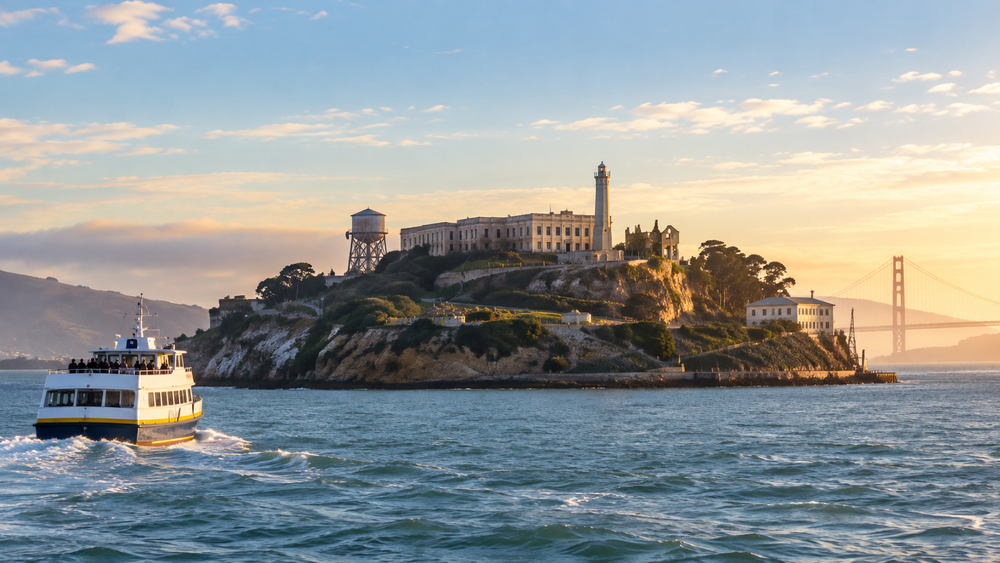
Fisherman's Wharf and Alcatraz
More tourist-oriented and priced accordingly, but the base for the Alcatraz ferry and tour (around USD 45 a day ticket, book well ahead) and the historic F Line streetcar into the rest of the city.
Money in San Francisco
San Francisco is highly card-first. Carry a small USD cash float, USD 100-150, for tips and smaller vendors, and use bank-operated foreign-card ATMs rather than standalone ones, which tend to charge more. A loaded Clipper Card is worth getting on arrival regardless, since it covers Muni and the cable cars more smoothly than a foreign contactless card sometimes does at older ticket machines.
See the USA travel guide for the full picture on ESTA/visa entry, LRS limits, the Visa Integrity Fee and national park fees.
Work out how much to carry as cash versus a forex card before you fly, and read the full USA forex guide for how the rate, TCS and LRS paperwork fit together on a trip like this.
What San Francisco actually costs
Set the length and style of your trip to see what to budget, in dollars and rupees.
Indicative, excluding international flights, per person per day. Converted at the verified mid-market rate on 7 September 2026, USD 1 ≈ ₹94.45, not a Matrix board rate.
| Tier | 3-day estimate (2 people sharing) |
|---|---|
| Budget | USD 650-1,000 |
| Mid-range | USD 1,350-2,100 |
| Comfort | USD 2,800+ |
Excludes international flights, sales tax and tips.
Getting around San Francisco
Muni, buses and light rail, and BART together cover most of what a visitor needs, and the cable cars, while touristy, are a real way to move between the waterfront and Union Square. A Clipper Card covers all three in one system. Budget for the cable cars properly: fares restructured in December 2025 to USD 12 for a single ride, or USD 18 for a Cable Car Plus day pass that also covers all of Muni; a standard Muni bus or light rail ride is USD 2.75 with Clipper or contactless, USD 3 in cash.
Driving in the city itself is trickier than it looks: steep hills, one-way streets and limited parking. Save a rental car for a day trip outside the city instead. BART runs until roughly midnight every night.
Common mistakes in San Francisco
Mistaking the SFO AirTrain for a city-bound train
It's a free internal airport shuttle only, connecting terminals to the BART station and parking. BART itself is the train that goes into the city.
Treating the cable car as a cheap novelty ride
Fares restructured in December 2025 to USD 12 for a single one-way ride, or USD 18 for a Cable Car Plus day pass covering all of Muni. If you're riding more than once, the day pass is usually the better deal.
Booking Alcatraz too late
Ferry tickets genuinely sell out, especially in peak season. Book well ahead rather than assuming you can walk up.
Packing only for warm weather in summer
June to August is cooler and foggier than the calendar suggests, San Francisco's famous "Karl the Fog" is real. Bring layers regardless of season.
Renting a car for the whole trip when it's not needed
San Francisco itself doesn't require one. Save the rental for a specific day trip, wine country or the coast, rather than the whole visit.
San Francisco FAQs
Three to four days covers the Golden Gate Bridge, Alcatraz, Chinatown and Golden Gate Park comfortably.
BART costs roughly USD 10-11 one way and takes about 30 minutes, following a free AirTrain connection from the terminal to the BART station.
No, genuinely not, unlike Los Angeles. BART, Muni and the cable cars cover most visitor needs within the city. A car is more useful for day trips outside the city, like wine country.
No. The AirTrain is a free shuttle that only moves within the airport, between terminals and the BART station. BART is the separate train that actually goes into San Francisco.
Yes. India is not a Visa Waiver Program country, so Indian travellers need a B-1/B-2 visitor visa rather than an ESTA. See the USA travel guide for the current visa and fee picture.
Yes. Napa or Sonoma are roughly 60-90 minutes by car, a well-established full-day trip best done with a rental car, tour or private driver rather than public transit.
Rely on cards for almost everything, with a small USD 100-150 float for tips and smaller vendors. A loaded Clipper Card is worth getting on arrival regardless, since it covers Muni and the cable cars more smoothly than a foreign contactless card sometimes does at older ticket machines.
Buy us dollar before you fly
See your Matrix rate and the applicable charges before you confirm. Order online for doorstep delivery or collect from your nearest branch.
RBI Authorised Dealer Category-II, Licence No. NDL-ADII-0023-2023 · Same-day delivery · Serving 3 lakh+ customers