 US Dollar
 Euro
Euro British Pound
 UAE Dirham
 Australian Dollar
 Singapore Dollar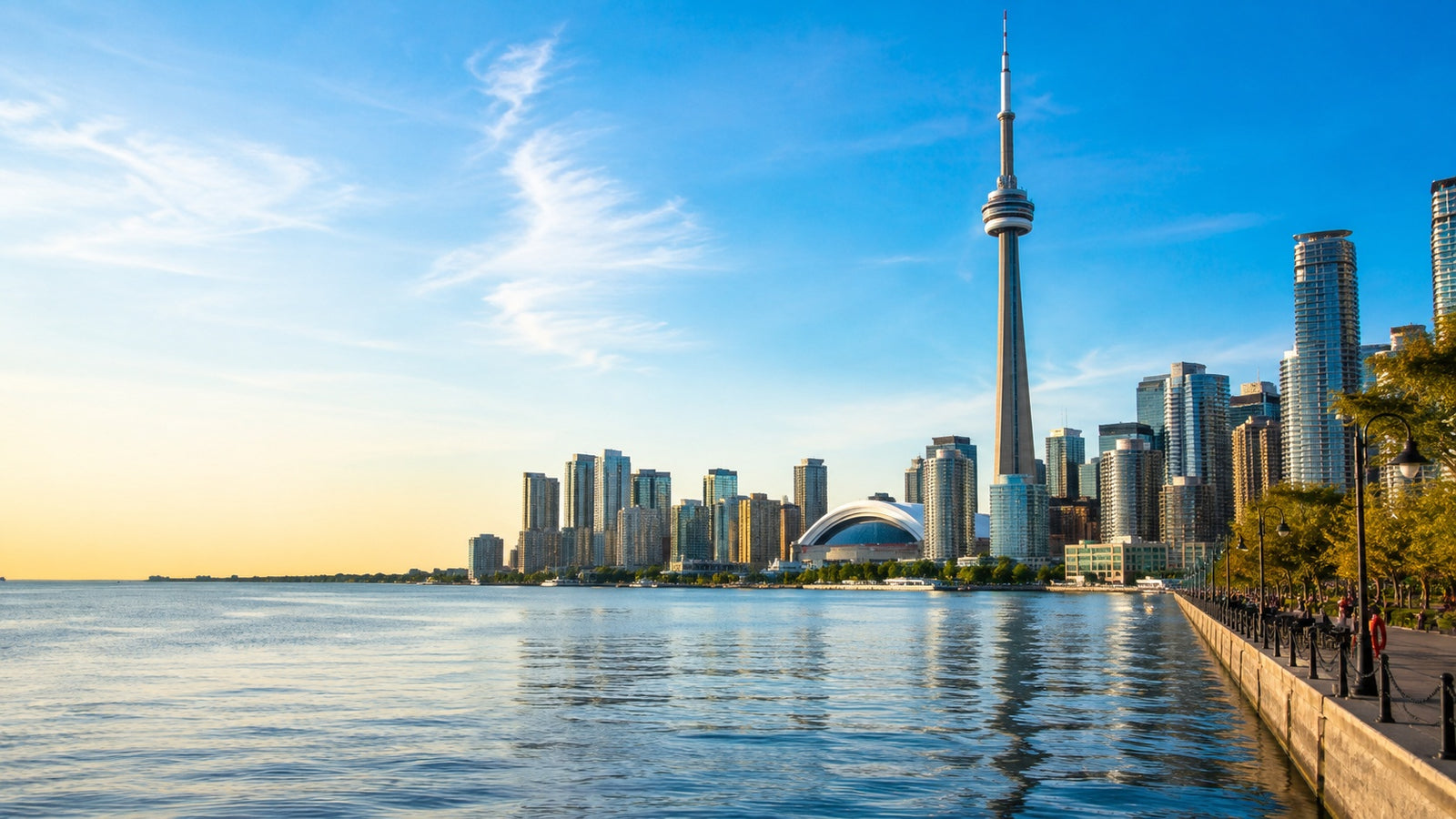
Canada Travel Guide
A practical Canada travel guide for international travellers: the Canadian Dollar, cards versus cash, the eTA and visa entry, sales tax and tipping, city and Rockies budgets, transport, national parks and money tips.
Canada money at a glance
Currency
Canadian Dollar (CAD), 100 cents. Notes are polymer CAD 5, 10, 20, 50 and 100; the CAD 1 and CAD 2 coins are the loonie and toonie.
Paying
Card-first. Cards, contactless and mobile wallets work in cities and tourist areas; cash helps for tips, small vendors and remote travel.
Sales tax
Added at the register, not shown on the shelf price, and it varies by province (about 5% to 15%). There is no general visitor refund.
Tipping
Expected. Around 15 to 20% before tax at sit-down restaurants, and customary for some personal and hotel services.
Visa planning
Depends on passport and travel mode. Visa-exempt travellers usually need an eTA (CAD 7) when flying; many others need a visitor visa. See the entry section.
Cash for a week
CAD 100 to 250 is practical for card-using visitors; road trips and remote areas may need more.
Daily budget
Roughly CAD 220 to 400 per person per day for a mid-range trip, more for Vancouver, Toronto and the Rockies.
Canada is highly card-first: cards, contactless and mobile wallets work in cities and tourist areas. Cash still helps for tips, small vendors, some parking and remote or northern travel where terminals are scarce. Keep a small CAD float and put larger costs on a low-fee card. Two things add to the shelf price: sales tax, applied at the register and varying by province, and tipping, expected on top at restaurants and for many services. Choose CAD at terminals to avoid dynamic currency conversion.
Best places to visit in Canada
Canada is not one simple trip. Toronto, Montreal, Quebec City, Vancouver and Ottawa work without a car; the Rockies, Atlantic coast and national parks need transport and seasonal planning. Pick a region or two.
 Ontario
Toronto
First-timers, food, museums, sport and the Niagara gateway.
 British Columbia
Vancouver
Coast, city and mountains, with Victoria and Whistler nearby.
 Quebec
Montreal
Food, festivals, design, nightlife and French-Canadian culture.
 Quebec
Quebec City
History, architecture and winter atmosphere on short breaks.
 Alberta
Calgary and Banff
The Rockies, lakes, hiking, skiing and road trips.
 Ontario
Ottawa
Museums, Parliament, canals and family travel.
| City | Region | Daily budget | Paying | In short |
|---|---|---|---|---|
| Toronto | Ontario | CAD 240-420 | Transit-first | First-timers, food, museums, sport and the Niagara gateway. |
| Vancouver | British Columbia | CAD 250-450 | Transit, ferry, car for trips | Coast, city and mountains, with Victoria and Whistler nearby. |
| Montreal | Quebec | CAD 200-350 | Metro and walking | Food, festivals, design, nightlife and French-Canadian culture. |
| Quebec City | Quebec | CAD 190-330 | Walkable core | History, architecture and winter atmosphere on short breaks. |
| Calgary and Banff | Alberta | CAD 230-450 | Car or shuttle | The Rockies, lakes, hiking, skiing and road trips. |
| Ottawa | Ontario | CAD 190-330 | Transit and walking | Museums, Parliament, canals and family travel. |
What things cost in Canada
| Coffee | CAD 3 to 6 |
|---|---|
| Casual meal for one | CAD 15 to 28 |
| Sit-down dinner for two (before tax and tip) | CAD 60 to 120 |
| City transit day pass | CAD 7 to 13 |
| Mid-range hotel per night | CAD 160 to 320, higher in Vancouver, Toronto and the Rockies |
| Domestic flight | CAD 120 to 400 depending on route and date |
| Rental car per day | CAD 50 to 110 plus insurance and fuel |
| Parks Canada daily entry | around CAD 11 per adult (a Discovery Pass covers multiple parks) |
Budget roughly ₹13,800 to ₹25,100 per person per day on the ground, two sharing a room and excluding flights.
Budget ranges are editorial planning estimates based on typical mid-range travel costs reviewed in July 2026, for one person, two sharing a room, excluding international flights, sales tax and tips. Actual prices vary by province, city, season and choices.
Entry and fees to know
CAD 7 non-refundable, valid up to 5 years or until the passport expires. It is needed when flying to Canada, not for most land or sea entries. Travellers who are not visa-exempt need a visitor visa.
IRCC (Government of Canada) →around CAD 11 per adult per day at many national parks; a Parks Canada Discovery Pass covers multiple parks and can be better value for longer trips. Some services are seasonal.
Parks Canada →Money in Canada, in detail
Canada is not one simple city break: Toronto, Montreal, Quebec City, Vancouver and Ottawa work without a car, while the Rockies, Atlantic coast and national parks need careful transport and seasonal planning. It is highly card-first, but two things push the final amount above the shelf price: sales tax, added at the register and varying by province (about 5% to 15%), and tipping, expected on top at restaurants and for many services. Entry depends on passport and travel mode, with an eTA (CAD 7) for visa-exempt air travellers and a visitor visa for others. Budget around CAD 220 to 400 per person per day. Carry most spending on a low-fee card with a backup, plus a small CAD cash float.
Understanding the Canadian Dollar exchange rate
CAD exchange rates float, so compare the final customer rate after card foreign-transaction fees, ATM charges and any conversion offer rather than a headline number. Make sure your card and any travel-money product handle CAD, and choose CAD at terminals.
How much CAD to carry
CAD 100 to 250 is a practical starting float for card-using visitors. Most spending can go on a low-fee card, with cash for tips, small vendors, some parking meters and remote or northern travel where terminals are scarce. Top up at bank ATMs rather than carrying large amounts.
Cards, cash and payment traps
Card acceptance is near-universal in cities and tourist areas, but keep a backup and a small cash float.
- Dynamic currency conversion: when a terminal or ATM offers CAD or your home currency, choose CAD. Home-currency billing lets the operator set a poorer rate.
- Tip prompts: card terminals often ask for a tip; check whether the suggested percentage is calculated before or after tax.
- Sales tax at the register: the shelf price usually excludes sales tax, so you pay more than the label.
The best ATM approach in Canada
Use ATMs operated by recognised banks rather than standalone machines in shops, which charge higher fees. Review the operator fee, withdraw a sensible amount rather than many small ones, and decline any offer to convert the withdrawal into your home currency. Your own issuer may also charge fees.
Sales tax and tipping in Canada
There is no single national sales tax shown on price tags. A 5% federal GST applies, and provinces add their own PST or QST or combine into HST, so the total at the register varies by province, commonly 5% to 15%. Unlike VAT-refund countries, Canada has no general sales-tax refund for visitors (the visitor rebate was withdrawn in 2007; only niche exceptions exist), so do not expect an airport refund.
Tipping is expected: around 15 to 20% before tax at sit-down restaurants, and customary for taxis, bars, hairdressers, hotel staff and tour guides. Card terminals usually prompt for a tip.
Canada visa and eTA by passport
Entry depends on the passport held and how you arrive. Visa-exempt travellers usually need an Electronic Travel Authorization (eTA), CAD 7, when flying to Canada; land and sea entries generally do not require an eTA. Many other travellers need a visitor visa, and some qualify for an eTA through a valid US visa or a recent Canadian visa. An approved eTA or visa does not guarantee entry. Check the official IRCC requirements for your passport before booking.
Official IRCC visit-Canada information →
Getting around Canada
Toronto, Montreal, Quebec City, Vancouver and Ottawa have transit good enough to skip a car. The Rockies, Atlantic coast, national parks and many regional trips are far easier with a rental car, and distances are large, so domestic flights matter. VIA Rail serves some corridors but is rarely the fastest option. Winter conditions affect driving and schedules, so plan seasonally.
Cash declaration entering Canada
There is no limit on how much money you may carry, but you must declare to the Canada Border Services Agency if you bring in or take out CAD 10,000 or more, or the foreign-currency equivalent, in cash or monetary instruments. Declaring is a reporting requirement, not a penalty; failing to declare can lead to seizure.
National parks and Parks Canada
Many national parks charge a daily entry fee, around CAD 11 per adult, and a Parks Canada Discovery Pass can be better value if you visit several parks or stay longer. Popular parks and mountain resorts get very busy in peak summer, and some services are seasonal, so check the specific park before you go and book accommodation early.
Canada money FAQs
It depends on the passport and how you arrive. Visa-exempt travellers usually need an eTA (CAD 7) when flying; many others need a visitor visa, and some qualify for an eTA via a valid US visa or a recent Canadian visa. Check the official IRCC requirements for your passport.
An Electronic Travel Authorization is an entry requirement for visa-exempt air travellers, costing CAD 7, valid up to 5 years or until the passport expires. It is needed when flying to Canada, not for most land or sea entries, and it does not guarantee entry.
Highly card-first in cities and tourist areas; cards, contactless and mobile wallets work almost everywhere. Keep a small CAD cash float for tips, small vendors and remote or northern travel.
Usually not. A 5% federal GST plus provincial PST, QST or combined HST is added at the register, so the total varies by province (about 5% to 15%) and is higher than the shelf price.
No general refund. Canada withdrew its visitor rebate in 2007, so you cannot reclaim GST/HST on everyday store purchases at the airport; only niche exceptions (some tour packages, goods shipped abroad) apply.
Around 15 to 20% before tax at sit-down restaurants, and customary for taxis, bars, hairdressers, hotel staff and guides. Card terminals usually prompt for a tip.
CAD 100 to 250 is practical for card-using visitors; road trips and remote areas may need more. Top up at bank ATMs rather than carrying large amounts.
You must declare to the Canada Border Services Agency if you carry CAD 10,000 or more, or the foreign-currency equivalent, in or out.
Choose Canadian dollars (CAD). Home-currency billing (dynamic currency conversion) usually gives a poorer rate.
A low-foreign-transaction-fee card or multi-currency travel card supporting CAD, a backup card, and a small CAD cash float. Compare rates and fees before travel.
Not in Toronto, Montreal, Quebec City, Vancouver or Ottawa, which have good transit. The Rockies, Atlantic coast, national parks and regional trips are far easier with a rental car, and distances are large.
Summer (roughly June to September) suits most trips and the Rockies; winter suits skiing and festivals but brings cold and travel disruption. Spring and autumn are quieter and cheaper.
Sort your Canadian Dollar before you fly
Lock the rate, carry the right mix of cash and card, and know today’s CAD rate before you book.
Official sources reviewed
- IRCC (Government of Canada) — eTA and visitor visa requirements
- Canada Revenue Agency — GST/HST and sales tax
- Canada Border Services Agency — Cash declaration (CAD 10,000)
- Parks Canada — National park fees and passes
- Bank of Canada — Currency
- Destination Canada — General travel guidance
Last reviewed 31 July 2026 by Matrix Forex Editorial Team. Next review due 31 October 2026.
Plan your canadian dollar money before you fly
Check today’s rate, load a multi-currency forex card, or speak to a Matrix Forex expert about the right travel-money mix.
RBI Authorised Dealer Category-II, Licence No. NDL-ADII-0023-2023 · Serving 3 lakh+ customers