 US Dollar
 Euro
Euro British Pound
 UAE Dirham
 Australian Dollar
 Singapore Dollar
New York Travel Guide
Museums, Broadway and a subway that runs all night, at the highest daily cost on this list.
Buy US DollarsNew York in three days
New York is the United States' largest city and the most-searched US destination for Indian travellers: museums, Broadway theatre, walkable neighbourhoods and a subway system that runs around the clock. It is also the most expensive city in this series, and the one where sales tax and tipping catch first-timers off guard most often.
New York has three airports, and which one your flight uses changes the transfer plan considerably. JFK connects to Manhattan by AirTrain plus subway (about USD 11.75, 60-80 minutes) or a flat USD 70 taxi fare. LaGuardia's Q70 bus to the subway is free, so only the onward subway fare applies. Newark needs its own AirTrain plus an NJ Transit train, a combined fare of about USD 17.25 to Penn Station. Confirm the airport before booking anything, since Newark sits across the river in New Jersey, not New York.
A realistic three days: Day 1 covers Midtown, the Empire State Building or Top of the Rock, Times Square, and a Broadway show in the evening (the TKTS booth in Times Square sells same-day discounted tickets). Day 2 is the Met or the American Museum of Natural History in the morning, an unhurried walk through Central Park in the afternoon, and dinner on the Upper West or Upper East Side. Day 3 covers the 9/11 Memorial in the morning, the Statue of Liberty and Ellis Island ferry or the Brooklyn Bridge walk in the afternoon, and dinner in Brooklyn. A fourth or fifth day is best spent on a specific neighbourhood (Greenwich Village, SoHo, Harlem) or a day trip to Woodbury Common Premium Outlets (about USD 40-42 return by shuttle) or Philadelphia (about 1 hour 25 minutes by Amtrak, often USD 30-40 one way booked ahead).
Where to stay and see
New York's best bases double as its best sightseeing areas. Pick one that matches what you actually plan to do.
Midtown
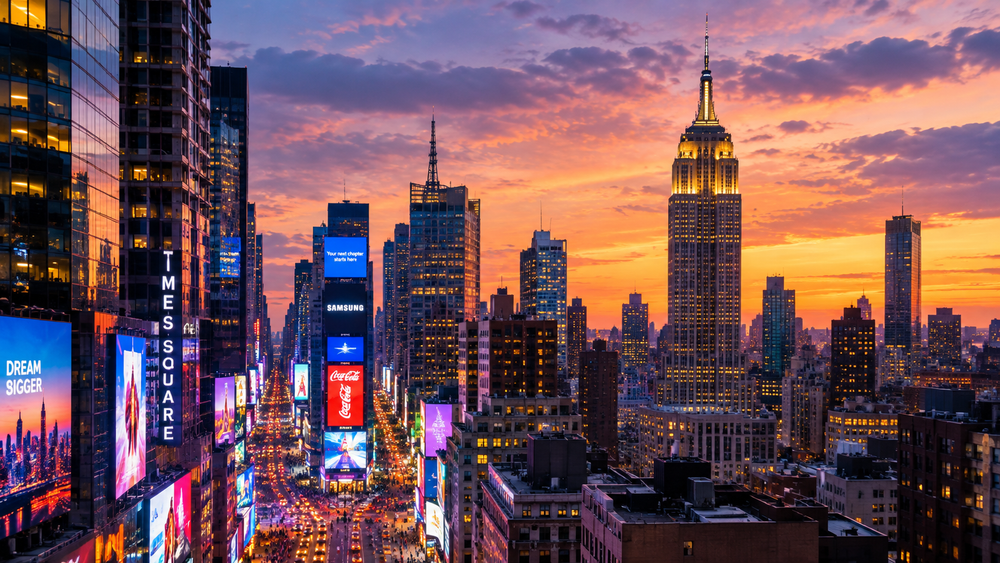
The default first-timer base: walkable to Times Square, the Empire State Building (deck tickets from about USD 44) and Rockefeller Center, and well connected by subway in every direction. Central, priced accordingly, the most expensive of New York's bases most of the year.
Lower Manhattan / Financial District
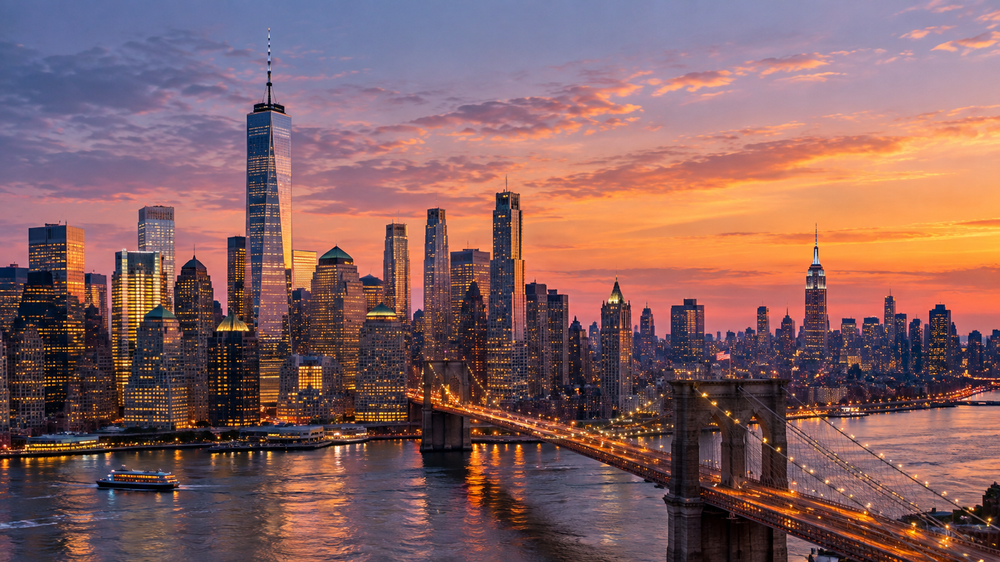
Home to the 9/11 Memorial and Museum (around USD 34), and the ferry out to the Statue of Liberty and Ellis Island (from about USD 25.50). A better-value base than Midtown for the same subway access, since it draws fewer leisure travellers.
Greenwich Village and SoHo
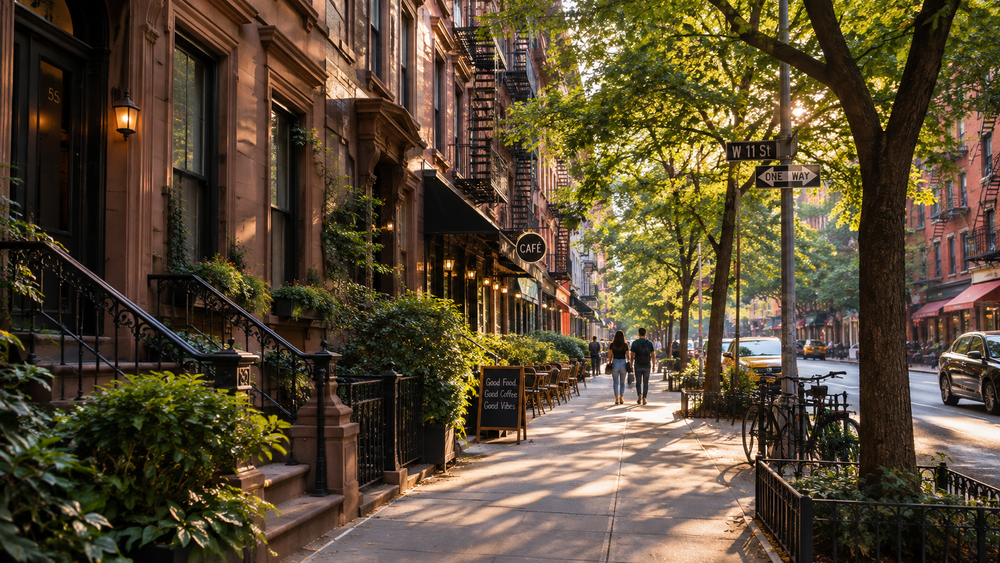
Walkable, dense with cafes and independent shops, a different pace from Midtown's scale and crowds. A neighbourhood deep dive here is the natural add if you have a fourth or fifth day.
Brooklyn (Williamsburg or Downtown)
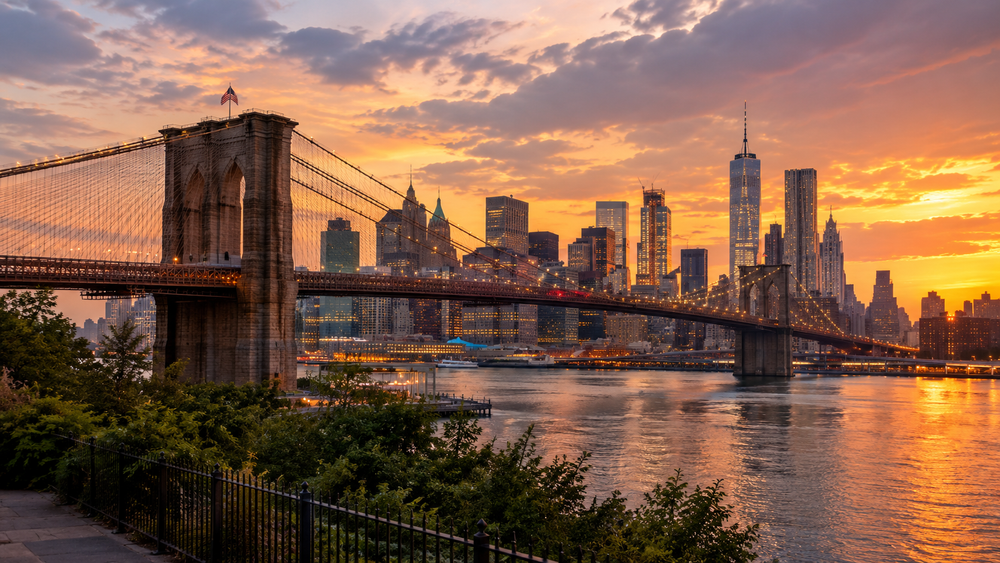
A short subway ride from Manhattan, usually the cheapest of the four areas on hotels, with a dining and nightlife scene that stands on its own. Worth it even for a Manhattan-heavy trip, as long as the hotel sits near a direct subway line.
Money in New York
New York is highly card-first. Cards and phone payments work almost everywhere, so plan on your card doing most of the work. Carry a small cash float of USD 100-150 for tips, small vendors and the odd card terminal that's down. Foreign-card ATMs are common; use bank-operated machines rather than the standalone ones in shops or bars, which tend to charge more.
New York State and city sales tax combine to roughly 8.875% on most purchases, added at the register rather than shown on the price tag, and restaurant meals and hotel stays carry their own rates on top. Tipping is expected everywhere in the city on the same percentages that apply across the US; see the USA travel guide for the exact figures, the Visa Integrity Fee, ESTA eligibility and LRS limits.
What New York actually costs
Set the length and style of your trip to see what to budget, in dollars and rupees.
Indicative, excluding international flights, per person per day. Converted at the verified mid-market rate on 7 September 2026, USD 1 ≈ ₹94.45, not a Matrix board rate.
| Tier | 3-day estimate (2 people sharing) |
|---|---|
| Budget | USD 750-1,100 |
| Mid-range | USD 1,500-2,300 |
| Comfort | USD 3,000+ |
Excludes international flights, sales tax and tips.
Getting around New York
The subway is the fastest and cheapest way to cover Manhattan and the boroughs: a flat USD 3.00 a ride regardless of distance, with a weekly cap of USD 35 once you've paid enough rides in a rolling seven days. Tap a contactless card or phone at any turnstile, there is nothing to buy in advance.
Yellow cabs and rideshare apps work well for late nights, heavy luggage, or crosstown trips where the subway connection is awkward. New York traffic can turn even a short cab ride slow, and the subway usually wins on time as well as cost. NYC Ferry (USD 4.50 a ride) is a cheap way to get a skyline view along the water, connecting Manhattan to Brooklyn, Queens and the Rockaways, though it's not a shortcut anywhere specific.
Common mistakes in New York
Assuming the price on the tag is the final price
New York State and city sales tax combine to roughly 8.875% on most purchases, added at the register, not shown on the tag. Tipping adds further on top. Budget with that buffer already built in.
Trying to see too many neighbourhoods in one day
Manhattan's grid looks compact on a map, but crossing between distant neighbourhoods eats real time. Group sights by area instead of chasing a scattered list.
Relying on a MetroCard
Sales and refills stopped on 1 January 2026. Use OMNY, tap a contactless card or phone, at the turnstile instead.
Confusing JFK, LaGuardia and Newark
They are genuinely different airports with different transfer routes. Confirm which one your flight actually uses before planning the transfer, especially for Newark, which sits across the river in New Jersey.
New York FAQs
Four to five days covers Midtown, the museums, Central Park and Lower Manhattan comfortably, without feeling rushed.
The AirTrain plus subway runs about USD 11.75 total (USD 8.75 AirTrain plus USD 3.00 subway) and takes 60-80 minutes. A yellow cab is a flat USD 70 fare to Manhattan, often USD 90-115 all-in with tolls and tip, taking 45-75 minutes.
No. Sales and refills stopped on 1 January 2026. Use OMNY, tap-to-pay with a contactless card or phone, across the subway, buses and the JFK AirTrain.
See the USA travel guide for the exact percentages that apply across the country. It is expected, not optional, at restaurants, bars, taxis and for porters.
Yes. India is not a Visa Waiver Program country, so Indian travellers need a B-1/B-2 visitor visa rather than an ESTA. See the USA travel guide for the current visa and fee picture, including the Visa Integrity Fee.
Generally yes. Its daily budget range sits at or above the top of what most US destinations cost, driven by hotel prices and the sheer density of paid experiences on offer.
Rely on cards for almost everything and carry a small cash float for the exceptions: a street food cart that's card-only in the other direction, a tip you want to hand over directly, or a card reader that's briefly down. New York is one of the most card-friendly cities on this list, so there's little reason to carry more than USD 100-150 in cash for a trip this length.
Buy us dollar before you fly
Zero markup on the live interbank rate. Order online for doorstep delivery or collect from your nearest branch.
RBI Authorised Dealer Category-II, Licence No. NDL-ADII-0023-2023 · Same-day delivery · Serving 3 lakh+ customers