 US Dollar
 Euro
Euro British Pound
 UAE Dirham
 Australian Dollar
 Singapore Dollar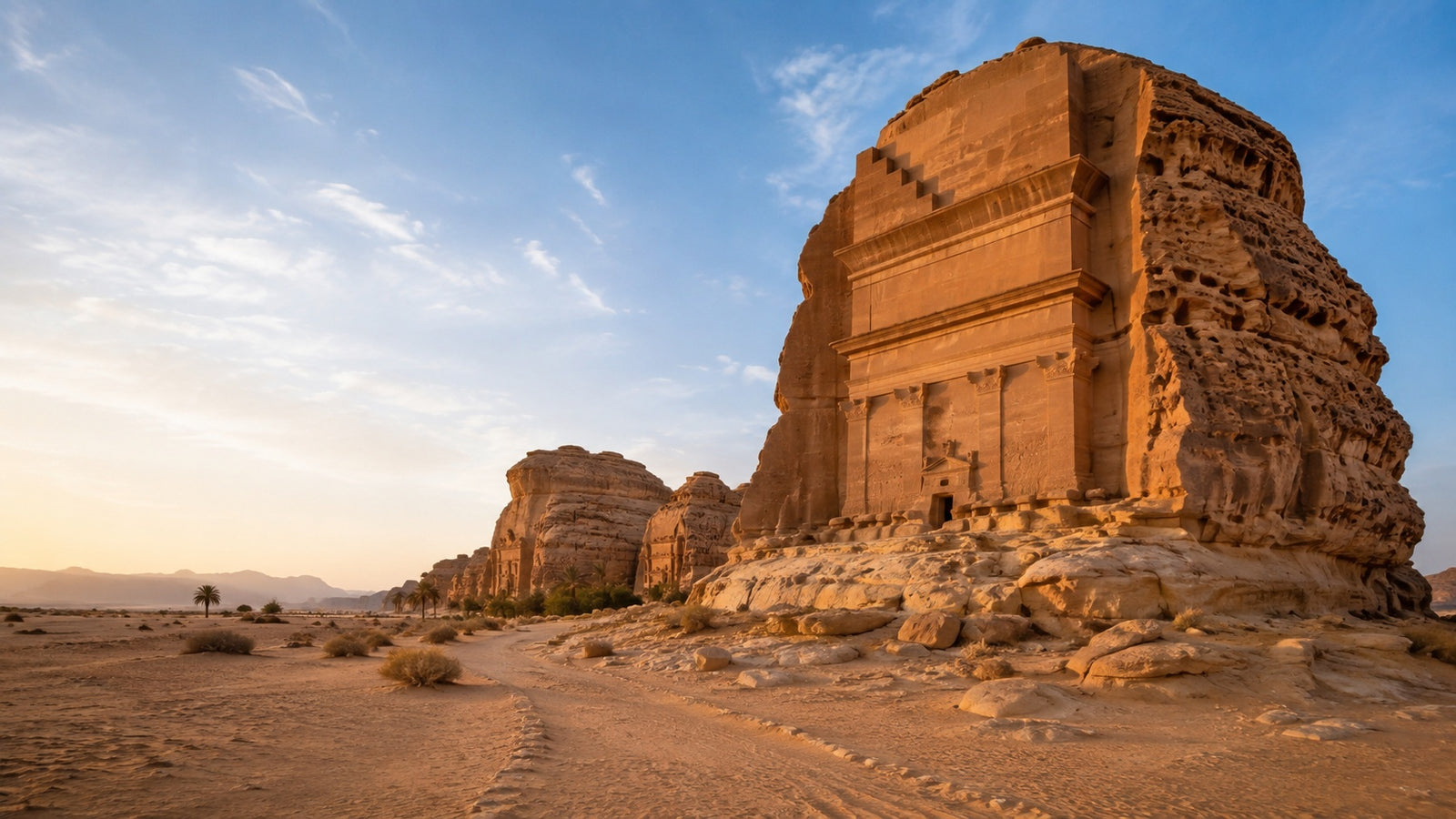
Saudi Arabia Travel Guide
A practical Saudi Arabia travel guide for international travellers: the Saudi Riyal, cards versus cash, passport-based entry, city budgets, transport, taxes and money tips.
Saudi Arabia money at a glance
Currency
Saudi Riyal (SAR), 100 halalas. Pegged to the US Dollar at about SAR 3.75. Notes are 1, 5, 10, 50, 100 and 500.
Paying
Card-first; the mada network, contactless and mobile wallets are widely used. Keep small notes for taxis, markets and tips.
Cash for a week
SAR 300 to 700 is practical for card-using visitors; road trips and smaller towns may need more.
Entry
Depends on the passport and residence; a tourist e-visa or visa on arrival suits many, and Umrah/Hajj routes differ. See the entry section.
Daily budget
Roughly SAR 500 to 1,000 per person per day for a mid-range trip; AlUla and major events cost more.
Tax
VAT is 15% on most goods and services; a tourist refund on qualifying goods is being introduced (see the fees panel).
Saudi Arabia is card-first: the local mada network, contactless and mobile wallets are widely used in cities, and ride-hailing is common. Keep a small SAR cash float for taxis, markets, smaller towns and tipping. The riyal is pegged to the US Dollar, so provider fees and cross rates matter more than daily swings. Choose SAR at terminals to avoid dynamic currency conversion, and remember VAT is 15%, so confirm whether prices include all taxes and service charges.
Best places to visit in Saudi Arabia
Riyadh and Jeddah work well as urban bases, while AlUla, Aseer and cross-country routes need early booking and careful transport planning. Haramain rail links Makkah, Jeddah and Madinah.
 Central
Riyadh
First-timers, museums, Diriyah, dining and events.
 Red Sea coast
Jeddah
Al-Balad, waterfront, food and the Red Sea gateway.
 Northwest
AlUla
Hegra, desert landscapes, heritage and premium stays.
 Eastern Province
Dammam and Al Khobar
Corniche, business travel and Bahrain connections.
| City | Region | Daily budget | Paying | In short |
|---|---|---|---|---|
| Riyadh | Central | SAR 550-1,000 | Metro, bus, ride-hail | First-timers, museums, Diriyah, dining and events. |
| Jeddah | Red Sea coast | SAR 500-950 | Ride-hail, car, walking zones | Al-Balad, waterfront, food and the Red Sea gateway. |
| AlUla | Northwest | SAR 800-1,600 | Pre-booked car or tours | Hegra, desert landscapes, heritage and premium stays. |
| Dammam and Al Khobar | Eastern Province | SAR 450-850 | Car or ride-hail | Corniche, business travel and Bahrain connections. |
What things cost in Saudi Arabia
| Coffee | SAR 15 to 30 |
|---|---|
| Casual meal for one | SAR 30 to 70 |
| Sit-down dinner for two | SAR 200 to 500 |
| Riyadh Metro/ride-hail short trip | SAR 4 to 25 |
| Mid-range hotel per night | SAR 350 to 800, higher in AlUla and at events |
| Domestic flight | SAR 300 to 900 depending on route |
| Haramain high-speed rail, Jeddah to Madinah | from around SAR 150 |
Budget roughly ₹11,500 to ₹22,900 per person per day on the ground, two sharing a room and excluding flights.
Budget ranges are editorial planning estimates based on typical mid-range travel costs reviewed in July 2026, for one person, two sharing a room, excluding international flights. Actual prices vary by city, season and choices.
Fees and rules to know
15% VAT on most goods and services (raised from 5% in 2020). A tourist VAT-refund scheme on qualifying goods is being introduced; check the current eligibility and process before relying on it, and confirm whether prices include all taxes.
Saudi ZATCA →check the current threshold Declare currency, instruments and specified valuables at or above the official threshold (around SAR 60,000). Confirm the live figure with ZATCA, as recent official pages have changed.
Saudi ZATCA →Money in Saudi Arabia, in detail
Saudi Arabia combines large modern cities, Red Sea coast, UNESCO heritage and desert landscapes, and it is card-first, with the mada network, contactless and mobile wallets widely used. The riyal is pegged to the US Dollar. Entry routes depend on passport and residence, with a tourist e-visa or visa on arrival for many; Umrah and Hajj travel follow separate rules. Budget around SAR 500 to 1,000 per person per day, more for AlUla and major events. VAT is 15%, with a tourist refund being introduced. Carry most spending on a low-fee card with a backup, plus a small SAR cash float.
Understanding the Saudi Riyal exchange rate
Compare the final customer rate after card foreign-transaction fees, ATM charges and any conversion offer rather than a headline number. Saudi Riyal is pegged to the US Dollar, so your home-currency cost depends mainly on your provider's fees and cross rates rather than daily rate swings. Make sure your card and any travel-money product handle SAR.
How much SAR to carry
SAR 300 to 700 is practical for card-using visitors; road trips, smaller towns and pilgrimage travel may need more. Use bank ATMs to top up, keep smaller notes for taxis, markets and tips, and put larger costs on a low-fee card. Avoid changing large sums at airport counters, where rates are usually poor.
Cards, cash and paying in SAR
Cards, contactless and mobile wallets are widely accepted, but keep some cash for smaller vendors and tipping.
- Dynamic currency conversion: when a terminal or ATM offers SAR or your home currency, choose SAR. Home-currency billing lets the operator set the rate and add a margin.
- Backup: carry a second card from a different provider and a small cash float.
The best ATM approach in Saudi Arabia
Use ATMs operated by recognised banks, review any operator fee, and withdraw a sensible amount rather than many small ones. Your own issuer may also charge a withdrawal or conversion fee. Decline any offer to convert the withdrawal into your home currency.
Entry and visas
Entry routes depend on passport and residence. A tourist e-visa or visa on arrival suits many nationalities, while Umrah and Hajj travel follow separate rules. Check the official requirements and avoid booking the wrong visa type. Makkah and central Madinah areas are restricted to Muslims.
Getting around Saudi Arabia
Riyadh has a metro and buses; ride-hailing is widespread; domestic flights matter for distance, and Haramain high-speed rail links Makkah, Jeddah and Madinah.
VAT and final prices
Saudi Arabia applies 15% VAT on most goods and services (raised from 5% in 2020). A tourist VAT-refund scheme on qualifying goods is being introduced; check the current eligibility and process. Confirm whether prices include all taxes and service charges, and choose SAR at terminals.
Cash declaration
Declare currency, instruments and specified valuables at or above the official threshold (around SAR 60,000); confirm the current figure with ZATCA, as recent official pages have changed. Declaring is a reporting requirement, not a penalty; keep exchange records where relevant.
Saudi Arabia money FAQs
It depends on the passport and residence. A tourist e-visa or visa on arrival suits many nationalities; Umrah and Hajj travel follow separate rules. Check the official requirements for your passport before booking, and avoid booking the wrong visa type.
Card-first; the mada network, contactless and mobile wallets are widely used, and ride-hailing is common. Keep a small SAR cash float for taxis, markets and smaller towns.
15% on most goods and services, raised from 5% in 2020. A tourist VAT-refund scheme on qualifying goods is being introduced; check the current eligibility and process.
Yes. The SAR is pegged to the US Dollar at about SAR 3.75, so your home-currency cost depends mainly on your provider's fees and cross rates.
SAR 300 to 700 is practical for card-using visitors; road trips, smaller towns and pilgrimage travel may need a larger buffer.
Declare currency, instruments and specified valuables at or above the official threshold (around SAR 60,000). Confirm the current figure with ZATCA, as it has changed recently.
Choose riyals (SAR). Home-currency billing (dynamic currency conversion) usually gives a poorer rate.
A low-foreign-transaction-fee card or multi-currency travel card, a backup card, and a small SAR cash float. Compare rates and fees before travel.
Riyadh has a metro and buses; ride-hailing is widespread; domestic flights matter for distance, and Haramain high-speed rail links Makkah, Jeddah and Madinah.
November to March is comfortable, especially for AlUla and desert travel; summer is very hot. Event periods can raise hotel rates sharply.
Makkah and central Madinah areas are restricted to Muslims. Tourist visas cover the rest of the country; check current rules for religious-site access before travel.
Sort your Saudi Riyal before you fly
Lock the rate, carry the right mix of cash and card, and know today’s SAR rate before you book.
Official sources reviewed
- Saudi Central Bank (SAMA) — Currency and the dollar peg
- Saudi ZATCA — VAT, tourist refund and cash declaration
- Visit Saudi — Visa and general travel guidance
- Saudi Ministry of Interior (Absher/eVisa) — Entry and e-visa
Last reviewed 31 July 2026 by Matrix Forex Editorial Team. Next review due 31 October 2026.
Plan your saudi riyal money before you fly
Check today’s rate, load a multi-currency forex card, or speak to a Matrix Forex expert about the right travel-money mix.
RBI Authorised Dealer Category-II, Licence No. NDL-ADII-0023-2023 · Serving 3 lakh+ customers