 US Dollar
 Euro
Euro British Pound
 UAE Dirham
 Australian Dollar
 Singapore Dollar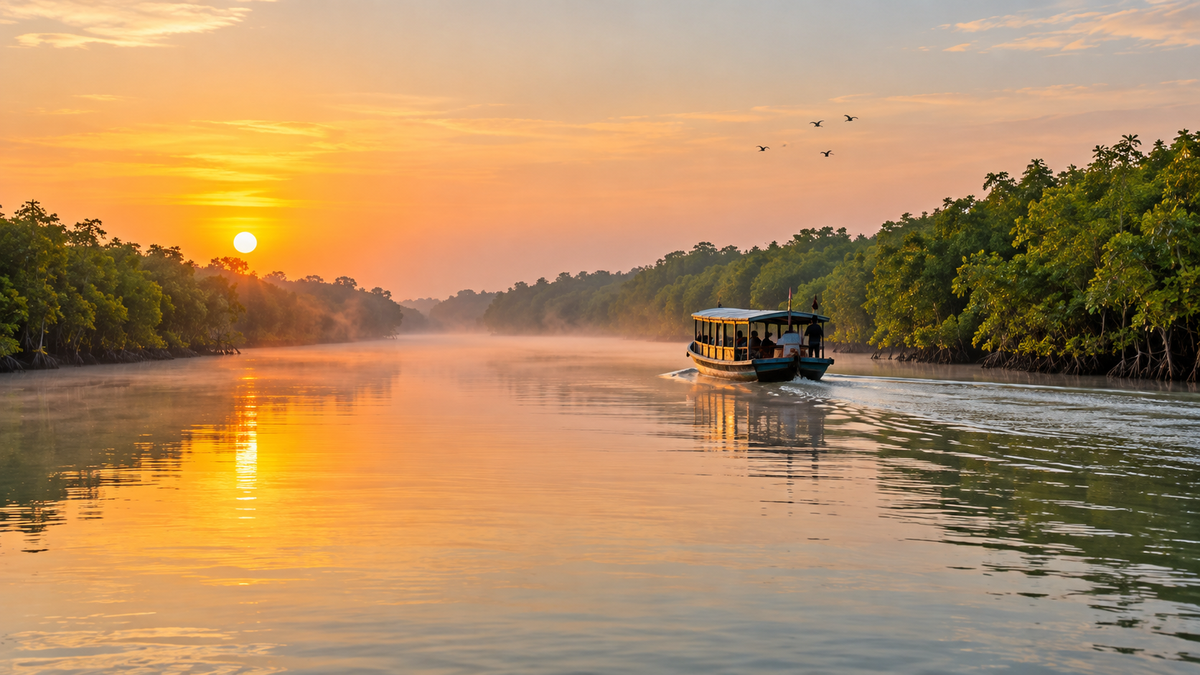
Khulna and the Sundarbans Travel Guide
Buy Bangladeshi TakaKhulna and the Sundarbans at a glance
Khulna, the main city of south-west Bangladesh, is the gateway to the Sundarbans, the largest contiguous mangrove forest in the world, where a 2023-24 survey counted 125 Bengal tigers on the Bangladesh side. The forest straddles the border: the Bangladesh part has been a UNESCO World Heritage Site since 1997 and the Indian part since 1987, with separate permits, operators and fees. This guide covers the Bangladesh side, reached by boat from Khulna or from Mongla, 44 km south.
The forest is closed to visitors every year from 1 June to 31 August, and November to February, when the rivers are calm, is the best time. Karamjal, a short boat ride from Mongla, is the easy introduction: a walkway through the mangroves and a crocodile breeding centre, on a BDT 575 ticket for foreigners (BDT 500 plus 15% VAT). Katka, Kochikhali and Hiron Point, with the deer, the birds and the faint chance of a tiger, need an overnight boat trip with a licensed operator, and their Forest Department ticket is BDT 2,300 for foreigners. Indians pay the foreigner rate here; there is no SAARC discount.
From Dhaka, the Jahanabad Express crosses the Padma Bridge in 3 hours 45 minutes (8 pm from Dhaka, arriving 11:45 pm; not Mondays), and the Sundarban Express makes a daytime run in about 7 hours 40 minutes (8 am, not Wednesdays). Buses over the bridge take 4 to 5 hours. US-Bangla and Biman fly to Jashore in 45 minutes, about an hour and a half by road from Khulna; Khulna's own airport has not been built. The Bandhan Express from Kolkata has been suspended since July 2024.
Bagerhat, about an hour from Khulna, is the old mosque city around the 15th-century Sixty Dome Mosque. Indian passport holders need a visa before they travel, from a Bangladesh mission or visa centre in India: there is no visa fee for Indians, and no visa on arrival for Indian tourists.
What to see and do
Khulna is the base for Bagerhat; Mongla, 44 km south, is closer to the forest, and most tours leave from one of the two.
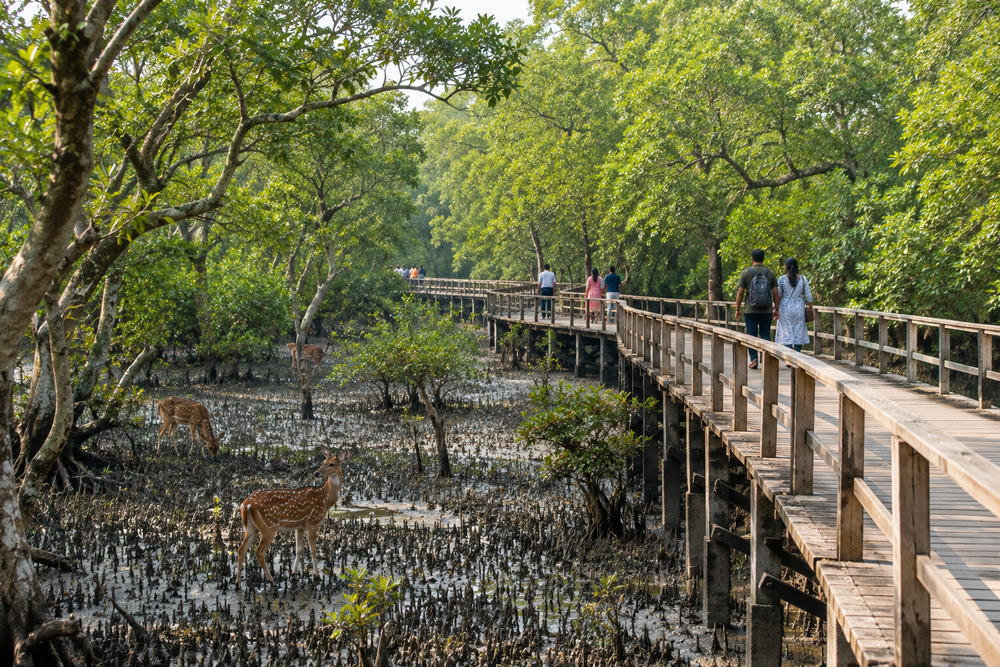
Karamjal
The closest forest stop, a short boat ride from Mongla: a raised walkway through the mangroves, spotted deer and a crocodile breeding centre. Day tickets for foreigners cost BDT 575 with VAT.
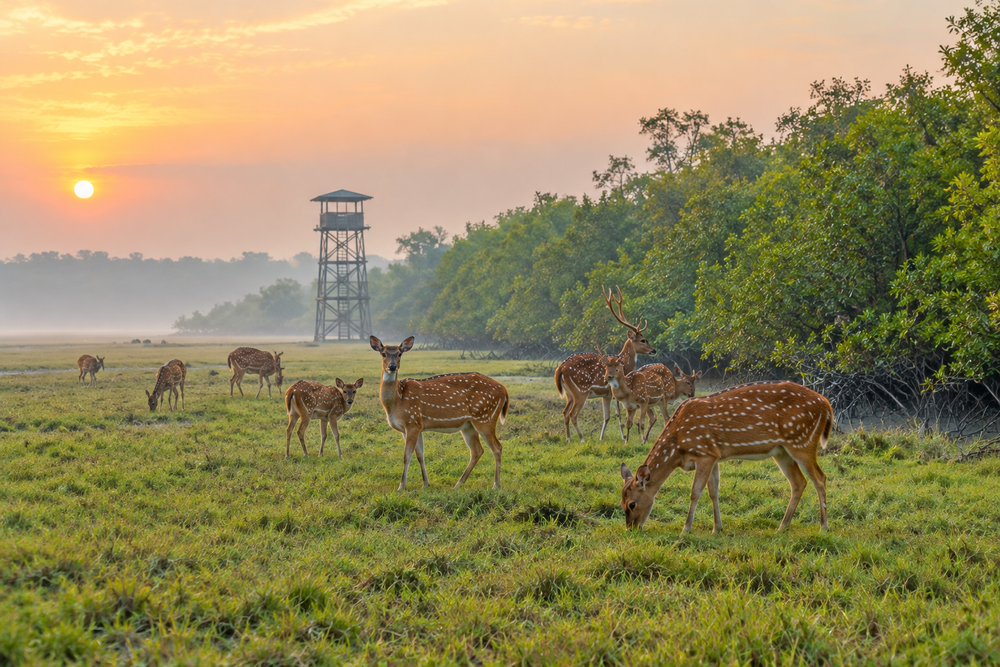
Katka and Kochikhali
Deep in the south of the forest near the sea, with meadows of spotted deer, watchtowers and empty beaches. Reached only on overnight boat tours with licensed operators, who arrange the Forest Department tickets (BDT 2,300 each for foreigners).
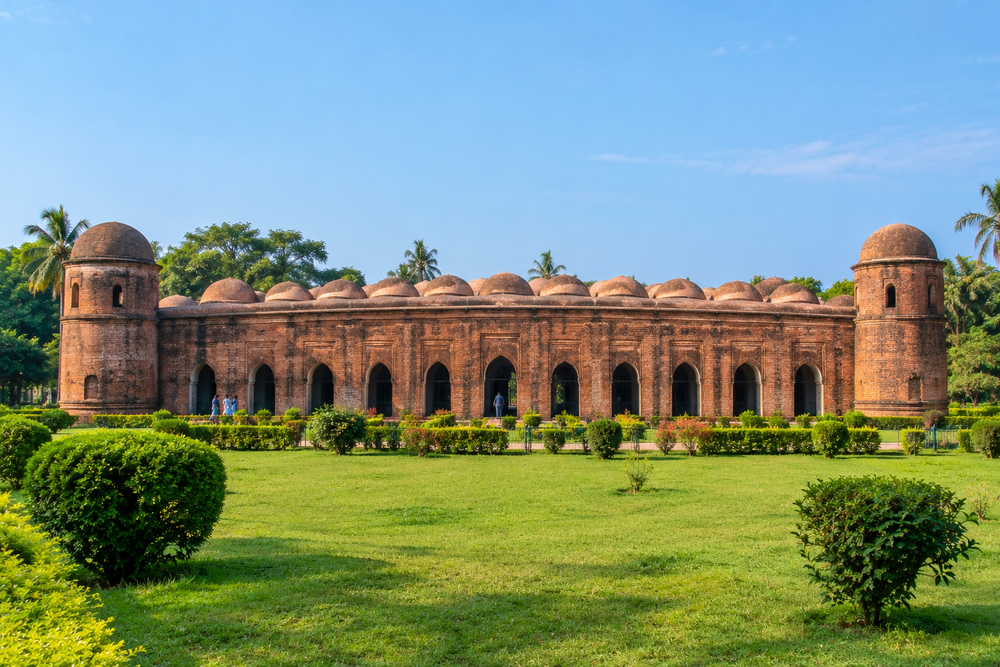
The Sixty Dome Mosque
The centrepiece of the Historic Mosque City of Bagerhat, a UNESCO site since 1985, about 30 km from Khulna. Indians pay the SAARC rate of BDT 100 (other foreigners BDT 200); it closes on Sundays and opens only in the afternoon on Mondays.
Paying in Khulna and the Sundarbans
For the taka itself, entry rules for Indians, how much cash you can bring in and how cards and ATMs work, see the Bangladesh travel guide, and the Bangladeshi taka page for its rate against the rupee.
Khulna has bank ATMs and its bigger hotels take cards, but the forest has neither. Multi-day tours are usually paid in advance to the operator: ask what the price includes (Forest Department tickets, VAT, guide, meals), and carry taka for anything that is not.
What Khulna and the Sundarbans actually costs
Set the length and style of your trip to see what to budget, in Bangladeshi taka and Indian rupees.
Indicative, excluding international flights and accommodation, per person per day. Converted at the verified mid-market rate on 9 October 2026, BDT 100 ≈ ₹78, not a Matrix board rate.
Budget roughly ₹1,180 to ₹3,920 per person per day on the ground, excluding flights and accommodation.
| Item | Cost |
|---|---|
| Karamjal ticket, foreigners | BDT 575 with VAT |
| Katka, Kochikhali or Hiron Point ticket, foreigners | BDT 2,300 with VAT |
| Sixty Dome Mosque, SAARC rate / other foreigners | BDT 100 / 200 |
| Flight, Dhaka to Jashore, one way | from about BDT 5,750 |
| Local meal or street food | BDT 100-300 |
Getting around
Rickshaws and CNG auto-rickshaws cover Khulna. Mongla is about 44 km south by road; from there, and from Khulna, the forest is reached only by water, on hired boats for Karamjal or tour boats for the deeper sites. For Bagerhat, hire a car or take a bus, about an hour each way.
Common mistakes in Khulna and the Sundarbans
Expecting a visa on arrival
Bangladesh's visa on arrival is not open to Indian tourists. Get the visa in India before you fly; there is no visa fee, only a service charge at the outsourced centres.
Planning a trip between June and August
The Sundarbans is closed to tourists every year from 1 June to 31 August.
Booking the Indian Sundarbans by mistake
The two sides have separate permits, operators and fees. Make sure your tour leaves from Khulna or Mongla, not from West Bengal.
Expecting to see a tiger
About 125 tigers live on the Bangladesh side, in dense mangrove, and sightings are rare even on multi-day trips. Go for the forest, the deer and the birds.
Khulna and the Sundarbans FAQs
By train over the Padma Bridge: the Jahanabad Express takes 3 hours 45 minutes (8 pm from Dhaka, not Mondays). Buses take 4 to 5 hours, or fly to Jashore in 45 minutes and drive about an hour and a half.
No. The Bandhan Express has been suspended since July 2024, along with the other cross-border trains, and no restart date had been announced by 9 October 2026. Fly to Dhaka or Jashore, or cross by road at Petrapole-Benapole.
Yes, arranged before you travel: Bangladesh's visa on arrival is not open to Indian tourists. Fill in the online form at visa.gov.bd, print it, and submit it with your passport at a Bangladesh mission in India (New Delhi, Kolkata, Mumbai, Chennai, Guwahati or Agartala) or a Bangladesh Visa Application Centre in eastern India. Indians pay no visa fee; the outsourced centres charge a service fee of about ₹825.
Forest Department tickets cost BDT 575 for Karamjal and BDT 2,300 for Katka, Kochikhali, Hiron Point and the other deep sites, both including 15% VAT. Indians pay the foreigner rate; there is no SAARC discount. Multi-day tours add the boat, meals and guide.
Every year from 1 June to 31 August. November to February, when the rivers are calm, is the best time.
On 9 October 2026 one taka was ₹0.78 at the mid-market rate, so BDT 1,000 is about ₹780. You can bring up to BDT 10,000 in taka into Bangladesh.
More guides in Bangladesh
Buy bangladeshi taka before you fly
See your Matrix rate and the applicable charges before you confirm. Order online for doorstep delivery or collect from your nearest branch.
RBI Authorised Dealer Category-II, Licence No. NDL-ADII-0023-2023 · Same-day delivery · Serving 3 lakh+ customers