 US Dollar
 Euro
Euro British Pound
 UAE Dirham
 Australian Dollar
 Singapore Dollar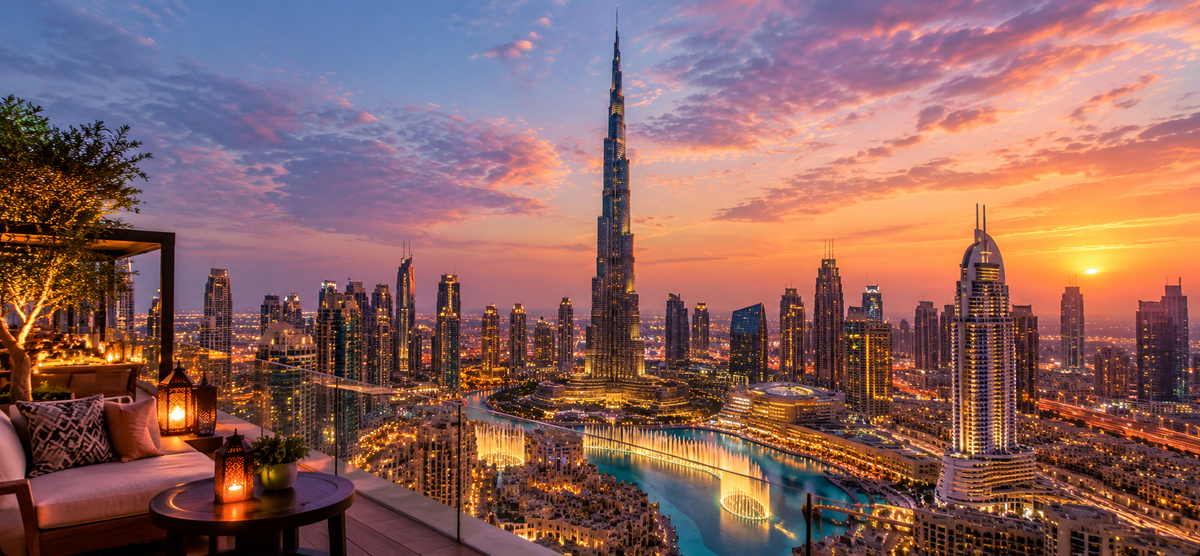
Dubai Travel Guide
Buy UAE DirhamsDubai at a glance
Dubai is the UAE's largest city and, for most Indian travellers, the whole trip rather than a stop on one. Direct flights land from more than a dozen Indian cities, the visa is straightforward, and a very large Indian community means the food, the language and the weekend rhythm all feel familiar faster than anywhere else in the Gulf. Four to five days covers the city properly, and it pairs naturally with Abu Dhabi, about 90 minutes down the E11.
Dubai International (DXB) sits about 5km from Deira and 15km from Downtown, and the Metro Red Line runs directly into the city from Terminals 1 and 3, which makes it the rare major airport where public transport is genuinely the sensible choice. A Metro trip costs AED 3 within one zone, AED 5 across two adjacent zones and AED 7.50 beyond that on a nol Silver card. A taxi starts at AED 12 for a street pickup and AED 13 booked through an app.
Buy a nol Silver card rather than paper tickets. The card is AED 25 and AED 19 of that is usable credit, so the real cost is AED 6, while a paper nol Red Ticket is AED 2 and then charges AED 4 a trip against the Silver card's AED 3. From the fifth journey onward the Silver card is cheaper, and almost every visitor makes more than five. Children aged five and under travel free on both.
The Burj Khalifa is the one ticket worth booking before you fly. The standard Silver ticket to levels 124 and 125, about 452 metres up, is AED 189, and the Gold ticket to level 148 is AED 399. It opens 10am to 8pm daily and sunset slots sell out first. Day 1: Downtown, the Dubai Mall aquarium and the fountain show, Burj Khalifa booked for late afternoon. Day 2: Old Dubai, the gold and spice souks in Deira, and an abra across the creek for AED 1. Day 3: a desert safari. Day 4: the Marina, JBR beach and Palm Jumeirah. Day 5 is where an Abu Dhabi day trip fits.
Where to stay
Dubai is long and thin, so being walkable to a Metro station matters more than the neighbourhood name.
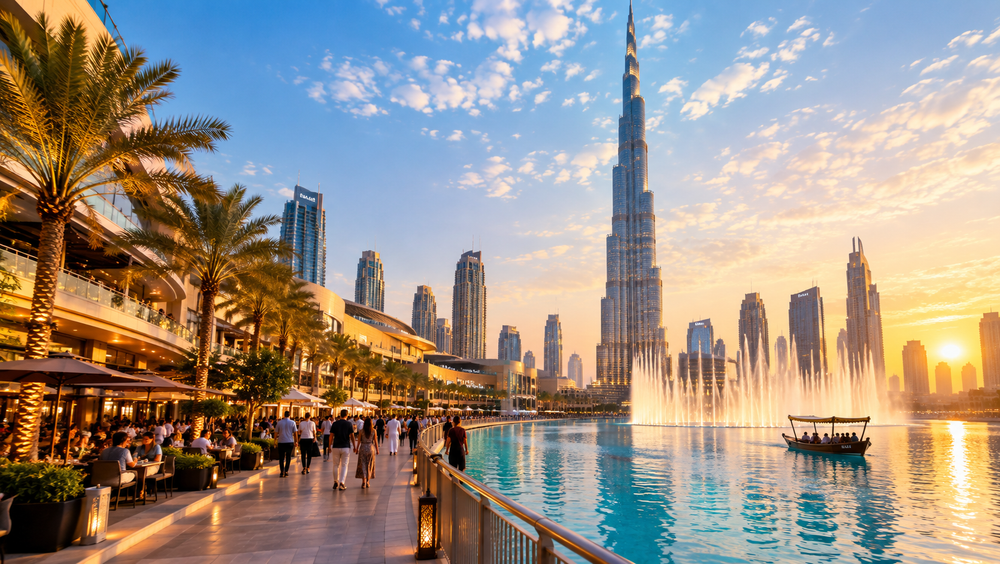
Downtown Dubai
At the foot of the Burj Khalifa and the Dubai Mall, on the Metro Red Line. The most convenient first-time base, and the most expensive.
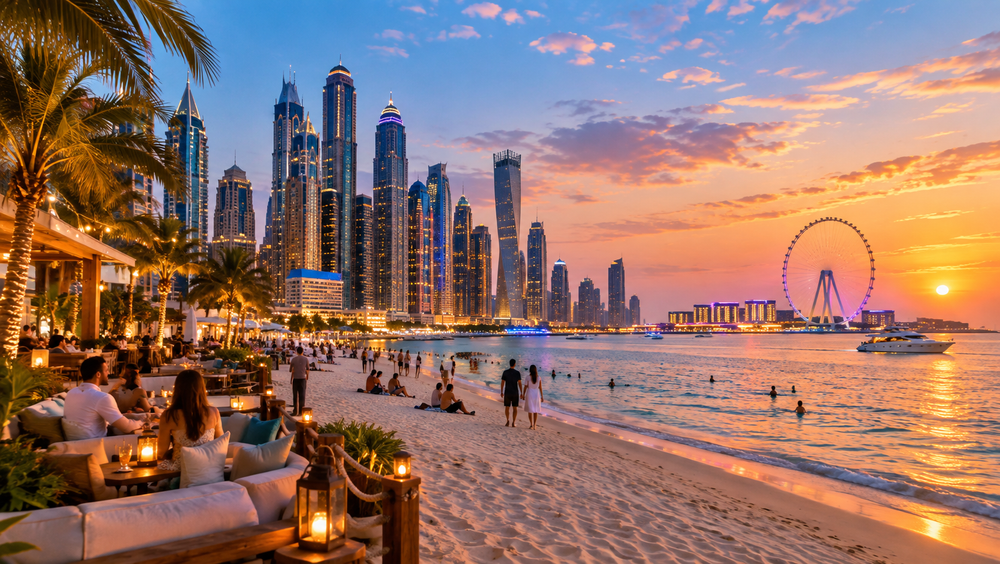
Dubai Marina and JBR
High-rise waterfront with a beach, a tram loop and two Metro stations. Suits a longer stay and a family, and works out cheaper than Downtown.
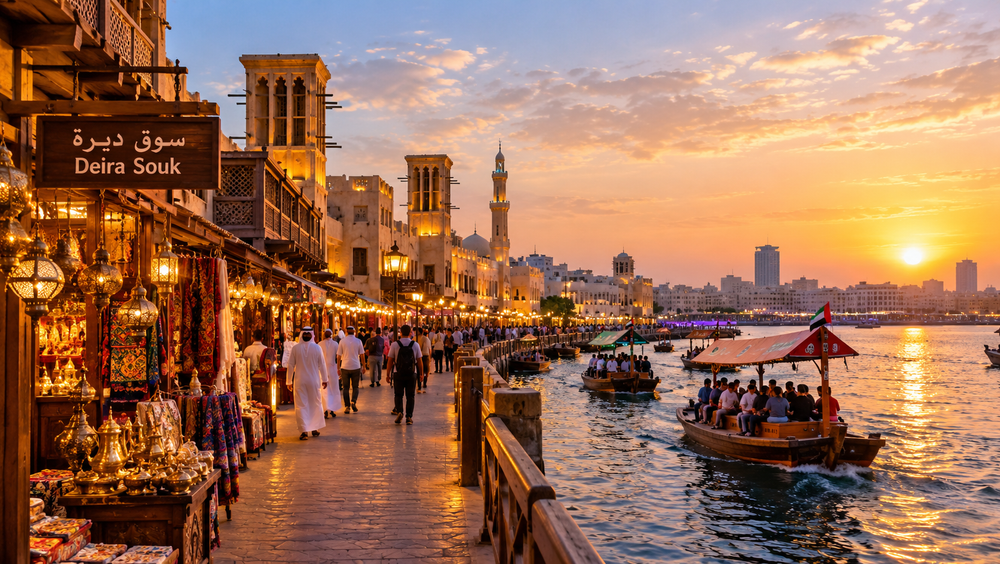
Deira and Bur Dubai
Old Dubai either side of the creek, the souks, the best-value hotels and the strongest Indian food scene in the city. Less polished, far more atmospheric.
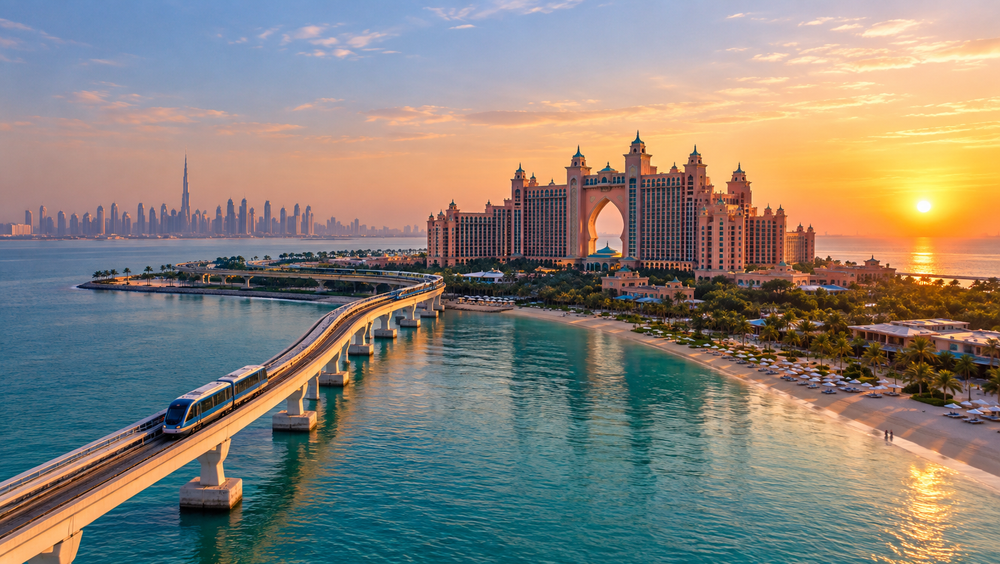
Palm Jumeirah
Resort territory on the fronds, reached by monorail. A destination rather than a base, and a long way from anything not on the Palm.
Paying in Dubai
For the dirham itself, how much cash to carry, the ATM situation and the LRS and TCS numbers, see the UAE travel guide.
Before you fly it is worth reading what an ATM withdrawal in Dubai actually costs, since the UAE bank's own fee lands on top of whatever your Indian bank charges.
Dubai is close to fully cashless. Cards work at malls, hotels, restaurants, taxis and Metro top-up machines, so a modest AED 300 to 500 float covers the souks, the abra and the occasional small vendor. Ask to be charged in dirhams whenever a card machine offers you rupees, since the rupee option is dynamic currency conversion and costs several percent.
What Dubai actually costs
Set the length and style of your trip to see what to budget, in dirhams and rupees.
Indicative, excluding international flights and accommodation, per person per day. Converted at the verified mid-market rate on 22 September 2026, AED 1 ≈ ₹26.08, not a Matrix board rate.
Budget roughly ₹6,500 to ₹15,650 per person per day on the ground for a mid-range trip, two sharing a room, excluding flights.
| Item | Cost |
|---|---|
| Metro trip (nol Silver, 1-2 zones) | AED 3-5 |
| Taxi, minimum fare | AED 12 |
| Casual restaurant main | AED 40-90 |
| Burj Khalifa, levels 124 and 125 | AED 189 |
Getting around
The Metro's two lines cover the length of the city along Sheikh Zayed Road, and the network is priced by zone rather than distance: AED 3 within one zone, AED 5 across two adjacent zones and AED 7.50 for anything further on a nol Silver card. Gold class doubles it. Dubai is divided into seven zones, and a transfer made within 30 minutes counts as one journey, with up to three transfers and 180 minutes allowed.
Taxis are metered, plentiful and cheap by Indian standards for the distances involved, starting at AED 12 on the street and AED 13 through an app. One charge catches people out: crossing into Sharjah adds AED 20 to the fare. The abra across Dubai Creek is the bargain of the city at AED 1 a crossing.
Common mistakes in Dubai
Buying paper nol tickets instead of a Silver card
A Red Ticket costs AED 2 and then AED 4 a trip. A Silver card costs AED 25 with AED 19 of usable credit inside it and charges AED 3. From the fifth journey the card is cheaper, and most visitors make far more than five.
Leaving the Burj Khalifa until you arrive
Sunset slots sell out first and walk-up pricing is worse. Book the AED 189 Silver ticket before you fly and pick a late-afternoon slot so you see the city in daylight and lit up.
Forgetting the Sharjah surcharge on taxis
Crossing the emirate border into Sharjah adds AED 20 to a Dubai taxi fare, which is easy to miss when a hotel looks cheaper just over the line.
Accepting rupees when a card machine offers them
That is dynamic currency conversion and it costs several percent over paying in dirhams. Always choose AED.
Underestimating how far apart things are
Deira to the Marina is over 30km. Dubai reads compact on a map and is not, so group each day around one area rather than criss-crossing the city.
Dubai FAQs
The standard Silver ticket to levels 124 and 125 is AED 189, roughly ₹4,930, and the Gold ticket to level 148 is AED 399. It opens 10am to 8pm daily, and sunset slots are the first to sell out, so book before you fly.
Yes. The Red Line runs directly from Terminals 1 and 3 into the city, and a trip costs AED 3 to AED 7.50 depending on how many zones you cross. It is one of the few major airports where the train genuinely beats a taxi for a first arrival.
A nol Silver card. It costs AED 25 with AED 19 of usable credit, so the real outlay is AED 6, and it charges AED 3 a trip against the paper Red Ticket's AED 4. It pays for itself by the fifth journey and works on the Metro, tram, buses and even parking meters.
Less than you would expect. Dubai is close to fully cashless, so AED 300 to 500 per person, roughly ₹7,800 to ₹13,000, covers the souks, the abra and small vendors. Everything else takes cards.
Four to five days covers Downtown, Old Dubai, a desert safari and the Marina without rushing. Add a fifth or sixth for an Abu Dhabi day trip, which is about 90 minutes each way.
Yes. A Dubai taxi adds AED 20 when the journey crosses into Sharjah, on top of the metered fare, which is worth factoring in if you are comparing hotels just over the emirate border.
More guides in UAE
Buy uae dirham before you fly
See your Matrix rate and the applicable charges before you confirm. Order online for doorstep delivery or collect from your nearest branch.
RBI Authorised Dealer Category-II, Licence No. NDL-ADII-0023-2023 · Same-day delivery · Serving 3 lakh+ customers