 US Dollar
 Euro
Euro British Pound
 UAE Dirham
 Australian Dollar
 Singapore Dollar
Hong Kong Travel Guide
A practical Hong Kong travel guide for international travellers: the Hong Kong Dollar, Octopus, cards versus cash, passport-based entry, transport, neighbourhood budgets, the no-VAT tax position and money tips.
Hong Kong money at a glance
Currency
Hong Kong Dollar (HKD), shown as HK$. Notes are HK$20, 50, 100, 500 and 1,000, issued by several banks.
Paying
Card-first plus Octopus. Cards, contactless and the Octopus card cover most spending; cash still helps at markets and smaller shops.
Cash for a week
HKD 500 to 1,000 with smaller notes for markets, local food and backup.
Entry
Depends on the passport held; many visitors get visa-free stays of varying length. Hong Kong immigration is separate from Mainland China. See the entry section.
Tax
No general VAT or sales tax, so prices are as displayed. Restaurants frequently add a 10% service charge.
Daily budget
Roughly HKD 1,200 to 2,500 per person per day for a mid-range trip, driven mostly by hotel location and dining.
Hong Kong is highly card-friendly, and Octopus makes local transport and small payments exceptionally convenient. Cards and contactless cover most spending, but cash still matters at traditional markets, some neighbourhood restaurants and smaller merchants. Carry two payment methods from different providers, load or top up Octopus separately, and keep emergency cash apart from your main wallet. Decline any card-terminal offer to convert a payment into your home currency.
Best places to visit in Hong Kong
Hong Kong is compact and MTR-connected, so your neighbourhood shapes the trip more than the city size. These bases suit different priorities, from harbour views to markets and value.
 Hong Kong Island
Central and Admiralty
Skyline, business district, Peak access and premium hotels.
 Hong Kong Island
Sheung Wan and Sai Ying Pun
Heritage streets, cafes, temples and local food.
 Hong Kong Island
Causeway Bay and Wan Chai
Shopping, nightlife, harbourfront and convenience.
 Kowloon
Tsim Sha Tsui
Harbour views, museums and popular first-time stays.
 Kowloon
Jordan and Mong Kok
Markets, street food and better-value accommodation.
 Outlying area
Lantau Island
Airport access, Big Buddha, hikes and Disneyland.
| City | Region | Daily budget | Paying | In short |
|---|---|---|---|---|
| Central and Admiralty | Hong Kong Island | HKD 1,800-3,500 | MTR, tram, walk | Skyline, business district, Peak access and premium hotels. |
| Sheung Wan and Sai Ying Pun | Hong Kong Island | HKD 1,400-2,800 | MTR, tram, walk | Heritage streets, cafes, temples and local food. |
| Causeway Bay and Wan Chai | Hong Kong Island | HKD 1,500-3,000 | MTR, tram, walk | Shopping, nightlife, harbourfront and convenience. |
| Tsim Sha Tsui | Kowloon | HKD 1,500-3,100 | MTR, ferry, walk | Harbour views, museums and popular first-time stays. |
| Jordan and Mong Kok | Kowloon | HKD 1,100-2,300 | MTR, bus, walk | Markets, street food and better-value accommodation. |
| Lantau Island | Outlying area | HKD 1,200-2,600 | MTR, bus, cable car | Airport access, Big Buddha, hikes and Disneyland. |
What things cost in Hong Kong
| Street food or cha chaan teng meal | HKD 40 to 90 |
|---|---|
| Casual restaurant meal for one | HKD 90 to 180 |
| Sit-down dinner for two | HKD 400 to 900 (before the 10% service charge) |
| MTR single journey | HKD 5 to 25 depending on distance |
| Airport Express to Central | about HKD 115 one way |
| Mid-range hotel per night | HKD 900 to 2,200, higher on Hong Kong Island |
| Star Ferry | a few HKD per crossing |
Budget roughly ₹12,800 to ₹26,800 per person per day on the ground, two sharing a room and excluding flights.
Budget ranges are editorial planning estimates based on typical mid-range travel costs reviewed in July 2026, for one person, two sharing a room, including accommodation but excluding international flights and premium shopping. Actual prices vary by neighbourhood and dining style.
Money rules to know
Hong Kong has no general VAT, GST or sales tax, so the price you see is what you pay, and there is no tourist tax refund because there is no such tax. Restaurants frequently add a 10% service charge.
Hong Kong SAR Government →over HKD 120,000 in currency or bearer instruments, in or out, must be declared to Customs via the Red Channel; an e-form pre-submission is available.
Hong Kong Customs and Excise Department →Money in Hong Kong, in detail
Hong Kong uses the Hong Kong Dollar and is highly card-friendly, with the Octopus card covering transport and small payments across the city. Cards and contactless handle most spending, though cash still helps at markets and smaller shops. A distinctive money point: Hong Kong has no general VAT or sales tax, so prices are as displayed, but restaurants frequently add a 10% service charge. Entry depends on the passport held, with many visitors getting visa-free stays, and Hong Kong immigration is separate from Mainland China. Budget around HKD 1,200 to 2,500 per person per day for a mid-range trip.
Understanding the HK Dollar exchange rate
HKD is stable relative to many currencies, but compare the final customer rate after card foreign-transaction fees, ATM charges and any conversion offer rather than a headline number. Check all visible charges before you confirm.
How much HKD to carry
For a short card-first visit, HKD 500 to 1,000 in cash is a practical starting point, with smaller notes for markets and local food. Load or top up Octopus separately, keep a second card and avoid carrying the whole trip budget in cash.
Octopus, cards and cash
Octopus is more than a transit card: it covers MTR, buses and ferries and is accepted at many convenience stores, cafes and vending machines.
- Octopus: load it for transport and small payments; visitor and mobile versions have different refund terms, so check before choosing.
- Cards: contactless is widely accepted; some cards can act as Octopus or transit media.
- Cash: keep smaller notes for markets, older restaurants and small shops.
The best ATM approach in Hong Kong
Use ATMs operated by recognised banks, review any operator fee, and withdraw a sensible amount rather than many small ones. Your own issuer may also charge a withdrawal or conversion fee. Decline any offer to convert the withdrawal into your home currency.
Hong Kong entry and the Mainland distinction
Entry depends on the passport held, travel purpose and length of stay; many visitors receive visa-free stays of varying length. Importantly, Hong Kong has separate immigration arrangements: a visa for Mainland China does not authorise entry to Hong Kong, and Hong Kong permission does not authorise entry to the Mainland. Check the Hong Kong requirements for your passport before booking.
Getting around Hong Kong
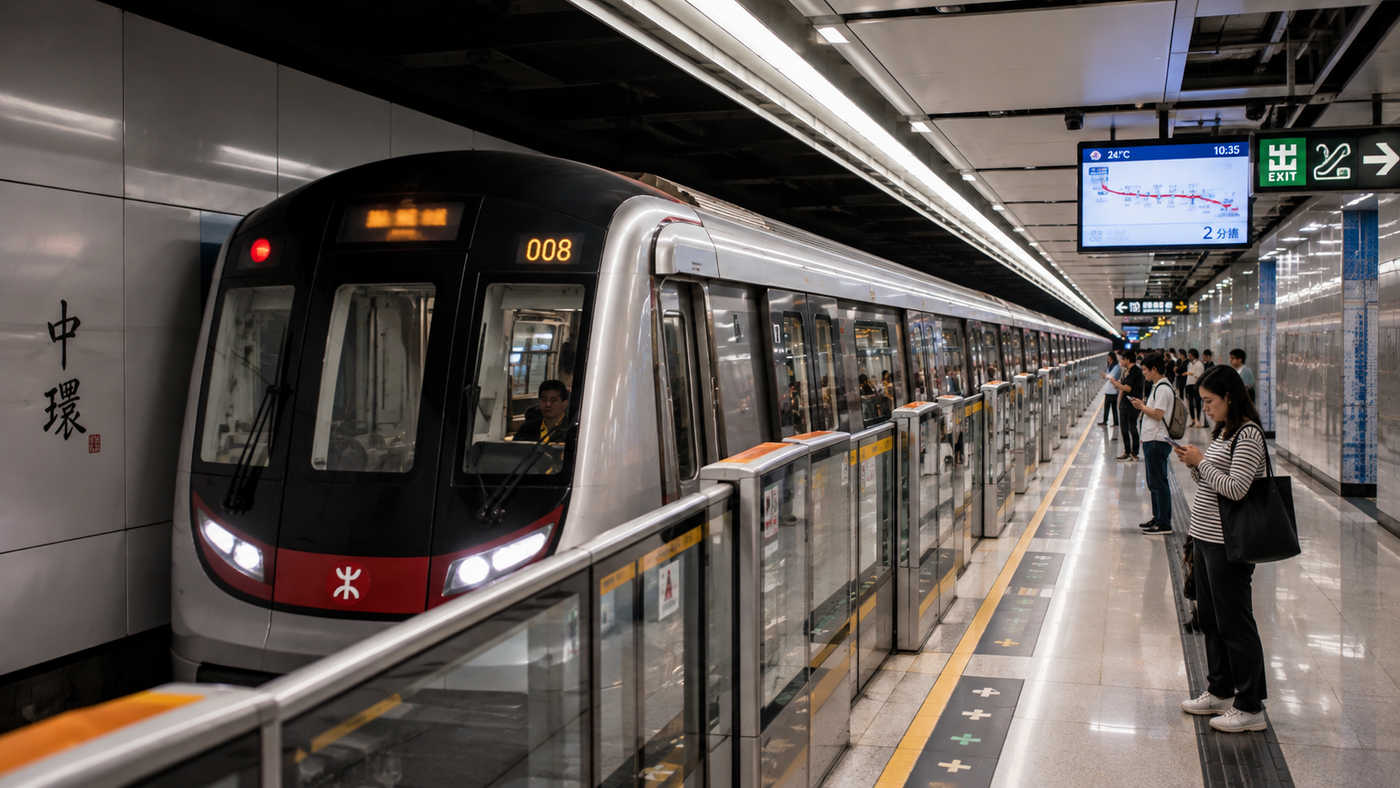
The MTR is fast, clean and links most neighbourhoods and the airport; Octopus or contactless pays the fare. Trams on Hong Kong Island, buses, the Star Ferry across the harbour and taxis fill the gaps. The Airport Express reaches Central in about 24 minutes. Use the same card or device consistently where a network supports contactless.
No VAT, service charges and tipping
Hong Kong has no general VAT or sales tax, so the price you see is the price you pay, and there is no tourist tax-refund scheme because there is no such tax. Restaurants frequently add a 10% service charge to the bill; beyond that, tipping is modest, such as rounding up a taxi fare or leaving small change.
Cash declaration entering Hong Kong
Carrying currency or bearer negotiable instruments worth more than HKD 120,000, in or out, must be declared to Customs via the Red Channel; an e-form pre-submission is available. Declaring is a reporting requirement, not a penalty.
Weather and typhoon season
Hong Kong has a subtropical climate, and tropical cyclones can affect transport mainly from May to November, especially July to September. Follow Hong Kong Observatory rainstorm and cyclone warnings and keep a flexible plan during severe weather, when transport and attractions may close.
Hong Kong money FAQs
It depends on the passport held; many visitors receive visa-free stays of varying length. Hong Kong has separate immigration from Mainland China, so a Mainland visa does not cover Hong Kong. Check the Hong Kong Immigration Department requirements for your passport before booking.
No. Hong Kong has separate immigration arrangements. A visa for Mainland China does not authorise entry to Hong Kong, and Hong Kong permission does not authorise entry to the Mainland.
Octopus is a stored-value card used for MTR, buses, ferries and many shops, cafes and vending machines. It is very convenient for a Hong Kong trip; visitor and mobile versions have different refund terms, so check before choosing.
No. Hong Kong has no general VAT or sales tax, so displayed prices are what you pay, and there is no tourist tax refund. Restaurants frequently add a 10% service charge to the bill.
For a card-first visit, HKD 500 to 1,000 is a practical start, with smaller notes for markets and local food. Load Octopus separately and keep a second card as backup.
Carrying currency or bearer instruments worth more than HKD 120,000, in or out, must be declared to Customs via the Red Channel; an e-form pre-submission is available.
Yes, widely, at hotels, shops, restaurants and transport, along with Octopus. Your issuer may charge a foreign-transaction fee, so review the cost, and keep some cash for markets and smaller shops.
Choose HKD. Paying in your home currency may trigger dynamic currency conversion, where the merchant or processor sets the exchange rate and may add a margin.
Tipping is modest. Restaurants usually add a 10% service charge; beyond that, rounding up a taxi fare or leaving small change is typical rather than a fixed percentage.
A low-foreign-transaction-fee card or multi-currency travel card, a backup card, Octopus for transport, and a modest HKD cash float. Compare exchange rates, card fees and ATM charges before travel.
Tropical cyclones can affect transport mainly from May to November, especially July to September. Follow Hong Kong Observatory warnings and keep flexible plans during severe weather.
Yes; use bank-operated ATMs, review any operator fee, withdraw sensible amounts and decline any home-currency conversion offer. Your own issuer may also charge fees.
Sort your Hong Kong Dollar before you fly
Lock the rate, carry the right mix of cash and card, and know today’s HKD rate before you book.
Official sources reviewed
- Hong Kong Immigration Department — Visit and entry requirements by passport
- Hong Kong Customs and Excise Department — Currency and bearer instruments declaration
- Hong Kong SAR Government — Tax system (no VAT/sales tax)
- Octopus Cards Limited — Octopus for visitors
- Hong Kong Observatory — Weather and cyclone warnings
- Hong Kong Tourism Board — General travel guidance
Last reviewed 31 July 2026 by Matrix Forex Editorial Team. Next review due 31 October 2026.
Plan your hong kong dollar money before you fly
Check today’s rate, load a multi-currency forex card, or speak to a Matrix Forex expert about the right travel-money mix.
RBI Authorised Dealer Category-II, Licence No. NDL-ADII-0023-2023 · Serving 3 lakh+ customers