 US Dollar
 Euro
Euro British Pound
 UAE Dirham
 Australian Dollar
 Singapore Dollar
Denmark Travel Guide
A practical Denmark travel guide for international travellers: the Danish krone (not the euro), cards versus cash, ETIAS and Schengen entry, city budgets, transport, VAT refunds and money tips.
Denmark money at a glance
Currency
Danish krone (DKK), written kr. NOT the euro. Notes are 50, 100, 200 and 500 kroner.
Paying
Highly card-first, one of the most cashless countries; cards and contactless everywhere. Some venues are card-only.
Cash for a week
DKK 500 to 1,000 is plenty for many card-using visitors.
Entry
Depends on the passport held. Denmark is in the Schengen area; ETIAS is planned but not yet in force. See the entry section.
Daily budget
Roughly DKK 1,200 to 2,300 per person per day for a mid-range trip, higher in central Copenhagen and peak summer.
Tax
VAT is 25% (among the highest), included in prices; eligible non-EU visitors can claim a refund on qualifying goods.
Denmark is one of the most cashless countries in the world: cards and contactless work almost everywhere, and some venues do not take cash at all, so a working card is essential. It uses the Danish krone, not the euro. Carry a small DKK reserve only as backup, choose DKK at terminals to avoid dynamic currency conversion, and use bank ATMs. Accommodation, restaurant meals and last-minute rail can be expensive.
Best places to visit in Denmark
Copenhagen is the natural first stop; Aarhus adds museums and a younger waterfront, while Odense, North Jutland, Funen, Bornholm and Møn reward slower travel. The country is easy without a car.
 Capital region
Copenhagen
Design, food, canals, museums and first visits.
 East Jutland
Aarhus
Museums, architecture, waterfront and a student city.
 Central islands
Odense and Funen
Fairy-tale history, castles and villages.
 North
NorthNorth Jutland
Beaches, light and the meeting of two seas at Skagen.
| City | Region | Daily budget | Paying | In short |
|---|---|---|---|---|
| Copenhagen | Capital region | DKK 1,500-2,800 | Walk, bike, metro, train | Design, food, canals, museums and first visits. |
| Aarhus | East Jutland | DKK 1,200-2,200 | Walk, bike, light rail | Museums, architecture, waterfront and a student city. |
| Odense and Funen | Central islands | DKK 1,100-2,000 | Train, bus, bike | Fairy-tale history, castles and villages. |
| North Jutland | North | DKK 1,100-2,100 | Car, train | Beaches, light and the meeting of two seas at Skagen. |
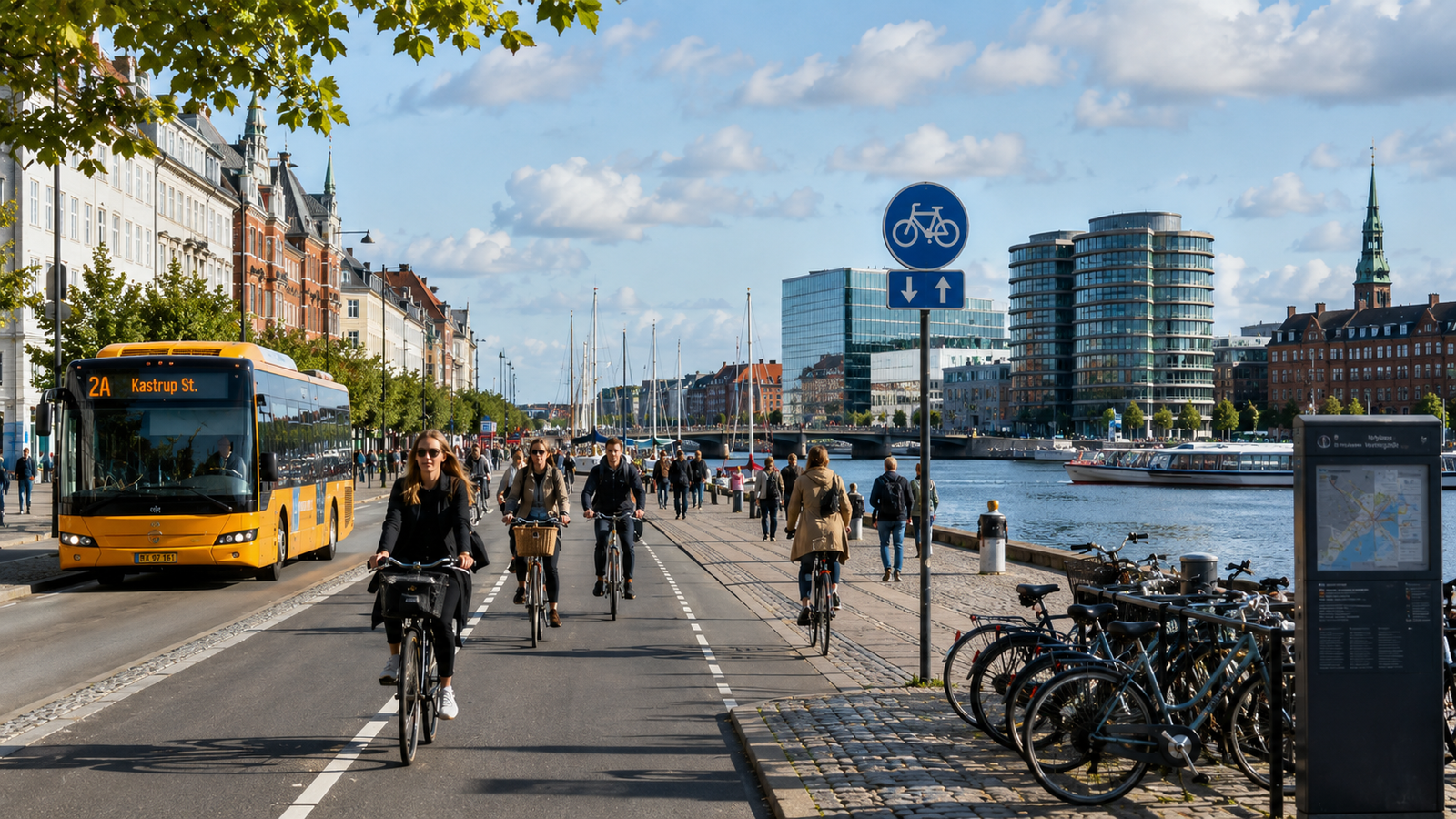
Cycling and public transport make exploring Denmark easy and convenient.
What things cost in Denmark
| Coffee | DKK 35 to 55 |
|---|---|
| Casual meal for one | DKK 90 to 180 |
| Sit-down dinner for two | DKK 500 to 1,000 |
| Copenhagen transit day pass | around DKK 90 |
| Mid-range hotel per night | DKK 900 to 1,900, higher in central Copenhagen |
| Intercity train | DKK 200 to 450 depending on route and booking |
Budget roughly ₹15,600 to ₹29,900 per person per day on the ground, two sharing a room and excluding flights.
Budget ranges are editorial planning estimates based on typical mid-range travel costs reviewed in July 2026, for one person, two sharing a room, including accommodation but excluding international flights. Actual prices vary by city, season and choices.
Entry and tax to know
The EU's ETIAS travel authorisation is planned but not yet in force; the 2026 launch was dropped and 2027 is now expected. Once live, visa-exempt travellers will need it (about EUR 20) for short stays. Travellers whose passport requires a Schengen visa should apply for one instead. Check the official EU ETIAS site.
European Union (ETIAS) →25% VAT included in displayed prices. Eligible non-EU visitors can claim a refund on qualifying purchases above the minimum spend, validated at the airport on departure.
Money in Denmark, in detail
Denmark is compact, highly connected and easy without a car, but it is expensive and uses the Danish krone, not the euro. It is one of the most cashless countries, with cards and contactless accepted almost everywhere and some venues card-only, so a working card is essential. Entry depends on the passport held; Denmark is in the Schengen area and the EU's ETIAS is planned but not yet in force. Budget around DKK 1,200 to 2,300 per person per day. Carry most spending on a low-fee card with a backup, plus a small DKK float, and choose DKK at terminals.
Understanding the Danish krone exchange rate
DKK exchange rates float, so compare the final customer rate after card foreign-transaction fees, ATM charges and any conversion offer rather than a headline number. Denmark uses the Danish krone, not the euro, so make sure your card and any travel-money product handle DKK.
How much Danish krone to carry
Denmark is one of the most cashless countries, and some venues do not accept cash at all, so a working card is essential. Keep a small DKK reserve for the rare cash-only moment, top up at bank ATMs, and put day-to-day spending on a low-fee card. Avoid changing large sums at airport counters, where rates are usually poor.
Cards, cash and paying in DKK
Cards and contactless are accepted almost everywhere. The key money trap is being offered a currency choice.
- Dynamic currency conversion: when a terminal or ATM offers DKK or your home currency, choose DKK. Home-currency billing lets the operator set the rate and add a margin.
- Not the euro: Denmark is in Europe but uses the Danish krone; do not assume euro prices or euro acceptance.
- Backup: carry a second card from a different provider, as some venues are card-only.
The best ATM approach in Denmark
Use ATMs operated by recognised banks rather than standalone tourist machines, which often charge high fees and push conversion. Review the operator fee, withdraw a sensible amount rather than many small ones, and decline any offer to convert the withdrawal into your home currency.
ETIAS and Schengen entry
Short-stay entry depends on nationality: some visitors travel visa-free, others need a Schengen visa. Denmark is part of the Schengen area. The EU's ETIAS travel authorisation is planned but not yet in force (see the fees panel); once it launches, visa-exempt travellers will need it, while travellers whose passport requires a Schengen visa should apply for one. Check the official sources for your passport before booking.
Official EU ETIAS information →
VAT and tourist shopping refund
Prices include VAT. Eligible non-EU visitors can usually claim a VAT refund on qualifying purchases above a minimum spend, by requesting a refund form in-store and validating it at the airport on departure (see the fees panel for the rate). Allow extra time at the airport for the refund process, and keep goods and receipts available for inspection.
Cash declaration
Declare EUR 10,000 or more in cash or monetary instruments when entering, leaving or transiting Denmark. Declaring is a reporting requirement, not a penalty; keep exchange receipts where relevant.
Denmark money FAQs
No. Denmark uses the Danish krone (DKK), not the euro. Make sure your card handles DKK and choose DKK at terminals rather than home-currency billing.
It depends on the passport held. Denmark is in the Schengen area; some travellers visit visa-free, others need a Schengen visa. The EU's ETIAS is planned but not yet in force. Check the official sources for your passport.
Extremely card-first; one of the most cashless countries. Cards and contactless work almost everywhere and some venues are card-only, so a working card is essential; keep a small cash float only as backup.
Choose kroner (DKK). Home-currency billing (dynamic currency conversion) lets the operator set a poorer rate.
DKK 500 to 1,000 is plenty for most card-using visitors; top up at bank ATMs if needed.
Eligible non-EU visitors can claim a refund of the 25% VAT on qualifying purchases above the minimum spend, validated at the airport on departure.
Declare EUR 10,000 or more in cash or monetary instruments when entering, leaving or transiting Denmark.
A low-foreign-transaction-fee card or multi-currency travel card supporting DKK, a backup card, and a small DKK float. Compare rates and fees before travel.
Rarely, but carry a small DKK reserve for the occasional situation; the country is overwhelmingly card and mobile.
Yes; use bank-operated ATMs, review any fee and decline home-currency conversion.
Copenhagen has metro, trains, buses and harbour buses; intercity rail and regional buses connect most destinations, and cycling is excellent.
Late spring to early autumn has the best weather and long daylight; December is atmospheric but cold. Peak summer raises hotel prices.
Sort your Danish Krone before you fly
Lock the rate, carry the right mix of cash and card, and know today’s DKK rate before you book.
Official sources reviewed
- Danmarks Nationalbank — Currency and exchange
- Danish Tax Agency (Skattestyrelsen) — VAT and tourist refunds
- European Union — ETIAS travel authorisation
- Danish Customs (Toldstyrelsen) — Cash declaration
- VisitDenmark — General travel guidance
Last reviewed 31 July 2026 by Matrix Forex Editorial Team. Next review due 31 October 2026.
Plan your danish krone money before you fly
Check today’s rate, load a multi-currency forex card, or speak to a Matrix Forex expert about the right travel-money mix.
RBI Authorised Dealer Category-II, Licence No. NDL-ADII-0023-2023 · Serving 3 lakh+ customers